Why a disc brake rotor micrometer matters before you start replacing parts
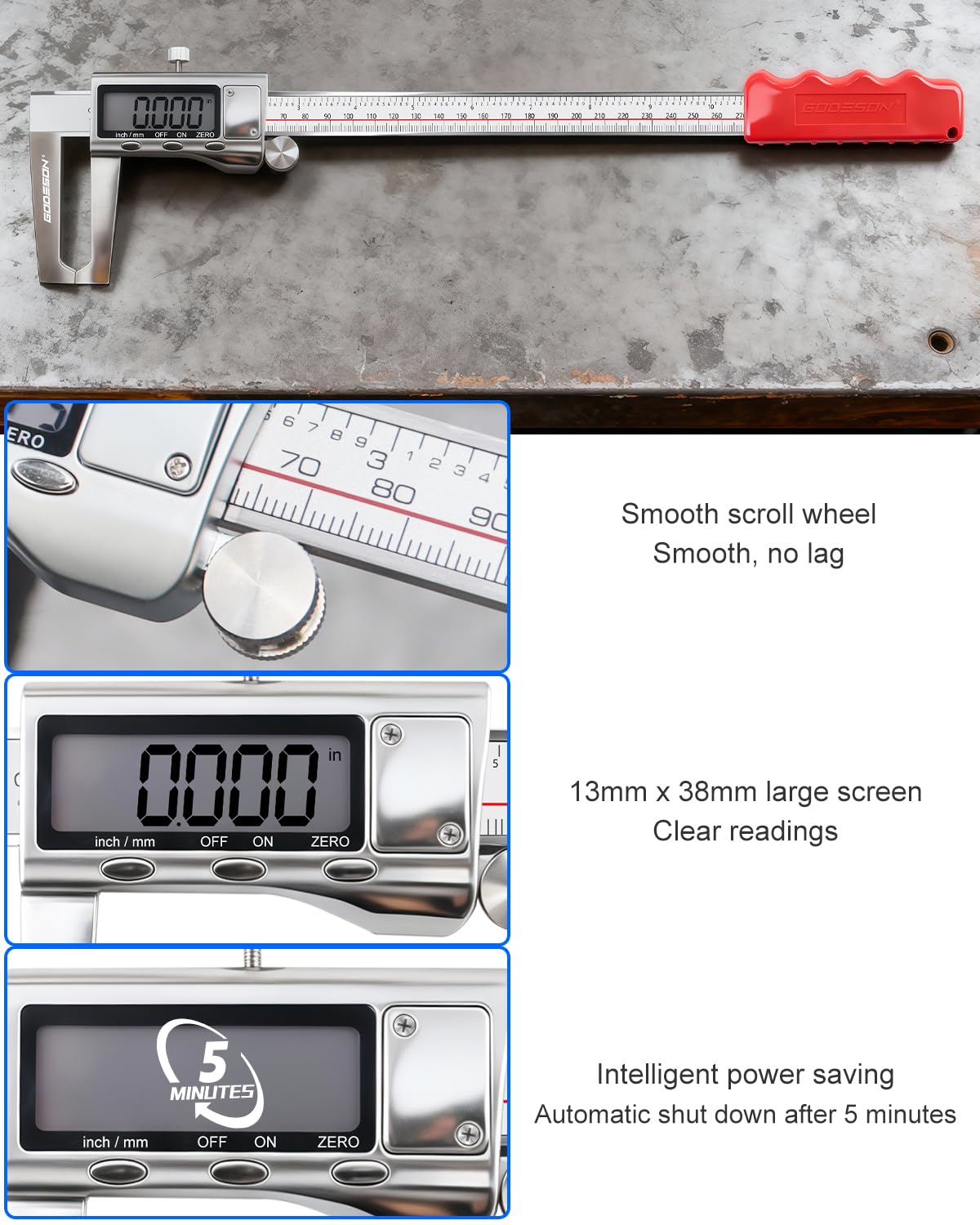
When brake work gets serious, guesswork is expensive. A GODESON Disc Brake Rotor Micrometer is the kind of tool that helps a shop, fleet team, or careful DIY technician decide whether a rotor can stay in service, needs machining, or should be replaced outright. That decision sounds simple, but anyone who has chased brake pulsation, uneven pad wear, or a comeback complaint knows it is not. A rotor can look fine and still be too thin, uneven, or inconsistent across its face.
That is why a dedicated disc brake rotor micrometer is different from a general-purpose measuring tool. It is built to reach over a rotor and check thickness in a way that is fast, repeatable, and suited to brake inspection work. The model markings visible here point to a stainless hardened body, IP54 protection on the display housing, and a digital LCD that shows both inch and millimeter readings. Those features matter because brake measurement happens in dirty, oily, and often rushed environments, not in an ideal metrology room.
Quick takeaways for buyers and technicians
- If your work involves brake inspection, rotor thickness checks should be done with a purpose-built micrometer rather than a general caliper.
- A digital readout helps reduce reading errors, especially when different technicians share the same tool.
- The visible HOLD function is practical when you are measuring in awkward positions under a vehicle or around a hub.
- An IP54 marking is useful in the field, but it is not the same thing as full waterproof protection.
- The black coated body and hardened stainless construction suggest a tool intended for regular shop use, not occasional bench work only.
What this type of micrometer is designed to do
A disc brake rotor micrometer is made for one main job: measuring rotor thickness accurately enough to support a service decision. In day-to-day maintenance, that means checking whether the rotor is still above minimum thickness, whether it is uniform across the disc, and whether wear patterns suggest a related problem such as caliper drag or pad contamination.
Unlike a general micrometer used on shafts or small parts, a rotor micrometer has the frame shape and reach needed to span a brake rotor. That shape reduces awkward hand positioning and makes it easier to take multiple readings around the disc. The goal is not just one number. The goal is a measurement pattern that tells you whether the rotor is consistent.
For engineers and sourcing teams, this distinction matters because a tool can be physically precise and still be wrong for the application if it is not suited to the part geometry. Brake rotors are a good example. Access is limited, surfaces may have rust scale near the edge, and heat cycling can create wear patterns that a quick visual inspection will miss.
Notable features visible on the GODESON unit
Digital LCD readout
The display shows inch and millimeter modes, which is a small feature with practical value. On mixed-line operations, or in shops that service imported and domestic vehicles, switching units without recalculating by hand saves time and avoids transcription errors. The HOLD function is also visible, and that is more useful than it sounds. In real work, you sometimes have to position your eyes, hands, and the part at different angles. Freezing the reading can make documentation easier.
Stainless hardened frame
The printed marking “STAINLESS HARDENED” suggests a body intended to resist wear and keep dimensional stability in service. That matters because a micrometer is only as trustworthy as the rigidity of its frame and the consistency of its measuring faces. A lighter, flimsier tool may look fine at first but can lose confidence quickly in a busy shop.
IP54 marking
The IP54 marking near the display housing indicates a degree of protection against dust and splashing. For maintenance teams, that is better than an exposed instrument, but it should still be treated like precision equipment. Brake dust, solvent mist, and coolant contamination can all shorten the useful life of any measuring tool if it is left uncared for.
Accessory cable and storage case
A visible cable or lead, along with a carry case, suggests the tool is meant to be moved between stations or stored safely between jobs. The exact function of the cable is not clear from the provided data, so it is better not to assume it is for USB, data output, or charging. Still, the inclusion of an accessory cable usually points to a more shop-oriented package than a bare-bones instrument.
How brake rotor thickness checks fit into real maintenance
A rotor measurement is rarely a standalone action. It sits inside a wider inspection workflow:
- Remove the wheel and expose the rotor face.
- Clean off loose rust, dust, or debris near the measurement points.
- Check the rotor at several positions around the disc, not just one.
- Compare readings to the service limit for that vehicle or equipment.
- Look for evidence of taper, hot spots, or uneven wear.
That process is simple, but people often skip the middle. They take one reading near the edge, see that it is “close enough,” and move on. That is where problems start. Rotor wear is not always even. A rotor can be thick in one spot and too thin in another, especially if pad wear, caliper issues, or previous machining have not been addressed.
A disc brake rotor micrometer is valuable because it encourages disciplined measuring. The shape and readout make it easier to take several points quickly, which is what good brake inspection really requires.
What buyers should compare before choosing a rotor micrometer
1. Measuring style and reach
The most important question is whether the frame geometry suits the workpiece. For rotor inspection, reach over the disc edge matters. If the tool is awkward to place, technicians will use it less often or measure poorly.
2. Readout clarity
A digital display helps reduce interpretation errors. That matters in mixed-shift environments where more than one person uses the same instrument. Clear inch/mm switching is especially useful when the service data comes in one unit and the shop records in another.
3. Protection level
IP54 is a helpful indicator for a shop environment, but buyers should not confuse it with rugged abuse resistance. If the tool will live in a toolbox that gets thrown in and out of trucks, a case and sensible storage habits matter just as much as the housing spec.
4. Build quality and feel
A hardened metal frame is usually a better sign than plastic-heavy construction for measurement consistency. The measuring faces should feel smooth and controlled, not loose or sticky. In a metrology tool, tactile quality is not cosmetic; it affects how repeatable the readings are.
5. Documentation habits
If your team records measurements for QC or maintenance history, a HOLD function and any external data capability may help. The exact cable function here is not confirmed, so buyers should verify that detail before assuming it supports digital logging.
Common mistakes when measuring brake rotors
The first mistake is measuring only once. That is not enough for a wear item that can vary across the disc surface. The second is measuring through heavy dirt or scale and treating the number as final. The third is using a general caliper where a rotor micrometer is more appropriate. Calipers can be fine for many dimensional checks, but rotor work benefits from a dedicated frame and contact arrangement.
Another common issue is ignoring the service manual or OEM minimum thickness specification. The tool can tell you the thickness, but it cannot decide the limit for you. That is the buyer-side caution worth repeating: the right micrometer helps you measure correctly, but the acceptable value still comes from the vehicle or equipment specification.
Who is likely to get the most value from this tool
This kind of micrometer makes the most sense for:
- Automotive repair shops handling brake inspections daily
- Fleet maintenance teams tracking wear before failures turn into downtime
- Quality control staff verifying machined disc components
- Tooling and inspection departments that need a simple, portable measurement method
- Mechanical maintenance crews that need repeatable field checks on rotating parts
It is less useful for someone who only changes brakes once every few years and is comfortable relying on visual checks. Brake measurement tools pay off when the work is frequent enough that repeatability matters.
A practical buyer note on packaging, calibration, and expectations
The available product data shows a carry case and accessory cable, which is a good start, but it does not confirm calibration status, exact resolution, measurement range, or accuracy. Those are not small details. A shop buying for inspection work should verify them before standardizing on any micrometer. If the tool is intended for customer-facing service records, confirmation of calibration and any applicable documentation becomes even more important.
That is especially true with digital instruments. The display may look sharp and easy to use, but shop confidence comes from the whole package: stable frame, clean contacts, clear unit selection, protected housing, and support materials that match the workflow.
FAQ: what people usually ask about disc brake rotor micrometers
Is a rotor micrometer different from a standard micrometer?
Yes. The frame shape and reach are tailored to disc rotor thickness checks, which makes the tool easier to use on brake components.
Why use digital instead of analog?
Digital readout is faster to read and easier to share across teams. It also reduces misreading, especially when inch and millimeter units are both used.
Can I rely on one reading?
No. Multiple readings around the rotor give a better picture of wear and taper.
Does IP54 mean the tool is waterproof?
No. It suggests limited dust and splash protection, not immersion protection.
Bottom line for sourcing and shop use
A GODESON Disc Brake Rotor Micrometer fits the practical needs of brake inspection work: visible digital readout, unit switching, HOLD function, hardened metal construction, and a form factor intended for rotor thickness measurement. Those are the features that matter when the task is to make a fast, defensible service decision.
If you are comparing tools for a shop, fleet, or inspection bench, treat this as a rotor-specific instrument first and a general digital micrometer second. Confirm the range, resolution, and accessory function before purchase, then make sure the team uses it the way it was intended: in multiple points, with a clean contact surface, and against the correct service limit.
For buyers building a dependable brake measurement workflow, the next step is straightforward: verify the specification sheet, check what comes in the case, and decide whether this tool matches the frequency and environment of your brake service program.