Why a digital tread gauge matters before the tire looks “obviously worn”
A GODESON Digital Tire tread depth gauge is the kind of tool many drivers only think about after a warning light, a failed inspection, or a wet-road scare. That is usually too late. Tire wear happens gradually, and visual checks are often misleading: a tread block can look acceptable from the curb side while the center of the tire has already lost useful depth. For anyone responsible for a personal vehicle, a small fleet, a workshop bay, or an inspection routine, a digital tread gauge turns that guesswork into a number.
That number matters because tread depth is tied directly to grip, water evacuation, braking feel, and replacement timing. It is not a glamorous measurement, but it is one of the clearest safety checks in routine vehicle maintenance. If you are deciding whether to replace a tire now, schedule another service interval, or keep a set in rotation a little longer, a tread depth meter gives you a better basis than eye-balling the grooves.
What this kind of tool is designed to do
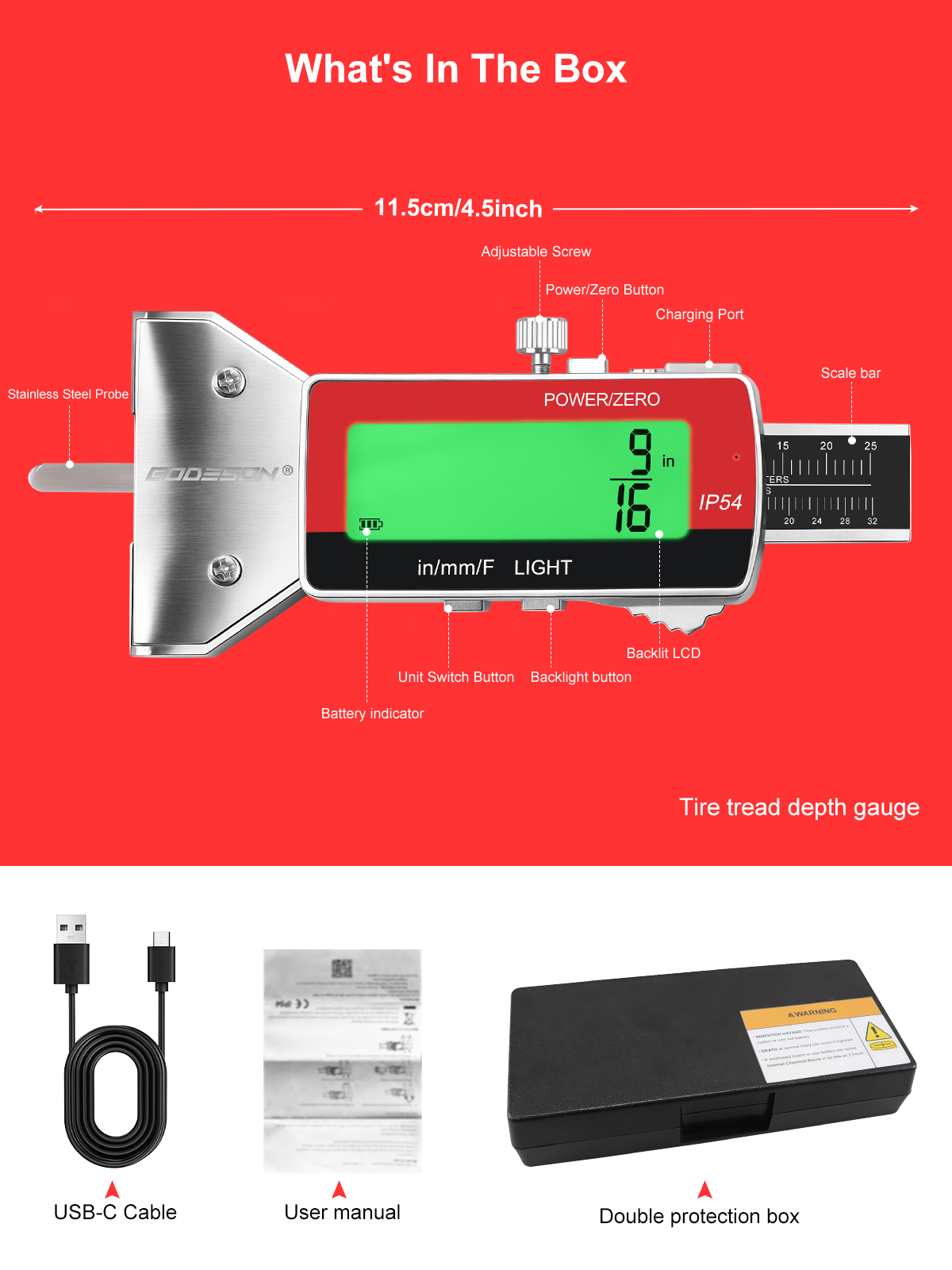
The visible product here is a handheld digital tire tread depth gauge with a red and black plastic housing, an LCD readout, and a slender probe that sits into the tread groove. The display supports mm/inch readout, and the buttons include ZERO, ON/OFF, and a unit toggle. That combination is simple, but it addresses the core need: measure tire wear quickly and repeatably without much setup.
The probe-style design is the important part. You place the flat base on the tread surface, extend the measuring tip into the groove, and read the depth on the screen. For buyers, that means less interpretation and fewer “close enough” judgments. It also makes it easier to compare readings across different tires or across the same tire over time, which is often where the real value lies.
Where a digital tread depth meter fits in day-to-day work
In a private garage, it helps answer a practical question: should this tire stay in service? That question comes up after long highway trips, before winter driving, or when a set of tires begins to age unevenly. A quick reading across the tread can show whether wear is even or whether one shoulder is dropping faster than the rest.
In fleet and service settings, the use case is broader. A technician may need to check multiple vehicles in a short window, and a digital gauge shortens the process. A manager can also use the readings as part of a maintenance log, especially when comparing tires across axles or identifying recurring alignment issues. The tool is not a substitute for a full inspection, but it gives a useful snapshot of tire condition.
There is another quiet advantage: digital readouts reduce argument. When a measurement is written down in millimeters or inches, it is easier to justify a replacement recommendation to a customer, driver, or internal purchasing team. That tends to matter more than people admit.
Key features buyers can actually use
Digital display
The LCD numeric display is the most obvious benefit. It removes the need to interpret a scale by eye, which is helpful when measuring in dim light or when the groove geometry is awkward. For teams that need a quick pass/fail check, a clear readout is often more practical than a purely analog tool.
Units in mm and inch
Being able to switch between millimeters and inches is useful in mixed working environments. Some technicians and shop processes are built around metric values, while others still think in fractions of an inch. A unit toggle avoids mental conversion errors, which are easy to make when a tire is nearing a replacement threshold.
Zero function
The ZERO button is a small feature that makes a real difference. Before a series of checks, it helps establish a baseline so the reading starts from a known reference point. In practice, that supports consistency between operators and between measurement sessions. It is a modest feature, but a practical one.
Probe and foot design
The slender probe with a flat foot lets the tool rest against the tire surface while the measuring tip enters the groove. That setup is better suited to tread measurement than a generic caliper or ruler, because tire grooves are not a flat surface and the probe is meant to follow that shape.
Why tread depth readings need context, not just a number
One mistake buyers make is treating tread depth as a single-issue decision. It is important, but it is not the whole story. A tire with acceptable depth can still be compromised by uneven wear, sidewall damage, age, or internal issues. Likewise, one tire with a low reading may be part of a broader pattern caused by alignment or inflation problems.
That is why a tread depth meter works best as part of a basic inspection routine. Check the inner, middle, and outer portions of each tire if possible. If one area is consistently lower than the rest, the problem may not be the tread itself but the condition causing it. A digital gauge makes those comparisons easier because the readings can be taken quickly and repeated without much strain.
How to compare tools when shopping
Buyers usually focus on display style, but the more useful comparison is how the tool fits the job. A simple digital tread gauge is typically enough for personal maintenance and routine shop checks. If the tool will live in a busy garage, you may care more about how easy it is to hold, whether the buttons are intuitive, and whether the readout is easy to read at a glance.
For procurement teams, the bigger question is not whether the device looks impressive. It is whether the gauge supports repeatable checks with low operator training. A compact digital unit with a probe and zero function is often easier to deploy across multiple users than a more complicated inspection device. That is especially true when checks must happen quickly, before a vehicle is released back into service.
Common buyer mistakes to avoid
The first mistake is measuring only one tire. Tread wear can vary from corner to corner, and the most worn tire is the one that matters most for decision-making. The second is measuring only one spot on a tire. Tread is not always uniform, and a single reading can hide uneven wear patterns.
Another common error is forgetting to set the unit mode or zero the gauge before starting. It sounds minor, but it can lead to inconsistent records. In a shop or fleet environment, those inconsistencies create confusion later when someone tries to compare last week’s reading with today’s.
There is also a practical warning worth stating plainly: do not assume a digital number alone tells you whether a tire is safe for every condition. Wet-weather performance, load, driving style, and road exposure all matter. A tread depth meter is a decision aid, not a verdict machine.
What the visible construction suggests about use
The red and black plastic housing suggests a lightweight handheld tool intended for everyday inspection rather than heavy industrial abuse. That is not a criticism. In automotive inspection work, compactness and speed often matter more than a bulky enclosure. The visible electronic display and measuring probe suggest a hybrid approach: simple enough to use manually, but precise enough to make the result readable in digital form.
Because the internal sensor type, exact range, and accuracy are not visible here, it is better to treat the device as a practical inspection instrument rather than a metrology instrument. That distinction matters. A tire shop can use a tool like this effectively for comparative wear checks and replacement decisions, even if it is not being used as a laboratory-grade gauge.
Practical workflow for reliable measurements
Start with a clean tire surface if possible. Stones, debris, or heavy mud can distort the reading or make the probe sit unevenly. Place the foot firmly on the tread and let the probe enter the groove without forcing it. Read the display once the tool settles.
Take measurements in several locations around the tire. On a single tire, that might mean inner, center, and outer grooves; on a set of tires, it means checking each wheel in the same way. Consistency matters more than speed once you are trying to compare data over time. If your team uses the gauge across multiple vehicles, a short standard operating method can save a lot of second-guessing later.
Who benefits most from this type of gauge
Individual drivers benefit because the tool makes routine tire checks easy enough to do at home. Fleet operators benefit because it supports preventive maintenance. Garages and inspection bays benefit because it helps document wear with a clear reading rather than a vague description. Even used-car prep teams can use a digital tread depth meter to sort vehicles that need attention before sale or transfer.
In each case, the decision being supported is similar: keep the tire in service, rotate it, inspect further, or replace it. That is a simple decision on paper, but in practice it affects safety, vehicle uptime, and budget timing. A small measuring tool can improve all three.
FAQ: a few questions buyers usually ask
Is a digital tread gauge better than a visual check?
For anything beyond a quick glance, yes. Visual checks are useful for spotting obvious damage, but they are poor at judging remaining depth accurately.
Is mm or inch more useful?
Either can work. Metric is often easier for service records, while inches may feel more familiar to some drivers. The useful part is having both available.
Can it help with uneven wear diagnosis?
Yes, at least at the first-pass level. If one part of a tire is wearing faster than another, repeated readings will usually show it. That does not replace a full mechanical inspection, but it helps identify where to look next.
A sensible next step for buyers
If you are evaluating a digital tire tread depth gauge for personal use or shop routines, focus on clarity, ease of use, and whether the tool supports consistent measurements across multiple tires. The GODESON Digital Tire tread depth gauge, based on the visible features here, is built around those practical needs: a digital display, a unit toggle, a zero function, and a probe-style measuring layout that suits everyday tread checks.
For sourcing teams and shop managers, the most useful test is not whether the gauge looks sophisticated. It is whether it helps users make the same decision the same way, day after day. That is usually what separates a handy inspection tool from one that sits in a drawer.