Why tread depth checks still matter, even on tires that “look fine”
A GODESON Digital Tire tread depth gauge is one of those small shop tools that can prevent a much bigger headache. Tires often wear unevenly, and the outer shoulder can look acceptable while the center or inner groove is already running thin. For engineers, fleet managers, service advisors, and anyone responsible for vehicle safety, that difference matters. The job is not just to measure a number; it is to decide whether a tire stays in service, gets rotated, or comes off the vehicle entirely.
That is why tread depth measurement keeps showing up in maintenance routines, pre-trip inspections, and used-car checks. A quick visual glance is useful, but it is not enough when the decision affects stopping distance, wet grip, or compliance with internal fleet policy. A digital tire tread depth gauge gives the user a simple reading from the grooves themselves, which is a better basis for action than guessing by eye.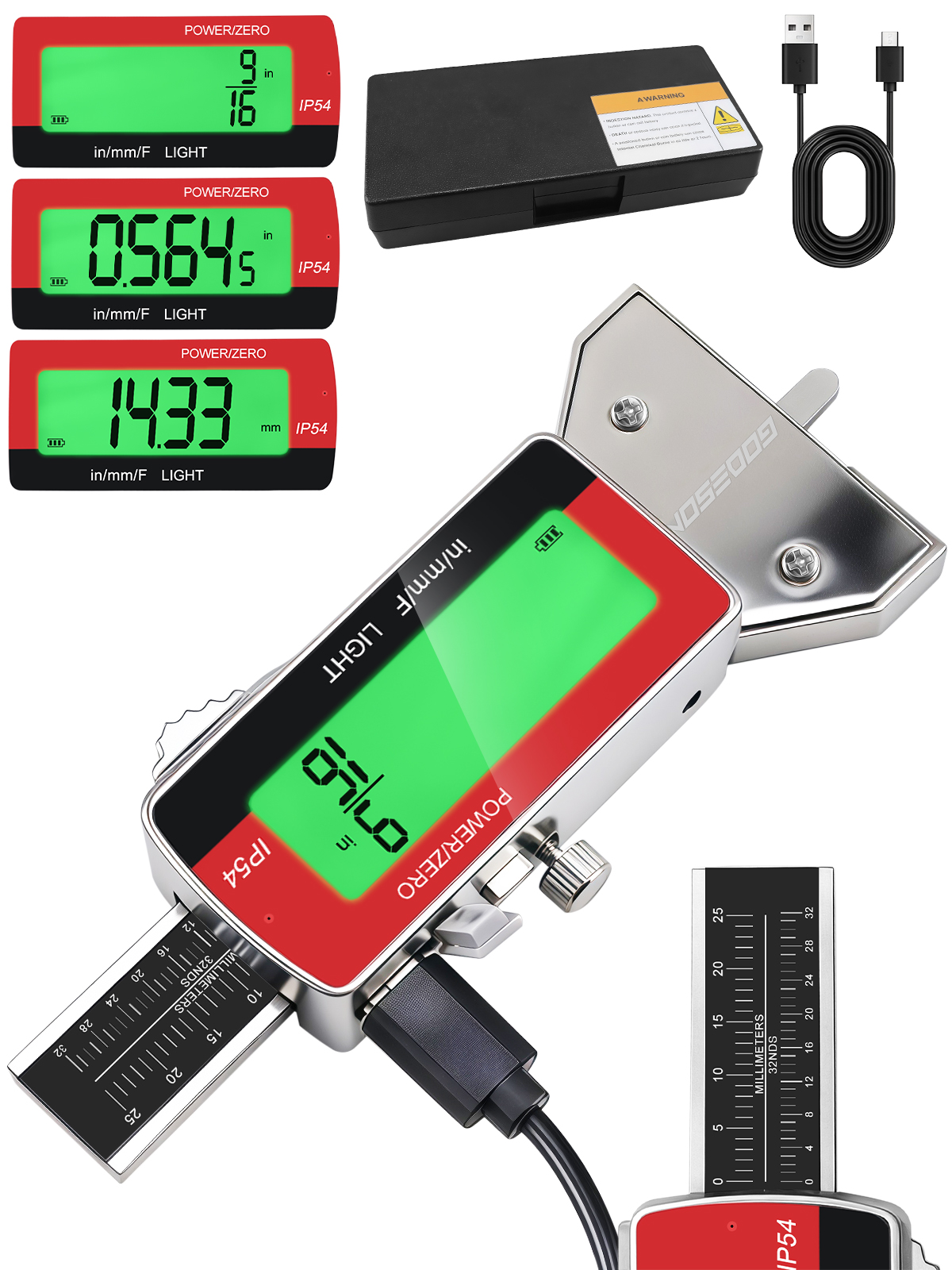
What this tool is designed to do
The product shown is a handheld digital tread depth gauge with a rectangular plastic body, a small LCD display, and a probing stem that reaches into the tire groove. The visible layout is straightforward: a red and black housing, a turquoise measuring stem, and a metal probe tip that makes contact inside the tread.
The display shows tread depth in both mm and inch units, which is useful when teams work across different reporting standards. The button layout also suggests typical measuring functions such as unit switching, zeroing, and power control. In practice, that makes the gauge easy to hand from one technician to another without much explanation.
For buyers, the main point is simple: this is a tire depth gauge intended for repeatable inspection work, not a decorative gadget. It is aimed at tire shops, auto repair facilities, fleet service teams, vehicle inspection stations, and individual drivers who want a more exact tire check before a long trip or a vehicle sale.
Where a digital gauge has an edge over a quick visual check
Tread depth is one of those measurements that should not be left to judgment alone. Two tires can look similarly worn from a distance and still read very differently once the probe is placed into the groove. That matters especially when wear is uneven, a tire has been rotated late, or a suspension issue has caused one side to lose tread faster than the rest.
A digital gauge helps in three practical ways:
First, it shortens inspection time. A technician can move from tire to tire without needing a separate scale or ruler.
Second, it reduces argument. A digital reading is easier to record, show to a customer, or include in a fleet maintenance log.
Third, it supports better threshold decisions. When a company has a replacement policy tied to tread condition, the gauge helps make that policy more consistent.
That said, the tool is only as good as the user’s technique. A probe must sit correctly in the groove, and the reading should be taken at the worn area that actually represents the tire’s condition. That sounds obvious, but in a busy shop people sometimes rush the process and read the first number they see.
How the measurement works in plain terms
The mechanism is simple. The metal probe tip is inserted into the tread groove, and the body of the gauge provides a digital reading on the LCD screen. The visible design indicates a direct depth measurement rather than an indirect estimate. The mm/inch display gives the user flexibility depending on shop practice or customer preference.
A setup like this is useful for multiple inspection contexts:
Tire shops
Service advisors can quote tread condition with more confidence, especially when comparing the same tire across rotations or follow-up visits.
Fleet maintenance
Fleet teams need repeatable inspection tools because one vehicle’s tire condition has to be compared with the rest of the group. A digital gauge helps standardize that process.
Auto repair and safety checks
When customers report noise, pulling, or poor wet traction, tread depth is one of the first checks to perform.
Personal vehicle use
Drivers can verify whether a tire still has useful tread before a road trip, seasonal change, or private sale.
Selection criteria buyers should think about
When evaluating a digital tire tread depth gauge, buyers usually focus on a few practical questions rather than a long spec sheet.
Readability
The screen should be easy to read in a workshop environment. Bright lighting, dirty hands, and awkward angles are the norm, not the exception.
Unit display
A gauge that supports both mm and inch readings is easier to use across different teams and customer formats. The visible buttons on this unit indicate that dual-unit use is part of the design.
Probe feel
A good probe should enter the groove smoothly without excessive wobble. Users do not want a tool that feels delicate when it is being used on rough tire surfaces.
Grip and housing
The red and black plastic body shown here looks sized for handheld use. In the real world, that matters because technicians work fast, sometimes with gloves on, and often while holding a wheel or kneeling beside a vehicle.
Workflow fit
The tool should fit the shop’s inspection process. If data must be recorded repeatedly, consistency matters more than flashy features.
Common mistakes when measuring tread depth
Even a basic gauge can be misused, and that leads to bad decisions.
One common mistake is checking only one spot on each tire. Tires often wear unevenly, so a single reading can miss the most worn area.
Another is ignoring the inner and outer shoulders. Those edges can be telling, especially when alignment or inflation issues are in play.
A third mistake is pushing too hard or placing the probe at an angle. The result may still show a number, but it may not be the right one.
Finally, some buyers treat the tool as a replacement for inspection judgment. It is not. A tread depth reading is one part of a broader tire assessment that can also include wear pattern, sidewall condition, and visible damage.
Practical buying advice for sourcing teams
If you are sourcing this kind of automotive inspection tool for a shop, fleet, or retail program, it helps to separate visible features from unverified claims.
The visible feature set here is clear: digital LCD readout, mm/inch display, zero function, on/off control, and a metal probe for groove measurement. Those are enough to establish the tool’s role in tire inspection.
What should be handled carefully are details that are not supplied, such as measurement range, accuracy, battery type, calibration status, ingress protection, or packaging contents. Those are important procurement questions, but they should be confirmed directly with the supplier rather than assumed from appearance.
For product teams and sourcing managers, the real buying decision is whether the tool matches the intended user and the expected usage frequency. A counter display and probe are sufficient for basic inspection work, but higher-volume operations may also want to ask about consistency between units, replacement policy, and any calibration documentation available from the seller.
When this tool adds the most value
This gauge is most useful when the stakes are practical rather than theoretical. A fleet manager deciding whether a van can leave the depot. A used-car inspector trying to document tire condition before closing a sale. A tire shop writing up a recommendation that a customer can actually understand. In those situations, a digital reading is faster and easier to defend than a hand-wave.
It is also helpful when the organization wants a simpler inspection culture. Not every workshop needs a complex measuring system. Sometimes the right choice is a compact handheld gauge that can be picked up instantly, used on any passenger vehicle tire, and put back in a drawer without fuss.
FAQ for buyers and users
Is a digital tread depth gauge better than a manual one?
Not always better, but often easier to read. Digital display reduces interpretation errors, which helps in busy service environments.
Why does dual-unit display matter?
It allows teams to work in the unit they prefer and makes reporting more flexible when customers or records use different measurement systems.
Can it be used on personal vehicles?
Yes. It is suitable for basic owner-level checks as well as professional inspection use.
Should tread depth be measured at just one point?
No. Multiple points across the tread usually give a better picture of real wear.
What to ask before placing an order
Before buying a batch of gauges, ask for the items that are not visible in the product photos. Confirm measurement range, accuracy, power source, and whether there are any replacement or spare-part considerations. If the tool will be used in a shop environment, also ask how it should be stored and whether the supplier provides any operating guidance.
Those questions may sound routine, but they prevent disappointment later. A tool can look solid and still be a poor fit if it does not match the user’s workflow.
Final buyer takeaway
A GODESON Digital Tire tread depth gauge is a compact inspection tool built for one job: giving a direct digital reading of tire tread depth. Its value lies in simplicity, dual-unit readability, and ease of use in everyday automotive inspection work. For buyers, the key is not to overcomplicate it. Focus on the visible function, confirm the unlisted technical details with the supplier, and judge the tool by how well it supports real tire-checking decisions in the shop, on the fleet line, or at the customer’s driveway.
If your team needs a straightforward tire depth gauge for routine inspections, this style of digital instrument is worth shortlisting. The right next step is to verify the technical specs that are not shown and compare them against your actual inspection process, not just the product photo.