


Why a digital tread gauge belongs on the bench, not in the glovebox
A GODESON Digital Tire tread depth gauge is one of those small tools that can save a mechanic, fleet manager, or careful driver from a much bigger problem later. Tire tread is not just a number on a screen; it is the part of the tire that manages water evacuation, grip, braking confidence, and wear monitoring. Once it gets too shallow, the margin for error narrows fast, especially on wet pavement or in stop-and-go service use.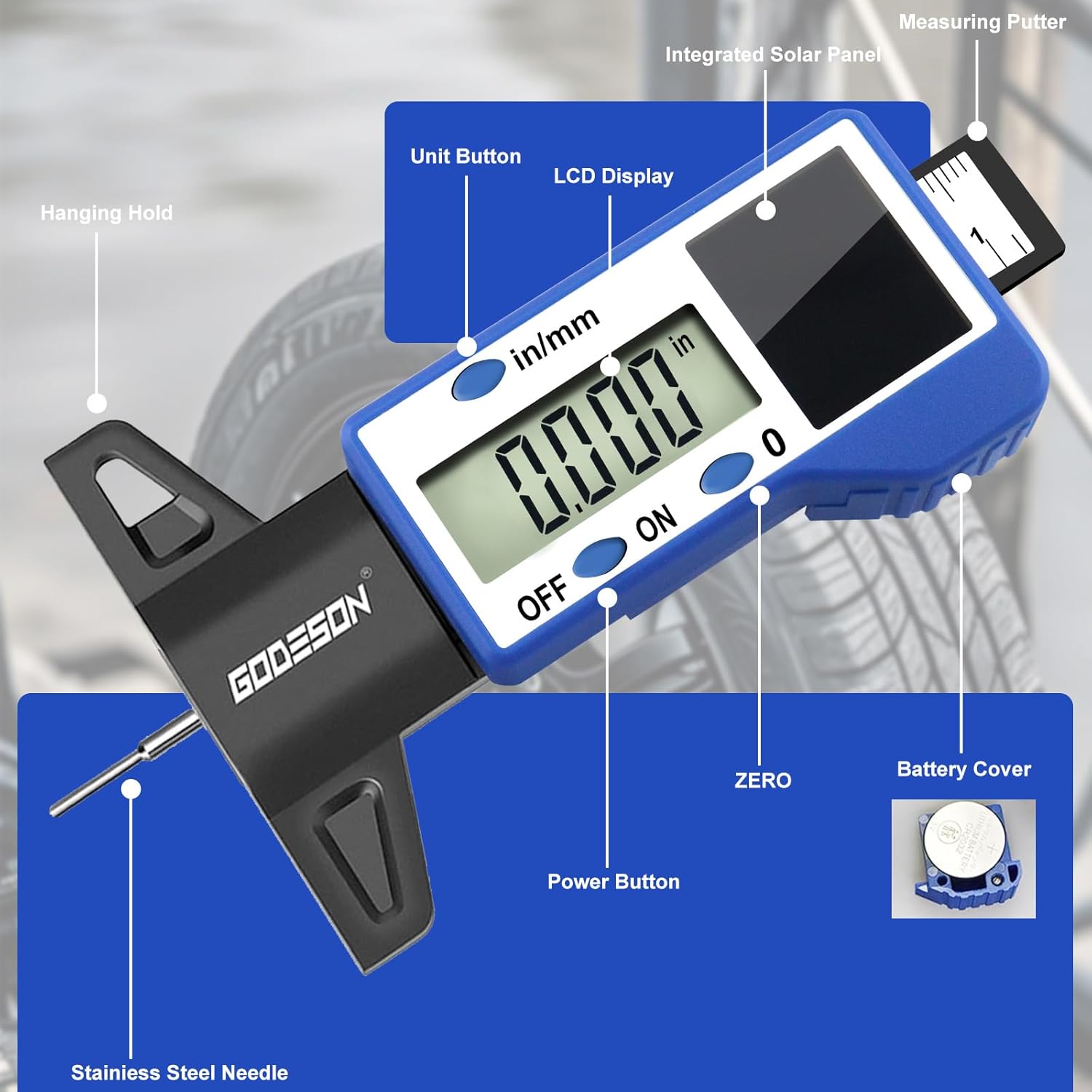
For sourcing teams and workshop buyers, the decision is less about whether tread depth matters and more about what kind of gauge makes daily checks efficient. A compact digital model like this is aimed at fast inspection work: press the foot on the tread, read the display, reset if needed, and move to the next tire. That sounds simple, but in a shop environment simplicity is value.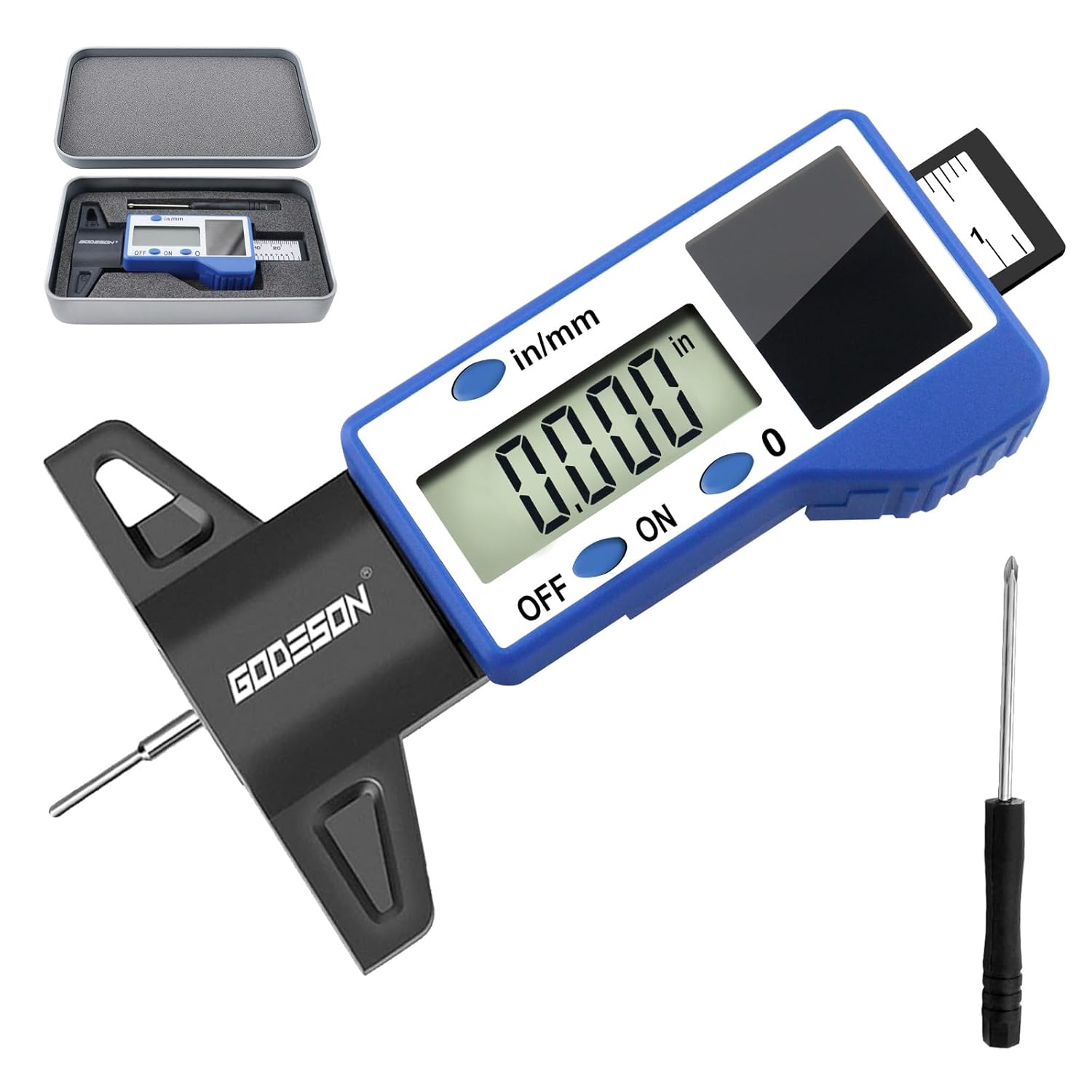
What this gauge is designed to do
The product falls into the digital tire tread depth gauge / tread depth meter category. Based on the visible design, it uses a handheld electronic layout with a red main housing, black base foot, narrow measuring probe, LCD display, and control buttons marked mm/inch, ZERO, and ON/OFF. The body appears to be mostly molded plastic with a ribbed grip, while the probe looks metallic. It is compact enough for pocket carry, inspection carts, or service counters.
That combination tells you the intended use case pretty clearly: quick tire wear inspection in automotive maintenance, fleet checks, pre-trip inspections, and tire retail or service settings. The unit’s dual-unit display is useful because different shops and regions still speak in different measurement habits. The ZERO function is also practical. In the field, a reset button can save time when you are checking several tires in succession and need the instrument to return to a known baseline.
Why tread depth checks matter to buyers and operators
Tread depth is one of those maintenance items people ignore until weather changes or tires start wearing unevenly. For a passenger car, the difference between a healthy tread pattern and a worn one is not academic. It affects wet traction, road noise, steering feel, and the likelihood of replacement being delayed past the sensible point.
Fleet operators have a different but equally pressing reason to care. A neglected tire can create inspection failures, roadside downtime, and avoidable replacement costs. Tire shops and service centers, meanwhile, need a repeatable way to show customers why a tire should be rotated, replaced, or monitored more closely. A digital gauge gives the technician a clear reading quickly, which helps reduce argument at the counter. That alone is worth something.
Quick comparison: what users usually want from a tread depth meter
A buyer looking at a digital tire tread depth gauge usually wants four things:
1. Readability
The LCD display matters because a numeric readout is faster to interpret than a simple pointer or molded scale, particularly under fluorescent shop lighting or outdoors in poor weather.
2. Ease of reset
A ZERO button is not a luxury. It is a workflow feature. In repeated inspections, being able to zero the instrument helps reduce confusion and speeds up the job.
3. Measurement flexibility
mm/inch switching is a small but useful detail. It makes the tool easier to deploy across different service teams or customer reporting styles.
4. Physical handling
The molded grip and compact rectangular body suggest it is meant to be handled with gloves on. That is not trivial. Workshop tools live in greasy hands, cold weather, and busy pockets. A tool that slips becomes a nuisance quickly.
How the form factor supports day-to-day use
The visible shape is more important than it first appears. A flat foot gives the gauge a stable contact point on the tread surface. The narrow probe can reach down into the groove where wear is actually measured. That geometry is the whole job: stable on top, precise below.
The red-and-black housing also serves a practical purpose beyond appearance. In a cluttered service bay, bright color improves visibility. People may think color is cosmetic, but a tool that can be found quickly is a tool that gets used more often. The white glove in the product image reinforces the idea that this is a hands-on inspection instrument rather than a bench-only device.
One caution, though: the image does not show enough to claim exact internal sensing technology, calibration method, accuracy class, or environmental protection. Buyers should not assume those points. If the gauge will be used in a harsh commercial setting, it is worth confirming those details before making it a standard issue item.
Selection criteria for engineering and purchasing teams
When evaluating a digital tread gauge for procurement, the obvious features are only the starting point. The practical questions tend to be more revealing.
Ask whether the display remains easy to read at arm’s length. A crisp LCD matters in field use, not just on a product page. Check whether the buttons feel positive enough for repeated operation with gloves. Review whether the unit has a sensible zeroing process that technicians can understand without training.
Also consider the broader workflow. If the gauge is meant for service counters, then quick readings and simple explanation matter more than fancy extras. If it is for fleet inspection, durability and consistency across multiple users become more important. If it is intended for retail tire sales, then the presentation matters too, because the tool is part of the trust-building process with the customer standing beside the vehicle.
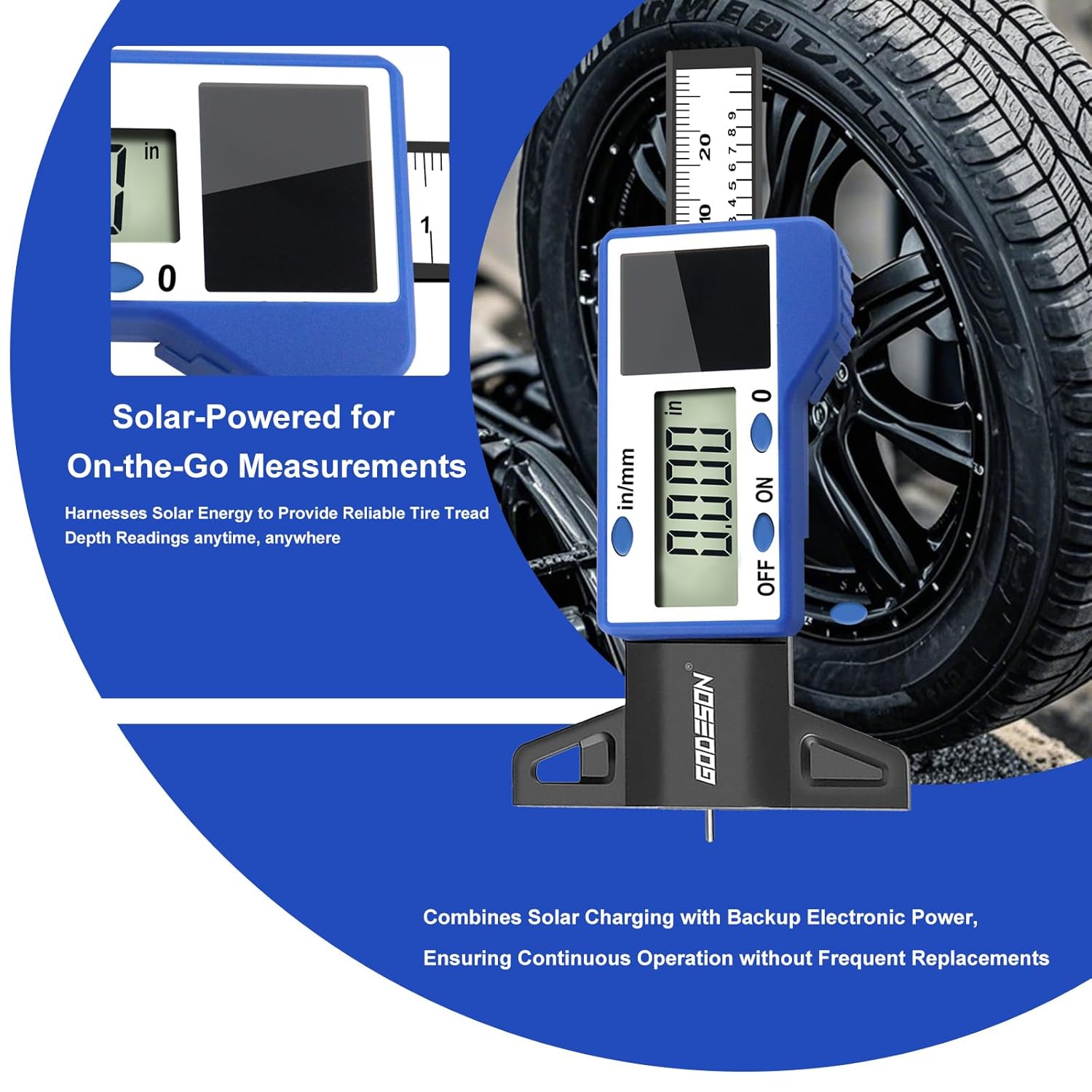
And yes, battery dependence is worth thinking about, even if the product image suggests a battery-powered electronic unit without showing the cell type. In shared shop use, a dead battery at the wrong moment can create unnecessary delay. Spare batteries or a routine check schedule can prevent that.
Common mistakes when measuring tread depth
The instrument is only as useful as the method behind it. One common error is taking a reading from a single spot and treating it as the whole story. Tire wear is often uneven. Inner and outer edges may differ from the center, and the center can differ from the shoulders. A quick reading is useful, but a few readings across the tread tell a more honest story.
Another mistake is pressing the gauge at an angle or on a dirty tread surface. Dust, stones, and road film can affect where the probe lands. In practice, a technician should clear the groove if needed and keep the tool aligned so the foot sits flat. It is not a delicate procedure, but it does reward discipline.
There is also a tendency in some shops to use the gauge only after a tire is obviously worn. That is too late for good maintenance planning. Regular monitoring gives the team a chance to rotate tires earlier, budget replacements properly, and avoid those awkward conversations when a set has been driven too far.
Where this style of gauge fits best
This type of digital tread depth meter is a good fit for tire service shops, fleet maintenance teams, inspection stations, dealerships, and automotive safety programs. It is also useful for retail staff who want to support a tire replacement recommendation with a visible reading rather than a vague opinion.
It may be less suitable for users who want a ruggedized inspection instrument for extreme field abuse, unless the supplier can document the relevant durability specs. The product design shown here looks serviceable and practical, but not overbuilt. That is fine for many indoor and light-duty environments.
What the product details suggest, and what they do not
The visible build suggests a straightforward electronic measuring instrument assembly: molded plastic casing, metal probe, LCD readout, and simple control buttons. That is a sensible construction for this category. It balances cost, portability, and ease of use.
What it does not tell us is equally important. We do not have verified information on accuracy, probe alloy, battery chemistry, dust or water resistance, or whether the unit is suitable for other applications beyond tire tread measurement. Buyers should treat those as open questions rather than assumptions.
That caution matters because measurement tools often look more capable than their actual specification sheet. In procurement, appearance is not performance. A clean display and a tidy housing are useful, but they are not a substitute for documented specs.
Practical buyer advice before placing an order
If you are sourcing this for a shop or fleet environment, start with the end use. Will one technician use it all day, or will it be passed around? Will it live at a service bay, in a mobile van, or at the front desk? Those answers shape how much weight you should give to handling, display visibility, and battery management.
It is also smart to ask for consistent product documentation. A tool like this is easy to specify once you know the display units, reset function, and form factor. But if your team needs conformity to an internal inspection procedure, you will want the supplier to confirm the specification details in writing. That saves time later, and it avoids awkward returns based on misunderstandings.
What decision this article should help you make
If your need is a straightforward, easy-to-read digital tire tread depth gauge for routine inspections, this GODESON unit fits the basic job profile well. It looks built for fast measurement, simple operation, and practical shop use. The dual-unit display, zero function, and compact body are exactly the sort of features that make a tool useful in daily maintenance rather than just acceptable on paper.
If, on the other hand, your purchasing decision depends on hard requirements such as certified accuracy, environmental protection, or special application compatibility, you should verify those points before committing. That is not a weakness of the tool category; it is simply good buying practice.
For teams comparing options, the next step is to request the full specification sheet, confirm the intended measurement use, and decide whether this gauge matches your inspection workflow. In a market full of look-alike tools, the best choice is usually the one that technicians will actually use correctly every day.





