


Discovering the GODESON Bicycle Tire Pressure Gauge: A Rider's Essential Tool
As a dedicated cyclist navigating the bustling streets and winding trails, I often find myself reflecting on the small yet pivotal tools that elevate my riding experience. Among these, the GODESON Bicycle tire pressure gauge stands out as a game-changer, ensuring that every pedal stroke is supported by optimal tire performance. This compact device has become my go-to companion, blending precision with portability in a way that transforms routine maintenance into a seamless ritual. In the world of cycling, where tire pressure directly influences speed, comfort, and safety, having a reliable gauge like this one makes all the difference, preventing flats and maximizing efficiency on every journey.
Unveiling the Design and Features That Set It Apart
The journey with the GODESON Bicycle tire pressure gauge began on a crisp morning when I unpacked it from its sleek red casing, immediately impressed by its ergonomic build that fits perfectly in the palm of my hand. Crafted with a user-friendly interface reminiscent of innovative tools like the Eflate, it features a simple one-button operation for venting and resetting, allowing me to check pressure without fumbling through complicated steps. What truly captivates is its battery-free mechanism, relying on mechanical ingenuity rather than electronics, which means it's always ready, no matter how long it's been tucked in my saddlebag. The shock protection encasing adds a layer of resilience, perfect for the vibrations of off-road adventures or the daily commute over pothole-ridden roads. As I attached it to my bike's valve for the first time, the clear pressure reading displayed effortlessly, holding steady until I was ready to note it down—a feature that eliminates guesswork and ensures accuracy every time.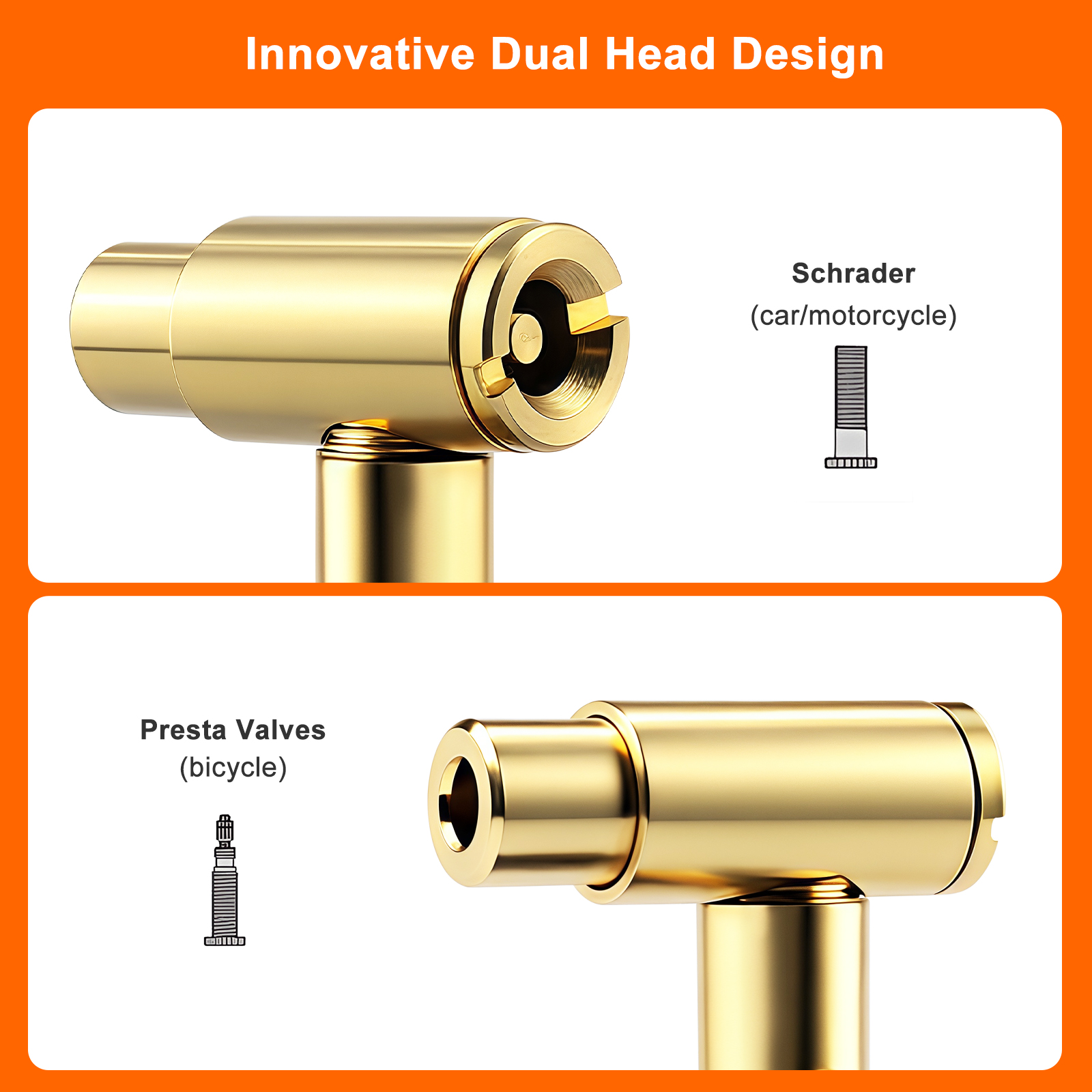
This gauge's thoughtful design extends to its vibrant exterior, not just a visual treat but a practical choice that makes it easy to spot in a crowded toolkit. Drawing from robust construction principles, it withstands the rigors of frequent use, whether I'm inflating tires before a long-distance tour or making quick adjustments during a group ride. The pressure-holding function is particularly ingenious; it locks in the measurement, giving me the freedom to move without losing the data. In my experiences, this has saved countless seconds, turning what could be a tedious task into a fluid process that keeps me focused on the road ahead. For fellow riders who value durability alongside simplicity, the GODESON Bicycle tire pressure gauge embodies a perfect harmony, proving that high-quality tools don't need to be overly complex to deliver exceptional results.
Integrating It into Your Daily Cycling Routine
Incorporating the GODESON Bicycle tire pressure gauge into my routine felt like adding a trusted ally to my cycling arsenal, one that quietly enhances every outing. I recall a weekend expedition through forested paths where underinflated tires could have spelled disaster, but a quick check with the gauge revealed the need for adjustment, averting potential slips on uneven terrain. Its effortless operation shines in these moments—press the button, align with the valve, and read the precise PSI or bar measurement without any air leakage or resets mid-process. This reliability extends to urban cycling too; during rush-hour checks, its compact size slips easily into a jersey pocket, ready for impromptu verifications that keep my rides safe and smooth.
Beyond the basics, the gauge encourages a proactive approach to bike care, prompting me to monitor pressure variations influenced by temperature shifts or load changes. For instance, on cooler evenings, I've noticed subtle drops that the device picks up with unerring accuracy, allowing preemptive pumps to maintain that ideal balance between grip and rolling resistance. The absence of batteries is a boon for extended trips—no frantic searches for replacements in remote areas. Paired with its shock-resistant build, it travels unscathed through gravel paths or bumpy city streets, emerging ready for the next use. Riders like me, who blend leisure with performance cycling, appreciate how this tool fosters confidence, knowing that well-maintained tires translate to fewer breakdowns and more enjoyable miles.
The Broader Impact on Cycling Safety and Performance
Reflecting deeper, the GODESON Bicycle tire pressure gauge has reshaped my understanding of how minor details amplify overall cycling prowess. Proper tire pressure isn't just about avoiding punctures; it's about optimizing energy transfer, reducing rolling resistance, and enhancing handling in corners or during sudden stops. Through numerous rides, I've seen firsthand how consistent monitoring with this gauge improves fuel efficiency on my hybrid bike and extends tire lifespan, saving both time and money in the long run. Its precise readings, often within 0.1 PSI accuracy akin to professional-grade equipment, empower me to fine-tune pressures for specific conditions—higher for speed on flats, lower for traction on trails.
In a community of cyclists sharing stories around the local shop, conversations often circle back to tools like this one, highlighting its role in preventive maintenance. The one-button venting feature allows safe deflation if overpressurized, a safeguard I've used to correct hasty inflations at gas stations. Environmentally, it promotes sustainability by encouraging longer tire life and efficient riding, aligning with my eco-conscious habits. For beginners dipping their toes into cycling, this gauge demystifies maintenance, making it accessible and less intimidating. As seasons change, from summer heat expansions to winter contractions, it remains a steadfast guide, ensuring my bike performs at its peak.
Why Every Cyclist Should Embrace This Innovation
Ultimately, the GODESON Bicycle tire pressure gauge has woven itself into the fabric of my cycling narrative, a silent hero in the pursuit of smoother, safer adventures. Its blend of simplicity, durability, and precision mirrors the essence of what great cycling gear should be—unobtrusive yet indispensable. Whether you're a casual rider pedaling to work or an enthusiast tackling marathons, integrating this tool elevates your experience, fostering a deeper connection with your bike. In the ever-evolving world of cycling accessories, it stands as a testament to thoughtful engineering, reminding us that true innovation lies in enhancing the fundamentals. With each use, it reaffirms my passion for the ride, turning potential hassles into moments of empowerment and joy on two wheels.





