Efficiency and Accuracy Combined: OEM Digital Tire Inflators for Fleet Maintenance
The Cost of Inaccurate Inflation in Fleet Operations
Fleet maintenance teams face one universal challenge: balancing time efficiency with tire accuracy. Underinflated or overinflated tires are not only a performance issue—they are a profit drain.
Research from the European Tyre and Rim Technical Organisation (ETRTO) shows that just a 10% drop in tire pressure can raise fuel consumption by 2% and shorten tire lifespan by 15%.
For logistics firms managing hundreds of vehicles, that margin translates into thousands of dollars lost each quarter.
To address this, modern fleet operators are turning to digital tire inflator OEM solutions that merge rapid inflation with uncompromising accuracy.
Inside the Technology: How Digital Inflators Deliver Repeatable Accuracy
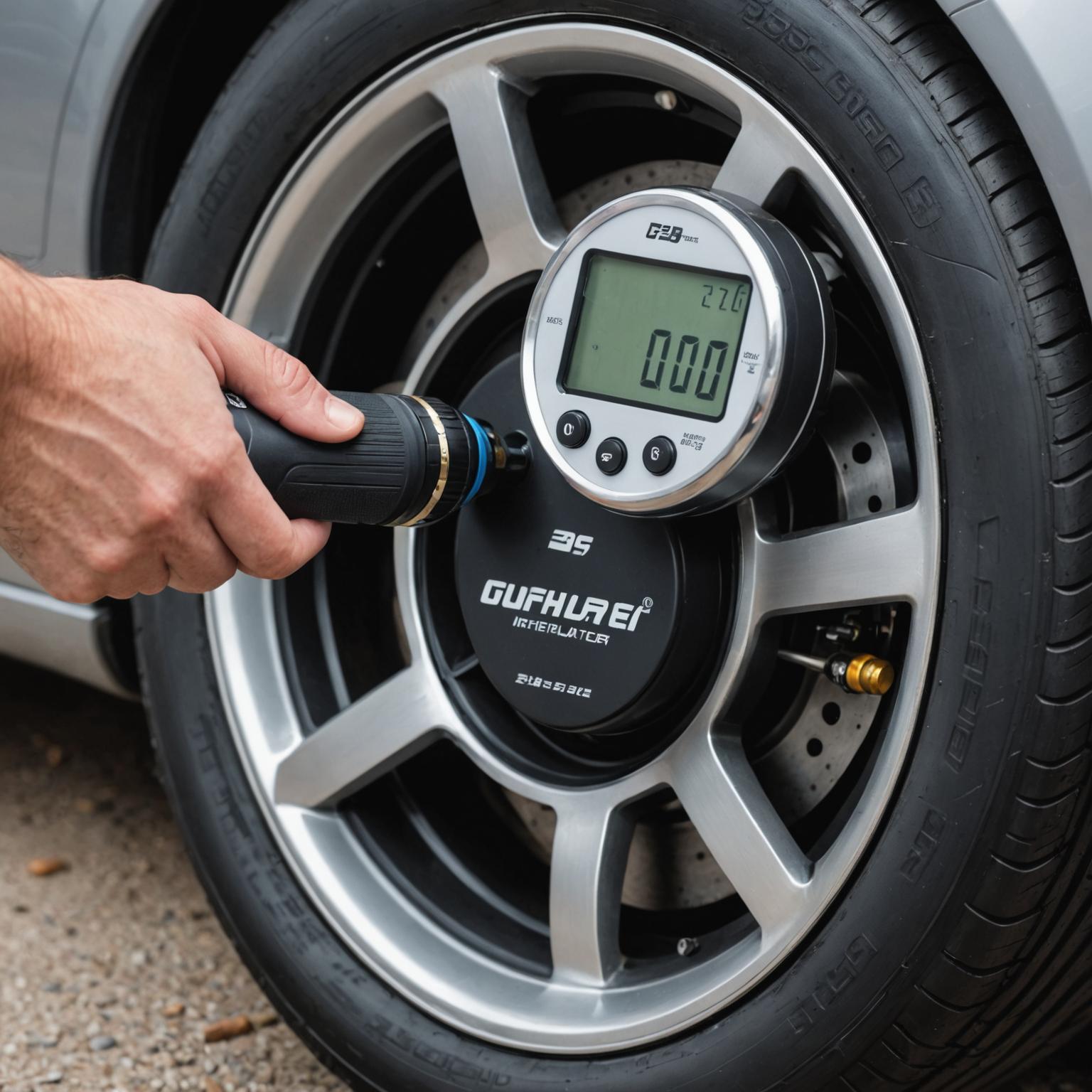
Traditional mechanical inflators rely on manual feedback and operator experience. By contrast, digital inflators apply electronic sensors and microcontrollers that measure and regulate air pressure automatically.
ATSAFEPRO’s OEM-grade inflators employ industrial-level pressure transducers and self-calibrating chips to maintain accuracy within ±0.5 PSI, even under continuous use.
Key design principles include:
-
Real-time feedback via high-contrast digital displays.
-
Auto-shutoff when the exact pressure is reached.
-
Multi-unit calibration (PSI/BAR/KPA) for international adaptability.
-
Industrial-grade sealing to prevent air leakage in high-cycle environments.
This integration of mechanical durability with digital precision forms the backbone of reliable, scalable fleet maintenance systems.
Evaluating Performance: Digital vs. Mechanical Inflators in Fleet Settings
| Criteria | Digital Tire Inflator | Mechanical Tire Inflator |
|---|---|---|
| Accuracy Stability | ±0.5 PSI over long-term use | ±1 PSI, manual-dependent |
| Maintenance Needs | Periodic calibration | Minimal upkeep |
| Operational Speed | 30–40% faster inflation cycles | Operator-dependent |
| Power Source | AC/DC or rechargeable | None required |
| Data Integration | Compatible with fleet software | Not available |
| Best Fit | Modern fleet depots and logistics hubs | Workshops and smaller garages |
While mechanical inflators remain durable and cost-efficient, digital systems deliver measurable ROI in large-scale fleet operations—particularly where speed, traceability, and compliance reporting are priorities.
Integrating OEM Solutions Into Fleet Maintenance Workflows
In a logistics environment, workflow optimization determines competitiveness. ATSAFEPRO’s OEM digital tire inflators are designed for structured integration across maintenance checkpoints:
-
Rapid Tire Inspection – Technicians use digital inflators to confirm and adjust pressure in less than 30 seconds per wheel.
-
Fleet-Wide Standardization – Unified PSI calibration ensures consistent tire performance across depots and routes.
-
Data-Driven Decisions – Optional modules record inflation data for predictive maintenance analytics.
-
Localized Configuration – OEM customization allows regional unit preferences, power inputs, and language interfaces.
By embedding these inflators into regular maintenance routines, fleets reduce downtime, extend tire lifespan, and lower operational costs.
Strategic Insights: What Fleet Managers Should Consider Before OEM Adoption
Before selecting an OEM partner, buyers must balance cost with lifecycle performance and customization capability.
Here’s what defines a reliable digital tire inflator OEM:
-
Engineering Maturity: The supplier’s track record in precision manufacturing and ISO-certified quality control.
-
Customization Depth: Options for branding, pressure unit variations, and functional adaptations.
-
After-Sales Infrastructure: Global warranty coverage and calibration support networks.
-
Regulatory Compliance: CE, ISO, and ETRTO conformity for international markets.
ATSAFEPRO meets these criteria through a vertically integrated production model, ensuring full control over design, manufacturing, and export logistics.
Practical Guidance for Fleets Transitioning to Digital Inflation Systems
For fleets currently relying on manual or semi-mechanical inflators, a phased upgrade strategy minimizes disruption:
-
Start with Critical Routes: Deploy digital inflators on high-mileage vehicles to monitor efficiency gains.
-
Train Maintenance Teams: Introduce calibration best practices and digital interface familiarity.
-
Analyze Data Outputs: Use recorded PSI trends to refine preventive maintenance intervals.
-
Scale Gradually: Expand implementation once fuel savings and reduced tire wear are verified.
This data-backed transition ensures both economic and operational sustainability.
Precision as a Competitive Advantage
As logistics networks evolve toward automation, the margin for error in maintenance shrinks. A reliable OEM partner like ATSAFEPRO transforms tire care from a manual process into a measurable, optimized system.
By combining accuracy, efficiency, and customization, ATSAFEPRO’s OEM digital tire inflators help fleets achieve consistent performance across regions and climates—turning maintenance precision into long-term profit.
Explore more about ATSAFEPRO’s digital inflator OEM programs on the homepage or reach our team via the contact page for partnership inquiries.