


Check Tire Tread Depth: A Simple Step That Keeps You Safer on the Road

  • blog
Posted by ATSAFEPRO On Sep 03 2025

 tire tread depth gauge

Check Tire Tread Depth: A Simple Step That Keeps You Safer on the Road

Why Tread Depth Matters for Safety

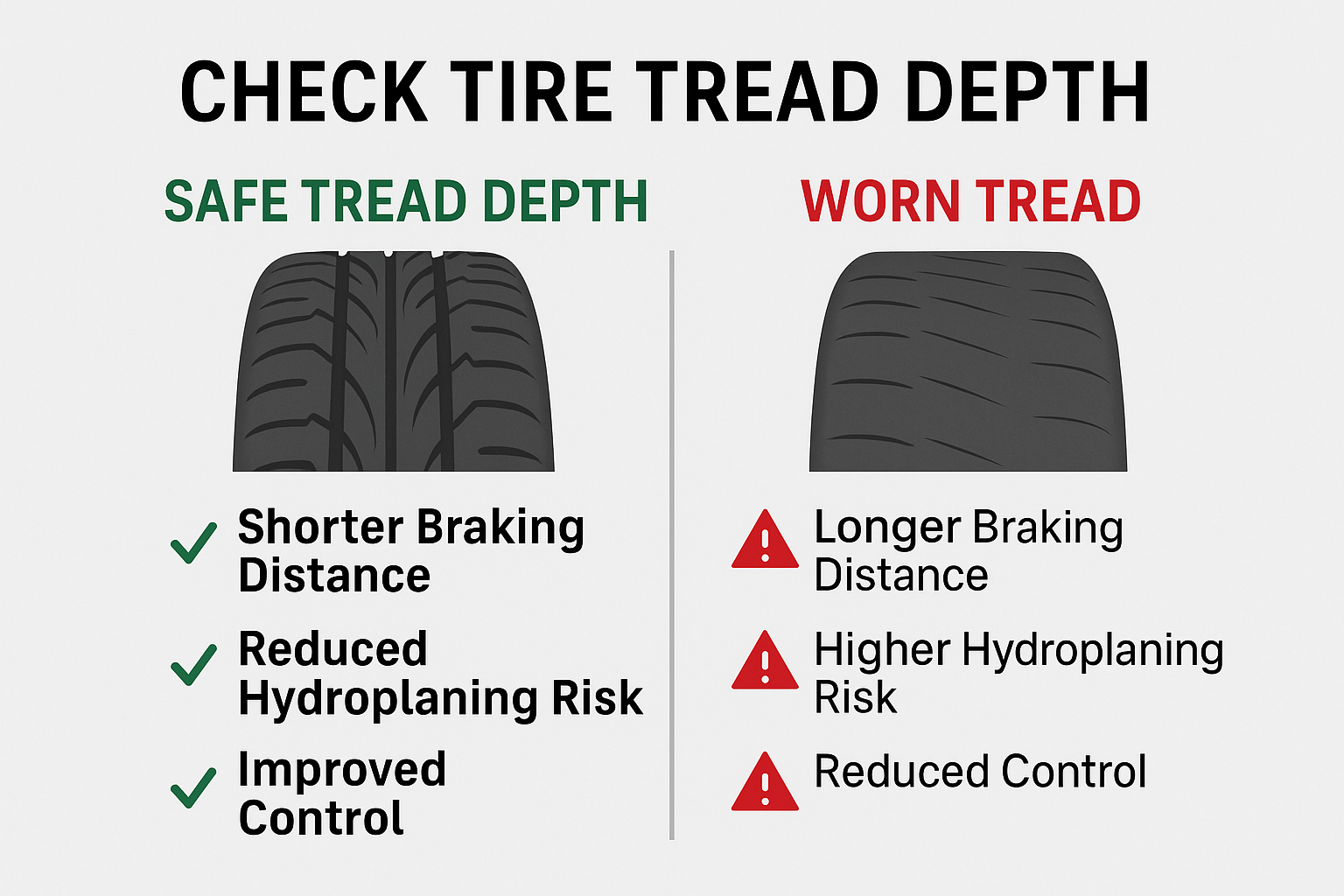
Tires do more than carry your car—they determine how well it grips the road. Tread depth directly impacts braking distance, handling, and control on wet surfaces. According to the National Highway Traffic Safety Administration (NHTSA), tires with shallow tread are responsible for thousands of accidents every year, especially in rainy conditions where hydroplaning is common. When you check tire tread depth regularly, you’re not just prolonging tire life—you’re actively protecting yourself and your passengers.

The Risks of Ignoring Tread Depth

Driving with worn tires doesn’t always feel dangerous—until it’s too late. With tread below 2/32 of an inch, water can no longer be channeled away effectively, leading to skids in rain and longer stopping distances. On highways, this difference can be life-threatening. Even in dry conditions, worn tread reduces cornering stability and can cause uneven wear patterns that shorten overall tire lifespan. These risks highlight why tread checks are as essential as tire pressure checks.

How to Check Tire Tread Depth at Home

Many drivers assume tread checks require a mechanic, but it’s easy to do yourself:

  • The Coin Test: Inserting a coin into the tread can give a quick estimate, but it lacks accuracy.

  • Tread Wear Indicators: Built-in wear bars across tires show when they’re approaching the limit.

  • Tread Depth Gauges: Tools like the ATSAFEPRO tire tread depth gauge give precise measurements in millimeters or 32nds of an inch. This accuracy ensures you know exactly when it’s time to replace your tires, not just guess.

Real-Life Scenarios That Prove the Value

  • Daily Commuting in Rain: Proper tread helps channel water away, reducing hydroplaning.

  • Family Road Trips: Long hours and heavy loads make tread checks even more critical.

  • Winter Driving: Adequate tread depth improves traction on snow and ice.

  • Used Car Inspections: A quick gauge reading tells you if a “good deal” on tires is really worth it.

ATSAFEPRO Tools That Simplify the Process

The ATSAFEPRO digital tread gauge provides easy-to-read measurements with backlit screens, so you can check tires even in low light. Durable and portable, it’s a practical tool to keep in your glove box. For those who prefer analog simplicity, ATSAFEPRO also offers color-coded tread gauges that instantly show safe, warning, or replace levels. Whichever style you choose, accuracy is guaranteed.

How Often Should You Check Tread Depth?

Experts recommend inspecting tread every 3,000 miles or once a season. If you live in areas with frequent rain or snow, check more often. Pairing this habit with monthly tire pressure checks creates a complete tire care routine that significantly reduces your risk of accidents.

A Routine That Keeps You in Control

When you check tire tread depth at home, you’re taking control of one of the most important safety factors on your vehicle. With tools like the ATSAFEPRO tread depth gauge, it takes only minutes to ensure your tires are ready for the road ahead. Don’t wait for warning signs—stay ahead of problems with regular checks.

Explore ATSAFEPRO’s tread depth gauges or reach out via Contact Us to find the right tool for your vehicle.


Featured Blogs

Tag:

  • Blog
Share On
Featured Blogs
ATsafepro torque wrench: what buyers should know before choosing a kit

ATsafepro torque wrench: what buyers should know before choosing a kit

1. Interview: what buyers really want from an adjustable torque wrench kit 2. First impressions from the bench 3. What a torque wrench kit is actually solving 4. What stands out in this kit 5. Quick buyer takeaway: where this type of kit fits best 6. How to evaluate the tool before buying 7. Materials and manufacturing, in plain language 8. Common mistakes shops make with adjustable torque wrenches 9. Interview note: what end users usually appreciate 10. FAQ 11. What a sourcing manager should request next

ATsafepro Torque Wrench Kit: What It’s Built For

ATsafepro Torque Wrench Kit: What It’s Built For

1. Why an adjustable torque wrench kit earns its place in the workshop 2. What the ATsafepro torque wrench set appears to be built for 3. The practical problem this tool solves 4. Quick buyer takeaways 5. How to read the value of the wrench body, not just the label 6. Why the case matters more than many teams expect 7. Material choices and what they suggest 8. Where this kit fits best 9. Common buying mistakes 10. How to evaluate this kind of kit before you buy 11. FAQ 12. What a buyer should do next

ATsafepro Torque Wrench: What Buyers Need to Know

ATsafepro Torque Wrench: What Buyers Need to Know

1. ATsafepro torque wrench: what buyers usually want to know first 2. What this kit appears to include 3. Why torque control matters more than “tight enough” 4. How the visible design supports daily use 5. Socket accessories: why the case matters as much as the wrench 6. What kind of buyer this wrench is suited for 7. Selection criteria buyers should not skip 8. Common mistakes when using a torque wrench kit 9. FAQ 10. Final buying advice

ATsafepro Torque Wrench Review: What the Kit Offers for Shop Use

ATsafepro Torque Wrench Review: What the Kit Offers for Shop Use

1. ATsafepro torque wrench vs. ordinary hand tightening: what changes in the shop 2. Quick comparison: torque wrench set, standard ratchet, and impact tool 3. What the visible kit suggests about real-world use 4. Why torque control matters more than many buyers expect 5. How this style of wrench compares with other common options 6. What to check before choosing a kit like this 7. Common mistakes buyers make with adjustable torque wrenches 8. Who this kind of kit suits best 9. Practical buyer advice before you order 10. FAQ 11. What to do next

ATsafepro Torque Wrench: What Buyers Should Check Before Ordering

ATsafepro Torque Wrench: What Buyers Should Check Before Ordering

1. ATsafepro torque wrench: what buyers should look for before they put one in a cart 2. 1. What the kit appears to be for 3. 2. What you can verify from the visible design 4. 3. Why socket material and markings matter 5. 4. Quick buyer checklist for an adjustable click-type torque wrench set 6. 5. Where buyers tend to get tripped up 7. 6. Practical notes for shops, fleets, and retail buyers 8. 7. Short takeaways for procurement teams 9. 8. FAQ: common questions buyers ask 10. 9. A sensible next step

ATsafepro Torque Wrench Review: What Buyers Should Check

ATsafepro Torque Wrench Review: What Buyers Should Check

1. A practical look at the ATsafepro torque wrench: what buyers are really checking 2. What stands out in the kit 3. How a click-type torque wrench helps in daily work 4. What the visible construction suggests 5. Where this kind of kit fits best 6. How buyers should evaluate it before purchase 7. Common mistakes buyers make with torque tools 8. A short interview-style takeaway from the shop floor 9. What to ask the supplier before you commit 10. Bottom line for buyers



