Why an adjustable torque wrench still matters in a shop that owns plenty of tools
An ATsafepro torque wrench is the kind of hand tool that looks straightforward until you have to explain why one fastener backed off, another was stretched too far, and a third now needs rework. In automotive service, assembly work, and general maintenance, tightening “good and snug” is often not good enough. A preset, measurable torque gives the technician a way to tighten fasteners with more consistency, which is especially important on wheel lug nuts, brackets, and other joints where over-tightening can be as troublesome as under-tightening.
That is the basic value of a click-type torque wrench set: it helps the user target a repeatable tightening force instead of relying on feel alone. For sourcing managers and product teams, the real question is not whether torque matters. It does. The question is whether a given wrench set is practical for daily use, easy to store, and sensible for the work being done. The visible features of this ATsafepro torque wrench set point to a tool aimed at that middle ground: functional, portable, and built for common vehicle service tasks rather than specialized lab work.
What is included in the set, and why that matters
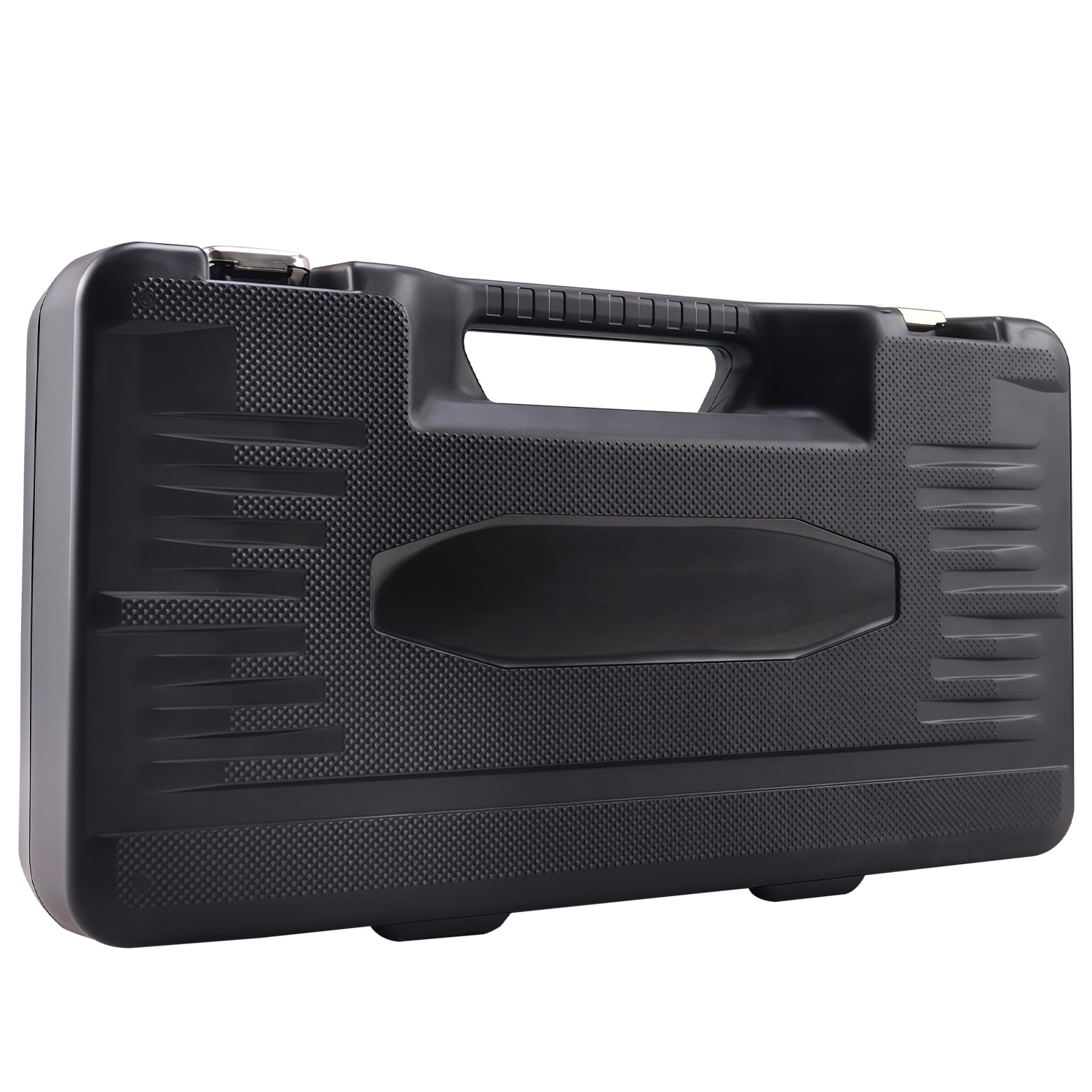
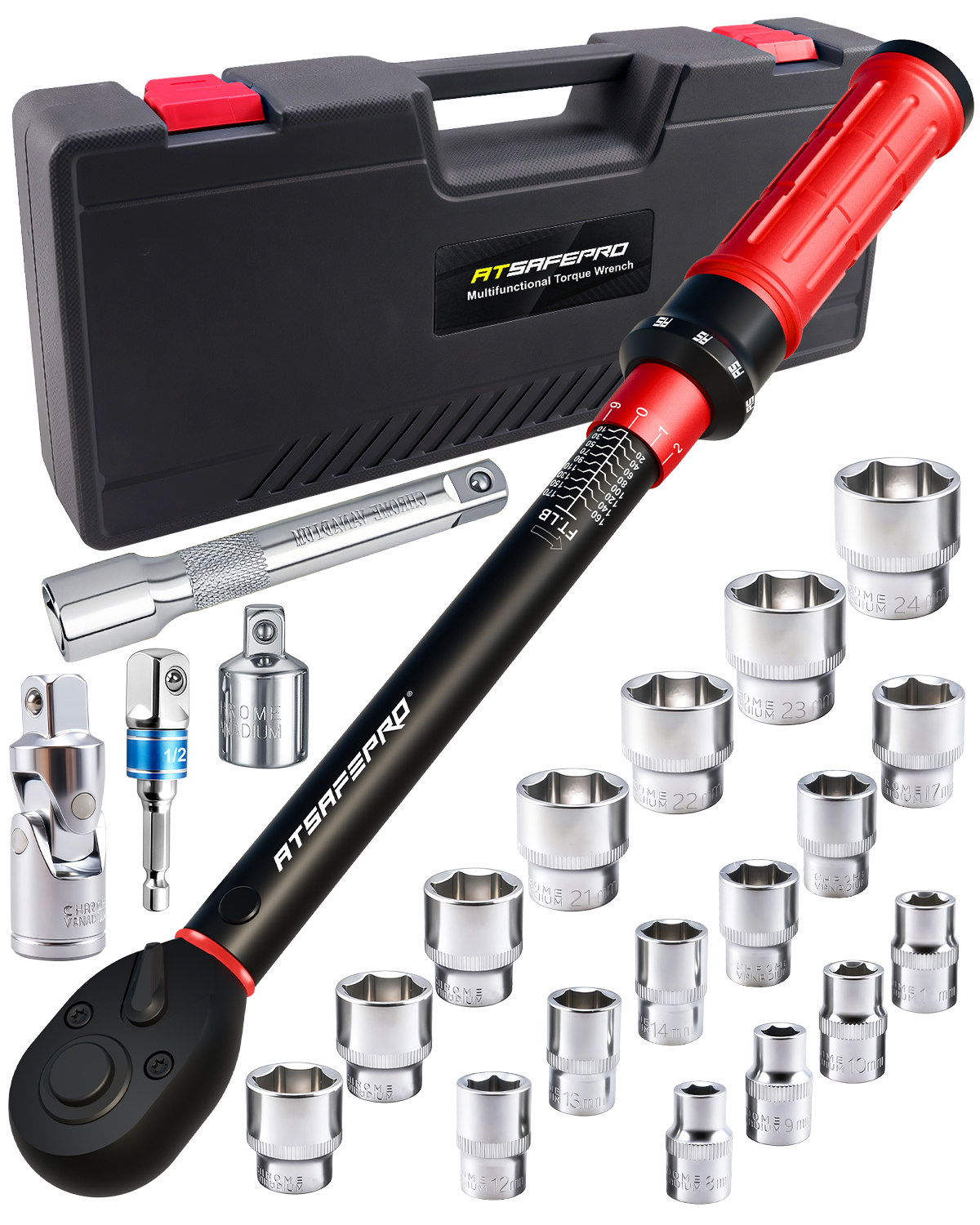
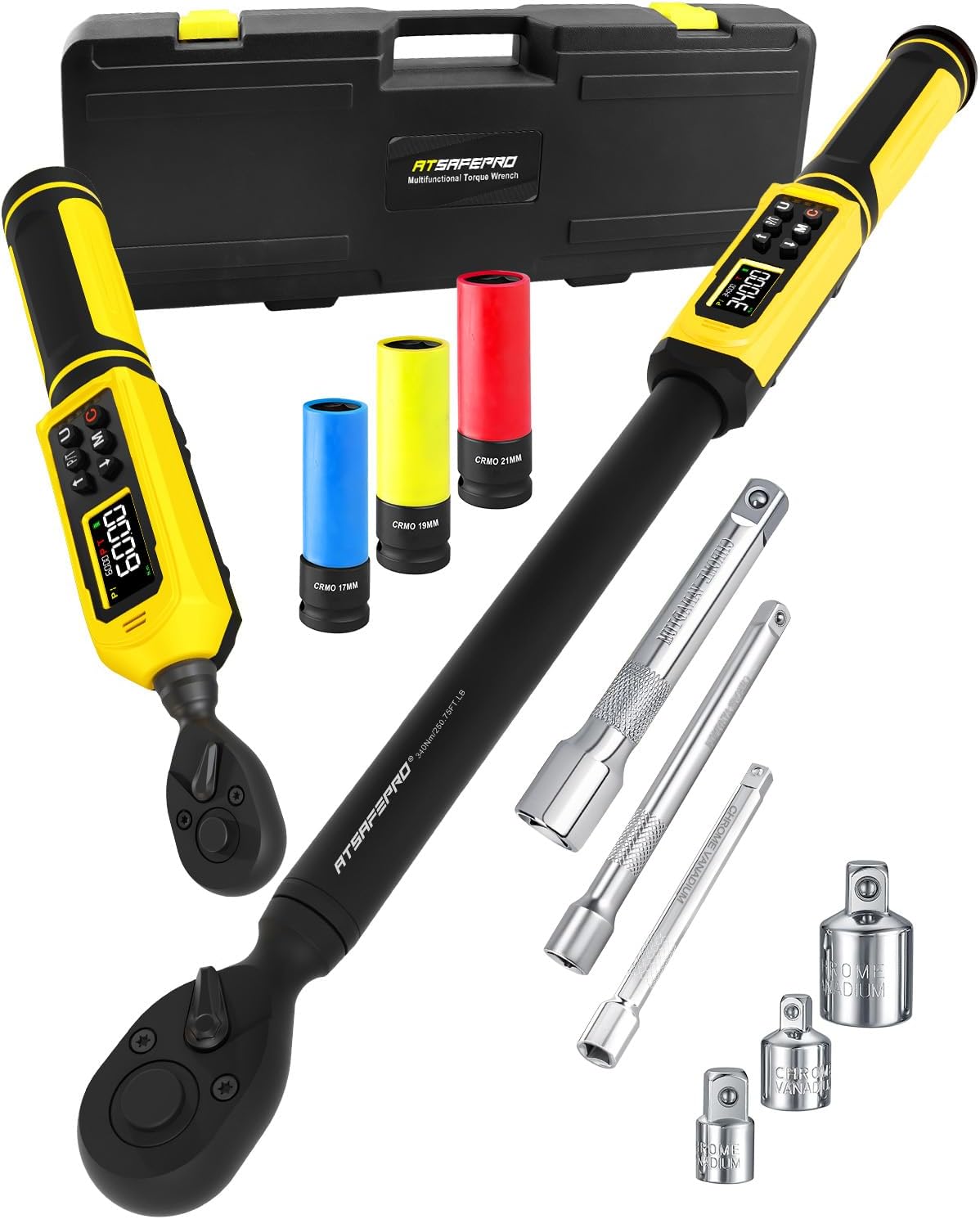
From the product information provided, this is an adjustable torque wrench / click-type torque wrench set with interchangeable socket accessories and a hard storage case. The wrench itself has a long metal body, a black grip, a red shaft or tube section, a ratcheting head, a torque scale printed on the adjustment section, and a locking collar near the handle. The case is molded plastic with fitted compartments, and the sockets shown include deep impact-style pieces with visible CR-MO markings on some sizes, including 17 mm, 19 mm, and 21 mm.
Those details matter because the set is being sold as a working system, not just a single tool. In the real world, a torque wrench without the right sockets becomes a drawer ornament. A case with dedicated compartments reduces loss and damage, which is not trivial in a garage environment where tools migrate from bench to cart to vehicle and back again. The carrying case also signals that the set is intended to travel, whether that means a home mechanic keeping it in the trunk or a fleet technician moving between bays.
How this type of torque wrench fits common shop work
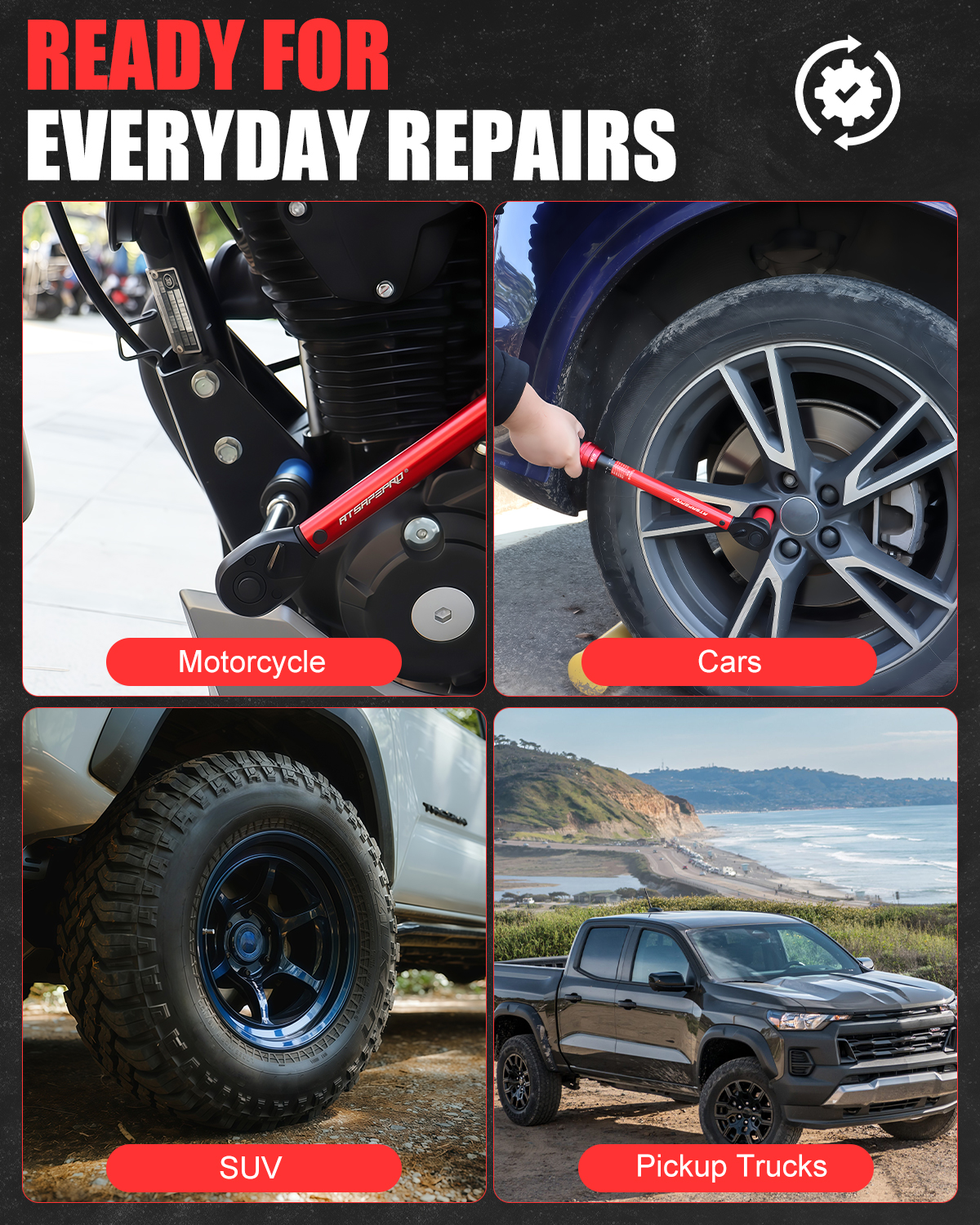
Wheel service and tire changes
Wheel lug nuts are the most obvious use case. They need controlled tightening, and many teams prefer a click-type wrench because it gives a clear tactile or audible indication when the preset torque is reached. That feedback is useful when the job is repetitive and the technician needs to move steadily across multiple fasteners without guessing.
The included socket sizes suggest this set is aimed at common automotive lug nut sizes. That does not automatically make it a universal wheel kit, of course. Buyers should still confirm the sizes they need for their vehicle platforms, especially if they service mixed fleets or aftermarket wheels.
Assembly and maintenance work
Outside of wheel service, an adjustable torque wrench is useful anywhere a fastener needs controlled clamping force. Brackets, covers, service components, and general mechanical assemblies often benefit from repeatable tightening. In a production or maintenance setting, that repeatability helps reduce variation between operators, which is one of the quiet reasons torque tools pay for themselves.
That said, a click-type torque wrench is not the right tool for every fastener. If the job requires very low torque, angle tightening, or digital recording, a different tool may be more appropriate. A buyer should think about the actual maintenance routine, not just the photo on the listing.
What the visible construction suggests
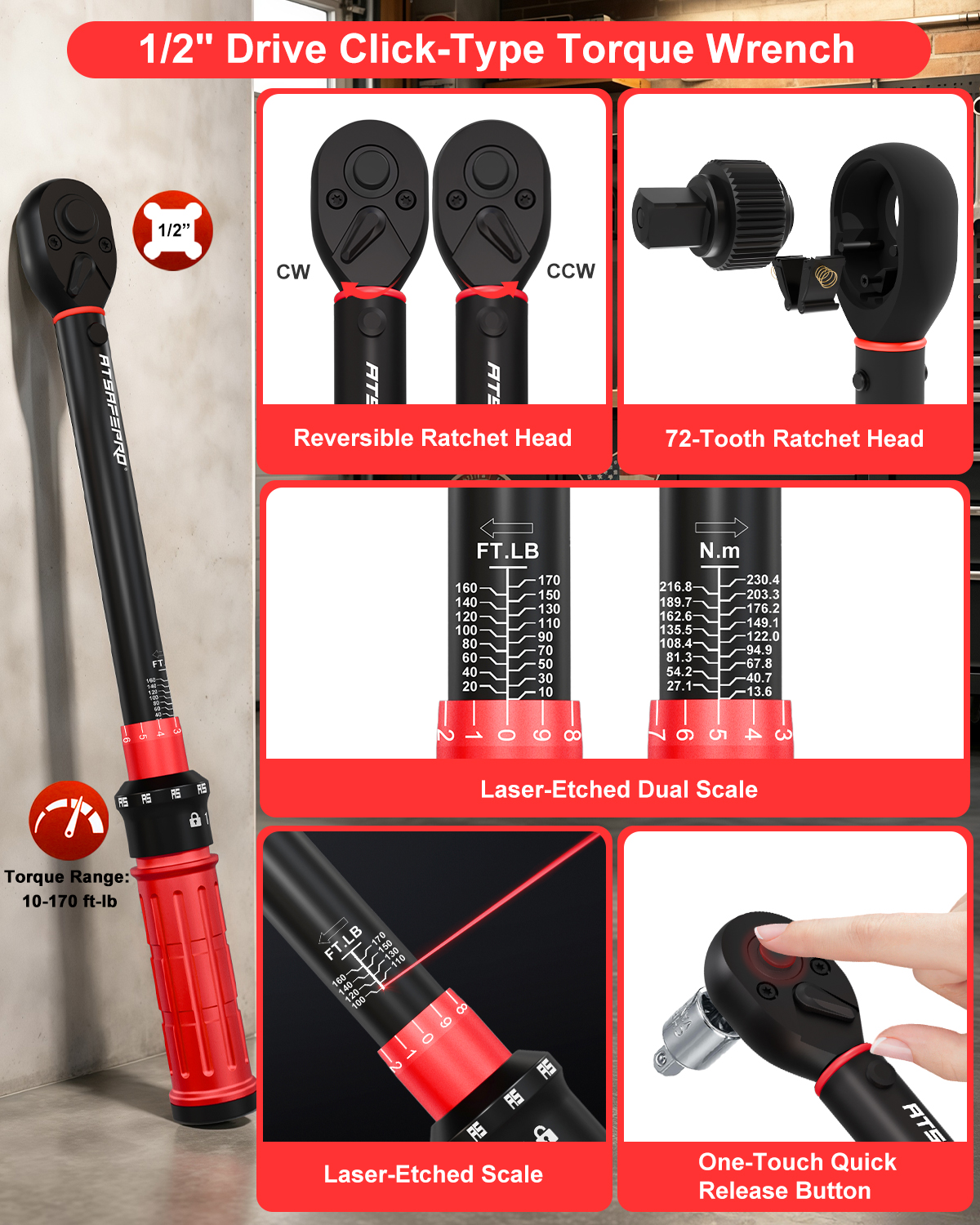
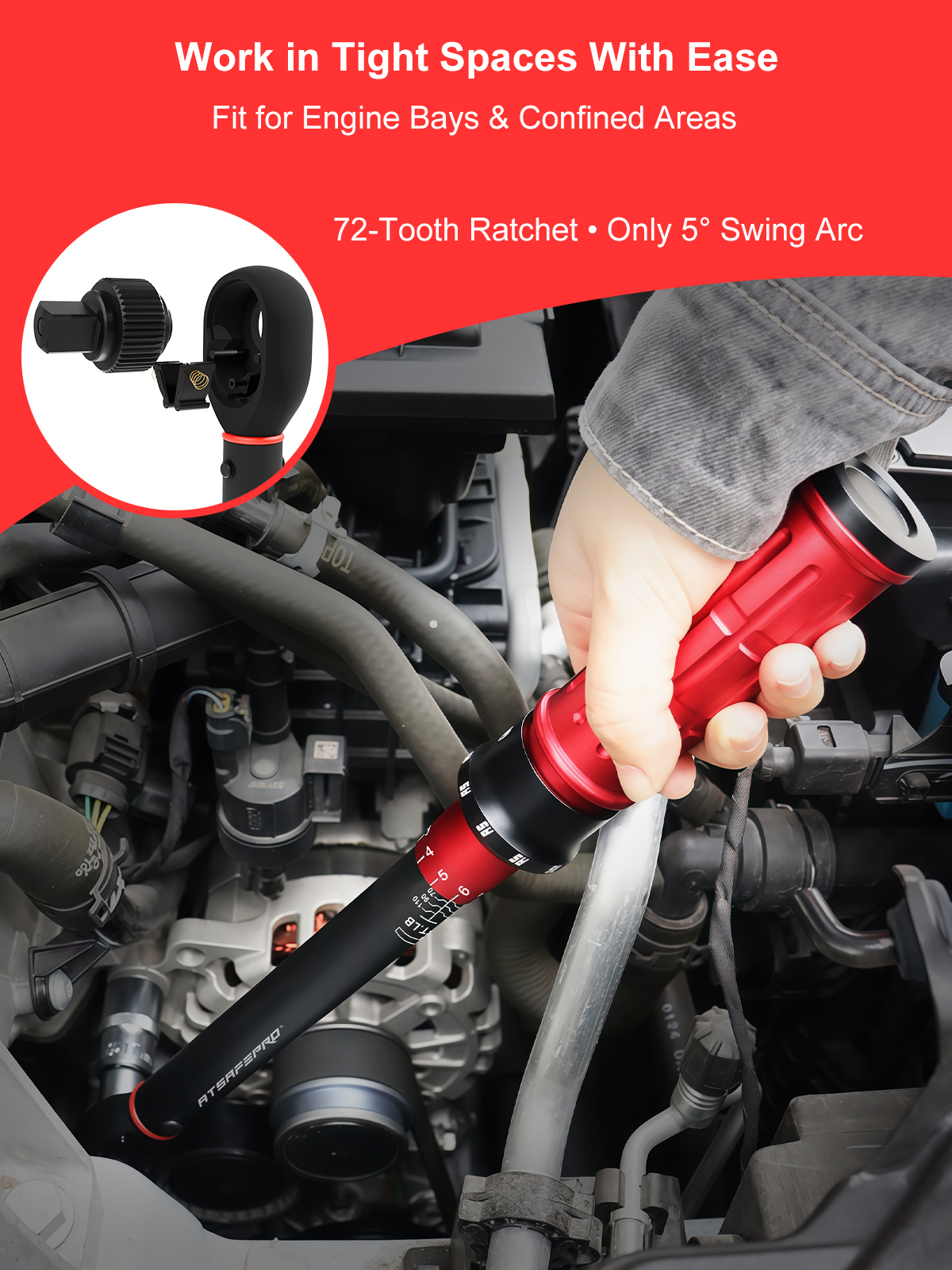
The wrench body appears to combine metal construction with a black textured grip and a red finished shaft. The head is black-coated metal and includes a selector lever or button, which is typical of a ratcheting head used for tightening and loosening in confined spaces. The printed torque scale is a practical feature; if a wrench is going to be adjusted frequently, the scale needs to be legible enough to survive daily use.
The sockets appear to be alloy steel with chrome-plated or black-coated finishes, and some are marked CR-MO. That marking usually signals chrome molybdenum alloy steel, a material commonly used for impact-style sockets and accessories. Even without overreading the image, it is fair to say these parts are meant to be durable shop accessories rather than lightweight decorative fittings.
As for the manufacturing side, this is best understood as a precision hand-tool product category built from forged or machined steel components with plated or coated finishes. The exact process is not visible, so it would be reckless to pretend otherwise. But buyers in this segment generally care about stiffness, readable markings, smooth adjustment, and whether the ratcheting mechanism feels secure under load.
How to judge whether this style of wrench is the right buy
For procurement and shop use, the first question is always coverage: does the wrench support the torque range your work requires? The provided data does not include an exact range, so that must be confirmed before purchase. The second question is compatibility. If the set is being used for wheel service, the included socket sizes may be helpful, but you still need to check drive size, fit, and whether the accessories match your fastener profile.
Third, look at usability. A torque wrench can be mechanically sound and still frustrating if the adjustment collar slips, the scale is hard to read, or the head feels awkward in tight wheel wells. Those are everyday complaints, not theoretical ones. Buyers should also ask whether calibration documentation is supplied or whether periodic calibration will be handled internally or by a service provider. The image does not confirm calibration status, so that is one of the details to verify rather than assume.
Practical advantages of a set versus a standalone wrench
Tool sets are sometimes dismissed as “bundle packaging,” but in this case the accessories appear to have real value. A storage case reduces the chance of missing sockets. The mixed accessory format also makes the tool more useful out of the box, especially for users who do not already own a deep socket set organized by size and finish.
For a buyer, there is another advantage: fewer purchase decisions. If the wrench, sockets, and case are designed to live together, the end user is less likely to substitute incompatible parts or lose the correct adapters. That sounds mundane until you have a service bay full of half-matched tools and no one can find the right socket for a routine brake or wheel job.
Common mistakes when buying or using a torque wrench
One common mistake is assuming all torque wrenches are interchangeable. They are not. Click-type, beam, digital, and preset tools each serve different needs. Another mistake is buying based on socket count alone. More accessories do not automatically mean a better tool if the wrench body is awkward or the torque range does not match the work.
Use is another area where people get careless. A torque wrench should not be treated like a breaker bar. It is a measuring tool, and rough handling can shorten its useful life. It is also wise to store it properly in the case, especially if it has a locking collar and a printed scale that can be damaged or worn by loose storage. Small habits matter more than most buyers want to admit.
Who is most likely to benefit from this kind of set?
Mechanics, garage owners, fleet maintenance teams, and hands-on DIY vehicle owners are the clearest audience. The presence of a carrying case and multiple sockets makes it especially practical for service work where tools move between jobs. For an engineering buyer, the set is less about novelty and more about standardization: one adjustable tool, one organized case, and a small set of compatible accessories that cover common tasks.
If the work environment is light industrial or automotive-focused, this format is easy to justify. If the application is highly specialized, then the buyer may need a more tightly specified wrench with documented calibration and a clearly published torque range. That is not a criticism of this product category; it is simply the difference between an everyday shop tool and a controlled production instrument.
Quick buyer checklist before placing an order
Before purchasing an ATsafepro torque wrench set, verify the torque range, drive size, included socket sizes, calibration information, and whether all pictured accessories are part of the shipment. Confirm that the wrench style matches the work: wheel service, maintenance, or assembly. If the tool will live in a fleet truck or garage cart, the case and socket organization may be just as important as the wrench itself.
And if the application involves critical fastening, do not treat a photo as a specification sheet. Ask for the numbers. A decent-looking wrench can still be the wrong wrench if the range, accuracy, or accessory fit does not line up with the job.
FAQ
Is this torque wrench suitable for wheel lug nuts?
Based on the visible socket sizes and the general product category, it appears aimed at wheel and automotive service. The final answer depends on the torque range and socket fit, which should be confirmed before use.
Does the set include a storage case?
Yes, a molded hard plastic case with compartments and red latches is shown in the product information.
Are the sockets impact-rated?
The sockets appear to be deep impact-style accessories, and some are marked CR-MO. That suggests durable alloy-steel construction, but the exact rating should be verified from the supplier’s documentation.
Can this replace a digital torque tool?
Not necessarily. A click-type wrench is excellent for many routine mechanical tasks, but a digital tool may be better when data logging, finer control, or specific process requirements are involved.
A sensible next step for buyers
If you are comparing the ATsafepro torque wrench against other adjustable torque wrench sets, start with the working requirements, not the accessory count. Check the torque range, the socket sizes, the feel of the ratchet head, and whether the case layout suits daily use. For sourcing teams, that is usually enough to separate a practical shop tool from a shelf filler.
If the published specifications line up with your application, this style of set offers a straightforward proposition: measurable tightening, portable storage, and a socket assortment that covers common automotive jobs without much fuss. That is often exactly what a busy shop needs.