Why a torque wrench matters more than most buyers think
An ATsafepro torque wrench is not the kind of tool people buy for show. It is there to solve a real fastening problem: getting bolts and nuts tight enough to hold, but not so tight that threads stretch, studs shear, or wheel hardware becomes difficult to service later. That matters in automotive work, mechanical assembly, and routine garage maintenance, where “tight by feel” can be good enough one day and a costly mistake the next.
In practical terms, a torque wrench helps a technician or home mechanic control clamping force rather than simply applying more muscle. That distinction is easy to ignore until a wheel nut loosens, a bolt head rounds off, or an over-tightened fastener makes the next repair miserable. Buyers usually come to this tool with a simple question: do I need a torque wrench kit, and what should I look for before I trust it on a car or workshop job?
What the visible design tells you
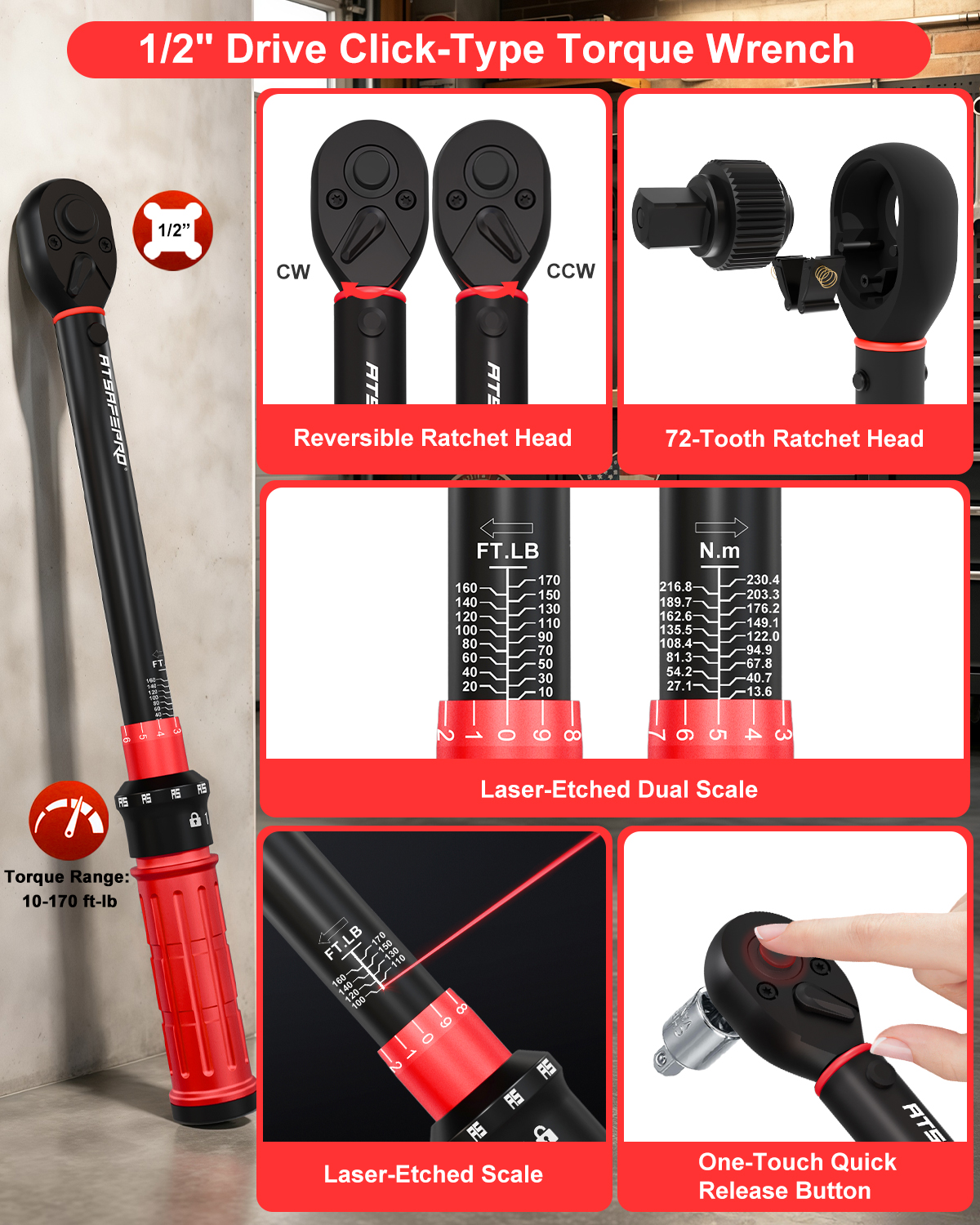
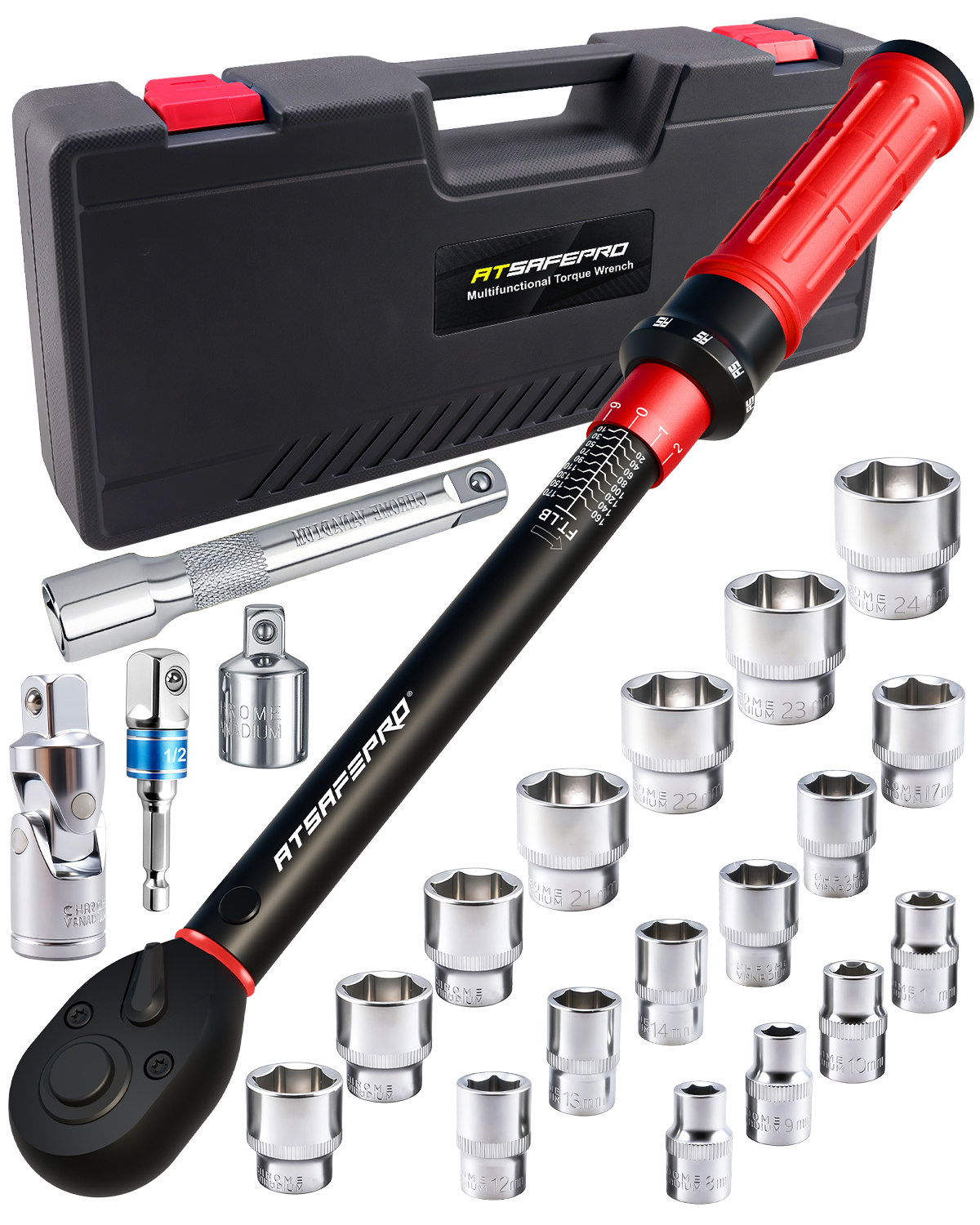
The kit shown here looks built around a long red-and-black handled wrench with a ratcheting head, a printed torque scale on the shaft, and a knurled adjustment section near the handle. Those details point to a tool made for setting and applying a chosen tightening value rather than simply cranking fasteners down as hard as possible.
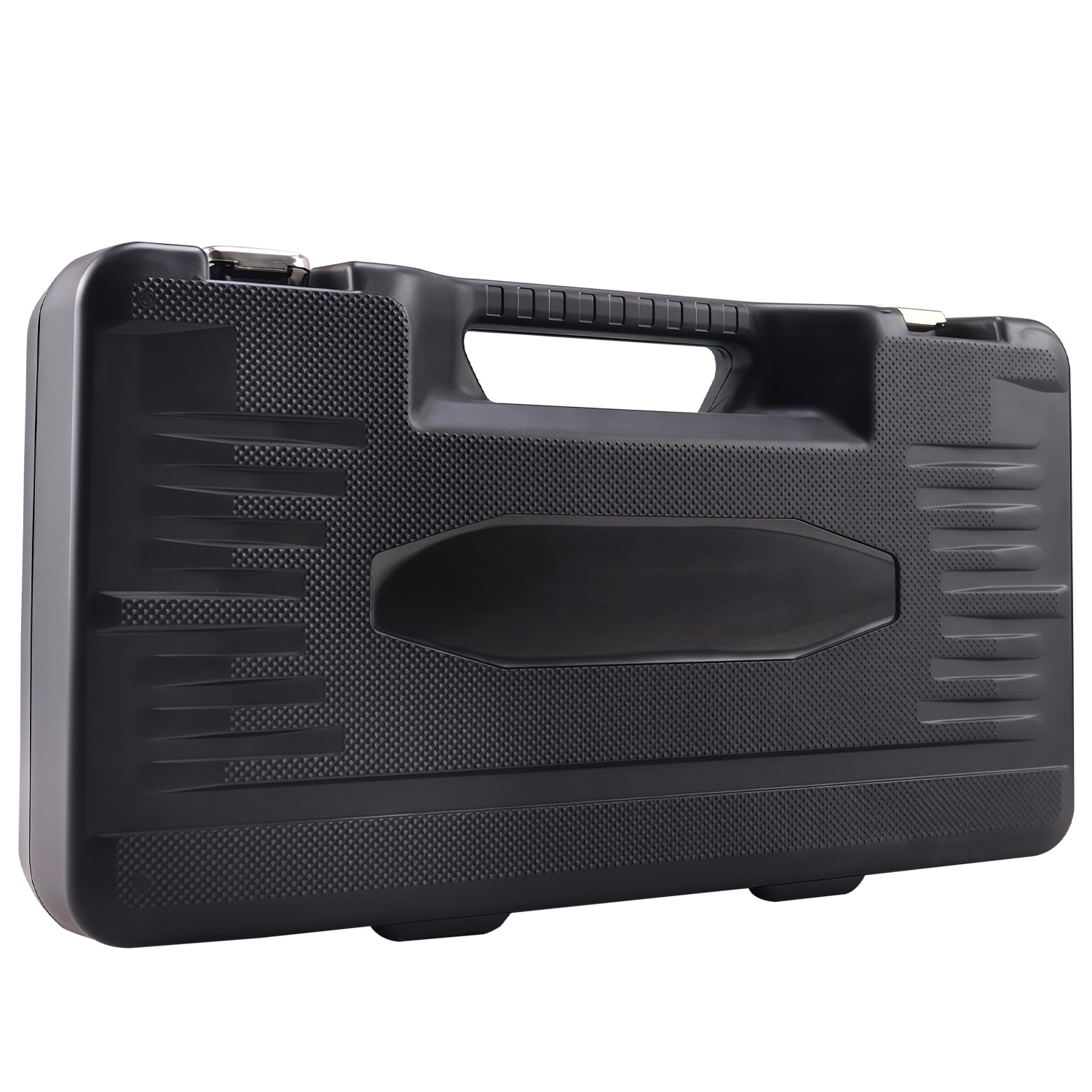
The carrying case is a meaningful detail, even if it sounds minor. Tools like this get used in garages, trunks, and job boxes, and a molded case helps keep the wrench, sockets, and adapters together. It also lowers the odds that the scale setting gets knocked out of place while the tool is stored loosely with heavier gear.
The included sockets labeled 17 mm, 19 mm, and 21 mm make the intended use fairly clear: wheel and tire work, plus general fastening tasks that call for controlled torque and interchangeable attachments. The additional silver and colored adapter pieces suggest the kit is meant to be flexible, though the exact drive size and torque range are not visible and should not be assumed.
The problem this tool is meant to solve
Fasteners fail in two directions. Too little torque leaves joints loose, uneven, or short on clamping force. Too much torque can deform sealing surfaces, crush gaskets, stretch studs, or make removal far more difficult than it should be. In automotive service, both mistakes show up all the time.
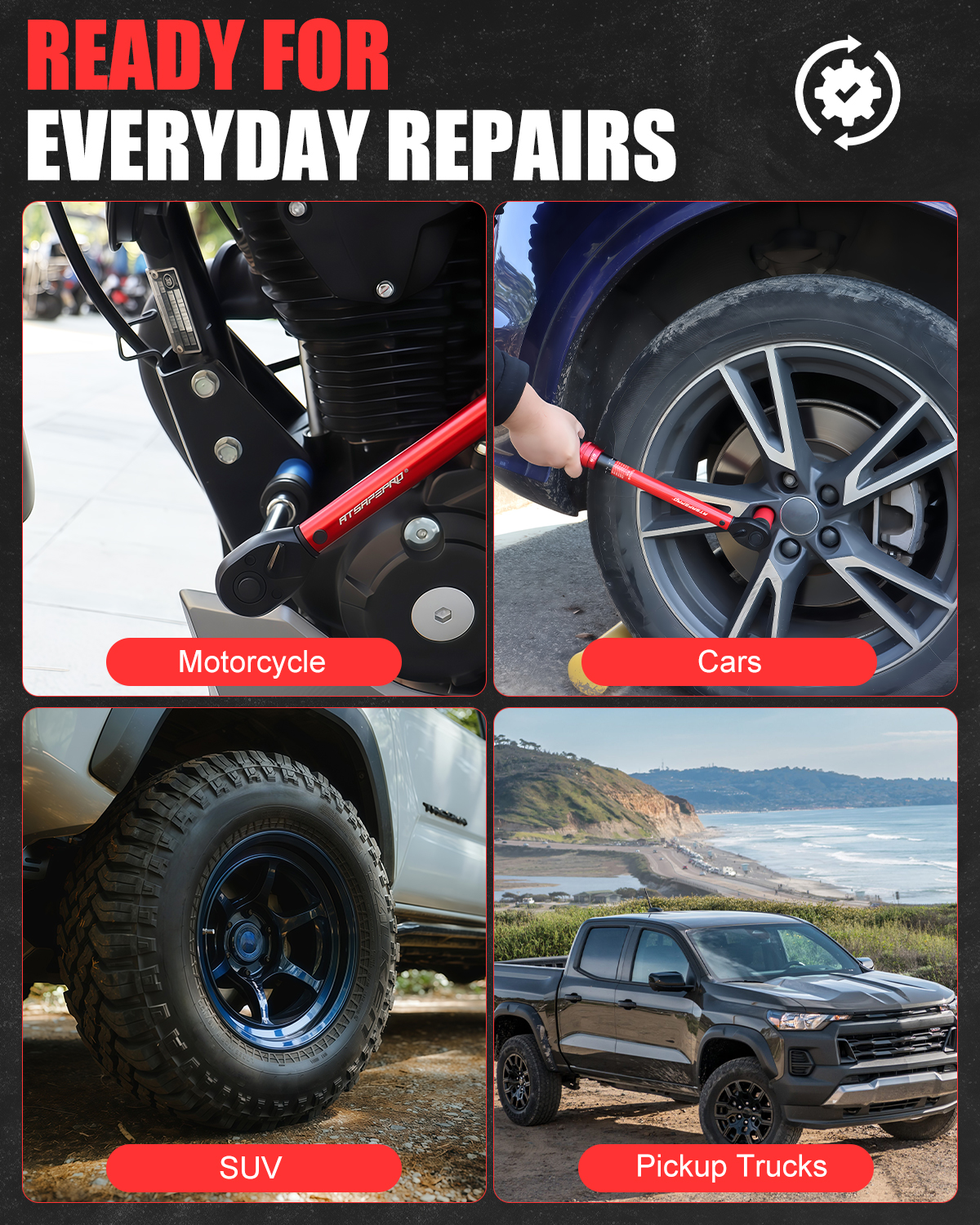
Wheel fastening is the obvious example. A wheel nut that is not tightened properly can create vibration, uneven load, or in the worst case a safety issue. On the other hand, a nut driven on with too much force can damage the stud, distort the wheel mounting face, or complicate roadside tire changes later. The same logic applies to many mechanical assemblies, from engine covers and brackets to equipment housings and support hardware.
This is why a torque wrench is not just a “precision” tool in the abstract. It is a control tool. It helps standardize work across different users, different shifts, and different jobs. For sourcing managers and shop buyers, that consistency is often worth more than flashy specifications on a product page.
How this kind of torque wrench kit is typically used
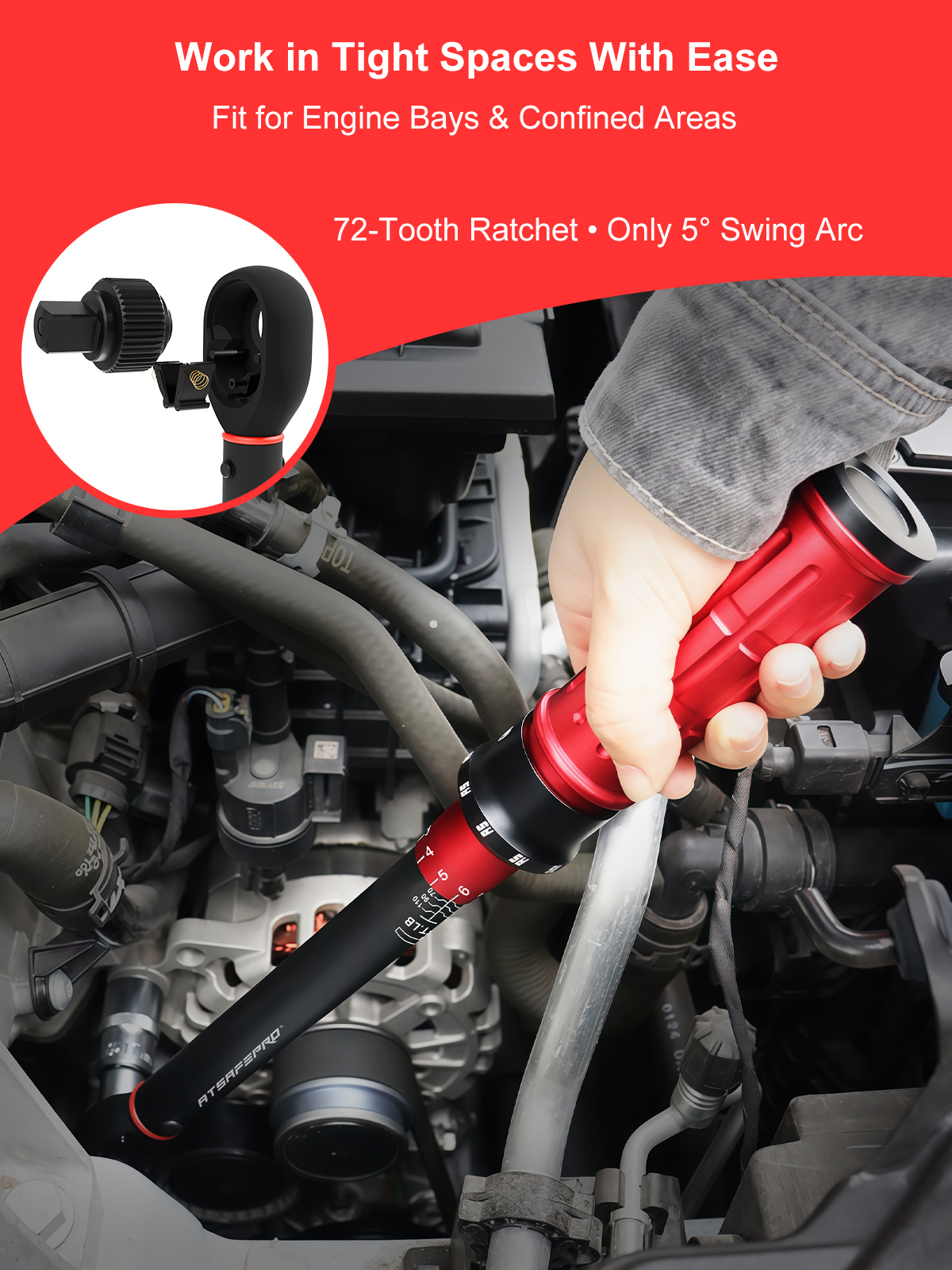
From the visible layout, this looks like a torque wrench set intended for socket-based fastening. The ratcheting head allows the user to work in confined spaces without lifting the tool off the fastener after every movement, which is useful around wheel hubs, suspension components, and general assembly points where access is awkward.
The torque scale printed on the body is important because it allows the user to set a target value before tightening. That setup step is where many mistakes happen in real life. Users should always confirm the setting before use, tighten in a controlled motion, and avoid using a torque wrench as a breaker bar. That last point is worth repeating because workshop habits are hard to unlearn.
If the wrench is being used for wheel service, the process should be deliberate: remove the wheel, reinstall the fasteners by hand first, and tighten in a proper pattern rather than running each nut fully down in sequence. That is basic shop practice, but it is still where a lot of uneven clamping problems begin. A torque tool does not fix bad sequence or dirty threads; it only helps once the process is already sound.
What buyers should evaluate before choosing a kit
1. Intended application
Start with the actual job. A roadside tire kit has different needs from a workshop tool used every day. Automotive users care about socket coverage, case durability, and whether the wrench is comfortable enough for repeated use. Mechanical assemblers may care more about repeatability, calibration confidence, and compatibility with existing sockets and accessories.
2. Range and scale readability
The visible torque scale is a good sign, but the buyer still needs to know whether the marked range fits the work. Because the exact range is not shown here, it should be verified before purchase. A wrench that sits at the edge of its usable range on every job is rarely the best choice. Scale clarity matters too; a tool that is technically accurate but hard to read in a dim bay is not much help at 6 p.m. in winter.
3. Socket compatibility
The included 17 mm, 19 mm, and 21 mm sockets are practical for common wheel service, especially on vehicles where lug nut sizes vary. Still, buyers should confirm whether their work requires additional sizes, deeper sockets, or other adapters. A kit can look complete in the case and still miss one size that gets used every week.
4. Storage and handling
A molded case is not just packaging. It protects calibration settings, keeps the parts organized, and makes the set easier to assign to a truck, bay, or service cart. For teams, that matters. Shared tools drift into lost-tool territory fast when storage is improvised.
Common mistakes people make with torque tools
One frequent mistake is assuming a torque wrench is a general-purpose tightening bar. It is not. If the tool is used to break loose stubborn fasteners, the internal mechanism and calibration can suffer, and the user may not know it right away.
Another mistake is ignoring the condition of the fastener itself. Dirty threads, corrosion, damaged nuts, or painted mating surfaces can change the friction in the joint and distort the resulting clamp load. Torque numbers only mean something when the joint condition is controlled reasonably well.
There is also a storage mistake that gets overlooked. Leaving the wrench set at a high value for long periods is not ideal for many adjustable torque tools. Buyers and technicians should follow the manufacturer’s instructions for storage position and care. If those instructions are missing or unclear, that is a warning sign worth noting before the tool goes into regular service.
What the materials and finish suggest about manufacturing
The visible metal construction and plated socket surfaces suggest a fairly standard hand-tool manufacturing route: machined components, surface finishing for corrosion resistance, printed or marked calibration graphics, and a molded plastic case for storage. That is normal for this class of product and, when executed well, it is a sensible combination for workshop use.
The red-and-black handle housing gives the tool a recognizable service-tool look, but the real question is not the color. It is whether the adjustment section feels positive, whether the ratchet action is smooth, and whether the markings remain readable after use and cleaning. Those are the practical details that determine whether a kit becomes a trusted garage tool or just another item in the drawer.
Buying advice for sourcing teams and end users
If you are buying for a workshop, think in terms of job coverage rather than spec sheet language. A torque wrench kit should answer three questions clearly: what fasteners will it cover, how easy is it to set and read, and how well will the accessories hold up in storage and transport?
For fleet maintenance or tire service, the presence of the 17 mm, 19 mm, and 21 mm sockets is a straightforward benefit. It reduces the number of separate tools a technician needs to carry. For mixed mechanical work, the included adapters may add flexibility, but buyers should confirm whether those accessories match their existing tool system instead of assuming universal compatibility.
There is also a practical procurement point here: tools used by multiple people should be easy to understand at a glance. A torque scale that is clear, a ratcheting head that behaves consistently, and a case that keeps everything in place can save time every single day. That is not glamorous, but it is exactly how good shop tools pay back their cost.
FAQ
Is this mainly for automotive work?
That appears to be the strongest use case. The included wheel-related socket sizes and the overall layout point toward automotive maintenance, tire service, and general workshop fastening.
Can it be used for other assembly tasks?
Yes, as long as the fastener size, torque range, and attachment setup fit the application. The important part is matching the tool to the joint, not forcing a one-size-fits-all approach.
Should buyers care about the case?
They should. A case keeps the wrench, sockets, and adapters organized and reduces the chance of damaged or misplaced parts. In service environments, that is worth more than many people expect.
A sensible next step
If you are evaluating an ATsafepro torque wrench for wheel service or general fastening work, start by confirming the torque range, drive size, and calibration details against your actual job requirements. Then check whether the included sockets cover the fasteners you touch most often, not just the ones that look useful in the photo. That simple check often tells you more than a long product description ever will.
For buyers, the right decision is usually the one that makes the tool easy to use correctly, easy to store, and hard to misuse. That is what separates a practical torque wrench kit from a box of parts that only looks ready for work.