Why a torque wrench matters more than most buyers admit
An ATsafepro torque wrench sits in a category that looks simple until a fastener fails. For engineers, shop managers, and hands-on buyers, the real question is not whether a wrench can tighten a nut. It is whether it can tighten the nut to the same controlled torque, again and again, without guesswork. That matters on wheel lugs, machinery covers, maintenance jobs, and assembly work where under-tightening invites loosening and over-tightening can damage threads, distort parts, or create a much longer repair later.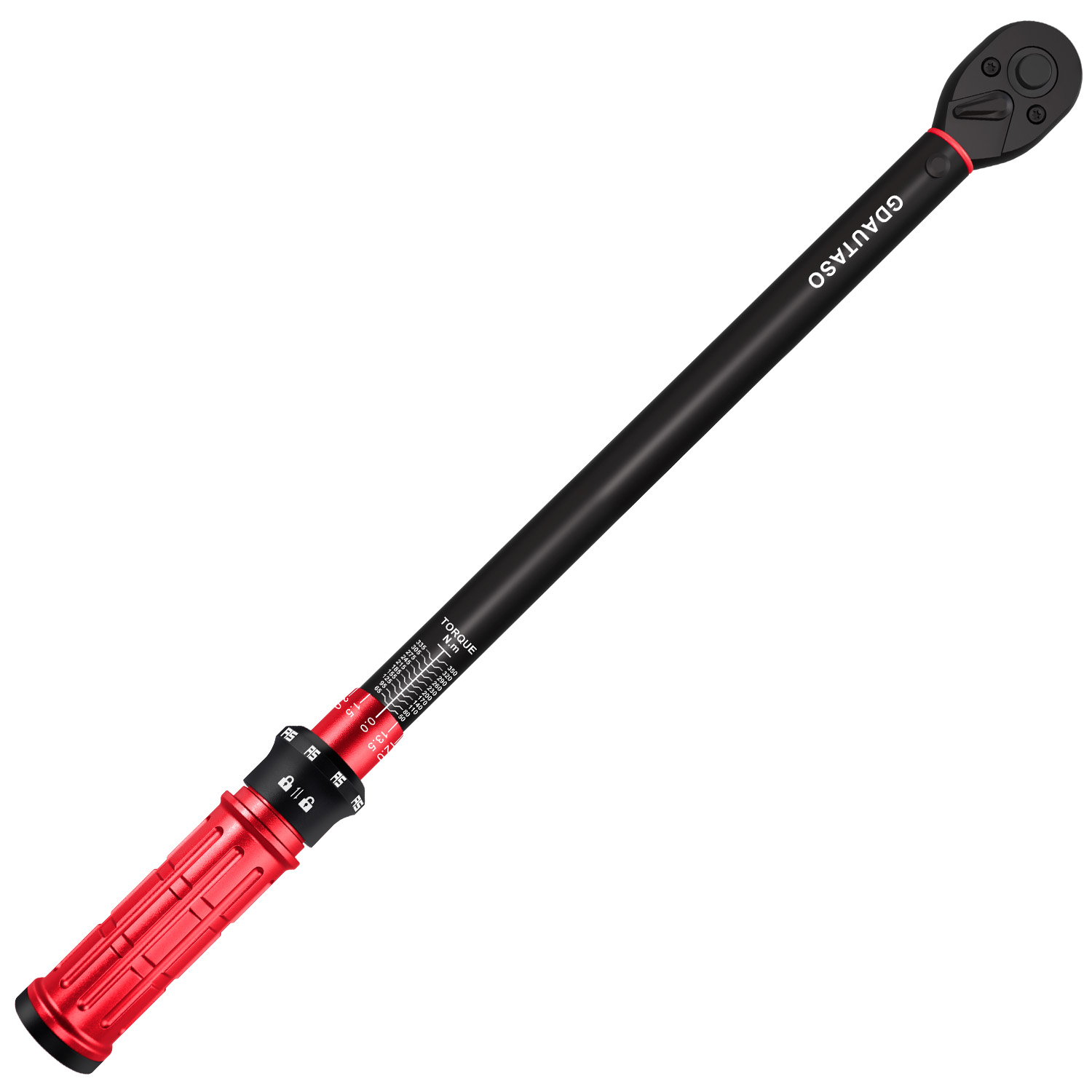
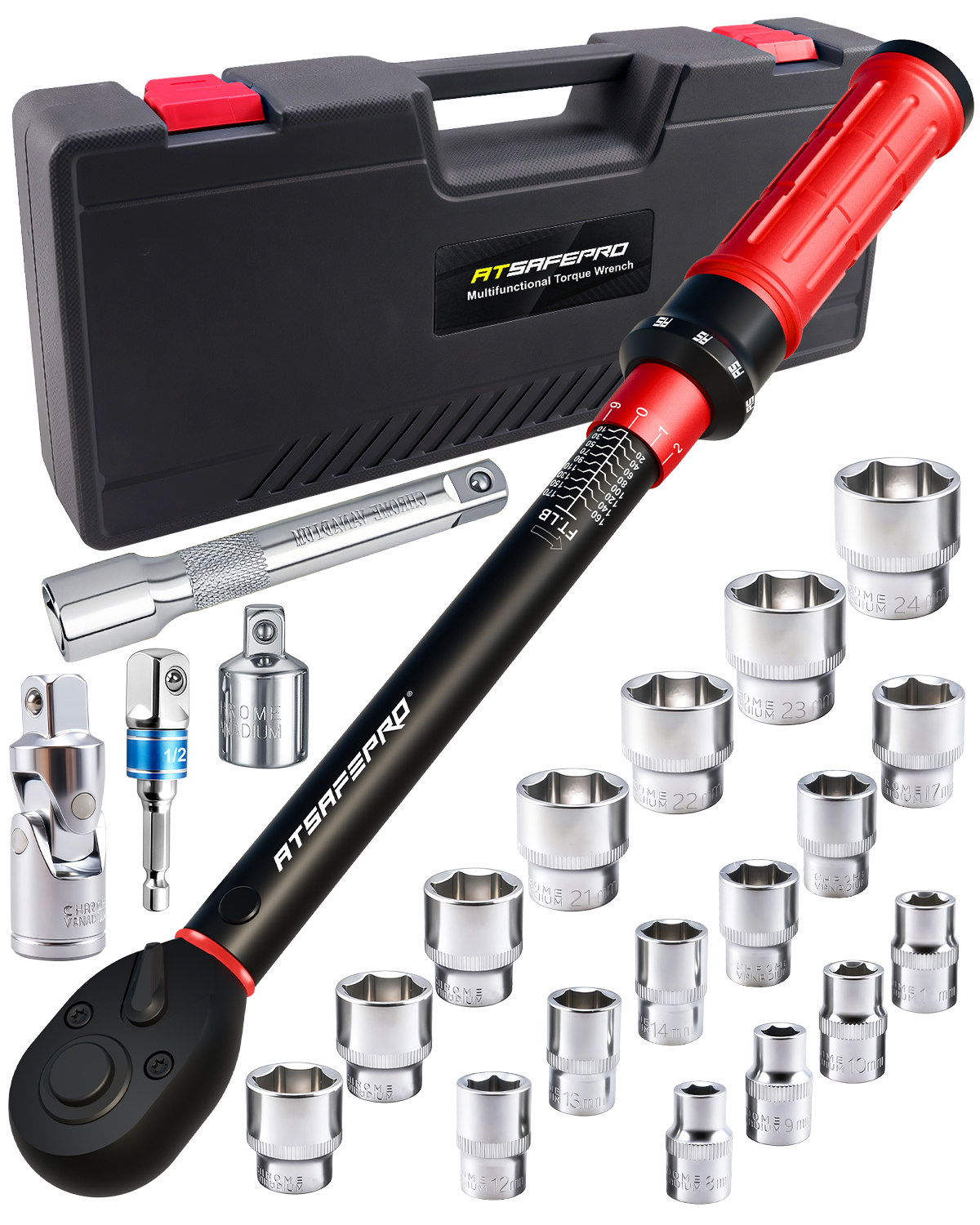
The visible setup in this kit makes the intent pretty clear: a click-type torque wrench, interchangeable sockets, a ratcheting head, and a molded case. In other words, it is built for repeatable work rather than improvised wrenching. That alone makes it relevant to anyone who needs to move between service bays, plant floors, or job sites without dragging along a full drawer of loose tooling.
What this kit is designed to do
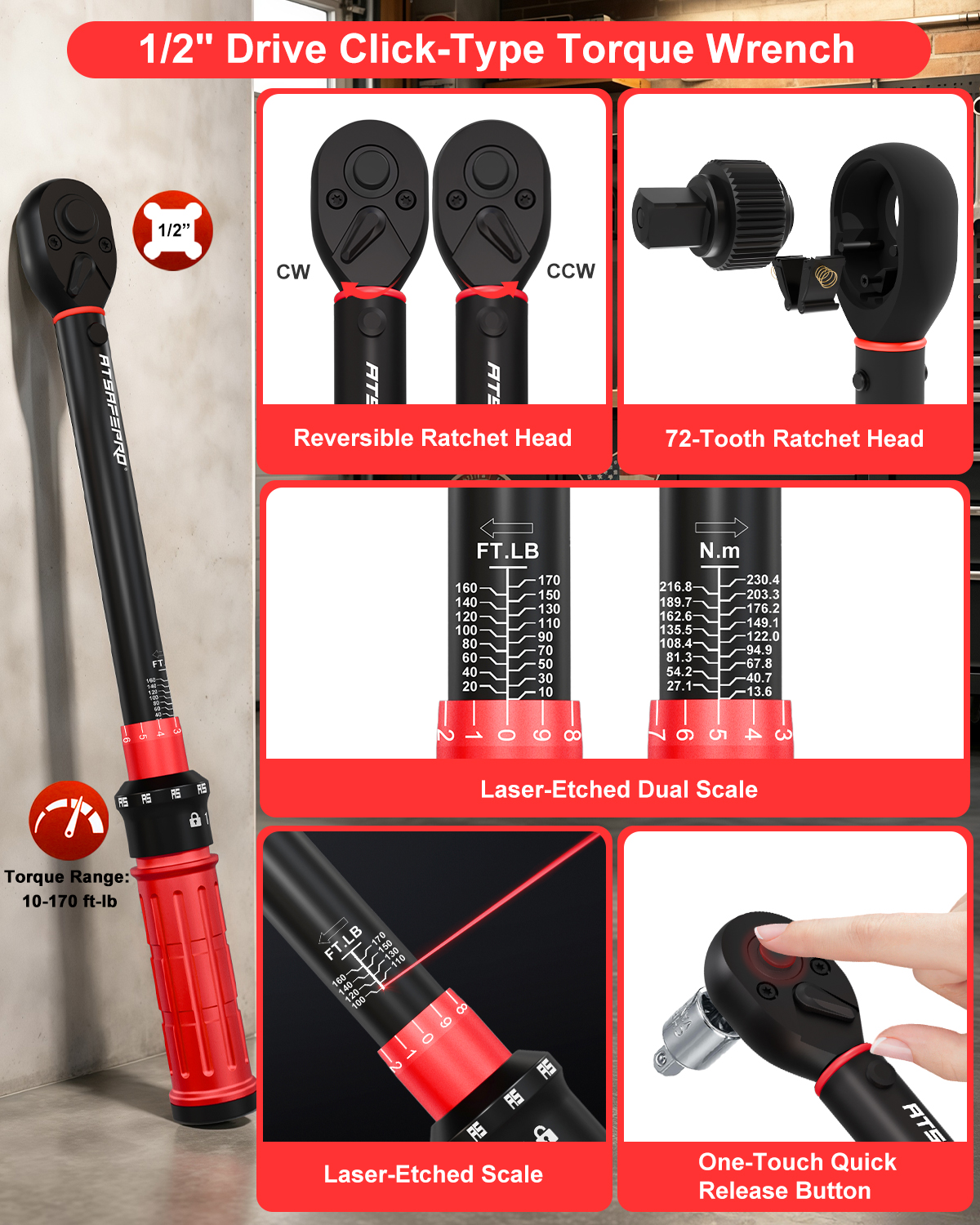
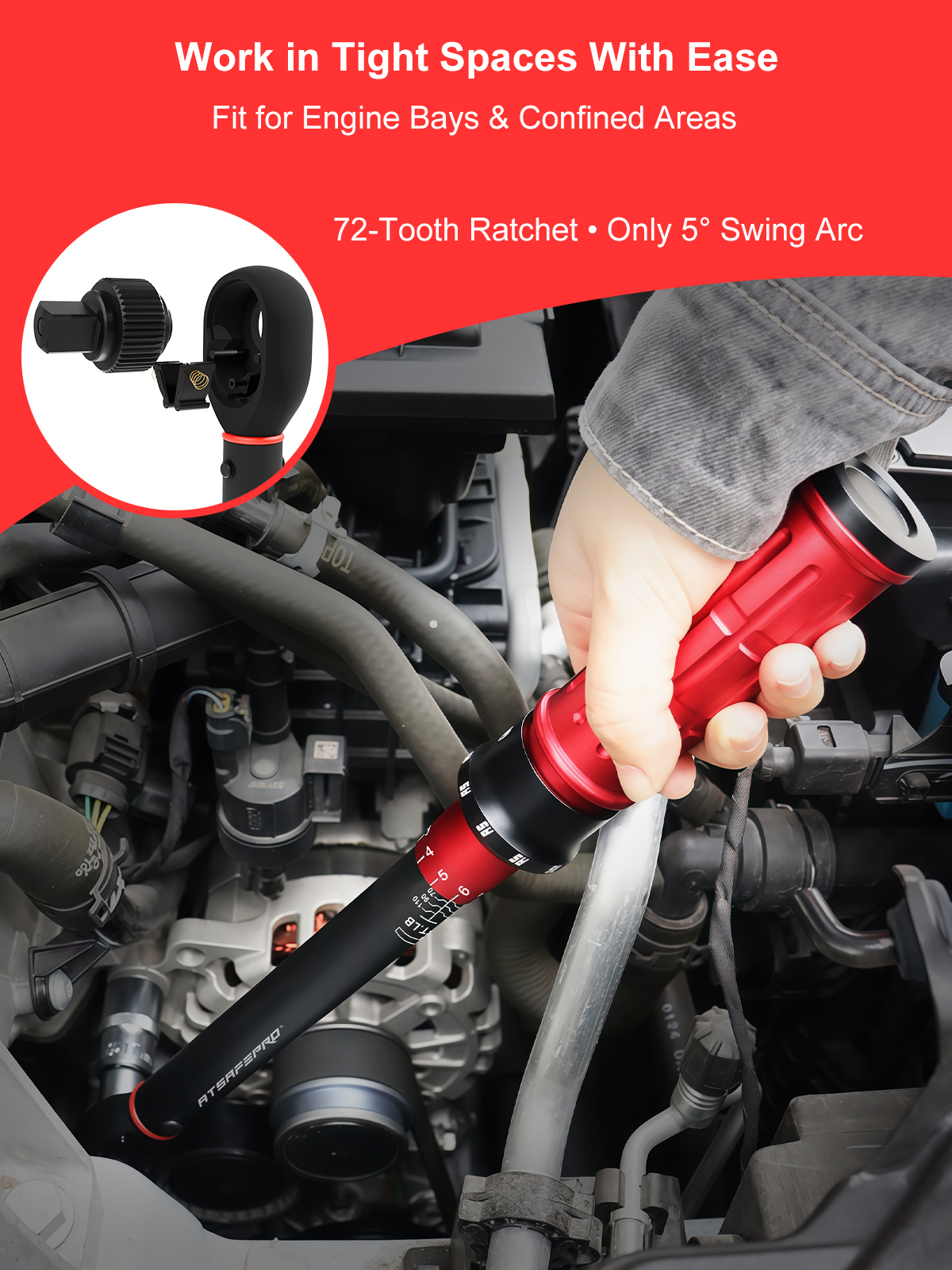
At a practical level, the ATsafepro torque wrench is a controlled fastening tool. The shaft carries printed torque scale markings, which lets the user set the desired torque value before tightening. The black knurled grip is there for purchase, especially when hands are oily or gloved. The ratcheting head suggests faster work on fasteners that require repeated placement, which is common in automotive and maintenance environments.
The kit also includes deep sockets marked 17 mm, 19 mm, and 21 mm with CR-MO markings, plus at least one adapter or extension. That is a useful clue about the intended use case. Those sizes are common in wheel service and general mechanical fastening, and the inclusion of deep sockets helps when studs or extended fasteners protrude beyond the nut face. Buyers should still verify whether these sizes match their actual application, because a kit can be useful and still be wrong for the job in hand.
Quick buyer takeaways
If you need a short decision frame, here is the simplest way to read this product:
It is suited to repeatable tightening tasks where torque control matters.
It is more organized than a bare wrench because it comes with sockets and a fitted case.
It is likely most useful in automotive, maintenance, and assembly settings.
It is not a universal answer unless the torque range, drive size, and calibration details match your requirement.
That last point is the one buyers often skip. A torque wrench is only valuable when the usable range and accuracy match the job. If those details are missing from a listing, the safe move is to ask before placing the order.
Materials and construction: what the visible design tells you
The wrench body appears to use a metal shaft with a painted or coated finish, a black ratcheting head, and a metal adjustment or locking section near the head. That is a standard and sensible arrangement for a general-purpose mechanical torque tool. The long red handle gives the user leverage while also making the tool easy to spot in a crowded service cart.
The sockets are marked CR-MO, which usually signals chromium-molybdenum steel in the tool world. That material family is commonly chosen for impact and high-load socket work because it can stand up well to demanding fastening duties. It is worth noting, though, that the exact alloy, heat treatment, and finish are not verifiable from the image alone. Buyers who need traceable material specifications should not assume more than the marking confirms.
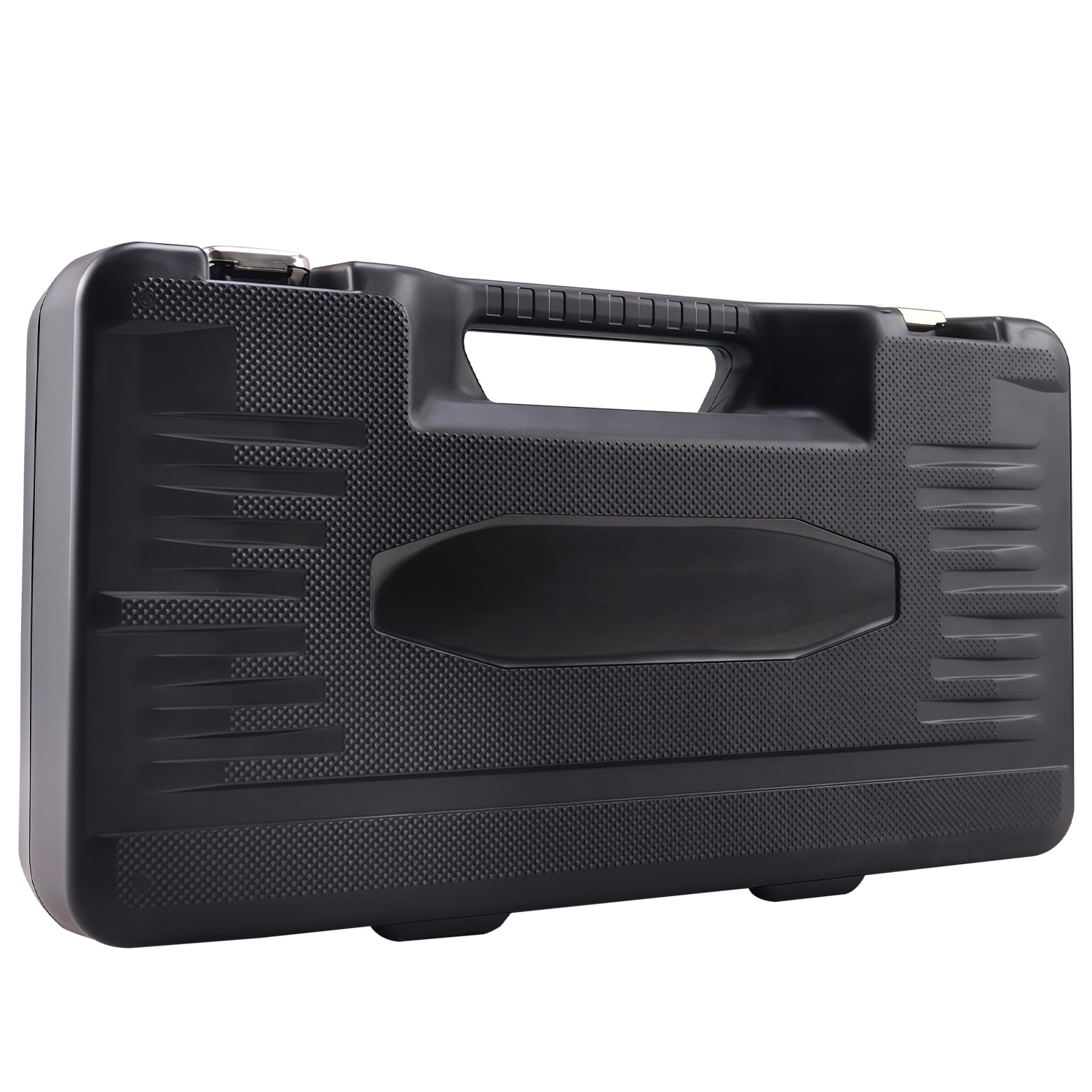
The molded black case with red latches is more than packaging. For a torque wrench kit, a fitted case helps keep the wrench, sockets, and adapters together, and that matters because torque tools are easier to misuse when they are left loose in a drawer or tossed into a vehicle trunk. A protected storage case also makes it less likely that the adjustment section gets knocked out of place.
Where a torque wrench kit earns its keep
This type of kit is most persuasive in jobs where the fastener has to be right the first time.
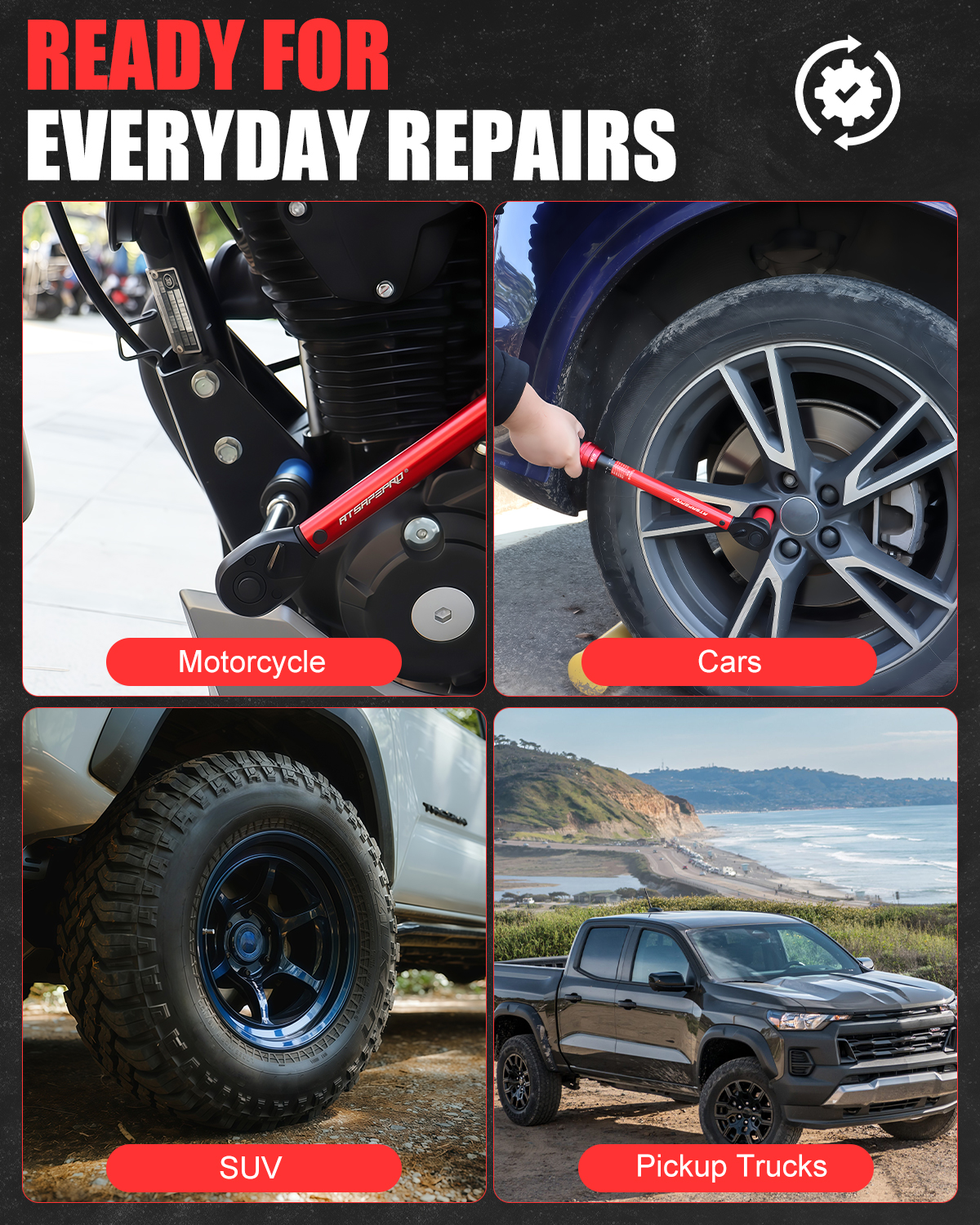
Automotive wheel lug nut service is the obvious use. Tire changes, brake work, and rotation tasks all benefit from controlled torque, especially when the same vehicle comes back for service and consistency matters. Machinery maintenance is another obvious fit, particularly on covers, brackets, guards, and other assemblies where a service team may need to remove and reinstall fasteners frequently. General assembly work also benefits when the company wants to reduce variation between operators.
There is also a quieter benefit: a torque wrench helps establish discipline. When a shop uses a controlled tool instead of “tight enough by feel,” it reduces the spread between one technician and the next. That does not eliminate error, but it makes error more visible and more manageable.
How to compare this kind of kit against other options
A buyer usually has three broad choices: a bare torque wrench, a full kit like this one, or a heavier professional setup with separate sockets and calibration support. The right choice depends on workflow.
A bare wrench makes sense when the shop already owns the correct sockets and the user is replacing a single tool. A kit makes more sense when portability and organization matter. A more specialized setup is often better in production settings where calibration records, tool control, or higher-frequency use are part of the job.
The ATsafepro torque wrench kit seems aimed at the middle ground. It is not trying to be a bench instrument. It is trying to be a practical field tool with enough accessories to get work done without hunting through mixed hardware.
Selection criteria that actually matter
When evaluating any torque wrench kit, buyers should focus on a few non-negotiables.
First, check the torque range. It is not visible here, and that matters more than almost any cosmetic feature. A wrench can look sturdy and still be wrong for low-torque or high-torque work.
Second, confirm the drive size and socket compatibility. The visible sockets are 17 mm, 19 mm, and 21 mm, but the wrench drive itself should match your sockets and accessories.
Third, look at readability. The printed torque scale should be easy to set in ordinary shop lighting, not just under ideal conditions.
Fourth, think about storage and control. A fitted case is not glamorous, but in real use it helps prevent parts loss and protects the tool between jobs.
Fifth, ask whether calibration documentation is available if your process requires it. No serious buyer should assume that because a wrench is new, it is automatically documented to a production standard.
Common mistakes buyers make with torque tools
The first mistake is treating all torque wrenches as interchangeable. They are not. A mechanic working on lug nuts has different needs from a maintenance tech assembling small equipment.
The second mistake is using a torque wrench as a breaker bar. That is a fast way to shorten tool life or compromise accuracy.
The third mistake is buying a kit for the accessories and ignoring the wrench itself. The sockets are useful, but the torque-setting mechanism is the core of the product.
The fourth mistake is forgetting that controlled torque is only one part of the job. Thread condition, lubrication, and fastener cleanliness all influence the final result. A torque tool cannot fix bad threads or contaminated hardware.
Practical advice before you buy
If you are sourcing this for an automotive bay, the socket sizes shown here will be familiar and probably useful. If you are buying for plant maintenance, confirm that the included accessories cover the fasteners your team actually sees, not just the common sizes.
For procurement teams, the most useful next step is to request the missing technical details before approval: torque range, drive size, any available accuracy data, and whether the kit is supplied with documentation. Those questions are not red tape. They are what separates a convenient kit from a usable standard tool.
For end users, keep the wrench stored in its case, avoid rough handling of the adjustment section, and use the tool only in the intended direction and range. Small habits matter with torque tools. They are not as forgiving as a basic spanner.
FAQ
Is this ATsafepro torque wrench only for cars?
No. It is also relevant to machinery maintenance, assembly work, tire service, and general fastening tasks where repeatable torque is needed.
Why are CR-MO sockets included?
CR-MO is commonly used for demanding socket applications. In this kit, it suggests the sockets are intended for practical mechanical use rather than light-duty drawer storage.
Can I rely on the printed scale alone?
You can use it as the working setting reference, but buyers should still confirm the torque range and any calibration details if the job is controlled or safety-related.
Does the case matter?
Yes. In shop environments, a fitted case protects the tool and keeps the accessories together, which reduces downtime from lost parts.
What this kit is really selling
The value here is not just the red handle or the included sockets. It is the combination of control, portability, and practical coverage for common fastening tasks. For many buyers, that is exactly the sweet spot: a torque wrench set that is organized enough for daily use, but not overcomplicated for straightforward service work.
If you are comparing torque wrench kits right now, start with the job, not the brochure. Match the tool to the fastener sizes, the torque requirement, and the way your team actually works. If those line up, this kind of kit can earn a permanent place in the truck, the bay, or the maintenance cart.