Why an adjustable click-type torque wrench kit matters in real shop work
An ATsafepro torque wrench is the kind of hand tool people usually notice only after a bad fastener job. In automotive service, equipment assembly, and maintenance work, the difference between “tight enough” and “too tight” is not academic. A wheel lug, a bracket bolt, or a machine fastener that is under-torqued can loosen in service. One that is over-torqued can stretch, strip, or distort the joint and create a repair problem that is far more expensive than the original work.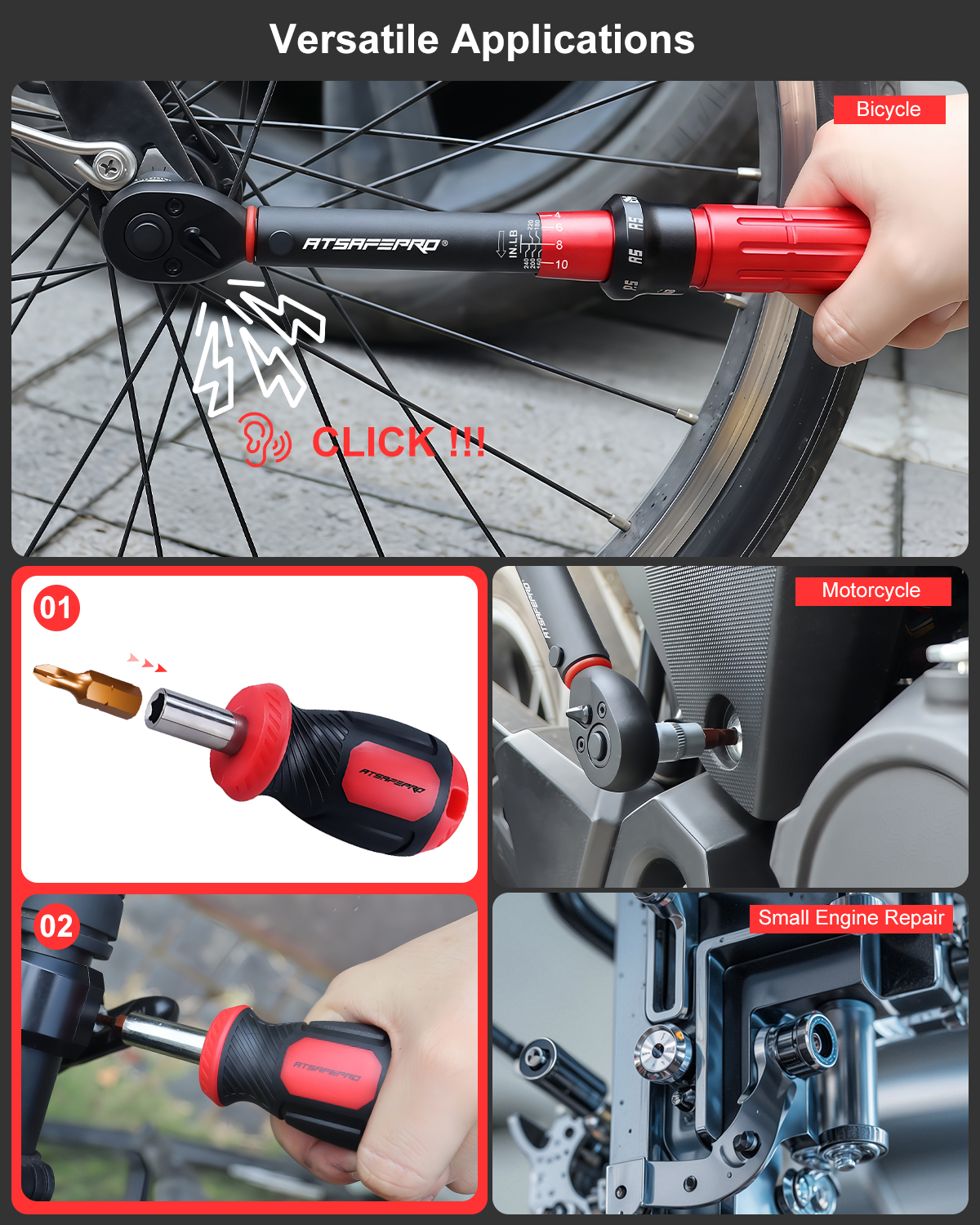
That is why buyers looking at an adjustable click-type torque wrench kit are really making a decision about control. The question is not simply whether the wrench turns a nut. It is whether the tool gives the operator a repeatable way to apply a preset torque value, then move on without guesswork. For sourcing managers and workshop leads, that matters because repeatability reduces rework, protects assemblies, and keeps technicians from relying on feel alone.
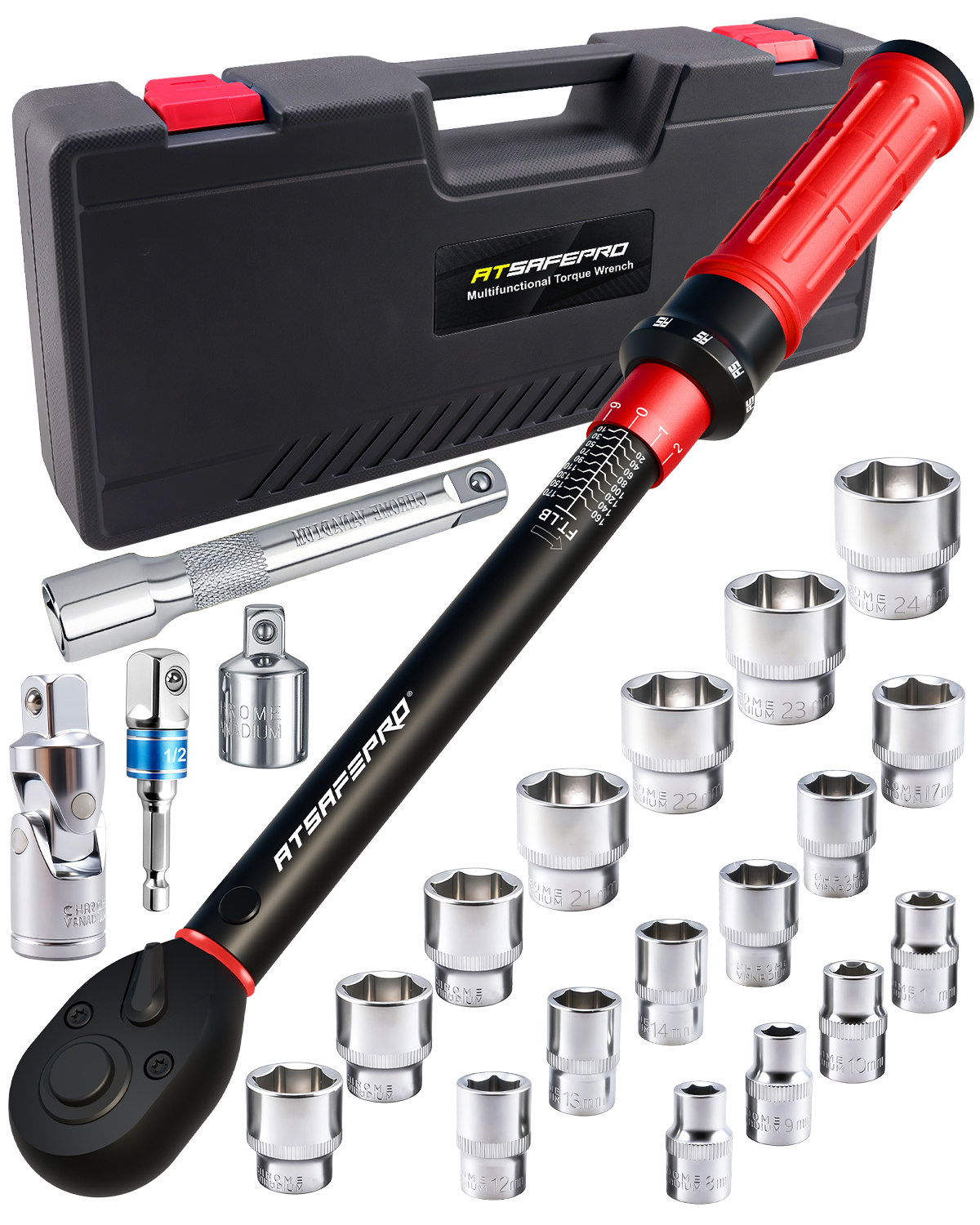
This style of kit is especially useful when a job involves several fastener sizes and the same general fastening method across different assemblies. The visible socket set, adapter piece, and storage case suggest a package built for flexible field use rather than one fixed application. That is often what buyers want in a general maintenance environment: one controlled-torque tool, multiple sockets, and a case that keeps the parts together instead of drifting across a toolbox drawer.
What this kit appears to offer at a glance
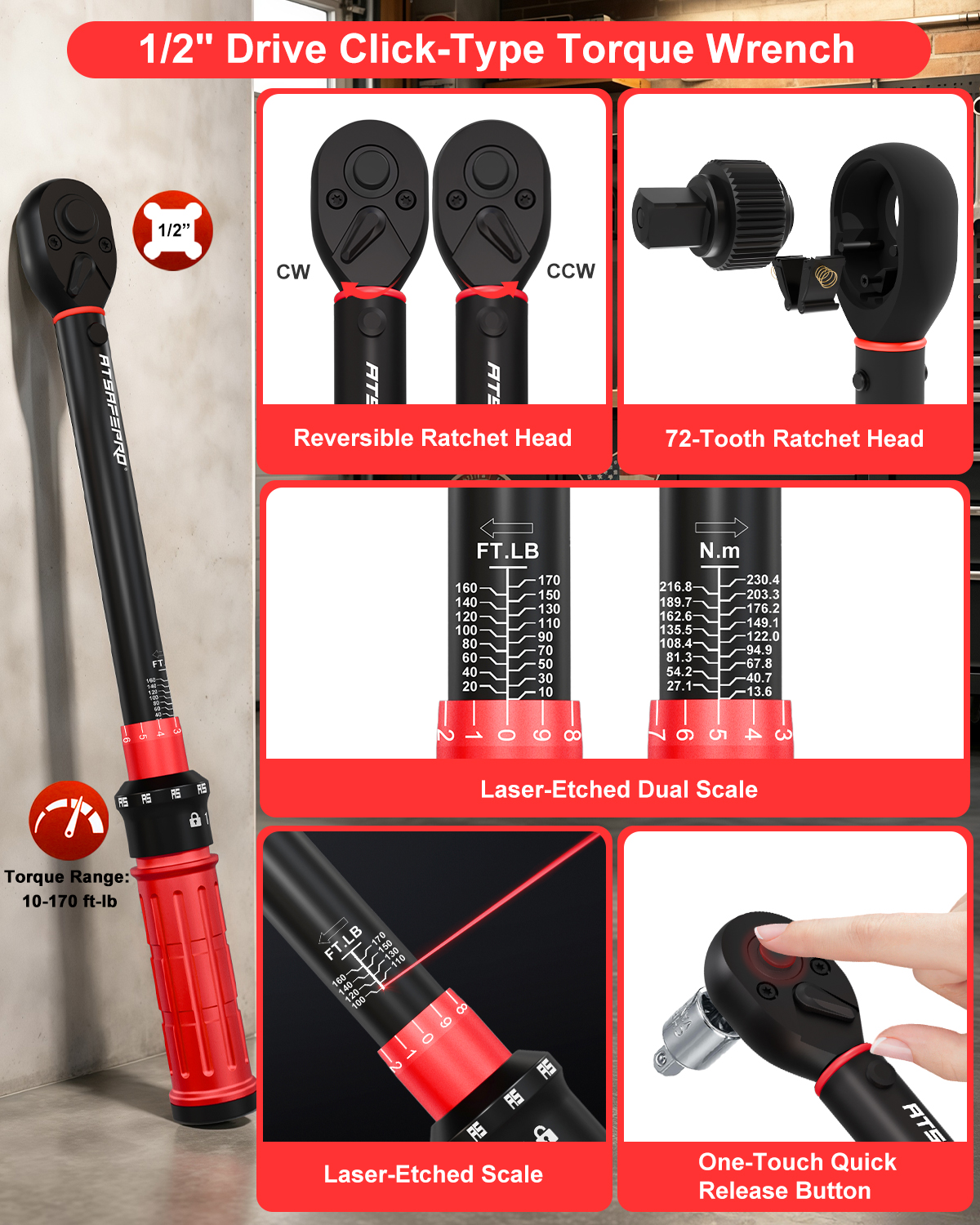
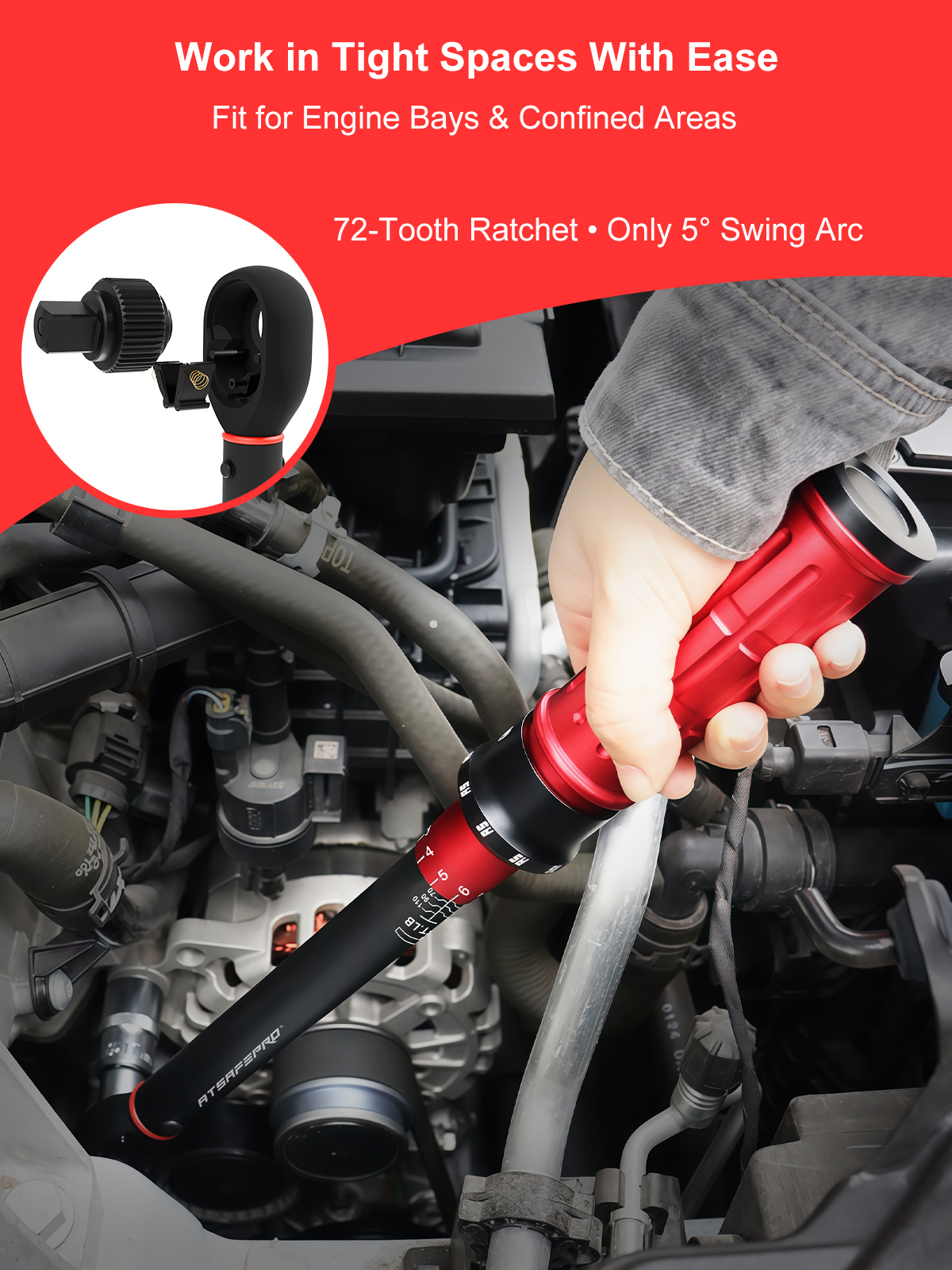
From the visible product details, the kit centers on a long lever-style torque wrench with a ratcheting head, a printed torque scale, and a textured grip. The wrench body has a red coated or anodized-looking shaft, while the head and grip are dark for contrast. That contrast is not just cosmetic. On a busy bench or in poor light, a clear scale and obvious adjustment section are easier to use correctly.
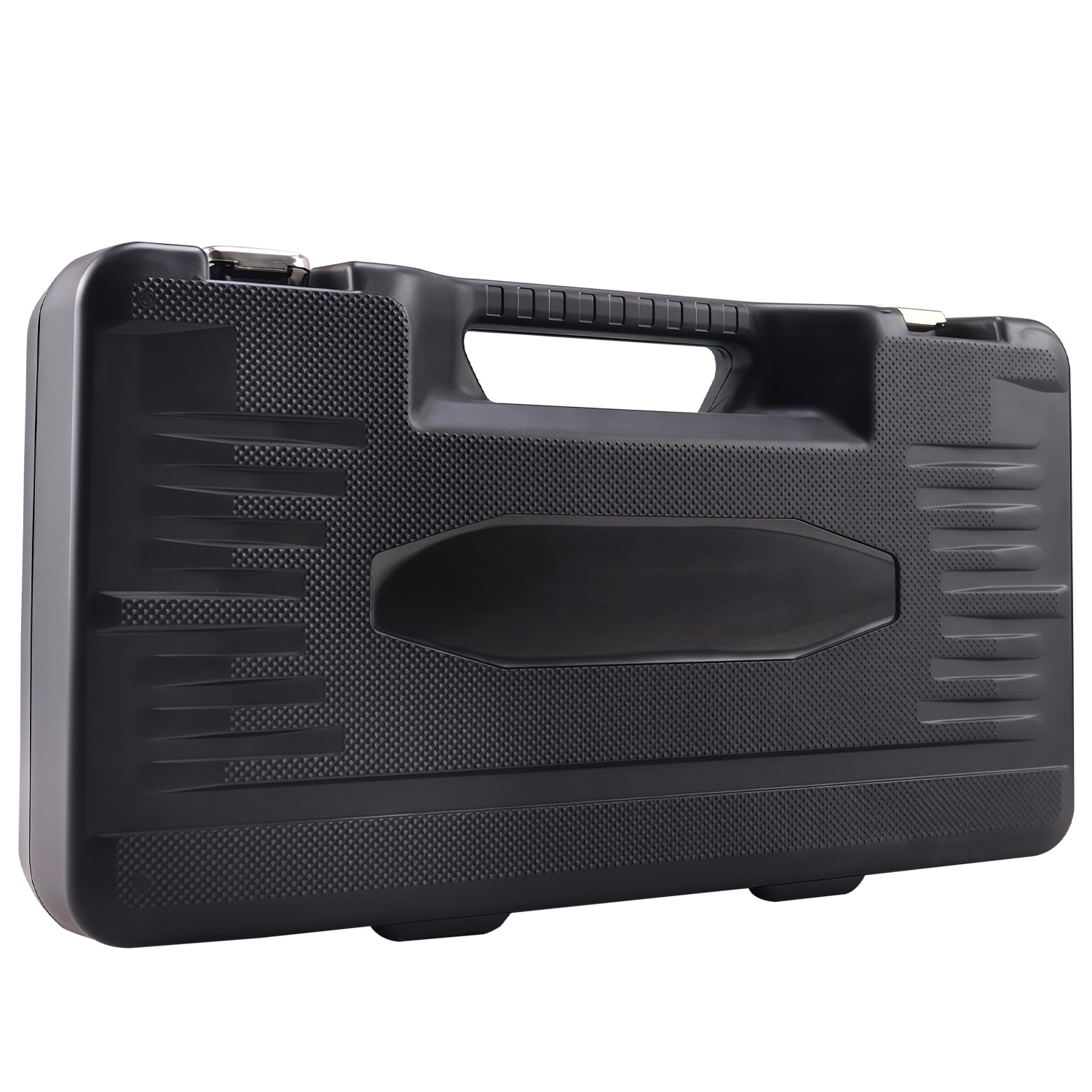
The accessory set includes a chrome-plated socket adapter or extension and several deep socket pieces marked 17 mm, 19 mm, and 21 mm. Those sizes are familiar in automotive wheel and lug nut service, though the exact application always depends on the vehicle or machine. The hard plastic carrying case with molded slots is a practical detail as well. It keeps the wrench, sockets, and adapter from banging together, which matters if the tool will live in a service truck or shared maintenance room.
One caution: the image does not verify the exact torque range, drive size, or accuracy tolerance. Buyers should treat those as specification checks, not assumptions. That is especially important if the wrench will be used in controlled assembly work rather than general repair.
How a click-type torque wrench works
A click-type torque wrench is built to signal when the preset torque has been reached. The operator sets the target value on the handle scale, typically using an adjustment section near the grip. As force is applied, the internal mechanism resists rotation until the set level is reached. At that point, the wrench gives a tactile or audible “click,” which tells the user to stop pulling.
That simple mechanism is why this tool category remains common in shops. It does not depend on memory or hand feel. It gives a process cue. In practice, that means fewer fasteners are chased later for looseness and fewer are ruined by a heavy-handed installer.
Still, a torque wrench is only as useful as the discipline around it. A click does not mean the fastener is magically perfect forever. It means the applied torque reached a chosen level under a specific set of conditions. Clean threads, lubrication, washer condition, and tightening sequence all affect the result.
Best use cases for a kit like this
This kind of torque wrench kit suits several common jobs:
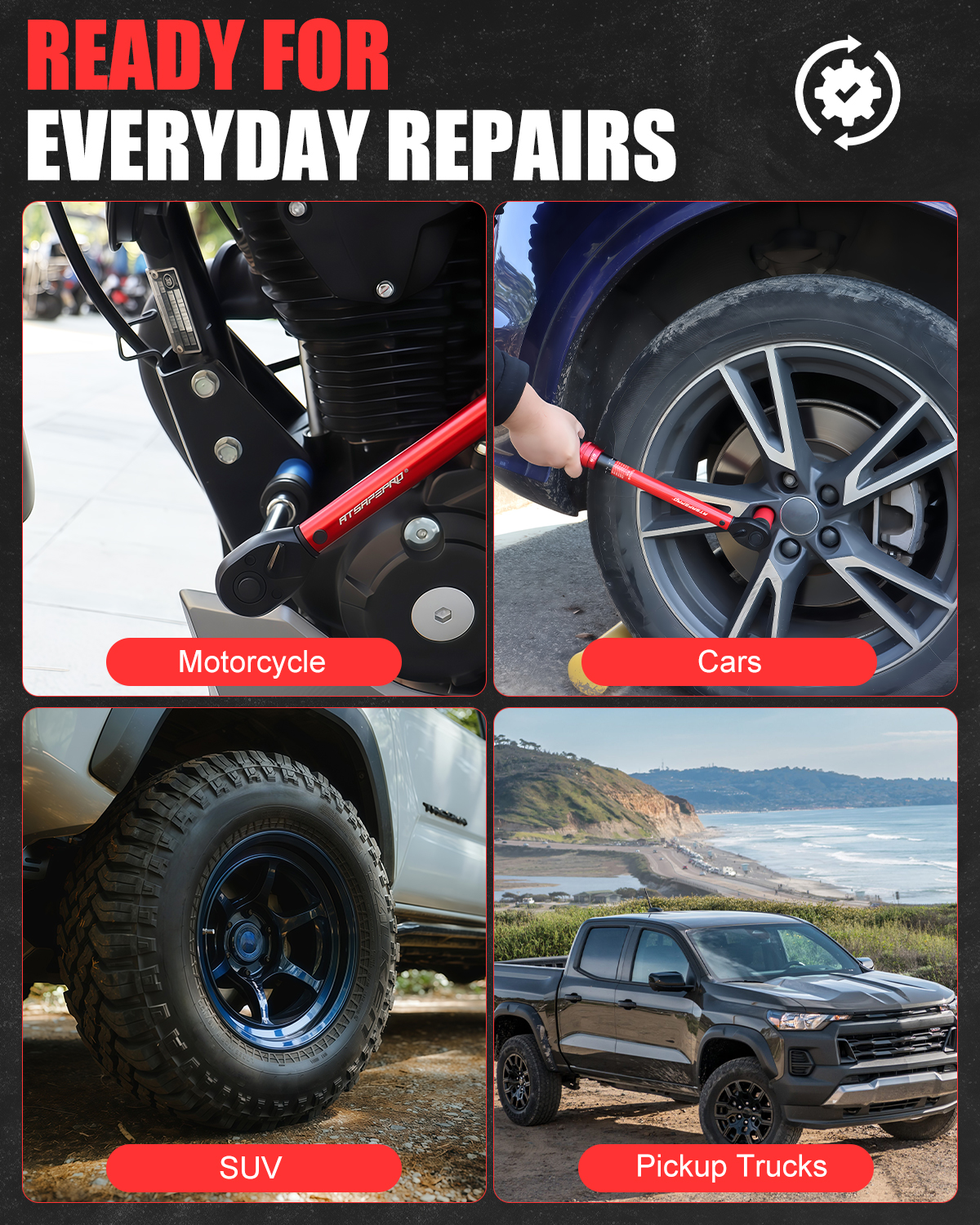
Automotive wheel service, especially lug nut tightening where controlled torque is standard practice.
Mechanical fastening on assemblies where repeated torque values are needed across several fasteners.
Maintenance work in plants, garages, and equipment rooms where technicians need a portable controlled-torque solution.
Bicycle or light equipment service where over-tightening can damage threads, housings, or clamping surfaces.
The socket assortment makes the tool more adaptable than a bare wrench. For field teams, that can save a trip back to the bench for the right accessory. For purchasing teams, it can also reduce the need to issue separate socket sets for every controlled-torque task, although that depends on the rest of the tool room inventory.
Selection criteria buyers should check before specifying one
If you are comparing an adjustable torque wrench kit against other hand tools, do not start with packaging. Start with the operating requirement.
Torque range and intended duty
The most important missing detail in many product listings is the actual torque range. A wrench that covers the wrong range is awkward at best and inaccurate at worst. The best practice is to match the wrench’s working band to the fasteners you actually service most often.
Calibration and repeatability
The product data available here does not confirm pre-calibration or a calibration certificate. That does not mean the tool is unsuitable; it means buyers should ask the question. In regulated environments or production work, traceability may matter more than the price of the wrench itself.
Socket compatibility
The visible socket sizes are 17 mm, 19 mm, and 21 mm. That is useful for wheel-related work, but buyers should confirm whether the drive interface and adapter suit their existing socket system. A good wrench is frustrating if it arrives with accessory sizes that do not match the shop’s actual fasteners.
Handle feel and scale readability
Torque tools are used by people wearing gloves, working under time pressure, or standing in awkward positions. A black textured grip and clearly printed scale are small features, but they make a difference in day-to-day usability. If the scale is hard to read, operators will guess more often than they should.
Common mistakes when using a torque wrench kit
The biggest mistake is using the torque wrench as a breaker bar. That practice can damage the internal mechanism and throw off accuracy. Another common error is storing the wrench with the setting left under load, which is not good practice for most click-type designs.
A more subtle mistake is assuming every fastener in a cluster should be tightened in the same order or to the same feel. On wheel assemblies and certain machine joints, sequence matters. So does the condition of the threads. A rusty or contaminated fastener may “feel” tight before it actually reaches the intended clamp load.
There is also the matter of accessories. Deep sockets and adapters are helpful, but they add variables. If the setup is long, awkward, or prone to wobble, the operator should account for that and work carefully rather than pushing through at speed.
What the visible construction suggests about durability
The wrench body appears to use a metal shaft with a coated finish, while the head is a dark ratcheting design. The sockets look plated, and the case is molded plastic. Taken together, that is typical of a general-purpose hand tool kit designed for workshop storage and frequent handling.
That said, appearance is not proof of metallurgy. Buyers should avoid reading too much into color alone. A red shaft may help visibility and corrosion resistance, but it does not reveal steel grade, heat treatment, or surface hardness. Likewise, chrome-plated sockets can look professional without telling you whether they are intended for light service use or more demanding mechanical work.
A practical buyer will ask the supplier the boring questions: what is the range, how is it calibrated, what is the recommended storage condition, and what fastener types is it meant to serve. Those questions are not glamorous, but they are what keep a tool purchase from becoming a shelf item.
How to use the kit well in day-to-day work
Set the wrench to the specified value before bringing it to the fastener. Select the correct socket size and make sure the fit is full and square. Apply force smoothly and stop at the click. Do not “double click” repeatedly out of habit; the first signal is the one that matters.
After the job, return the setting to the manufacturer’s recommended storage position if one is specified in the manual. Wipe the tool clean, place the sockets back in the molded case, and keep the kit away from oil soak, impact abuse, and moisture when possible. These are simple habits, but they extend useful service life more reliably than most marketing claims do.
Who should buy this type of kit
This kit makes the most sense for buyers who want a versatile controlled-torque solution for maintenance and general mechanical fastening. It is a sensible fit for service teams that handle wheel work, machinery assembly, and equipment repair with moderate variety in fastener sizes.
It is less ideal if your operation needs a highly specialized torque system, a digital readout, or documented calibration procedures as a matter of policy. In that case, the visual package may still be useful, but the specification sheet matters more than the accessory count.
FAQ
Is this torque wrench only for cars?
No. The visible socket sizes make it useful for automotive work, but a click-type torque wrench can also serve machinery, equipment, and maintenance tasks where controlled fastening is needed.
Can I use it with the included sockets for every job?
Only if the socket size and drive interface match the fastener and the tool’s intended use. Always verify compatibility before starting work.
Does the case matter?
Yes, more than many buyers expect. A molded case protects the adjustment mechanism, keeps accessories organized, and helps prevent the kind of shop-floor loss that turns a full kit into a missing-part headache.
What to do next
If you are evaluating an adjustable click-type torque wrench kit for procurement or workshop use, start by confirming the torque range, calibration status, drive compatibility, and socket fit for your actual applications. The visible ATsafepro kit looks suited to practical fastening work, but the real purchase decision should rest on the data behind the handle scale, not the color of the shaft.
For buyers building a serviceable tool standard, that is the useful next step: match the tool to the fastener family, confirm the specifications, and choose a kit that technicians will actually keep in the case after the job is done.