A practical look at the ATsafepro torque wrench: what buyers are really checking
I asked a shop tech a simple question the first time I looked at the ATsafepro torque wrench: what makes you trust one adjustable click-type tool over another? His answer was blunt. “If it adjusts cleanly, clicks consistently, and the kit covers the jobs I actually do, I’ll keep it on the bench.” That is the real test for any torque tool in automotive and mechanical fastening. Not the paint color, not the packaging, and not the marketing copy tucked into the case.
That is why buyers looking at the ATsafepro torque wrench are usually trying to decide something very practical: will this kit handle wheel work, routine repair, and general assembly without making fastening guesswork worse? A torque wrench is one of those tools that earns its place by preventing problems you may not see immediately. Over-tighten a fastener and you can stretch threads, distort mating parts, or create uneven clamping. Under-tighten it and the assembly may loosen under vibration. Either way, the error often shows up later, and by then the bill belongs to somebody else.
What stands out in the kit
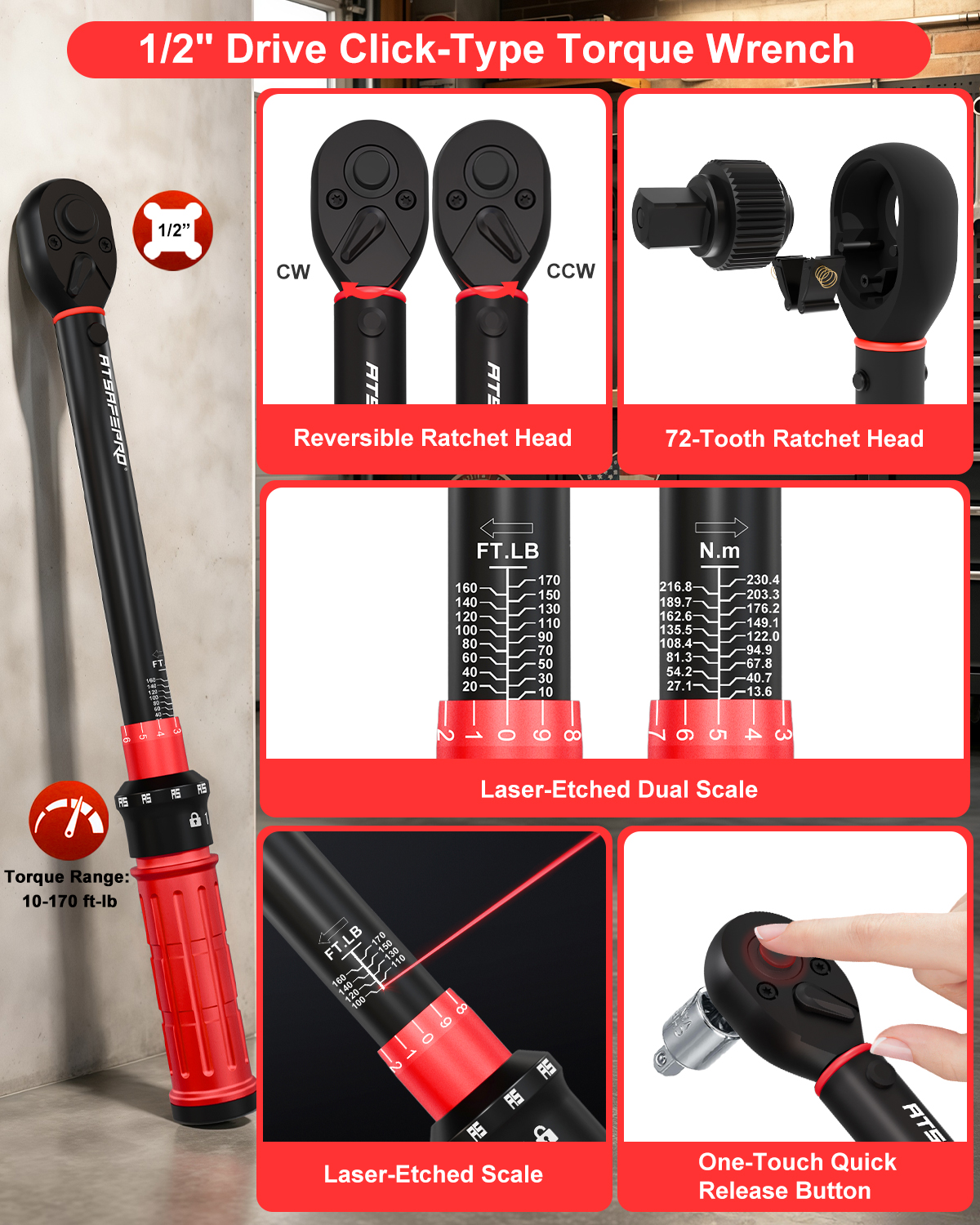
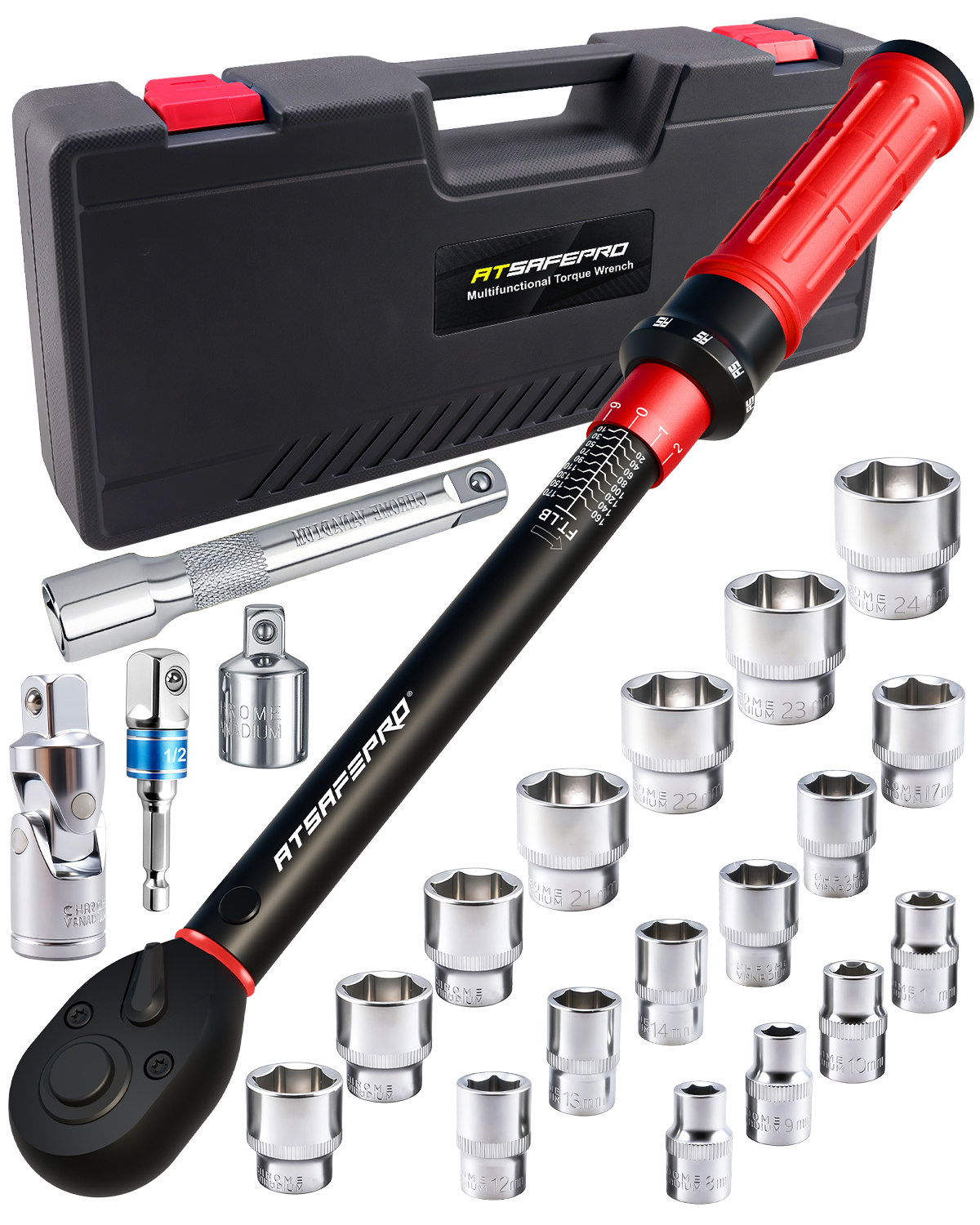
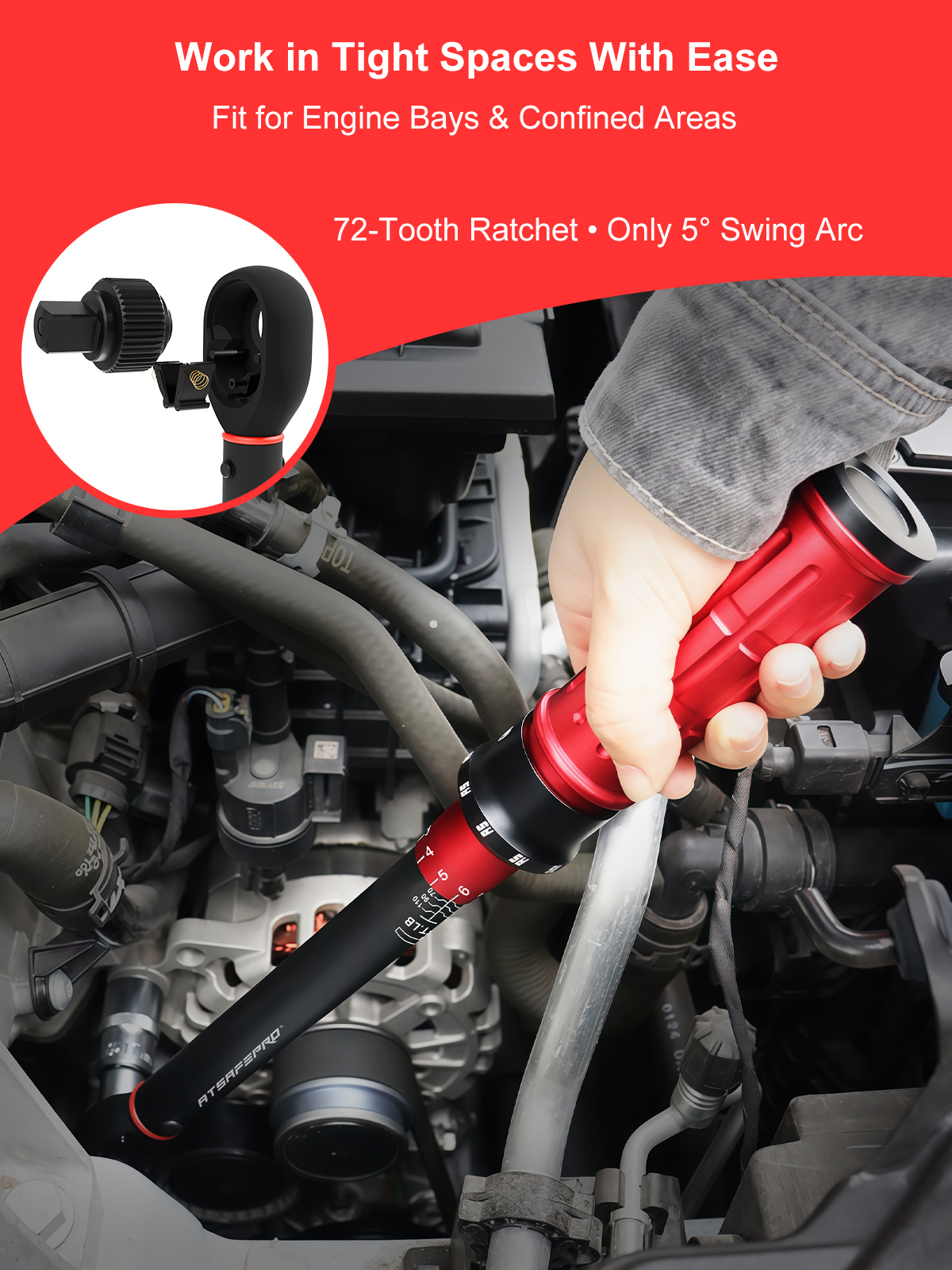
From the product information, this is an adjustable click-type torque wrench kit for automotive and mechanical fastening. The visible layout is familiar to anyone who works around vehicles or light machinery: a straight handle, a textured grip, a ratcheting head, a printed torque scale, and a locking or adjustment section near the lower grip. The wrench is paired with a molded storage case and several sockets, including deep CR-MO sockets marked 17 mm, 19 mm, and 21 mm, plus a smaller chrome adapter or extension piece.
That combination tells you a lot about the intended use. The socket sizes line up neatly with common wheel-service work and general repair tasks. The fact that the sockets are marked CR-MO suggests chrome-molybdenum steel, which is commonly used for impact-style sockets because it handles service abuse better than plain chrome sockets. I would still avoid assuming more than the marking gives you. “CR-MO” is useful evidence, not a full material report.
How a click-type torque wrench helps in daily work
A click-type wrench is popular because it is straightforward. You set the desired torque value on the body, tighten the fastener, and the tool gives a tactile or audible signal when the preset load is reached. That makes it more repeatable than “feel” tightening, especially for technicians who move between different fastener sizes and applications during the same shift.
In practice, the appeal is consistency. A wheel nut can be brought down to a target value without relying on arm strength. An engine cover, bracket, or small machine assembly can be tightened without crushing a gasket or stripping a thread. The tool does not make the decision for you; it enforces the decision you already made.
There is one caveat worth stating plainly: a torque wrench only works well when it is used correctly. If the wrench is abused as a breaker bar, left stored with tension on the spring, or used beyond its intended range, the accuracy you thought you were paying for starts to fade. That is not unique to this model. It is a general rule across the category.
What the visible construction suggests
The ATsafepro torque wrench appears to use a long straight metal body with a red painted or anodized-looking finish, a black textured grip, and a black ratchet head. The overall shape is a standard workshop pattern rather than a specialty design. For buyers, that is often a good sign because standard layouts are easier to adopt across a shop. Technicians do not need a tutorial every time they pick it up.
The printed torque scale on the shaft is another important detail. A clear, legible scale matters more than people admit in procurement conversations. If the markings are hard to read under fluorescent shop lighting, nobody enjoys setting the tool, especially when the difference between two marks is small enough to invite mistakes. The product data confirms that the scale is printed, though the exact range is not fully legible from the available image, so I would want to verify the usable torque range before ordering for a specific program.
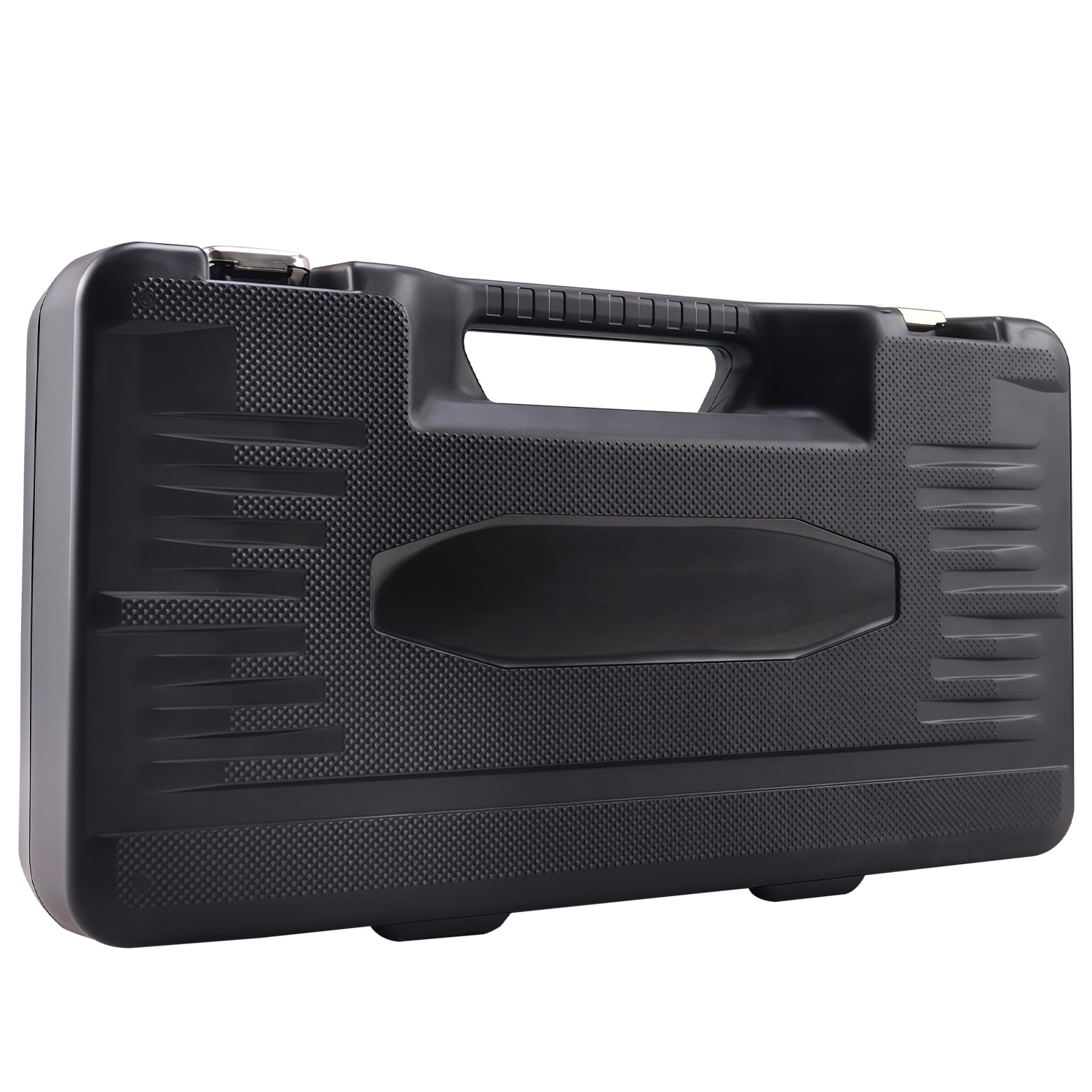
The storage case also matters. Tool control is not a luxury in a working bay. A molded case protects the wrench, keeps the sockets together, and makes it easier to spot missing pieces. That may sound minor until a shop wastes ten minutes searching for a 19 mm socket during a busy tire rotation block.
Where this kind of kit fits best
For many buyers, the real question is not “Is this a torque wrench?” It is “Will this cover enough jobs to justify shelf space?” Based on the kit contents and the product category, the answer appears to be yes for several common use cases.
Automotive and tire service
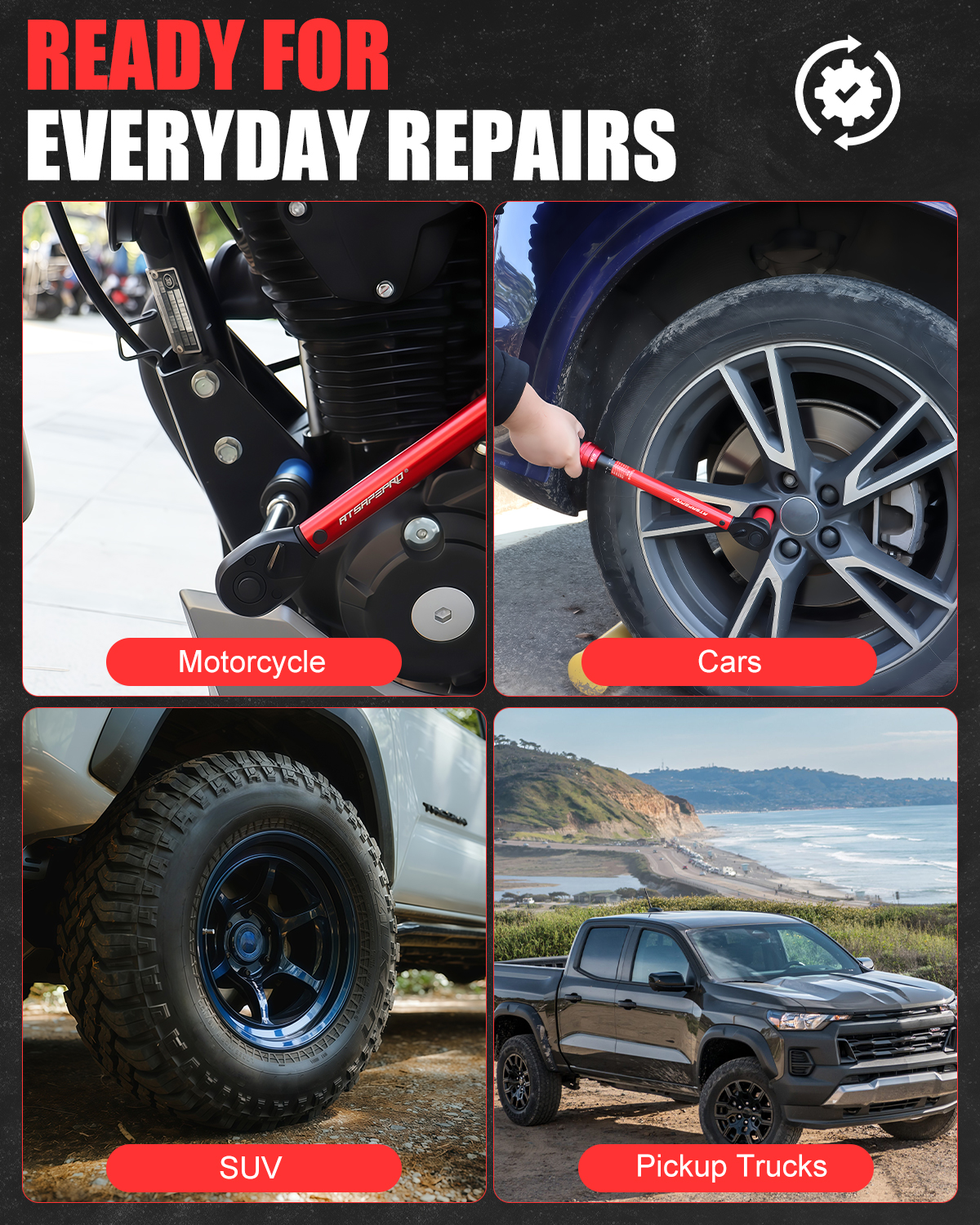
Wheel nuts are the obvious application. The included 17 mm, 19 mm, and 21 mm sockets fit a broad slice of passenger-vehicle service work. If your operation handles routine tire swaps, brake jobs, or wheel checks, a kit like this can sit close to the service bay and reduce the chance of improvised tightening.
Motorcycle and small equipment maintenance
Motorcycle shops and maintenance teams often need controlled fastening on smaller assemblies where overtightening is easy to do and expensive to fix. The same goes for light equipment assembly. A repeatable click-type wrench is usually more useful than a simple ratchet when fastener consistency matters.
General mechanical assembly
Assembly lines, maintenance departments, and repair benches all benefit from a tool that can be reset quickly and stored as a kit. For low-volume work, the package format is convenient. For higher-volume or more tightly controlled production, buyers should confirm calibration requirements and internal quality procedures before assuming a hand tool kit alone is enough.
How buyers should evaluate it before purchase
When a sourcing manager or engineer evaluates an adjustable torque wrench kit, I would keep the checklist grounded in the job, not the brochure.
First, confirm the torque range against the actual fastening requirement. The product data says the scale is printed but does not supply a fully readable range, so this should be checked before the tool is assigned to a critical task.
Second, verify the drive and socket interface. The head appears to be a square-drive ratcheting mechanism, but the exact drive size is not clearly readable. That matters because it determines compatibility with the socket set and any existing shop accessories.
Third, compare the socket sizes to the work envelope. Here the visible sizes are 17 mm, 19 mm, and 21 mm, which are very practical for common service tasks. If your application needs more variety, you will want to know whether the kit is expandable or whether it is intended as a focused wheel-service set.
Fourth, think about handling. A long handle can help with controlled application, but length also affects storage and one-handed use in cramped bays. That tradeoff is normal. Better leverage is useful; awkward reach is still awkward reach.
Common mistakes buyers make with torque tools
One common mistake is buying based on socket count alone. A nice case does not matter if the wrench range does not fit the fastening task.
Another mistake is assuming all click-type wrenches are interchangeable without calibration checks. They are not. Even when two tools look similar, actual performance can vary with design, use history, and storage habits.
A third mistake is overlooking the socket material. In this kit, the CR-MO marking suggests a more service-oriented socket set, which is helpful if the sockets will see tougher use. But that still does not mean every socket is suitable for every abuse scenario. A buyer should still match the accessory to the tool and the task.
A short interview-style takeaway from the shop floor
If you hear experienced technicians talk about torque tools, the conversation usually comes back to three points: does it set easily, does it click clearly, and does the case keep everything together. The ATsafepro torque wrench appears to answer those basics with a standard adjustable layout, a ratcheting head, visible scale markings, and a usable socket set for common service work.
That does not make it the right choice for every program. Critical production environments may need more documentation, tighter verification, or a different tool class altogether. But for automotive repair, tire service, motorcycle work, and general mechanical fastening, this kit has the sort of practical setup buyers often want: simple, organized, and close to the jobs that need doing.
What to ask the supplier before you commit
Before you place an order, ask for the exact torque range, drive size, and any available calibration documentation. If your application is routine service, those details may be enough. If the tool is going into a controlled maintenance system, you may need more internal traceability and a defined verification process.
Also ask whether the included sockets are intended for impact use in the way your shop works. The CR-MO marking is a helpful clue, but it is still smart to confirm the intended duty level rather than infer it from appearance alone.
Bottom line for buyers
The ATsafepro torque wrench kit looks aimed at the practical end of the market: technicians who want a usable adjustable click-type wrench, a small socket set, and a case that keeps the package together. That makes it worth a close look for wheel service and general mechanical fastening, especially when the main buying criteria are convenience and repeatability.
If you are evaluating it for your shop or purchasing program, the next step is straightforward: confirm the torque range, drive compatibility, and accessory fit against the actual job. That will tell you more than any product photo ever will.