Why a torque wrench matters before a fastener becomes a problem
An ATsafepro torque wrench is the kind of tool people only notice when something goes wrong: a wheel nut that loosens, a bracket that cracks, a delicate thread that strips, or a critical joint that never quite feels right. For engineers, sourcing managers, and hands-on maintenance teams, controlled tightening is not a luxury. It is part of making assembly repeatable, serviceable, and safe.
That is the real search intent behind this topic. Buyers are usually trying to decide whether a compact torque wrench kit with sockets and accessories can cover common fastening tasks without moving up to a more specialized professional set. They want to know what the tool does, where it fits, and what to check before putting it into service.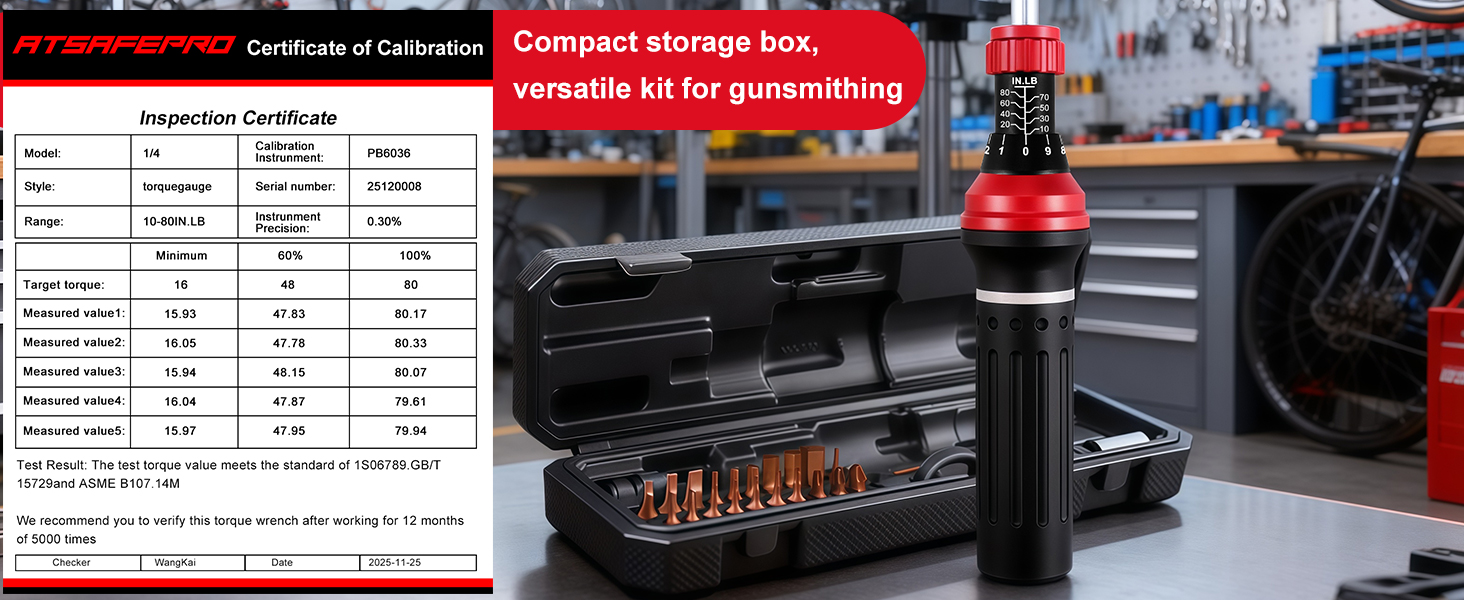
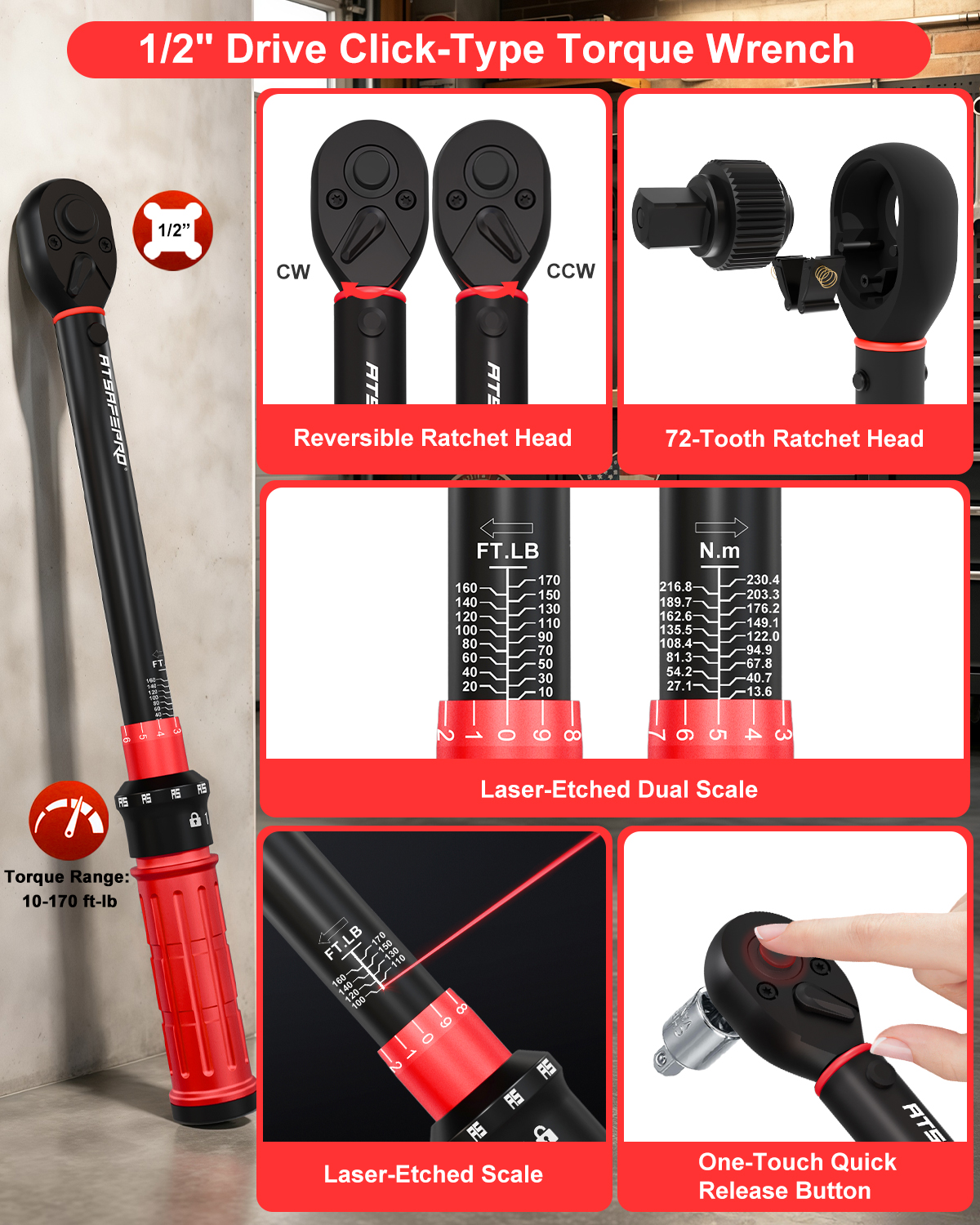
The ATsafepro torque wrench shown here appears to be an adjustable, click-type style kit with interchangeable sockets, an extension or adapter, and a molded storage case. It is aimed at practical work: automotive fastening, bicycle and motorcycle maintenance, and general mechanical assembly where a preset torque value is more useful than “tight enough by feel.”
What the kit appears to offer at a glance
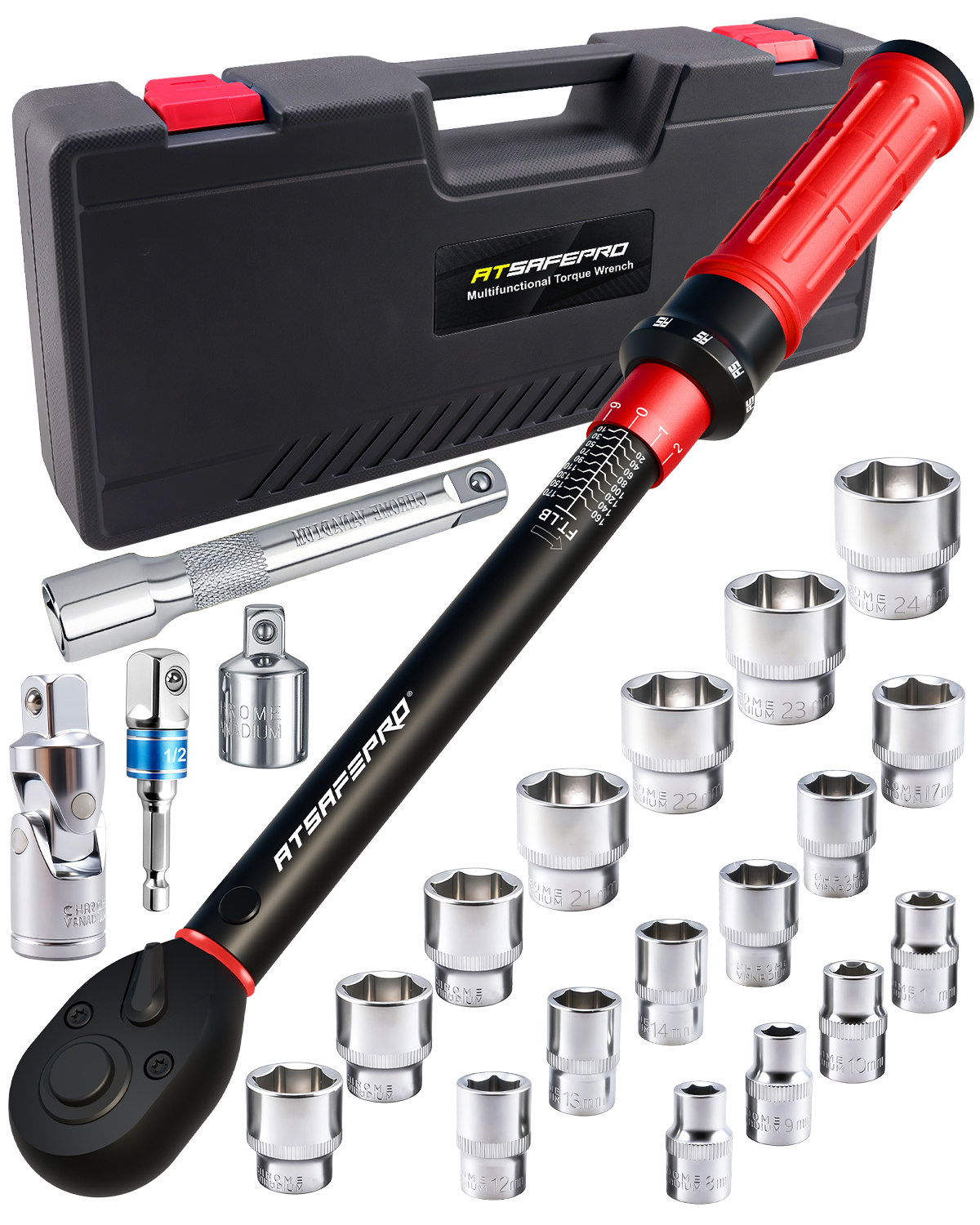
The visible package is straightforward, and that is part of the appeal. Instead of a bare wrench, you get a small fastening kit built around one adjustable tool and a handful of common accessories.
The standout pieces are:
- A long metal torque wrench body with a red finish
- A black textured grip for better hand control
- A black ratcheting head with a selector lever
- Engraved or printed torque scale markings on the handle
- Chrome-plated sockets marked 17 mm, 19 mm, and 21 mm
- A silver extension/adaptor
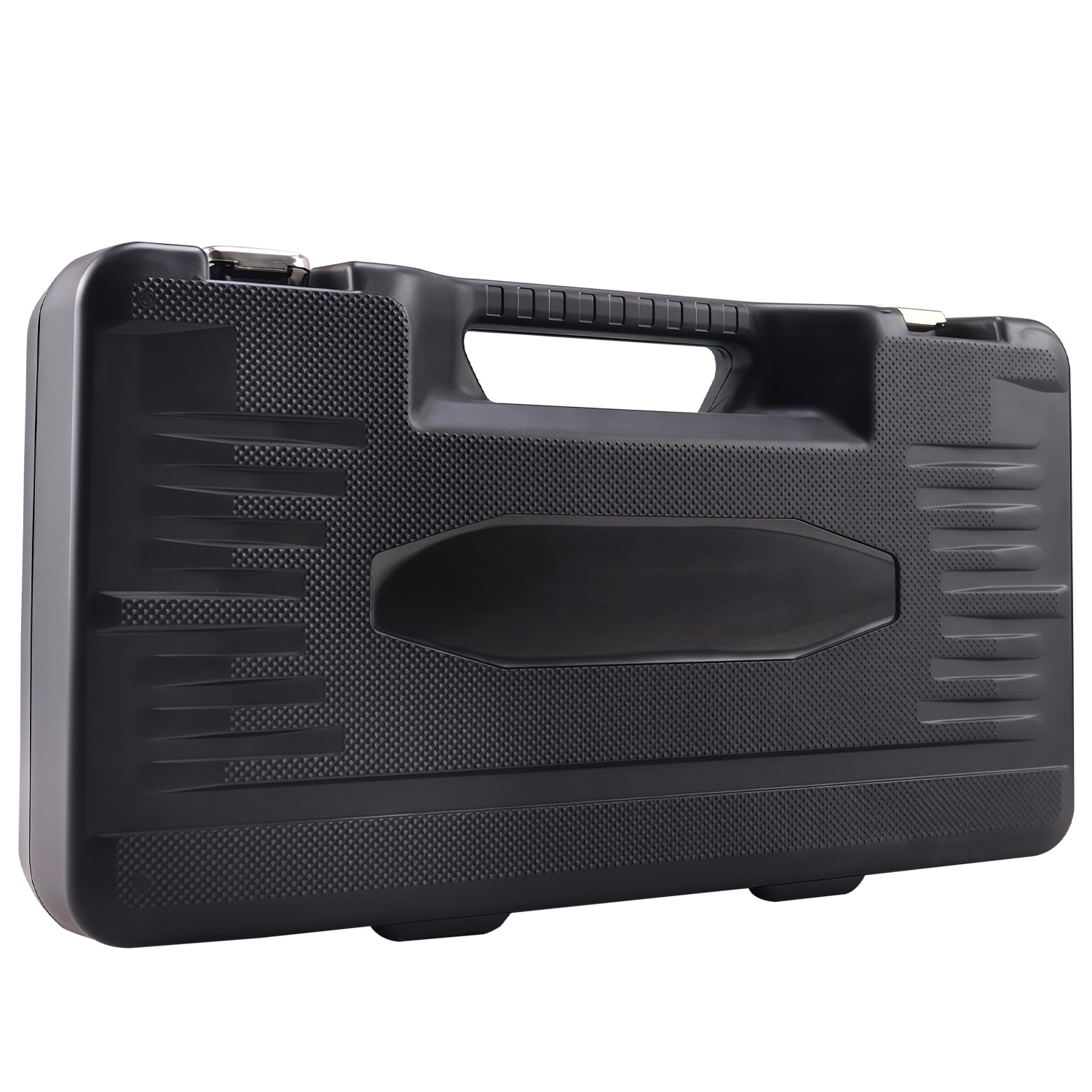
- A molded black plastic carrying case
That combination points to a tool meant for everyday maintenance where convenience matters. In the field, a technician often cares less about having a huge accessory library and more about whether the correct socket is already in the case and easy to grab.
Why controlled torque is a practical buying decision, not just a technical detail
Torque control sounds abstract until you look at the cost of getting it wrong. Under-tightened fasteners can loosen under vibration, which is a common issue on vehicles, frames, machinery covers, and rotating equipment. Over-tightened fasteners can stretch bolts, crush washers, deform mating surfaces, or damage softer materials such as aluminum housings and thin brackets.
That is why a torque wrench is not simply a “nice to have” hand tool. It helps standardize assembly across people and shifts. One technician may have a strong feel for fasteners; another may not. A torque wrench reduces the variability between them.
For buyers, the decision is usually not whether torque control is useful. It is whether this particular kit fits the work pattern. If most of the jobs involve wheel service, motorcycle covers, small machinery, or general maintenance, a compact wrench with a few common sockets can be very practical. If the work requires verified calibration records, very tight tolerances, or a broad torque range, the buying standard changes quickly.
How this style of torque wrench is typically used
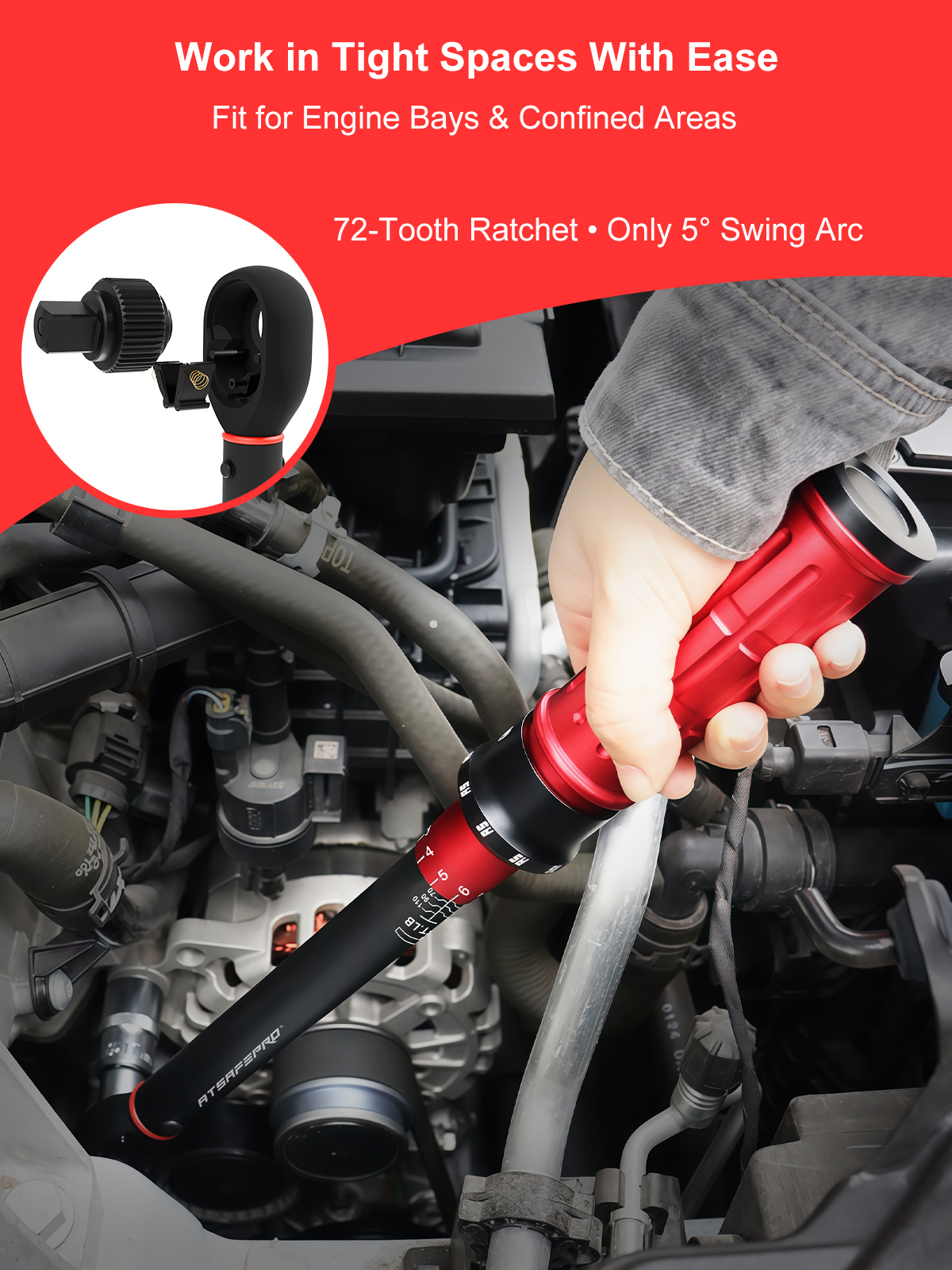
A wrench in this category is generally set to a target torque, applied to the fastener, and used until the user senses the preset limit or engagement event associated with the mechanism. The visible selector lever on the head suggests a ratcheting action that helps in confined spaces, which is useful when there is not much room to reset the tool between pulls.
In daily use, the workflow is simple enough:
1. Select the correct socket or adaptor
2. Set the desired torque value on the handle scale
3. Attach the wrench to the fastener
4. Tighten steadily and avoid sudden jerks
5. Stop once the preset limit is reached
That sounds obvious, but in practice the discipline matters. A torque wrench is only as useful as the person using it. Pulling too quickly, using the wrong setting, or treating the tool like a breaker bar defeats the purpose.
One practical caution: if the accessory set is being used for automotive wheel work, always confirm the socket size against the vehicle hardware before starting. The kit includes 17 mm, 19 mm, and 21 mm markings, which are common wheel-nut sizes, but common does not mean universal.
What the visible construction suggests about manufacturing
From a manufacturing standpoint, this looks like a conventional hand-tool build rather than a precision electronic instrument. The long shaft is likely machined metal, with a finished surface that may be painted or anodized in red for corrosion resistance and brand identity. The black grip seems textured for slip resistance, which is a small detail that matters when hands are oily or when the workbench is cold.
The socket set appears chrome plated, which is standard for corrosion resistance and easier cleanup. The engraved or printed torque markings on the handle are important because they are the user interface for the whole tool. If those markings are hard to read, the tool is less practical no matter how solid the mechanics are.
The molded case also deserves more credit than it usually gets. A torque wrench that is tossed into a drawer or service van can be damaged, especially if the adjustment area or head takes an impact. A fitted case helps protect the setting mechanism and keeps the sockets and extension together, which reduces the usual missing-part headache.
Where this kit makes sense
This type of torque wrench kit is most useful when the job mix is broad but not overly specialized.
Automotive maintenance
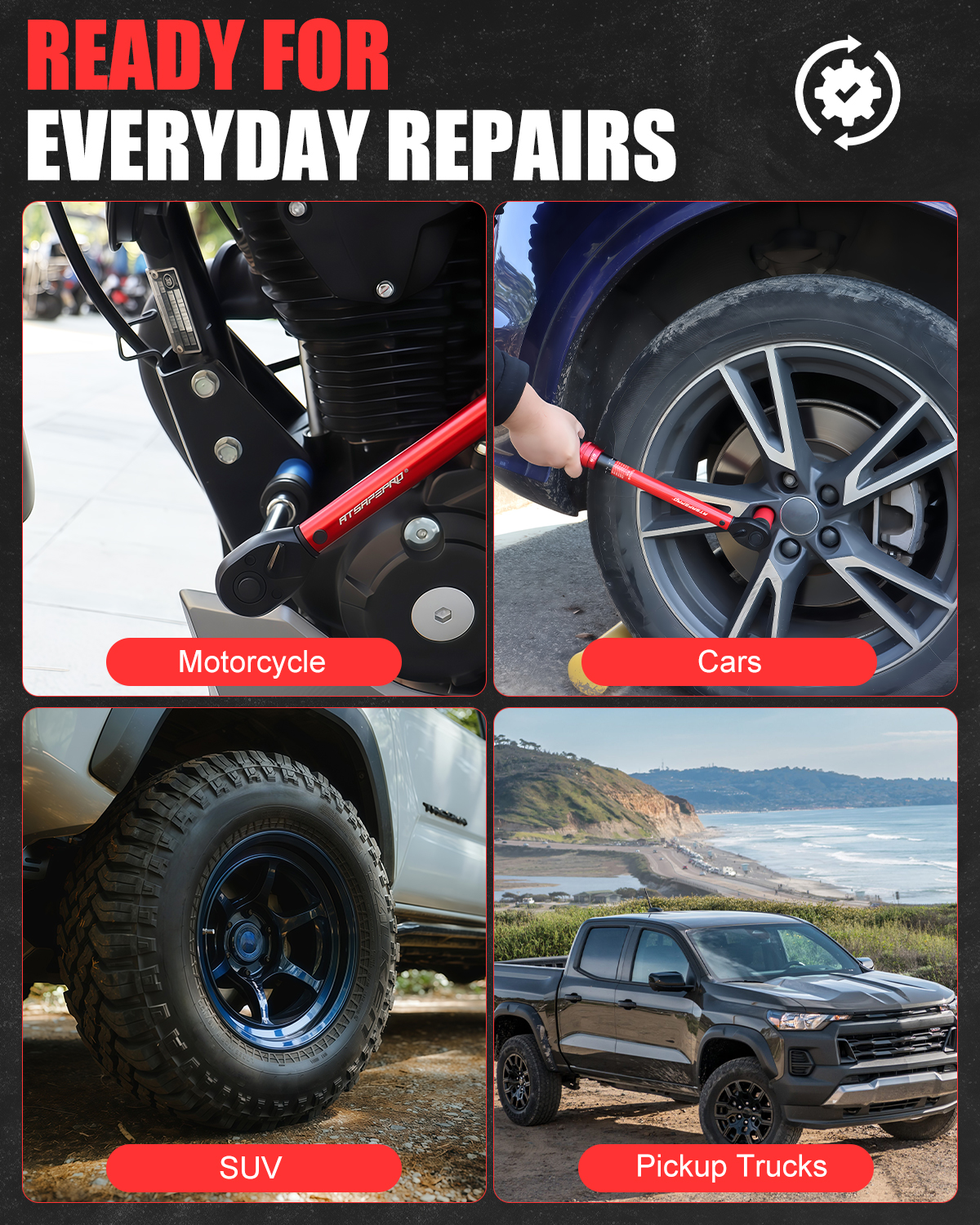
Wheel and brake-related fastening often benefits from controlled torque, though the exact requirement depends on the vehicle and the component. A kit with common socket sizes and an extension is useful for service bays, garage work, and fleet maintenance.
Bicycle and motorcycle service
Smaller vehicles often involve fasteners that should not be overtightened. Parts such as clamps, covers, and bracket bolts can be more sensitive than they look. A controlled wrench helps protect threads and thin components.
General machinery assembly
In machine building or light maintenance, repeatable tightening can help reduce variability across assemblies. That matters when multiple units are being built in the same shop and consistency is more important than brute force.
What buyers should check before purchasing
The visible information is helpful, but it does not answer everything. For a sourcing manager or technical buyer, that is where the real evaluation starts.
The main questions are:
- What is the torque range?
- What is the drive size?
- Is the wrench suitable for the intended fasteners and torque values?
- Is there a calibration statement or certificate available?
- How clearly are the markings printed or etched for shop use?
- How durable is the case and accessory layout under repeated transport?
Those questions matter because a torque wrench is not bought only for its appearance or accessory count. It is bought to perform within a known range and to stay usable over time. If the application is noncritical, a kit like this may be perfectly adequate. If the application is safety-sensitive or subject to internal QA requirements, documentation becomes part of the product.
Common mistakes with torque tools
A lot of torque wrench problems are really usage problems.
The first mistake is using a torque wrench to loosen stubborn fasteners. That is hard on the mechanism and can shorten tool life. Another common error is storing the wrench at a high setting and leaving it there for long periods. Many shops prefer to reduce the setting after use so the internal spring is not left under tension. If the manufacturer gives different storage guidance, follow that instead.
A third mistake is assuming the included sockets cover every job. They may work well for common automotive tasks, but specialty fasteners still require the right tool. Forcing a close-but-not-quite socket onto a fastener is how small problems become expensive ones.
A practical buyer’s view: where this kind of kit fits and where it does not
This ATsafepro torque wrench kit looks like a sensible general-purpose solution for users who want one organized set rather than a collection of scattered tools. It is especially attractive for maintenance teams that value portability and quick access to basic socket sizes.
It is less compelling if the job demands verified metrology, unusually high torque capacity, or a highly specialized head style. In those cases, the buyer should ask for more detailed product data before making a decision.
That may sound cautious, but it is the right approach. Torque tools live at the intersection of convenience and control. The wrong one can still turn a bolt, which is exactly why people underestimate the difference until a joint fails inspection.
FAQ
Is this a professional torque wrench?
It appears to be a practical adjustable torque wrench kit for general mechanical use, but the visible information does not confirm professional calibration or specification details.
What sizes are included?
The visible sockets are marked 17 mm, 19 mm, and 21 mm, plus an extension or adaptor.
Can it be used for automotive wheels?
It may be suitable for some wheel applications, but the correct answer depends on the vehicle, the required torque range, and the socket fit.
Does the kit include a storage case?
Yes, the visible packaging includes a molded black plastic case.
What to do next
If you are comparing torque wrench options for maintenance, assembly, or vehicle service, start with the basics: intended torque range, drive size, marking clarity, and whether the included sockets match the work you actually do. A compact kit like the ATsafepro torque wrench can be a useful purchase when the goal is controlled tightening, portability, and straightforward shop use.
For sourcing teams, the next step is to request the missing technical details before approving it for production or service use. For end users, the next step is simpler: match the tool to the fasteners on the bench, not the other way around.