Why a torque wrench matters more than most buyers expect
An ATsafepro torque wrench is the kind of tool that looks straightforward until you have to trust it on a real job. Then the details matter: the torque setting, the ratcheting head, the socket fit, and whether the tool makes tightening repeatable instead of guesswork. For automotive work, light machinery maintenance, and general assembly, the goal is not simply to make a fastener tight. It is to make it tight enough, and no tighter than necessary.
That distinction sounds minor, but it is where a lot of expensive problems begin. Over-tightened lug nuts can stretch studs, distort mating surfaces, or make roadside service miserable later. Under-tightened fasteners can loosen under vibration. In production or repair work, a controlled tightening process is often the cheapest form of insurance available. The buyer’s real decision is not whether torque control is useful; it is which style of wrench and accessory kit fits the work without adding friction to the process.
What this type of wrench is designed to do
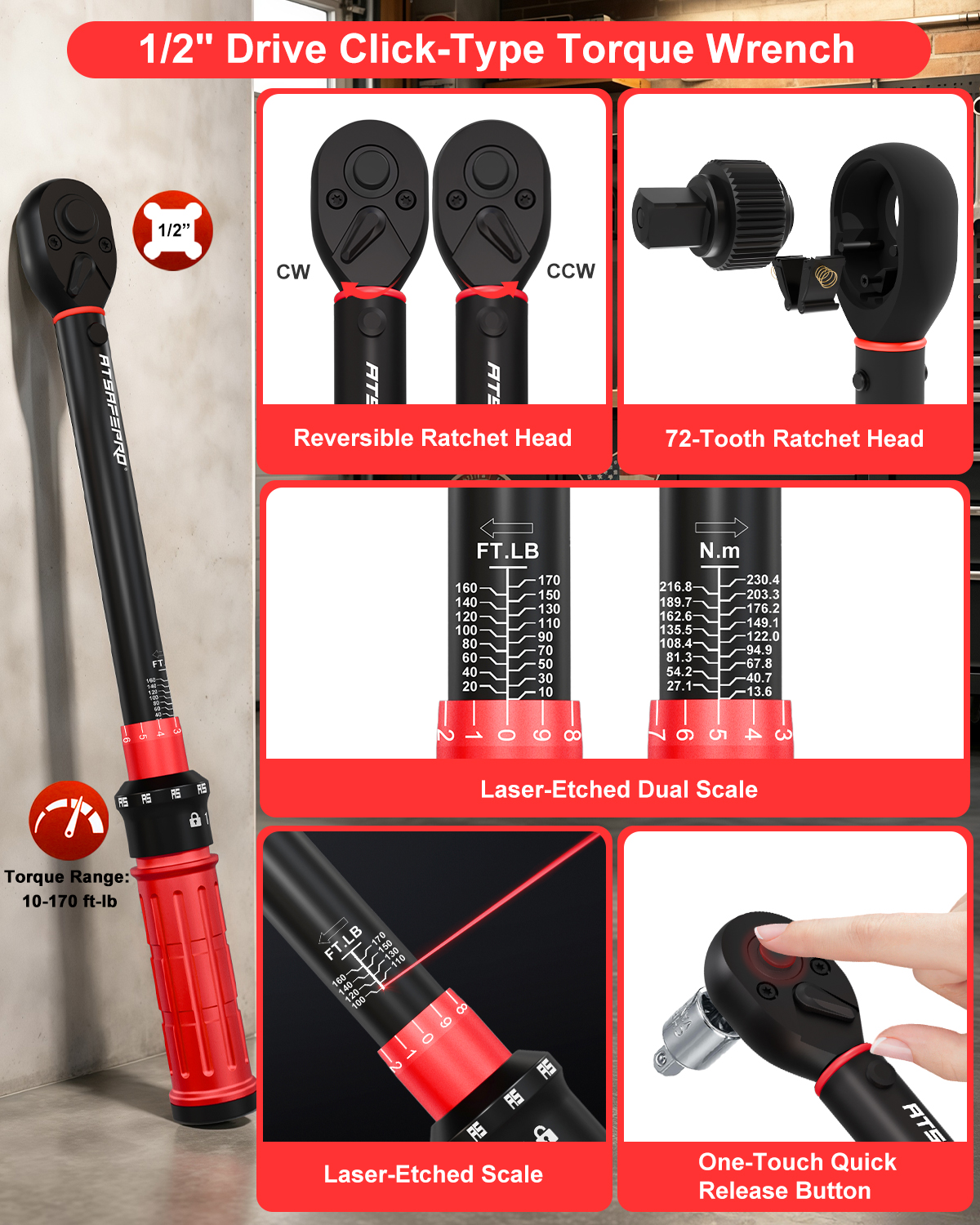
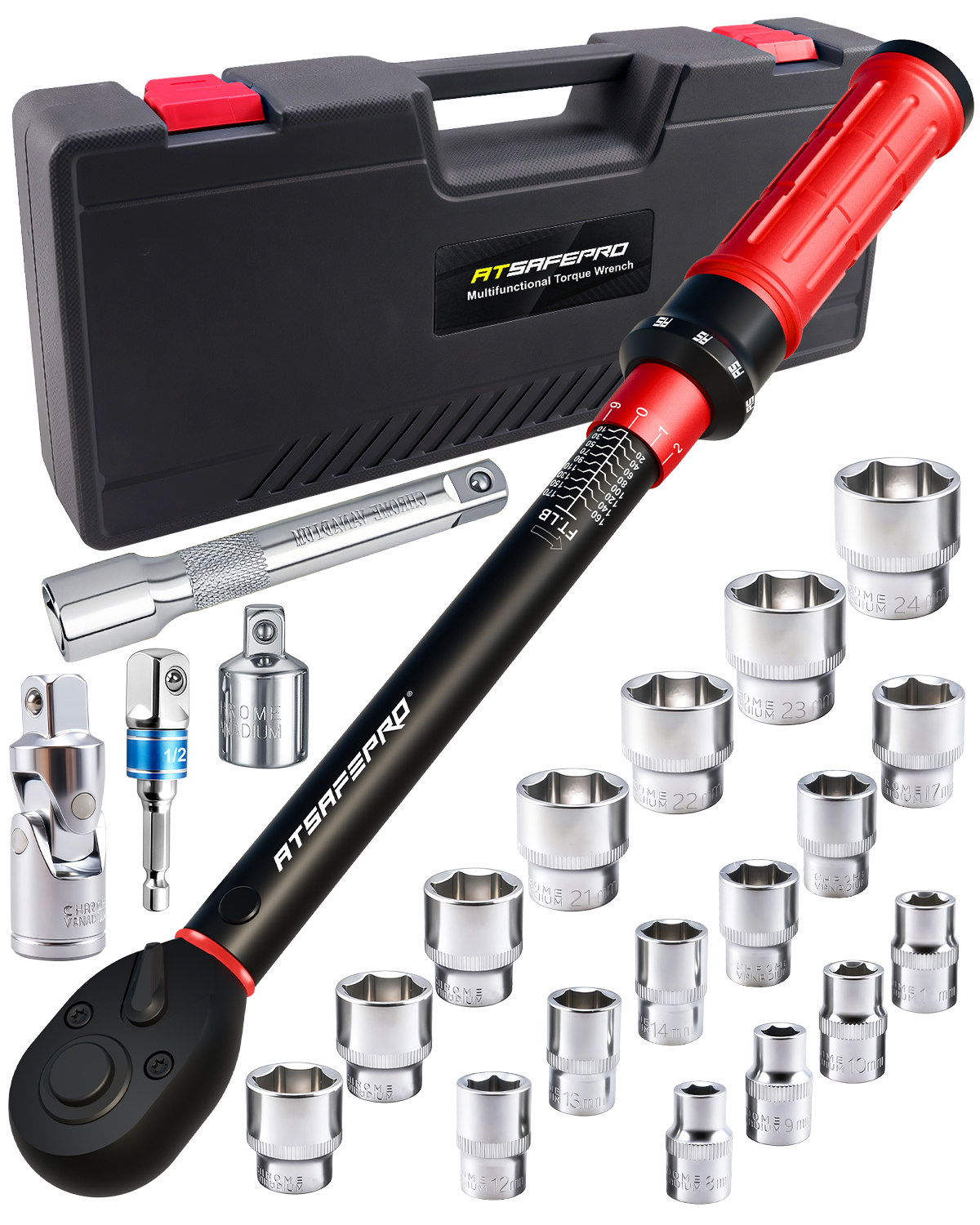
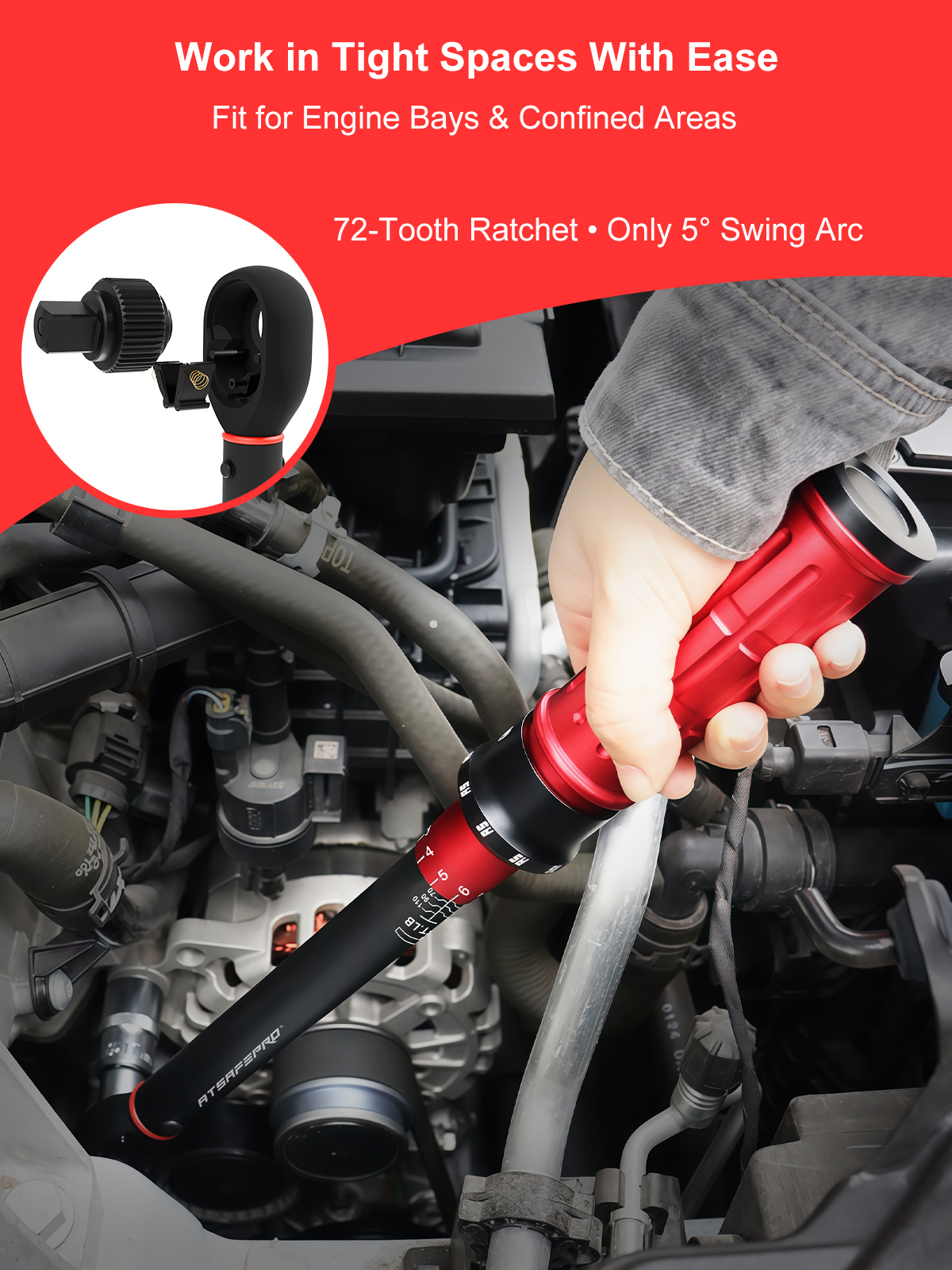
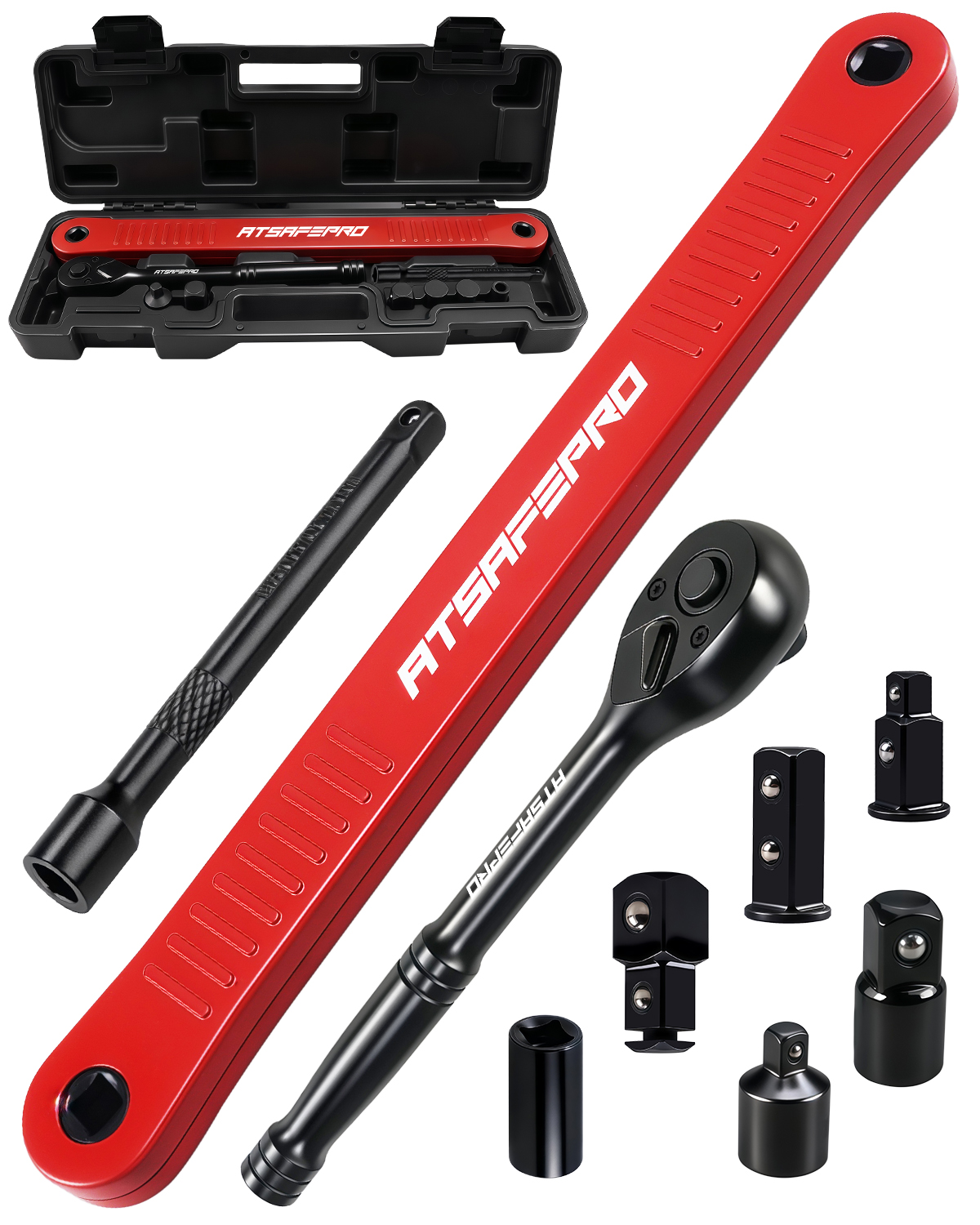
The tool shown in the product information is a hand torque wrench kit with a red-painted metal shaft, a black textured grip, and a ratcheting head. That combination suggests a practical, shop-friendly layout: one hand on the handle, the other guiding the socket. The etched torque scale and directional markings indicate adjustable settings, which is what most buyers want in a general-purpose wrench. You set a target torque, tighten, and use the wrench as a controlled final step rather than a blunt-force tool.
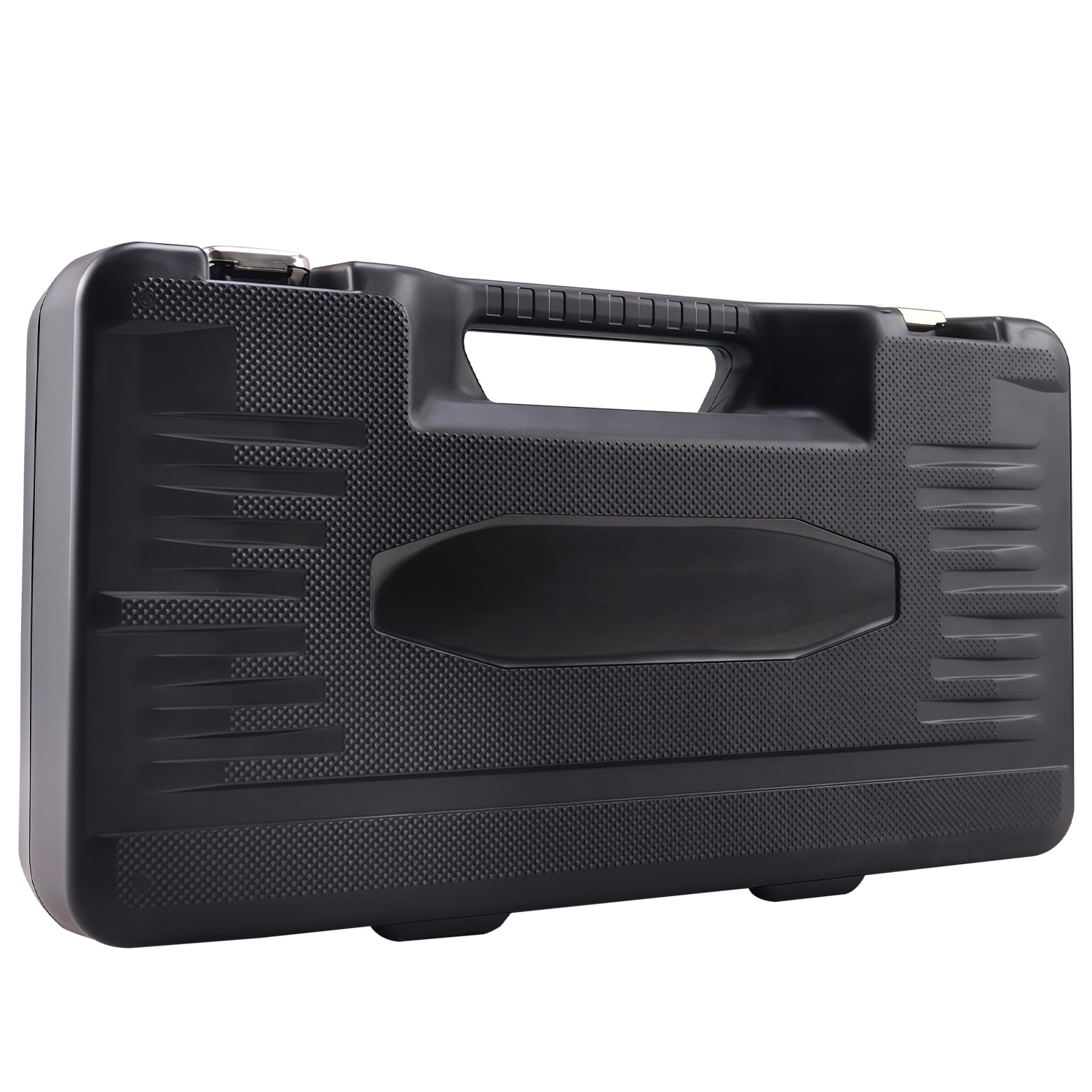
The included molded case and socket accessories point to a kit meant for field use as much as bench work. The visible sockets are marked CR-MO 17 mm, 19 mm, and 21 mm, which is a useful spread for wheel service and other common fasteners. There is also at least one extension or adapter and a silver socket accessory, which suggests the kit is built to solve access problems, not just present a single wrench in isolation. That matters in the real world, because recessed studs, crowded brackets, and awkward wheel faces are where many tools become annoying.
Quick buyer takeaway: what to look at first
If you are comparing a torque wrench kit for shop use, start with the parts that affect daily handling, not the packaging.
First, check whether the adjustment scale is easy to read under normal lighting. Etched markings are generally preferable to vague printed numbers that wear off. Second, look at the ratchet head size and profile. A compact head helps in tight spaces, especially around wheels and machine frames. Third, make sure the socket sizes match your actual tasks. A kit with 17 mm, 19 mm, and 21 mm sockets is convenient for many vehicle applications, but convenience only matters if those are the sizes you use most often.
Finally, ask whether the case layout supports the way your team works. A tool that lives in a truck, service bay, or shared maintenance cabinet needs a case that keeps parts from wandering. A loose adapter rolling around in the bottom of a drawer is one of those small shop problems that becomes a daily irritation.
How this style of torque wrench is typically used
Automotive wheel service
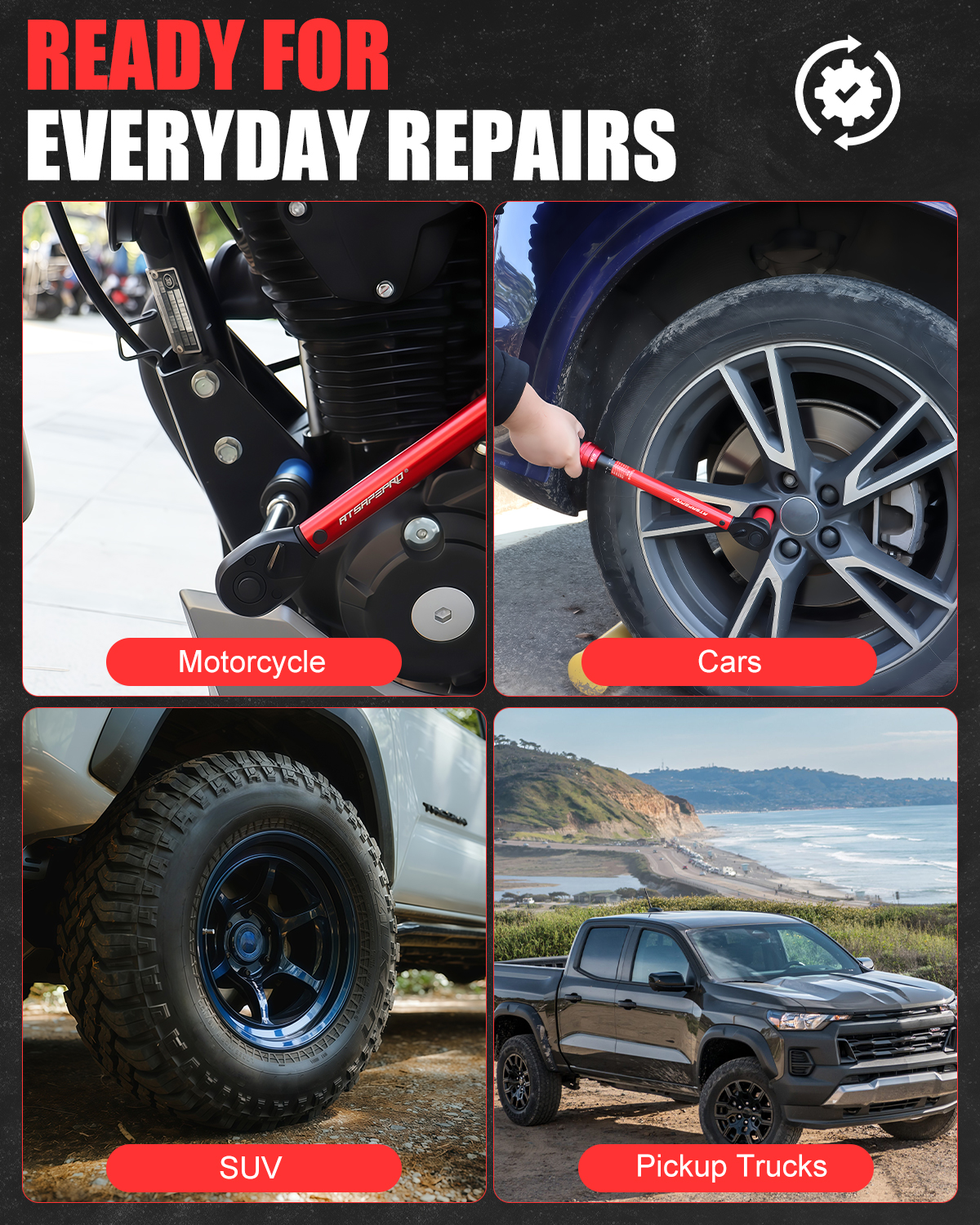
Wheel lug nuts are the obvious use case, and for good reason. The socket sizes visible in the kit line up with common wheel fastener dimensions, and the ratcheting head makes the tool practical for sequence tightening. In wheel service, the torque wrench should be the final tightening tool, not the fastener removal tool unless the manufacturer specifically allows it and the tool is used appropriately. That separation matters because torque tools are most reliable when they are treated as measuring instruments rather than general pry bars.
Maintenance and assembly work
In machinery maintenance, a hand torque wrench is helpful anywhere fasteners have to be brought to the same load every time. Guards, brackets, housings, and service covers often call for controlled tightening, though the exact torque values should always come from the equipment documentation. For assembly work, the benefit is consistency. A technician can move across a batch of parts without relying on feel alone, which is useful when the same joint must behave the same way from one unit to the next.
Why the included sockets and accessories are worth a closer look
Some buyers focus only on the wrench body and treat the accessories as filler. That is a mistake. A torque wrench kit becomes more useful when the socket set is appropriate to the work. The visible CR-MO labeling suggests chrome-molybdenum sockets, which are commonly selected for durability in demanding fastening tasks. I would still advise buyers to confirm whether the accessories are intended for impact use if that matters in their workflow; the image alone does not settle that point.
The adapter or extension piece is also practical, but it comes with a small caution. Extensions can help reach recessed fasteners, yet every added interface is another thing to keep clean and properly seated. In a busy shop, people sometimes stack adapters without thinking about access, leverage, or fit. That can create awkward tool geometry and make the final tightening less controlled than it should be. If a fastener is hard to reach, the answer is not always more hardware. Sometimes the better move is a different socket length or a better approach angle.
What manufacturing details matter behind the scenes
From a buyer’s point of view, a torque wrench is a finished hand tool. From a manufacturing point of view, it is a combination of machining, heat treatment, surface coating, assembly, and calibration-related marking work. The body and head must be built with enough consistency that the scale and adjustment mechanism make sense in use. The sockets likely involve forging or forming steps followed by coating and size marking, though the exact process is not fully verifiable from the available information.
That is one reason reputable tool kits usually have a disciplined look: clean scale markings, a stable ratcheting mechanism, and clearly labeled accessories. These are not decorative details. They are how the user sees whether the product was made with serviceability in mind. Even a visually attractive wrench is only as useful as the repeatability of its adjustment and the clarity of its markings.
Common mistakes buyers make
The first mistake is assuming one torque wrench works for every job. It does not. A kit may be suitable for wheels and general maintenance, but the needed torque range, drive size, and tool style should still match the task. The exact torque range for this model is not supplied, so buyers should confirm it before putting the tool into a standardized process.
The second mistake is ignoring storage. A torque wrench tossed into a drawer with loose sockets, oily rags, and whatever else is nearby tends to suffer. If the case is included, use it. That sounds basic, but in the field, basic habits are often the difference between a tool that lasts and one that drifts out of service early.
The third mistake is using the wrench as if it were a breaker bar. A torque wrench is for controlled tightening. It is not meant for loosening seized hardware unless the manufacturer specifically allows it and the user understands the limitations. Misuse is how calibrated tools get abused into being ordinary levers.
Practical selection criteria for sourcing teams
If you are sourcing this kind of hand torque wrench kit for a shop, fleet, or resale channel, focus on a few concrete questions. Does the scale read clearly? Does the ratchet feel suitable for the work area? Are the included socket sizes relevant to your applications? Is the case sturdy enough for transport? Are the accessories organized well enough that operators will actually keep them with the wrench?
Those questions may sound unglamorous, but they are the ones that determine whether the kit gets used correctly. Tools fail in procurement long before they fail mechanically. A kit can be perfectly adequate on paper and still become a shelf item if the sizes do not match the workflow or the adjustment process feels awkward in practice.
FAQ
Is this torque wrench suitable for wheel nuts?
The visible socket sizes and ratcheting layout make it a plausible fit for wheel service, especially on vehicles that use 17 mm, 19 mm, or 21 mm fasteners. Final suitability still depends on the required torque range and the vehicle specification.
Are the sockets included with the wrench?
Yes, the kit description shows a molded case with multiple socket accessories, including marked CR-MO 17 mm, 19 mm, and 21 mm sockets.
Can I assume the exact torque range from the image?
No. The exact torque range is not provided, so it should be verified before purchase or use in controlled assembly work.
Why does the case matter so much?
Because torque tools are easiest to keep in service when the wrench, sockets, and adapters stay together. A case reduces loss, damage, and accidental mix-ups.
What to do next
If you are evaluating an ATsafepro torque wrench kit for purchase, the best next step is to match the included socket sizes and wrench style to your actual fastening list. Confirm the torque range, verify the drive size and accessories you need, and decide whether this kit is meant for wheel service, maintenance work, or general shop use. A good torque wrench is not the most dramatic tool on the bench, but it is often the one that keeps everything else from becoming a repair problem later.