Why a  kit is more than just another hand tool
Anyone shopping for an ATsafepro torque wrench is usually trying to solve a practical problem: fastening parts tightly enough to be safe, but not so tightly that threads, studs, or mating surfaces get damaged. That matters most in automotive work, where wheel nuts, bolts, and other threaded joints need controlled tightening, not guesswork. A torque wrench is one of those tools that quietly protects expensive parts, and if you work in a garage, fleet shop, or even a home workshop, the difference between “tight” and “correct” is not academic.
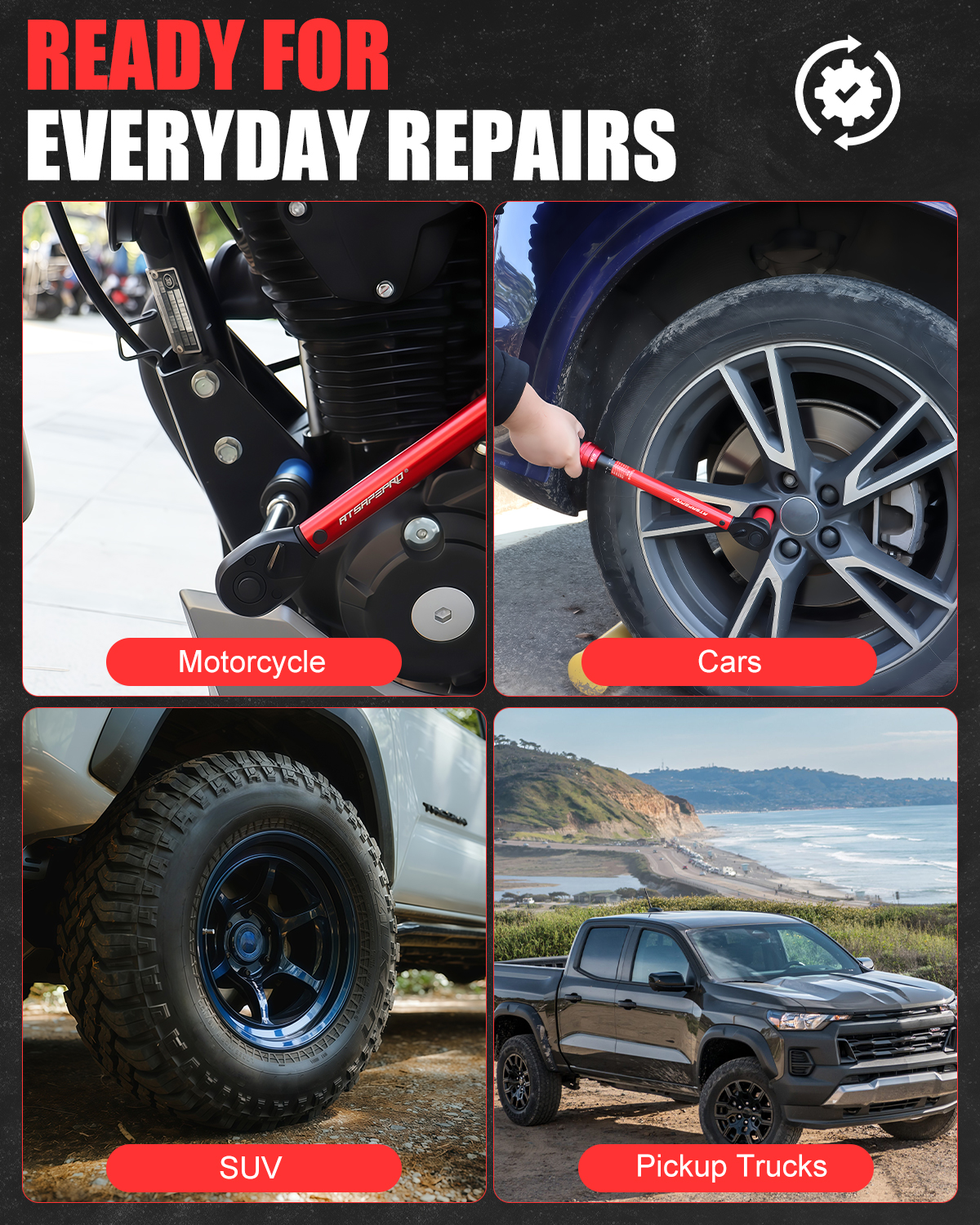
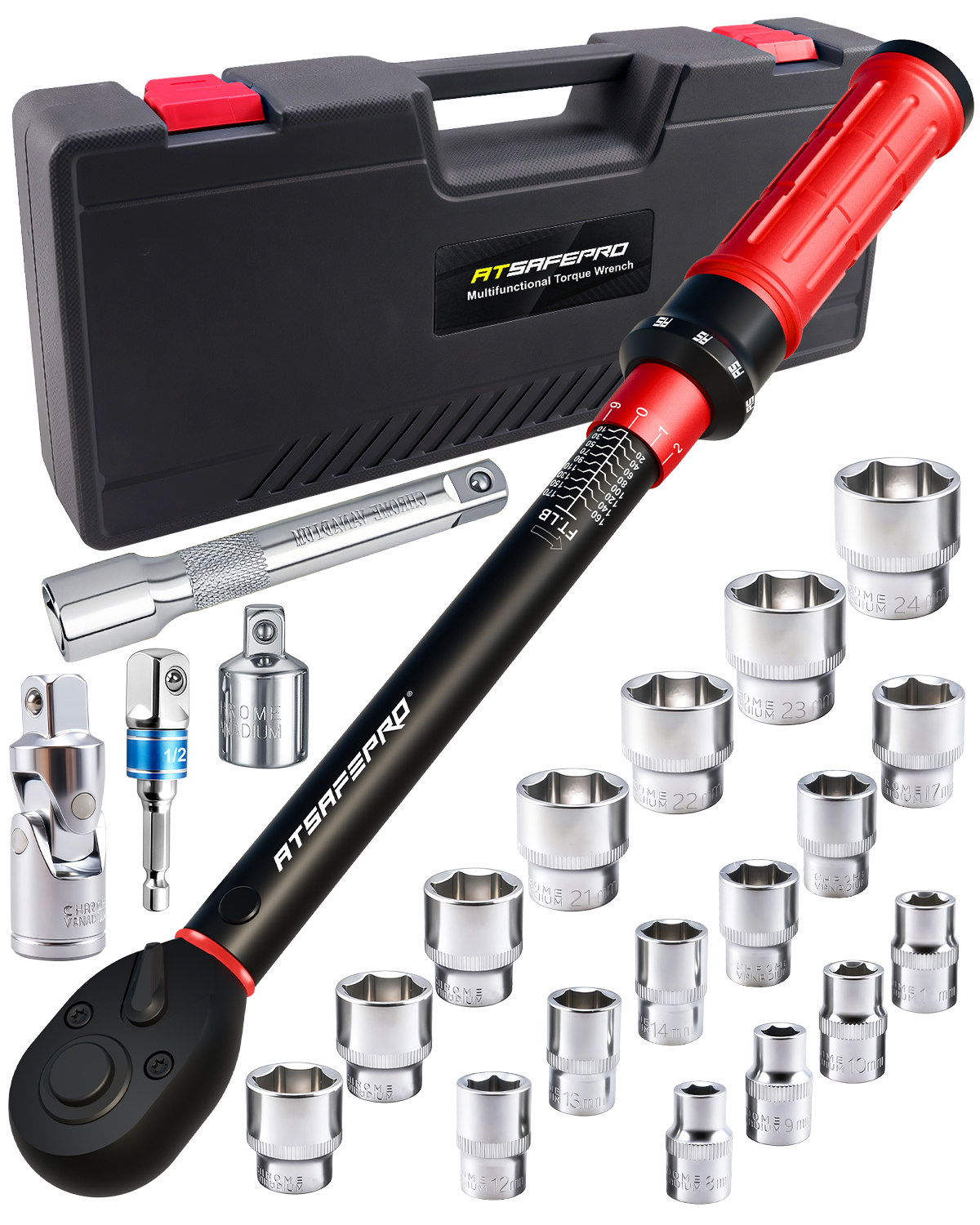
The ATsafepro torque wrench kit sits in the category of adjustable click-type torque tools, which is the style many mechanics recognize because of its straightforward use. You set the target torque, tighten until the tool clicks, and stop. That simple workflow is exactly why these kits are common for tire changes and general mechanical fastening. The included sockets, adapters, and storage case suggest a setup intended for real shop use rather than a single-task specialty tool.
What the kit appears to offer, at a glance
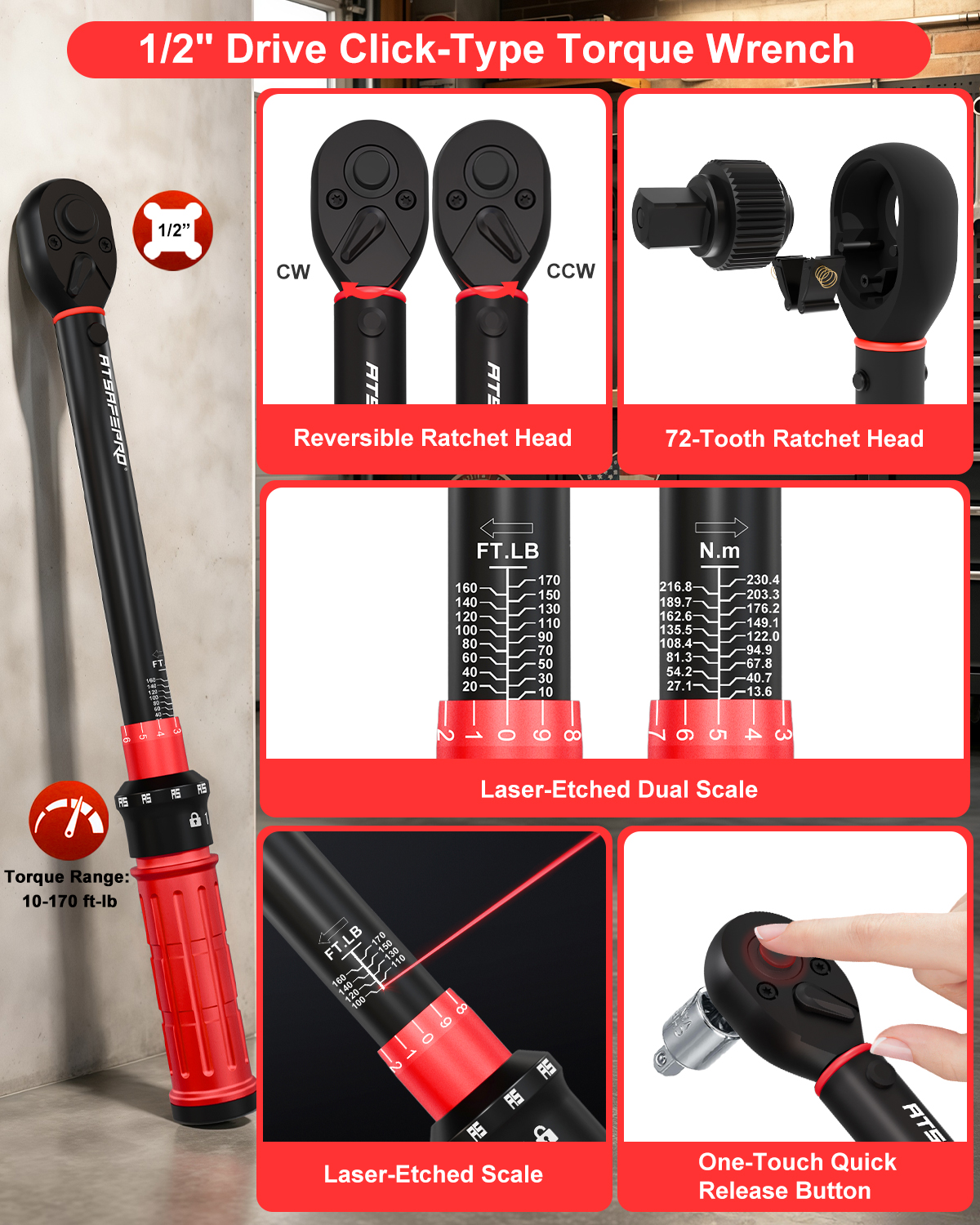
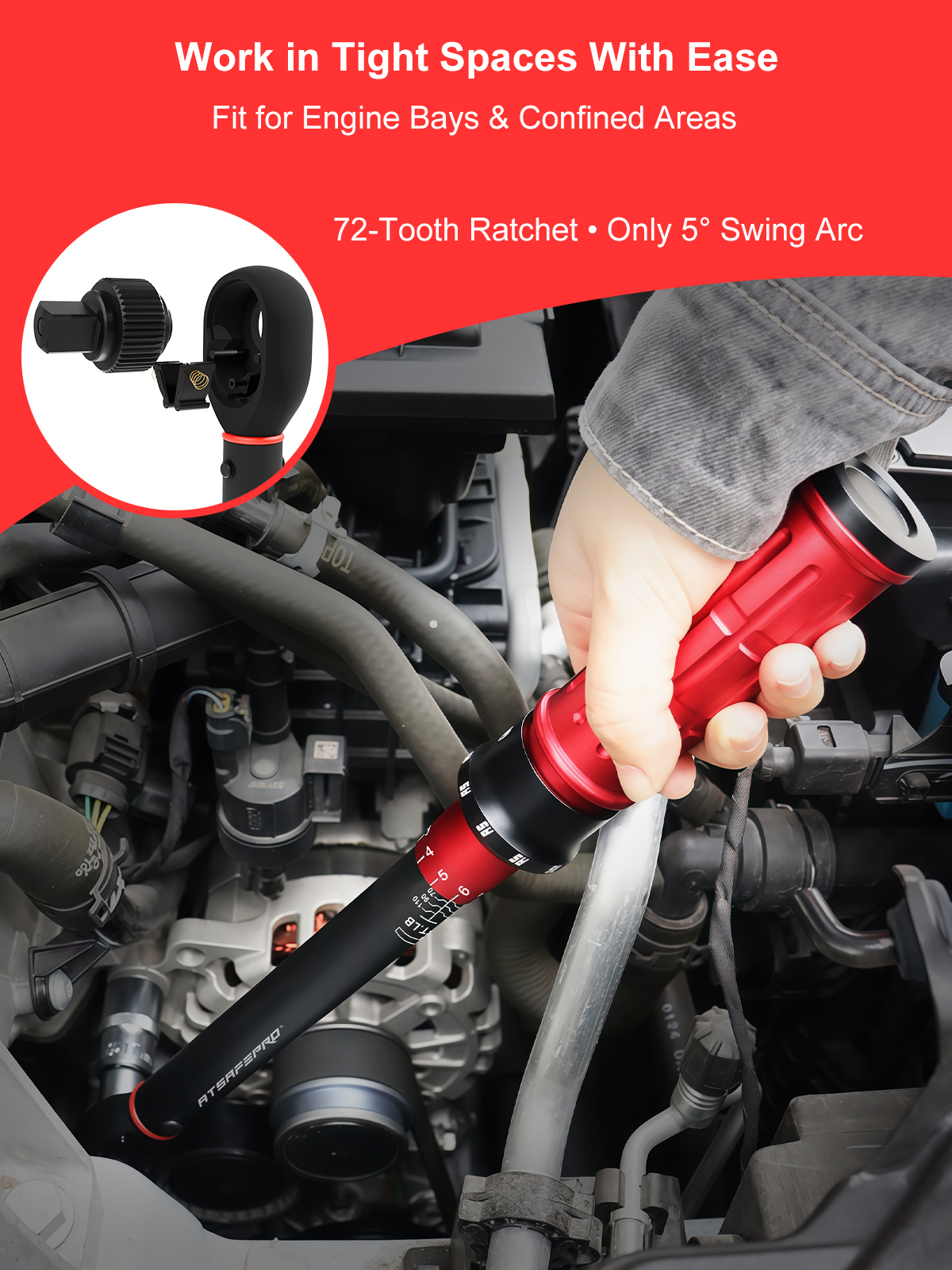
Based on the visible product details, this is a hand tool kit built around a calibrated torque mechanism with a ratcheting head. The wrench body appears metal, with a red shaft and black textured grip area, while the ratchet head is compact and black. That compact head profile is useful in tight spaces, though it is always worth remembering that a small head does not automatically mean easy access everywhere; brake-adjacent fasteners and recessed wheel locations can still be awkward.
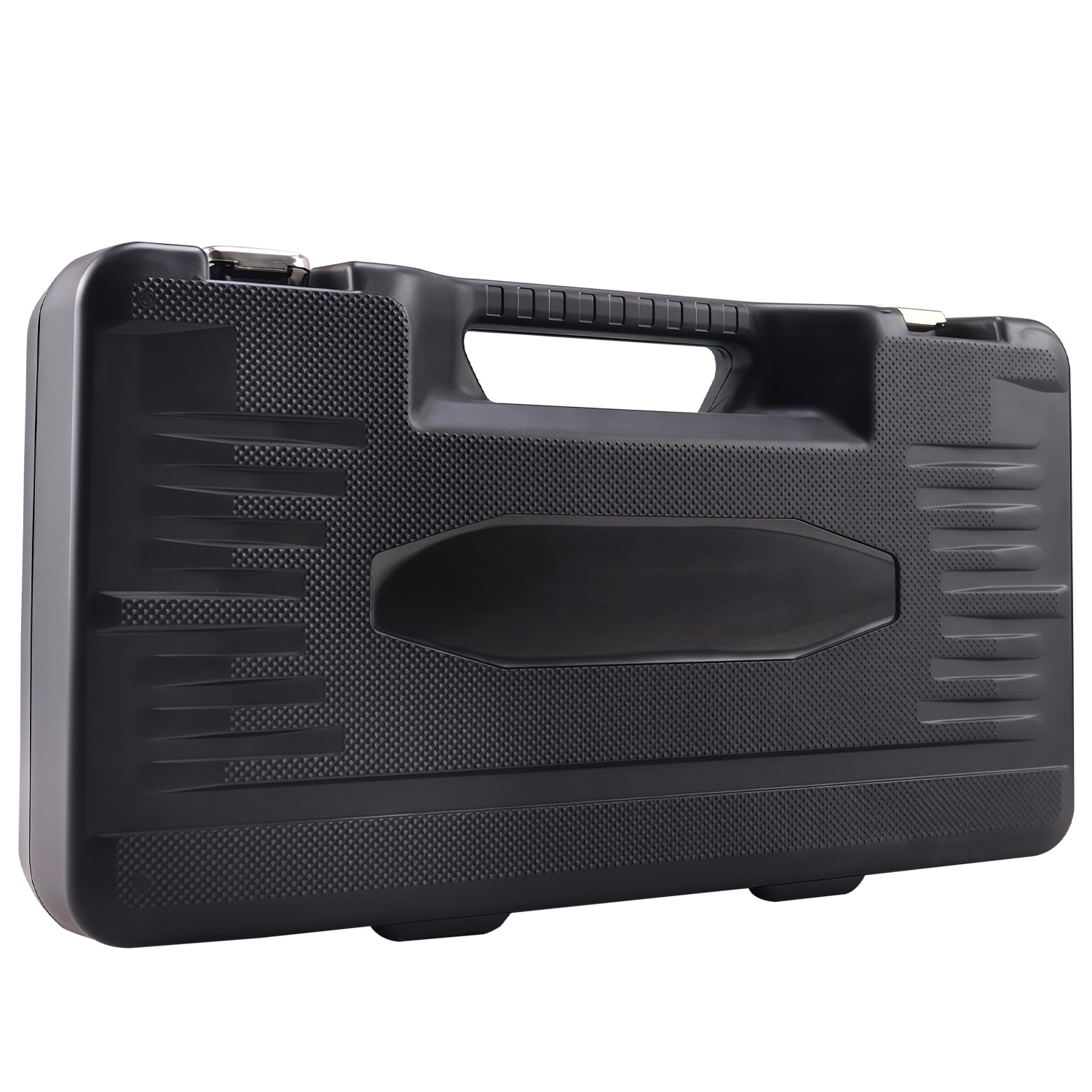
The kit also includes a blow-molded plastic case with molded compartments and red latches. That is a small detail, but a practical one. Torque tools and loose sockets often get abused not by use, but by storage. A case that keeps the wrench, sockets, and adapters organized reduces the chance of missing pieces and helps prevent the collar or scale from getting knocked out of position.
Click-type torque wrench versus other tightening methods
If you are comparing options, the main question is whether a click-type wrench is the right format for your work. In many automotive and maintenance settings, the answer is yes. It is fast, readable, and familiar to most technicians. But it is not the only option, and understanding the trade-offs helps avoid buying the wrong tool.
Click-type torque wrench
This style gives a tactile or audible signal when the preset torque is reached. For wheel service and routine assembly, that feedback is very useful. It keeps the process efficient and reduces the chance of overtightening. The ATsafepro torque wrench appears to use a torque adjustment collar near the handle, which is typical for this category.
Beam-style torque wrench
Beam wrenches are simple and durable, with no internal click mechanism to calibrate, but they demand more attention from the user. They are often chosen for their straightforward construction, not for speed. In a busy shop, they can feel slower and less convenient than a click-type tool.
Electronic torque wrench
Digital models offer readouts, sometimes memory functions, and sometimes richer data. They can be excellent for quality control work, but they are also more complex and usually more expensive. For many tire and general fastening jobs, that complexity is unnecessary.
For a buyer deciding between these types, the most useful question is not which one is “best” in theory, but which one will be used consistently by the people handling the job. The best torque wrench is the one that fits the shop routine and actually gets set correctly.
Why the socket set matters as much as the wrench itself
A torque wrench kit is only as useful as the attachment system around it. Here, the included sockets are a genuine part of the value. The visible CR-MO markings on the larger sockets indicate chrome-molybdenum material, which is commonly used for impact-style sockets because it handles demanding fastening work better than basic general-purpose chrome pieces in many applications. The color-coded sleeves make it easier to sort 17 mm, 19 mm, and 21 mm sockets at a glance, which is especially handy in tire service where those sizes come up frequently.
That said, buyers should not treat “CR-MO” as a magic badge. It is useful information, but socket durability still depends on design, fit, and how the tool is used. If the fastener size is wrong or the socket is worn, even good material will not save you from rounding a lug nut.
How this kit fits different users
For the home mechanic, the ATsafepro torque wrench kit looks appealing because it combines the wrench, sockets, and case in one package. That means fewer separate purchases and fewer chances to match an incompatible accessory later. If you change your own wheels seasonally, this is the sort of kit that can live on a shelf and come out when needed without much drama.
For a workshop or fleet environment, the picture is a little different. Shops tend to value repeatability, clear markings, and tools that are easy to return to storage after use. The case helps with that. The visible torque scale and click collar also suggest a tool designed for routine use rather than occasional novelty. Still, any buyer in a professional setting should confirm the exact torque range, drive size, and calibration details before standardizing on a tool like this. Those details are not obvious from appearance alone, and they matter if the tool will be part of a documented maintenance process.
Selection criteria that actually matter
When comparing torque wrench kits, it helps to focus on a few practical criteria instead of chasing broad claims.
Range and intended task
The most important specification is the usable torque range. A wrench that is too large for light fasteners is awkward and less accurate in practice; one that is too small will not cover wheel work or heavier assembly jobs. Since the exact range is not confirmed here, a buyer should verify it before purchase.
Drive size and accessory compatibility
Drive size affects what sockets and adapters will fit. Because the drive size is not clearly confirmed, this should be checked against the intended socket inventory. It is a basic point, but it is easy to overlook when the kit already includes several pieces.
Readability and adjustment feel
A clearly marked scale and a firm adjustment collar are not luxuries. If the numbers are hard to read, the wrench will be used less carefully, especially in poor shop lighting. The visible scale on the shaft is a good sign, but buyers should still inspect the legibility of the markings in person when possible.
Storage and handling
The blow-molded case is not just packaging. It helps protect the wrench, preserves the accessory set, and makes the tool easier to issue and return in a shared workshop. A tidy case also helps when roadside service kits get moved between vehicles.
Common mistakes with torque tools
One common mistake is treating a torque wrench like a breaker bar. These tools are for controlled tightening, not for loosening stubborn hardware. Another is ignoring the specified direction of use. Some click-type designs are reversible, some are not, and unless that is confirmed by the product spec, it should not be assumed.
There is also the issue of storage. Torque wrenches are often supposed to be relaxed after use, not left under load. That habit is boring, but it helps preserve the internal mechanism. A tool can look perfectly fine on the outside and still drift if it has been stored carelessly for years. That is a reminder that the case is useful, but user discipline matters more.
Buyer-facing practical advice
If your main use is wheel and tire work, the visible 17 mm, 19 mm, and 21 mm socket selection is immediately relevant. Those are common sizes in automotive service, so the kit looks aligned with its intended application. If you need a general fastening solution for mixed maintenance jobs, the adjustable wrench and adapters add flexibility.
If, however, you need documented calibration, traceable testing, or a formally stated accuracy class, you should not buy on appearance alone. The available information does not confirm those details, and that is the sort of omission that matters in regulated or quality-controlled environments. For purchasing teams, the safest approach is to request the torque range, drive specification, calibration status, and any compliance documentation before placing volume orders.
FAQ: quick answers before you buy
Is this kit suitable for wheel nuts?
Based on the included socket sizes and the overall design, it appears suited for wheel and tire service, but the exact torque range should be checked first.
Does the case add real value?
Yes. For a torque wrench kit, organized storage is part of the product’s usefulness, not an extra.
Are the sockets actually durable enough for shop work?
The CR-MO marking suggests they are aimed at tougher fastening tasks, but socket durability still depends on fit, usage, and maintenance.
Should I choose this over a digital torque wrench?
If you want simple, familiar operation for routine automotive work, a click-type wrench is often the more practical choice. If you need data features or stricter documentation, a digital model may be better.
What a sensible purchase decision looks like
The ATsafepro torque wrench kit is best understood as a practical fastening package: adjustable click-type wrench, matching sockets, adapters, and a hard case for storage. That combination makes sense for automotive maintenance and other controlled-tightening jobs where speed and simplicity matter. It is less about technical spectacle and more about everyday usability.
Before buying, confirm the missing technical specifics that cannot be safely inferred from appearance alone. If the torque range, drive size, and calibration details fit your application, this kind of kit can be a straightforward, useful addition to a shop or service truck. If you need higher-level documentation, make that request up front rather than discovering the gap after the tool arrives.
For sourcing teams and technicians alike, the real decision is not whether a torque wrench kit looks complete. It is whether it matches the work, the fastening sizes, and the level of control your process actually requires.