Why a torque wrench still matters when “tight enough” is not enough
An ATsafepro torque wrench is the kind of tool that looks straightforward until you have to rely on it for a job that actually matters. A wheel fastener that is too loose can back off under vibration. One that is overtightened can stretch a stud, distort a clamping surface, or make the next service call miserable. That is the real reason buyers look at a click-type adjustable torque wrench set in the first place: not for convenience alone, but for repeatability.
For engineers, sourcing managers, and service teams, the question is usually not whether a torque wrench is useful. It is which style of kit fits the work, whether the included accessories are practical, and whether the tool is organized well enough to stay in circulation instead of disappearing into a drawer after the first week.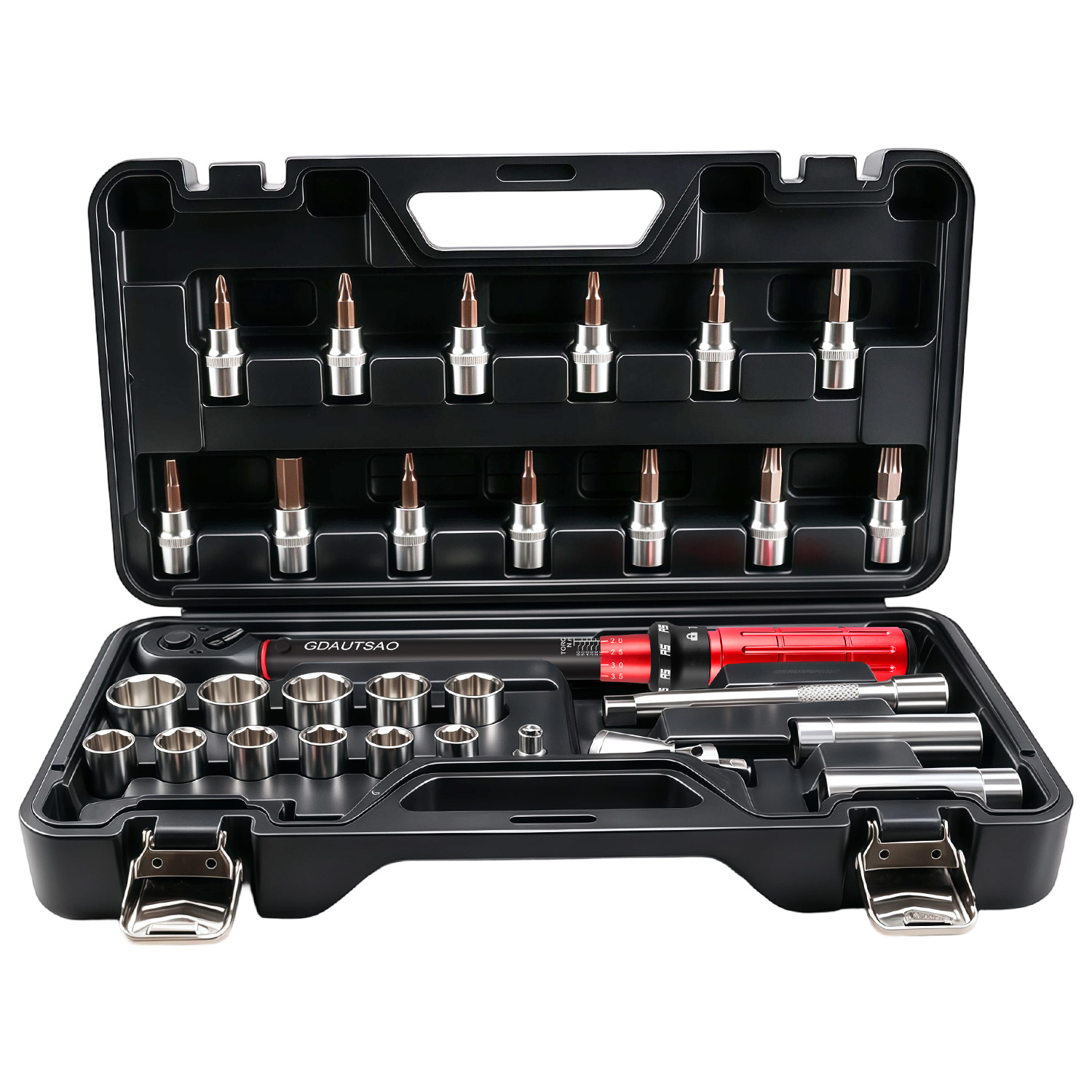
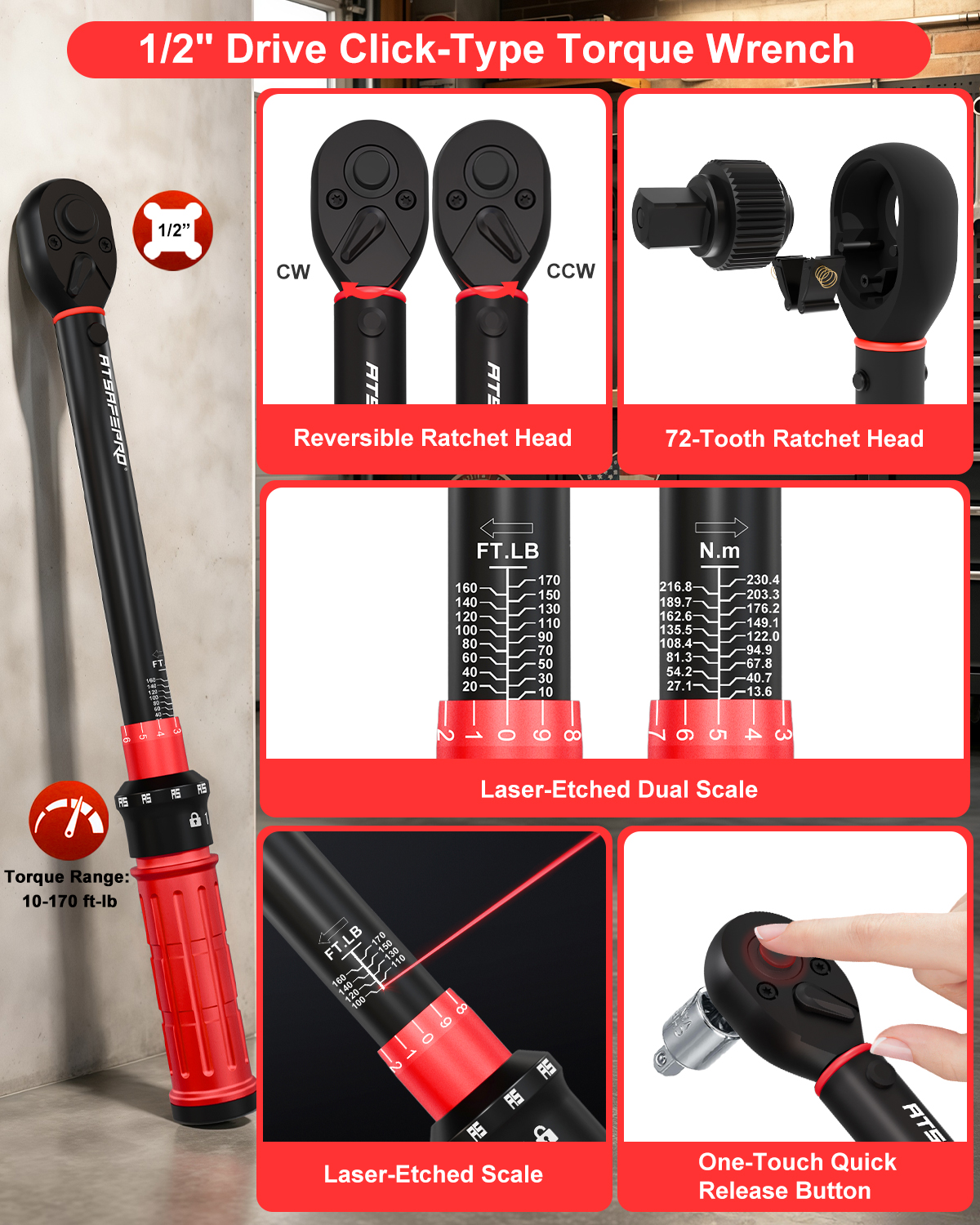
This particular kit is aimed at controlled fastening work in automotive service, machinery assembly, and similar maintenance tasks. The visible design choices tell you a lot: a long red metal body, black textured grip, a ratcheting head, an adjustable collar near the handle end, and a molded case with sockets and extensions. That is the shape of a field-ready service tool, not a bench-only specialty instrument.
What the kit appears to offer at a glance
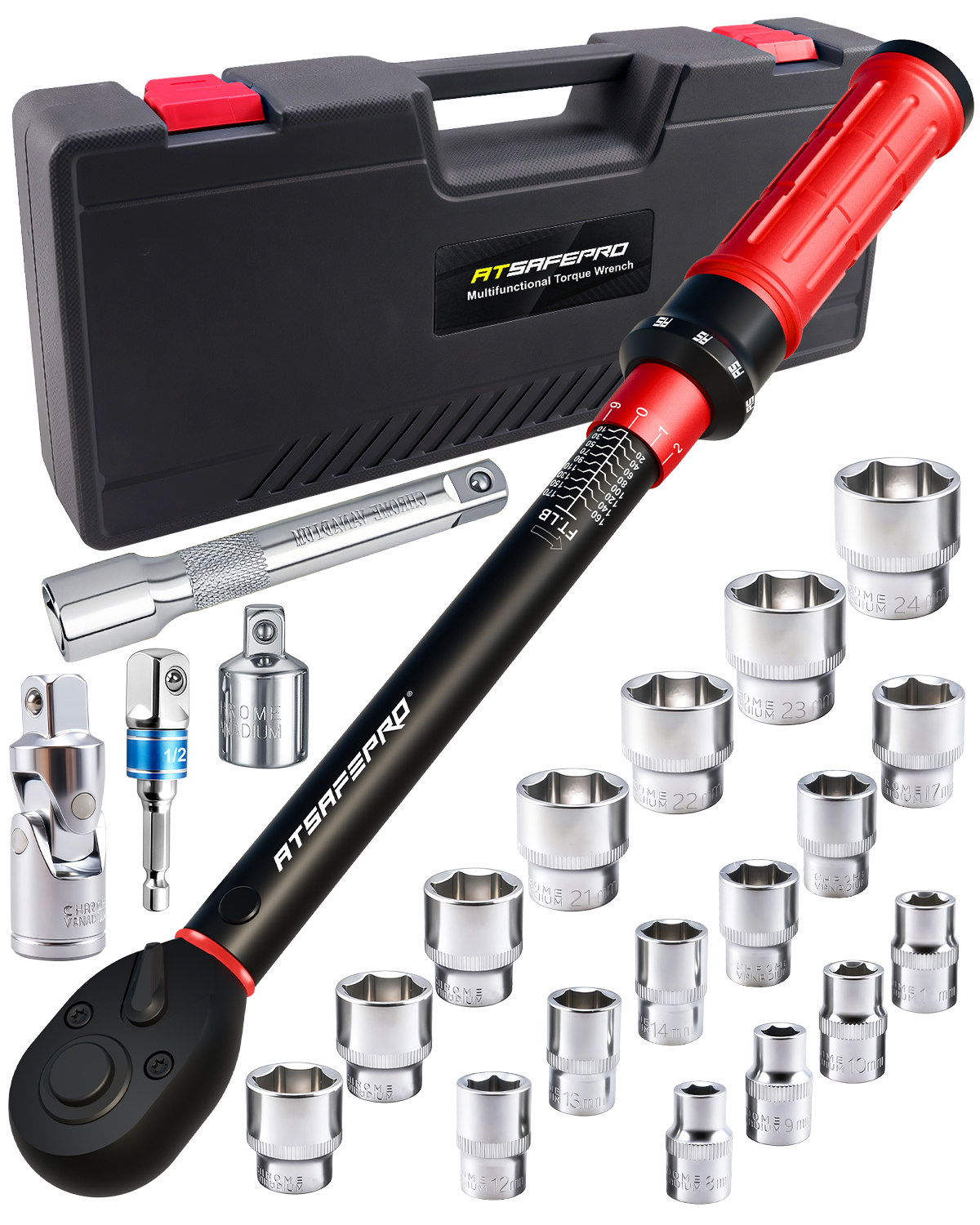
The ATsafepro torque wrench set shown here is built around one adjustable hand wrench and a small accessory system. The visible components include a carrying case, multiple chrome-moly sockets, and at least one extension and adapter. The socket sizes visible in the kit appear to include 17 mm, 19 mm, and 21 mm deep sockets, which are common sizes in wheel service and other mechanical fastening jobs.
The wrench itself appears to use a click-type adjustment method, with torque scale markings printed along the shaft and a locking or adjustment ring near the handle area. That combination is familiar to anyone who has worked around service tools: set the target torque, lock the adjustment, engage the fastener, and stop when the wrench signals the preset value has been reached.
A quick practical note: the photos make the tool look like a complete service kit, but exact torque range, drive size, and calibration details are not stated. Buyers should confirm those before assigning the tool to a controlled assembly process.
Where this style of wrench fits best
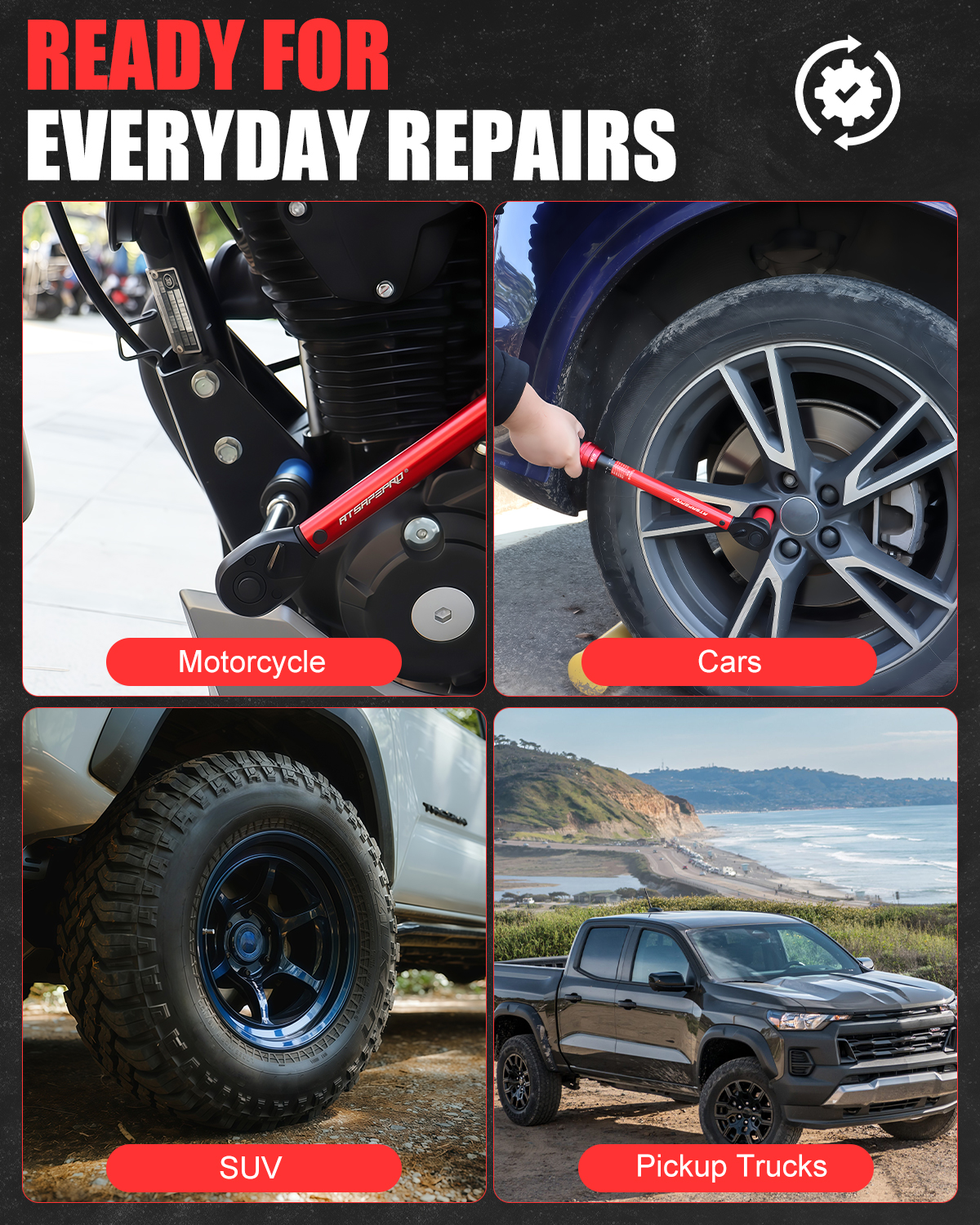
A torque wrench like this is most useful when the work is repetitive and the fasteners need to be brought to the same final load every time. That includes vehicle maintenance, especially wheel lug nut service, but also motorcycle and bicycle maintenance, small machine assembly, and general shop fastening where a specified torque is part of the process.
That said, not every fastening job needs a torque wrench. For rough assembly, temporary fit-up, or work on noncritical covers and brackets, many shops move faster with standard hand tools. The torque wrench earns its place when the joint design, material, or service procedure makes “close enough” a poor bet.
Typical use cases
Wheel lug nut tightening after tire service
Suspension and brake-related maintenance where even clamping matters
Assembly of equipment that uses specified fastener preload
Motorcycle and bicycle service, where over-torque can damage threads or parts
General maintenance work that benefits from a controlled final tightening step
Why the accessory kit matters as much as the wrench
A torque wrench is only as useful as the connection between the head and the fastener. The included sockets, adapter, and extension turn the tool from a single-purpose wrench into a more flexible service kit. That matters in real shops because access is rarely ideal. A recessed lug nut, a deep wheel well, or a slightly awkward machine housing often decides whether a job is efficient or frustrating.
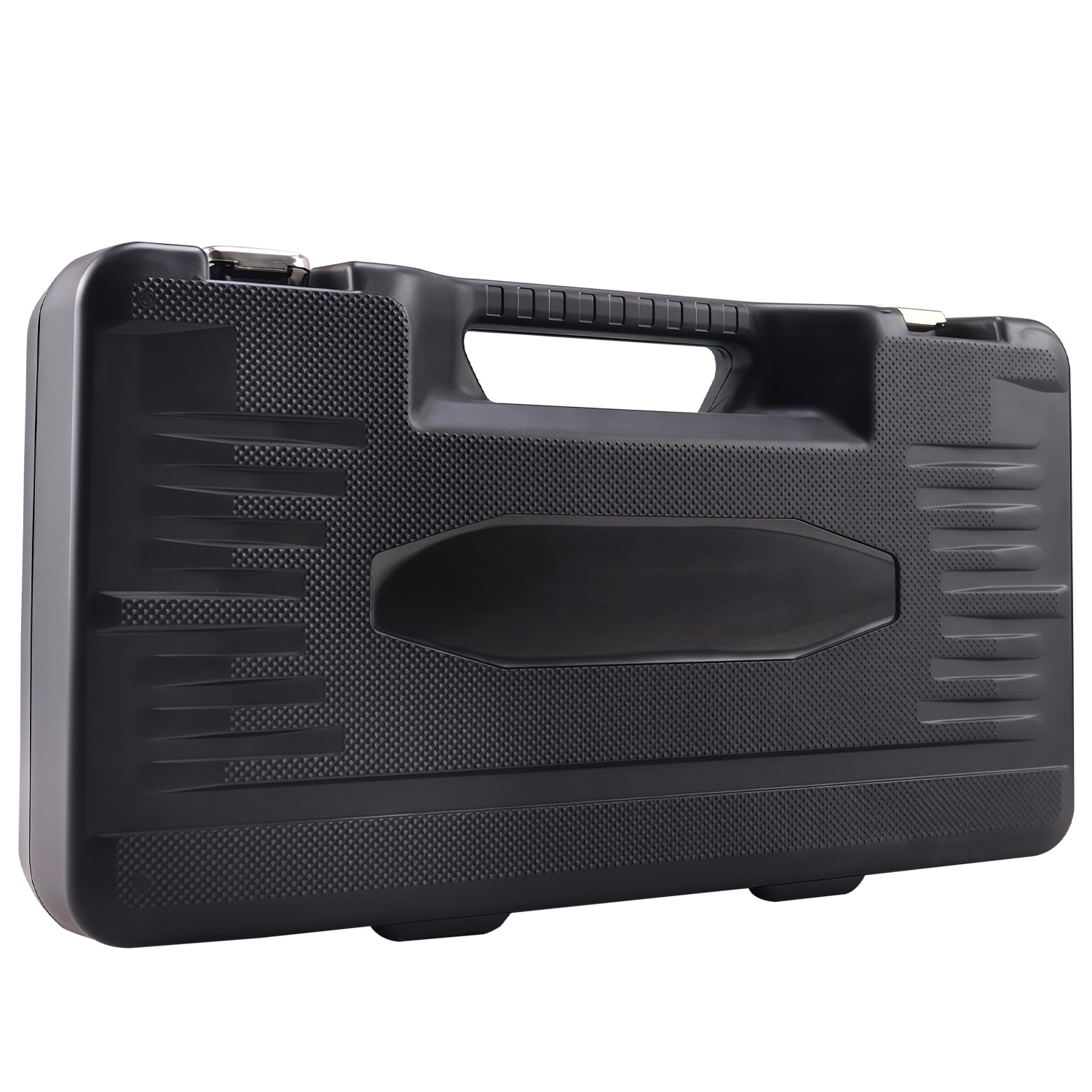
The visible CR-MO socket set is a practical touch. Chrome-moly sockets are commonly used where strength and durability are important, and the clearly marked sizes help reduce mistakes during fast-paced service work. The molded case also deserves attention. It is not glamorous, but it protects the tool, keeps parts together, and lowers the odds that the adaptor or one critical socket disappears between jobs.
If a hand tool kit does not stay organized, it will not stay useful for long. That is one of those boring truths procurement teams know well.
What the visible design tells you about day-to-day use
The red shaft and black grip do more than make the wrench easy to spot on a bench. In a working environment, visibility helps. Tools get shared, borrowed, set down on wheel carts, or carried from one bay to another. A distinctive body color reduces the chance that the wrench simply blends into a pile of standard hand tools.
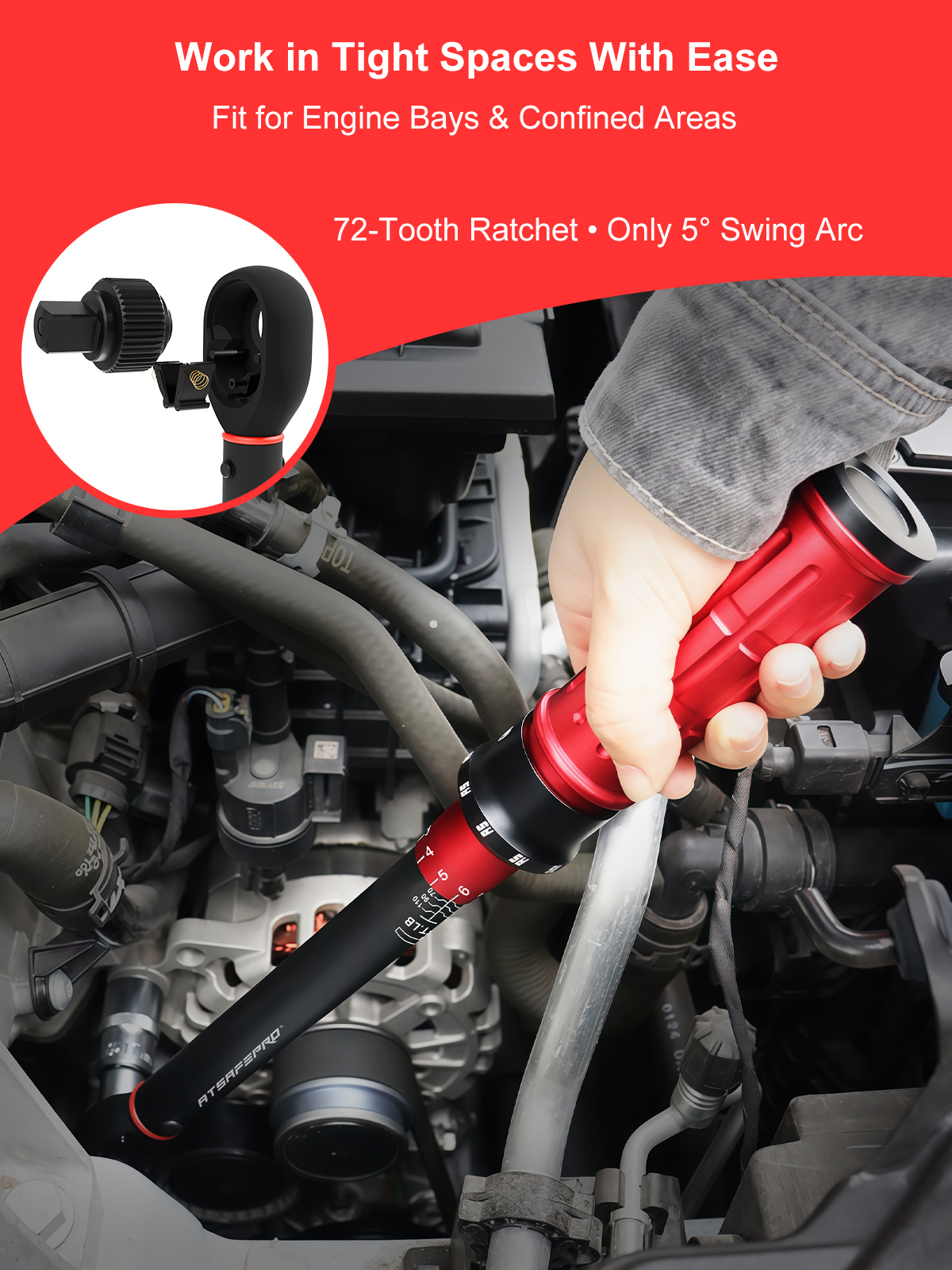
The ratcheting head is another practical feature. It allows directional fastener work without constantly lifting and repositioning the wrench, which is useful in tight spaces. On service work, that can save time, but it also encourages smoother motion and cleaner engagement. As always, the operator still needs to know whether the ratchet direction is correct before applying force. That sounds obvious until someone is under pressure and working by feel.
The adjustable collar or locking ring near the handle end suggests a user can set the torque value and then secure the setting. That matters because a torque wrench that drifts out of adjustment during use stops being a control tool and becomes just another handle with a scale on it.
How buyers should evaluate this kind of torque wrench
For sourcing teams and shop managers, the buying decision is less about the color scheme and more about fit for purpose. A practical review should focus on a few points.
First, confirm the torque range and intended drive size. Those are essential specifications, and they are not safely inferable from the images alone.
Second, ask whether calibration or verification documentation is supplied if the tool will be used in controlled assembly or quality-sensitive maintenance. This is especially important in environments where torque values are part of a documented process.
Third, look at the socket set as a system, not an afterthought. The visible 17 mm, 19 mm, and 21 mm sizes make sense for wheel-related applications, but the right range depends on the parts you actually service.
Fourth, consider storage. A molded case sounds minor until a kit starts living in a truck, on a field cart, or in a shared maintenance room. Protection and accountability matter there.
Common buyer mistakes
Assuming every torque wrench is suitable for precision assembly without checking accuracy or certification details
Buying the wrench first and discovering later that the required socket sizes are missing
Using the wrong accessory length or adapter without considering access and leverage implications
Leaving the adjustment unlocked in a shared shop environment
Treating a torque wrench like a breaker bar, which it is not
Practical cautions for shop use
Even a well-made torque wrench can be misused. The most common error is letting the tool double as a standard ratchet for jobs that do not require controlled torque. That wears the mechanism and increases the chance of sloppy habits around critical fasteners.
Another caution is about extensions and adapters. They are useful, but they change the feel of the setup and can complicate access in ways that operators sometimes ignore. In routine service, consistency is more valuable than improvisation.
There is also the old but necessary warning about wrench storage. Torque tools should not be tossed loose in a drawer with hammers, pry bars, and impact sockets. A molded case is a small thing, but it helps preserve the working condition of the tool and the discipline of the shop.
FAQ: what buyers usually want to know
Is this an automotive-only tool?
No. Automotive work is a natural fit, but the wrench can also suit bicycle, motorcycle, machinery, and general mechanical fastening tasks where a set torque value is needed.
Does the kit include sockets?
Yes, visible kit contents include multiple sockets, adapters, and an extension. The identifiable socket sizes appear to include 17 mm, 19 mm, and 21 mm deep sockets.
Can the wrench be used for both tightening and loosening?
The ratcheting head suggests it can be used in directional fastener work, but torque control is mainly about the final tightening step. For loosening stubborn fasteners, most mechanics still prefer a dedicated hand tool or impact tool, depending on the job.
Is the torque range known?
Not from the supplied information. That specification should be confirmed before purchase or deployment.
What decision this article should help you make
If you are deciding whether the ATsafepro torque wrench is the right fit, the real question is whether you need a compact, organized torque kit for everyday service work or a more specialized precision instrument for a controlled assembly line. The visible kit points toward practical maintenance use: adjustable torque scale, ratcheting head, protective case, and a useful set of sockets and extensions.
For field teams, that is often enough. For procurement, it is the start of the checklist, not the end of it.
If you are evaluating the kit for a shop, line, or fleet application, the next step is to verify the torque range, drive size, and any documentation your process requires. Once those are clear, the question becomes simpler: does this tool make correct tightening easier to repeat? That is the standard worth holding every hand tool against.