Why a torque wrench matters more than most people think
An adjustable torque wrench is one of those tools that looks straightforward until a wheel stud strips, a brake component loosens, or a fastener ends up over-stressed because somebody tightened it by feel. The ATsafepro torque wrench, based on the tool configuration provided, sits squarely in the practical category: a click-type wrench with a visible torque scale, ratcheting head, and a socket kit meant for automotive and general mechanical assembly work.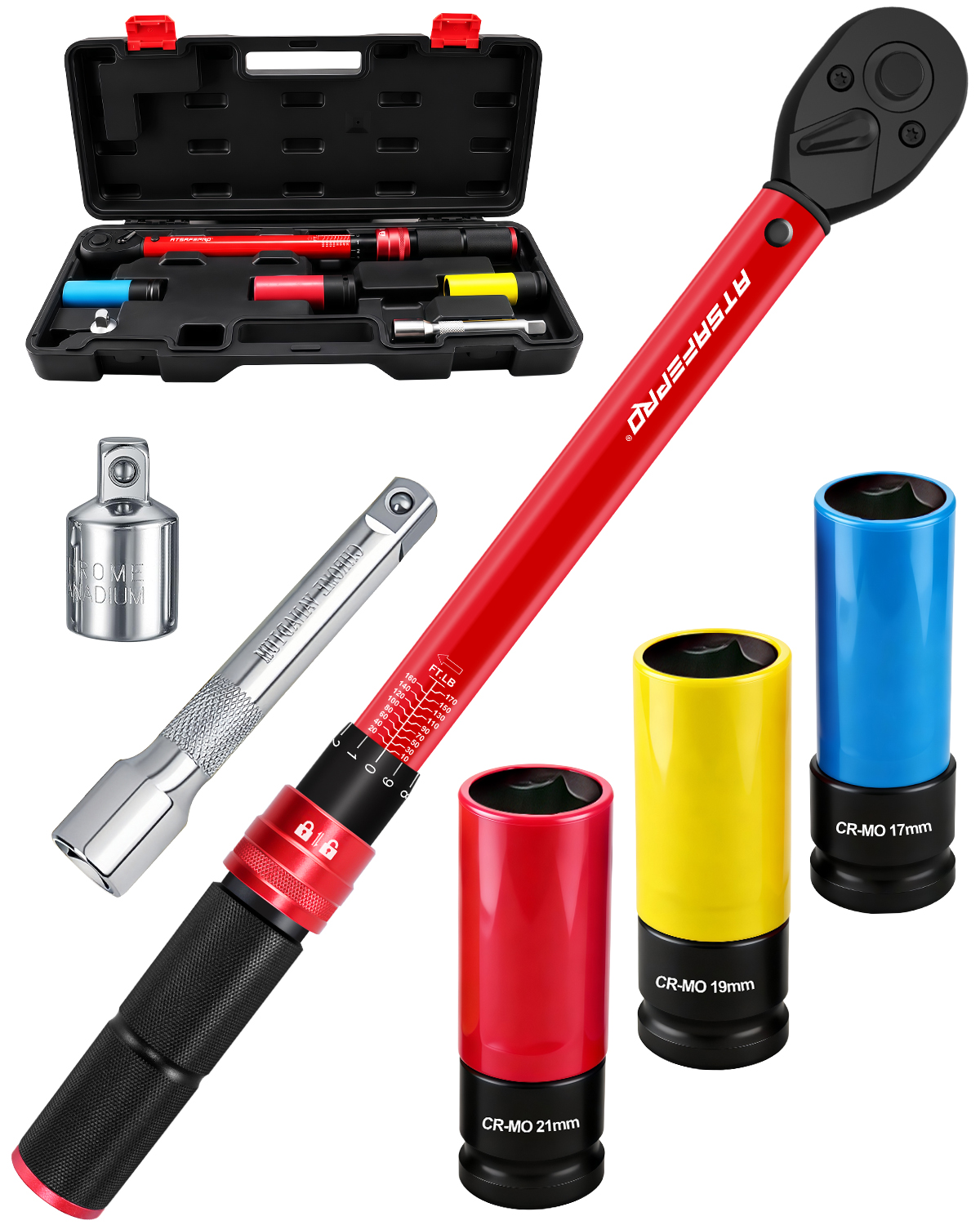
That matters because controlled tightening is not just a technician’s preference. It is a basic requirement in a lot of assembly jobs where fasteners need to be secure without being crushed, stretched, or left inconsistent from one side to the next. For buyers comparing workshop hand tools, the real question is rarely “does it tighten bolts?” It is “can it help me tighten the right bolts to the right level, repeatedly, without adding risk or wasted time?”
What this tool is designed to do
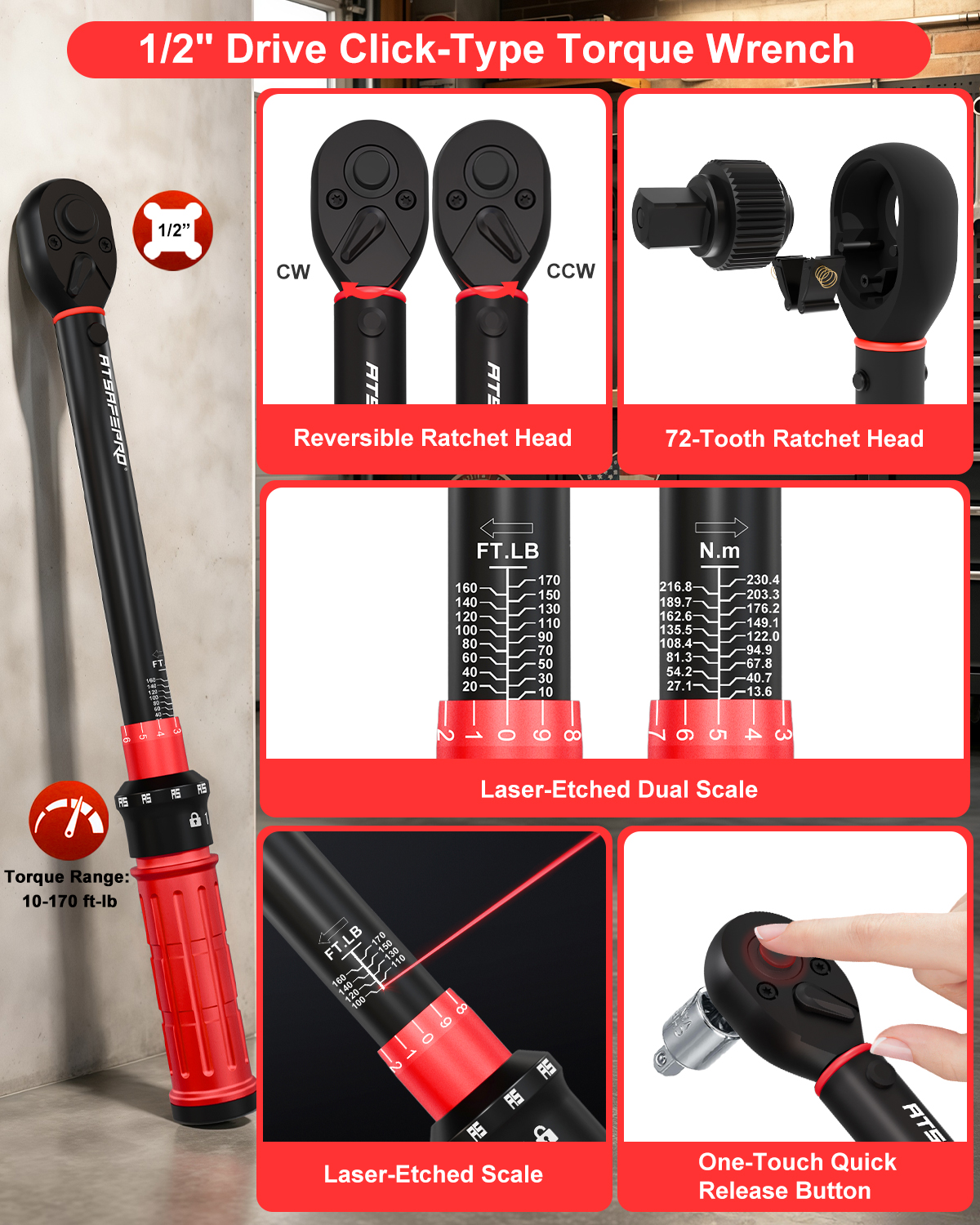
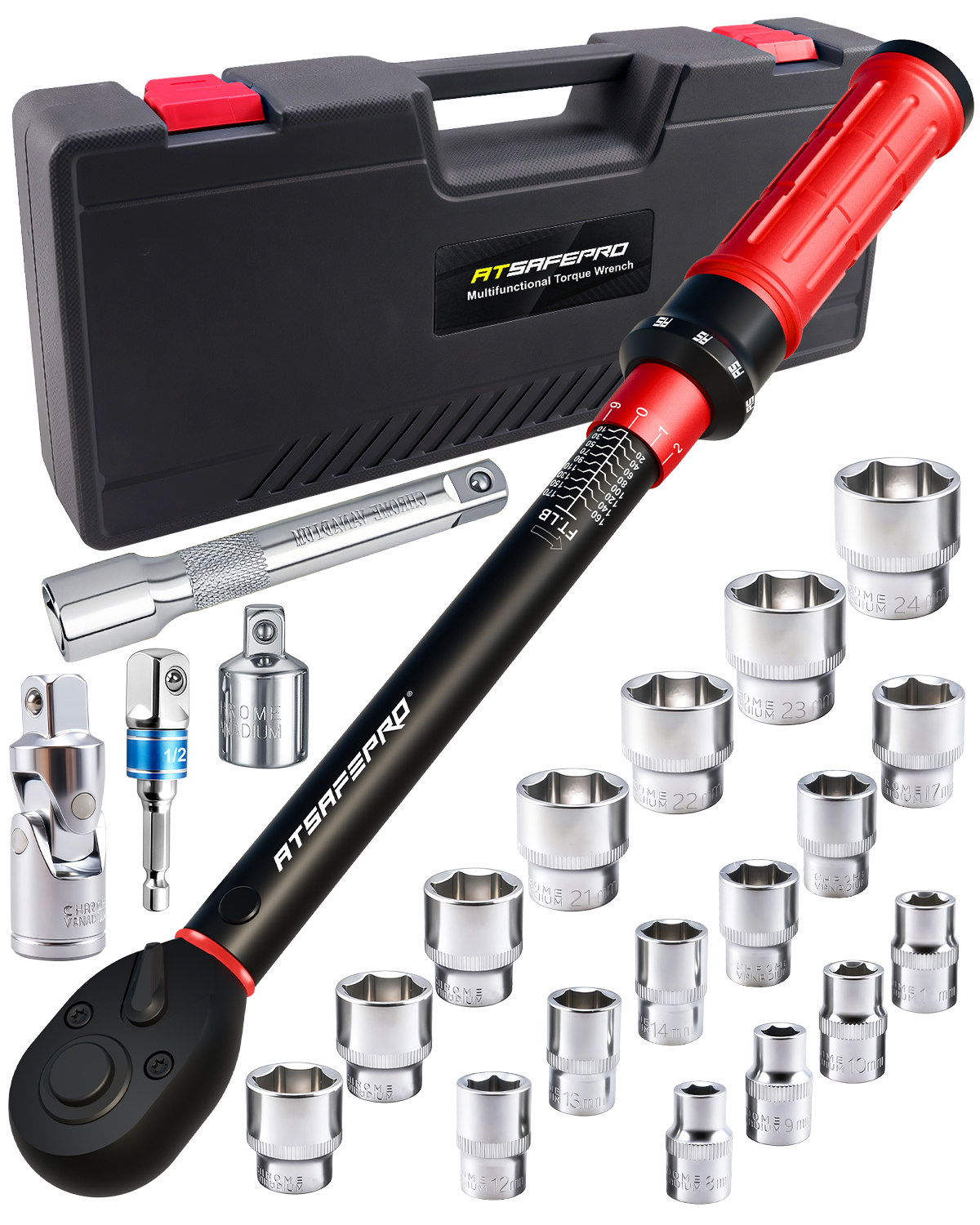
The ATsafepro torque wrench appears to be a kit built around a long metal wrench body with a black textured grip, a red shaft, and a ratcheting head with direction selection. The torque setting is shown on the shaft, which is the typical setup for a click-type adjustable wrench used in garages and assembly areas.
That format is familiar for a reason. It lets the operator dial in a target torque, then tighten fasteners until the wrench signals that the set level has been reached. In practice, that makes it useful for jobs where consistency matters more than brute force: wheel hardware, automotive service tasks, light machinery assembly, and routine maintenance work.
The included socket assortment is also part of the value proposition. The visible sizes include common wheel-related dimensions such as 17 mm, 19 mm, and 21 mm. For a buyer, that suggests a kit aimed at tire changes and similar service work rather than a bare tool that still requires a separate socket purchase.
Quick takeaways for sourcing and workshop buyers
If you are evaluating a torque wrench set like this for a shop, fleet bay, or DIY garage, a few points stand out right away.
The first is usability. A long handled wrench gives the user better leverage and usually makes controlled tightening feel less abrupt than a short tool. The second is workflow. A kit with sockets and a carry case reduces the chance that the tool gets used once and then scattered across a bench. The third is clarity. A printed torque scale is only useful if it remains easy to read, so buyers should pay attention to legibility, marking durability, and how the scale is laid out.
That sounds basic, but in the field, basic details are what decide whether a tool gets used correctly or abandoned after the first awkward job.
How the design supports everyday mechanical work
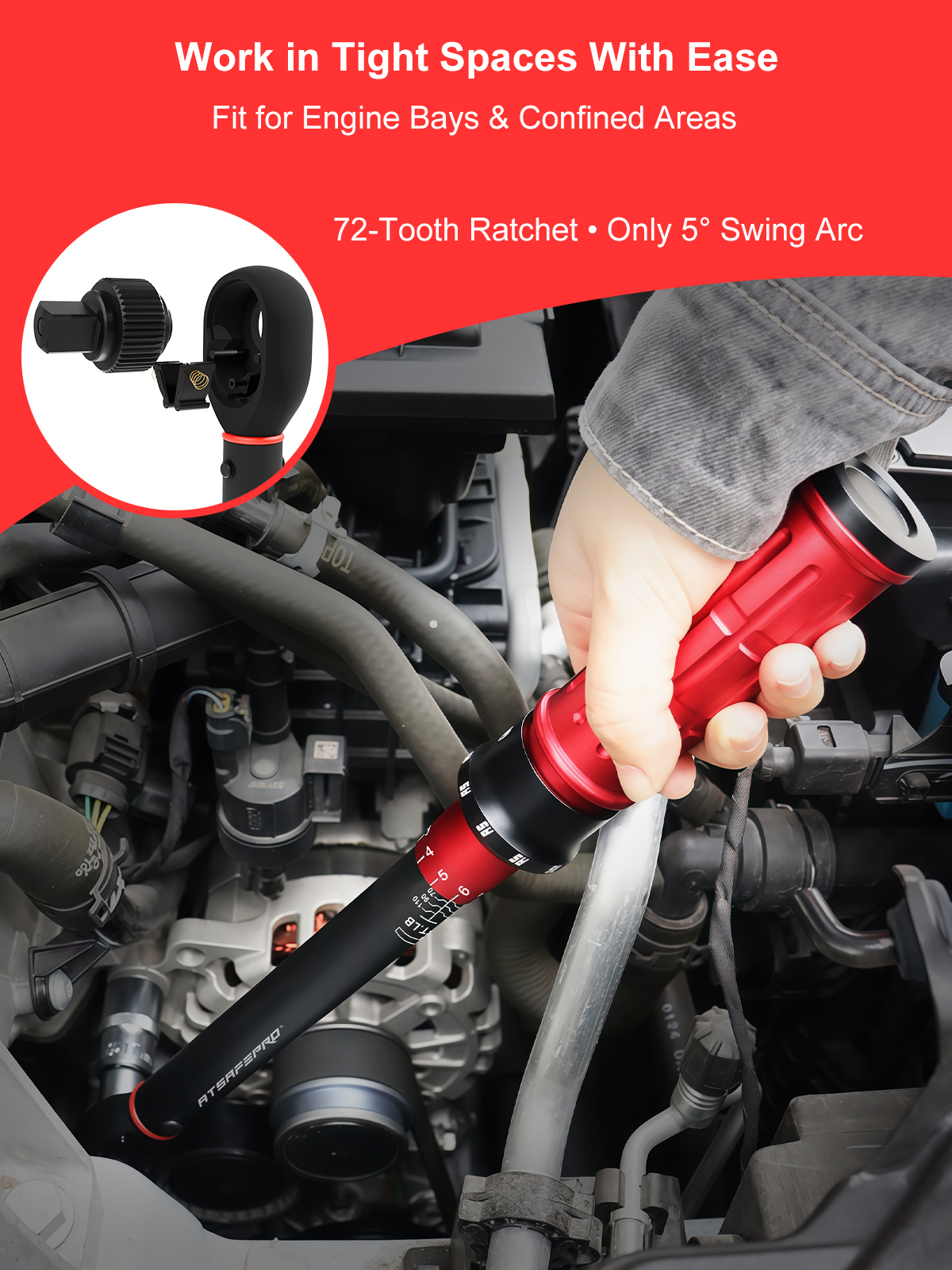
The visible construction points to a tool intended for practical, repeated handling rather than delicate bench use. A black textured grip helps with control, especially if hands are oily or the user is wearing gloves. The ratcheting head with direction selector also matters more than many buyers realize, because it helps the operator work in tighter spaces without constantly removing the wrench from the fastener.
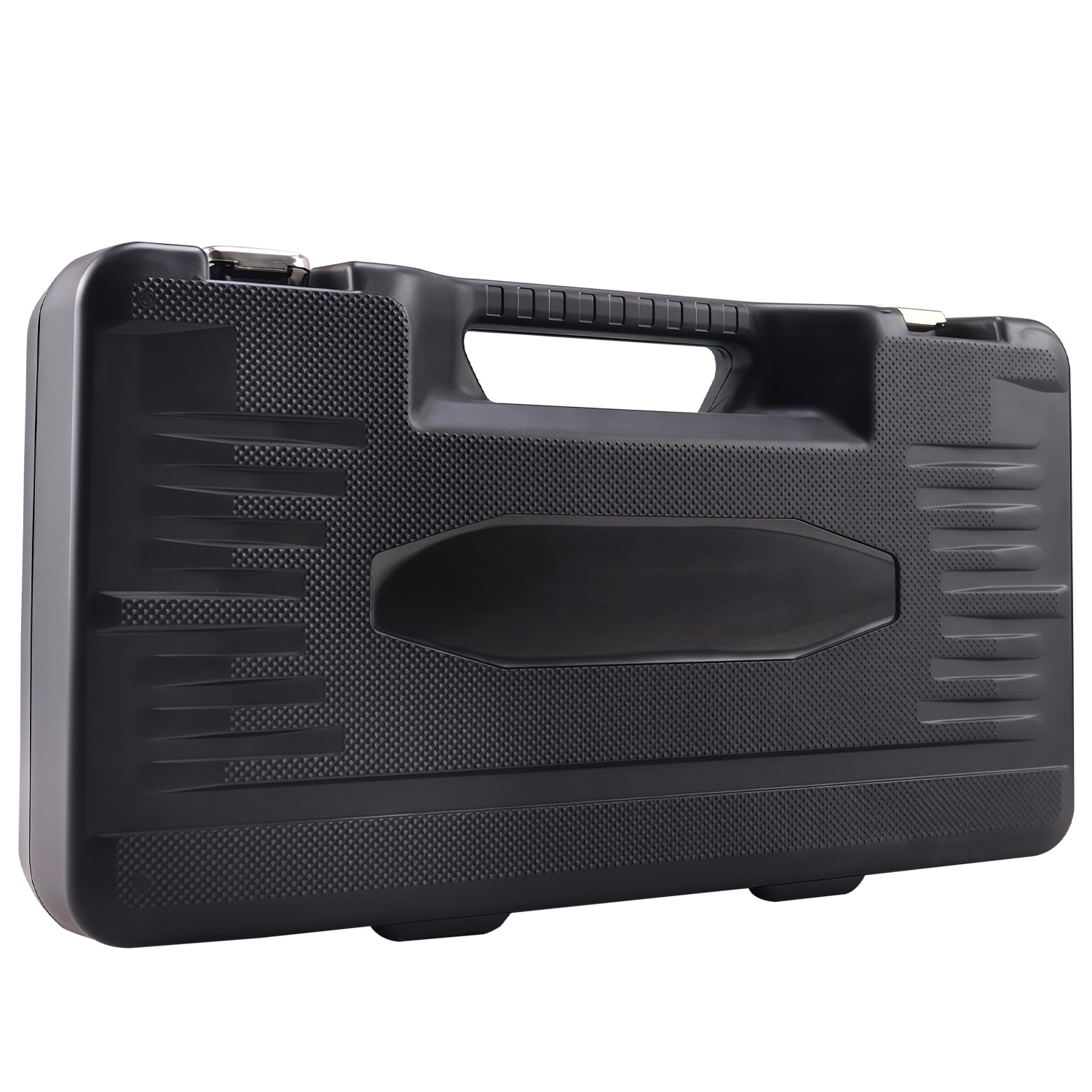
The molded hard case is another small but useful part of the package. Torque wrenches should not be tossed loosely into a drawer with hammers and pry bars. A case helps protect the scale, head mechanism, and sockets from unnecessary wear. It also makes it easier for a service manager or a serious DIY user to keep the set together.
The red shaft finish suggests a coated or painted surface treatment, though the exact process is not confirmed. In tool manufacturing terms, that type of finish can serve both identification and corrosion-control purposes, but buyers should still treat finish quality as a visual clue rather than a guarantee of long-term durability.
Where this kind of torque wrench fits best
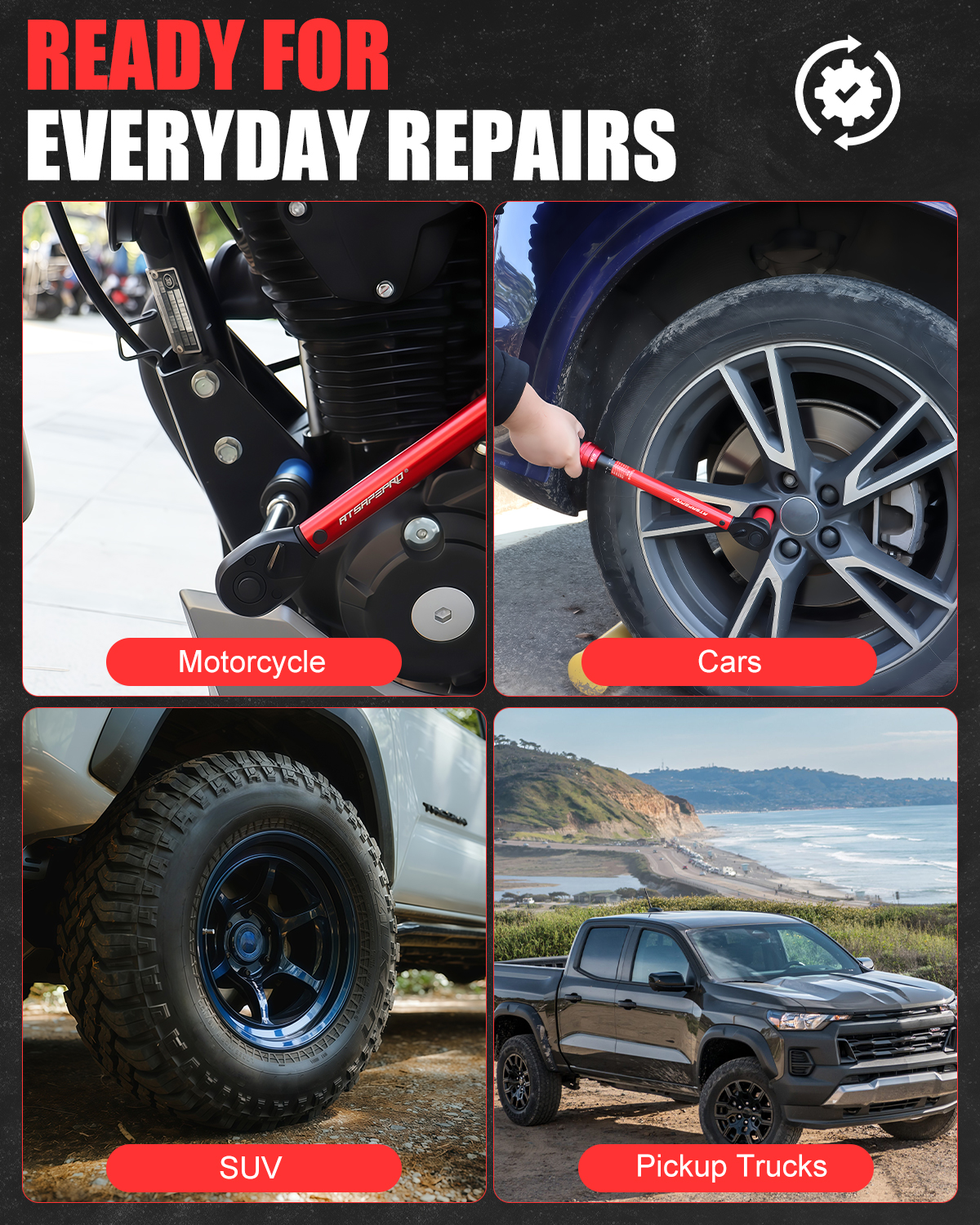
For automotive users, the clearest fit is tire service and wheel installation. Lug nuts are exactly the sort of fastener that benefits from a controlled tightening method, especially after a wheel has been removed and reinstalled. Uneven hand-tightening can lead to problems that show up later as vibration, service complaints, or awkward roadside corrections.
The kit also makes sense in small mechanical assembly environments, maintenance departments, and workshop settings where technicians need one tool that can handle a range of common fastener sizes. If the sockets included in the case match the tasks on hand, there is less friction and fewer interruptions during the job.
It is not, however, the sort of tool a buyer should assume fits every application. Torque wrench selection should always start with the fastener requirements, not the catalog image. If the job involves very high torque, very low torque, or a specific drive size not covered by the kit, this may not be the right choice. That is a practical caution, not a criticism.
What to check before buying
There are a few details that engineering buyers and sourcing managers should verify before committing to this kind of set.
1. Torque range and calibration information
The product description provided does not confirm the exact torque range, accuracy, or calibration standard. Those are not minor details. They are the numbers that determine whether the wrench is suitable for the target application. A buyer should always confirm them directly before placing the tool in a production or service environment.
2. Drive compatibility
The head appears to accept standard sockets, but the exact drive size is not confirmed. That matters because the socket set, adapters, and existing shop inventory all depend on it.
3. Socket quality and fit
The included sockets are shown as deep, color-coded accessories, which is convenient. Still, buyers should ask whether the sockets are intended for automotive service use, what materials they use, and how they fit under load. It is better to verify that now than discover a mismatch during a wheel change.
4. Storage and handling
A hard case is useful, but case layout matters. If the sockets or adapters rattle too much, the set becomes annoying to maintain. If the wrench does not sit securely in the case, the protection is only partial.
Common mistakes when using a torque wrench like this
The most common mistake is treating a torque wrench like a general-purpose ratchet. It is not just another tightening tool. Once the target torque is reached, the job is done. Forcing the fastener beyond that point defeats the purpose of using the wrench at all.
Another common problem is failing to set the target value carefully before use. A quick glance is not enough. Users should confirm the setting before every critical fastening operation, especially when moving from one job to another.
A third issue is improper storage. If the product is a click-type wrench, best practice is usually to return it to the lowest practical setting after use, not leave it cocked at a high load indefinitely. The exact storage recommendation can vary by design, but it is wise to avoid unnecessary spring tension when the tool is not in service.
There is also a human factor here: operators sometimes assume “tight enough” is the same as “correct torque.” It is not. On wheels, engine components, and other load-bearing joints, guesswork has a cost.
How buyers should judge the value of the kit
The value of the ATsafepro torque wrench is not just the wrench itself. It is the combination of the wrench body, the adjustable scale, the ratcheting head, the included socket accessories, and the carry case. For a garage user, that can mean one purchase instead of three.
For a sourcing manager, the real question is whether the kit reduces sourcing complexity without compromising the technical needs of the job. If the answer is yes, it can be an efficient purchase. If the torque specification, drive format, or socket quality is uncertain, then the kit may still be useful, but only after validation.
That is the sensible position with any hand tool that is meant to control fastener preload. Convenience is useful. Accuracy is essential.
FAQ
Is this torque wrench suitable for wheel changes?
Yes, based on the visible socket sizes and the adjustable click-type format, it appears well suited to wheel installation and tire-service tasks.
Does the kit include sockets?
Yes, the product information indicates multiple socket/adaptor pieces are included, with visible sizes such as 17 mm, 19 mm, and 21 mm.
Can it be used for general mechanical assembly?
Yes. It is a reasonable fit for maintenance, workshop repair, and controlled tightening tasks where a preset torque is needed.
What should I verify before purchase?
Confirm the torque range, accuracy, drive size, socket compatibility, and any calibration details that matter to your application.
Next step for buyers
If you are comparing the ATsafepro torque wrench against other adjustable wrench kits, start with the job list, not the product photo. Match the torque needs, the socket sizes, and the storage format to the work you actually do. If those line up, this style of kit can be a practical addition to a shop or garage. If they do not, it is better to keep looking than to discover the mismatch after the first installation.
For purchasing teams, the cleanest next move is to request the missing technical data before ordering: torque range, drive compatibility, and any verification paperwork that may be available. That is the point where a promising tool becomes a usable one.