


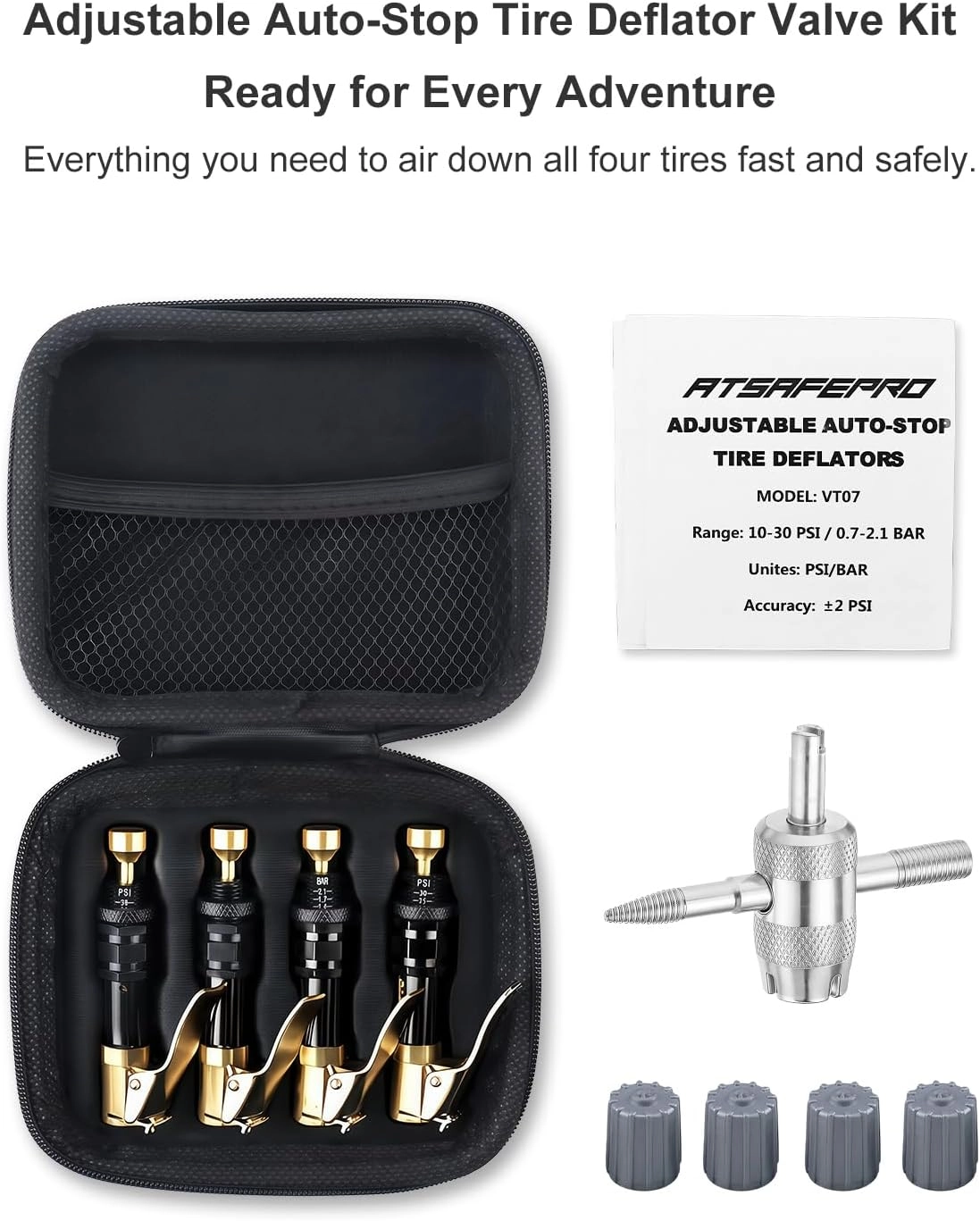
Tire Deflator with Air Chuck: Control Pressure with Precision Anywhere
Why Tire Pressure Control Matters
Tire pressure isn’t just about comfort—it directly affects safety, traction, and fuel efficiency. According to the National Highway Traffic Safety Administration (NHTSA), under-inflated tires cause 25,000 accidents annually in the U.S. On the other side, over-inflation reduces tire grip and accelerates wear.
A Tire Deflator with Air Chuck gives drivers precise control over pressure, allowing quick adjustments whether on highways, construction sites, or off-road trails.
Pain Points from Poor Tools
Drivers often rely on basic deflation methods or outdated tools, which come with hidden risks:
-
Inconsistent Pressure Readings – Cheap gauges show varying results.
-
Slow Deflation – Basic tools require long waiting times.
-
Air Leaks During Use – Poor sealing air chucks waste time and air.
-
Durability Issues – Plastic parts crack under repeated use.
Solution: A professional-grade tire deflator with an integrated air chuck ensures consistent, accurate, and quick adjustments across all vehicle types.
Key Features That Make the Difference
Professional tire deflators combine several advantages:
| Feature | Low-Quality Tools Issue | Professional Solution |
|---|---|---|
| Pressure Gauge Accuracy | ±5 PSI deviation | ±1 PSI precision |
| Deflation Speed | Slow air release | Fast-flow valves |
| Air Chuck Seal | Leaks under pressure | Brass or steel tight-seal design |
| Durability | Plastic wear | Hardened alloy or stainless steel |
| Compatibility | Limited to one valve type | Works with Schrader & accessories |
These differences matter most for fleets, off-road drivers, and anyone who demands reliability under pressure.
Real-World Applications
Imagine an off-road enthusiast lowering tire pressure before tackling sand dunes. With a Tire Deflator with Air Chuck, he can bring down PSI quickly and evenly, ensuring wider tire contact for traction. After the trail, the same tool helps him restore exact highway PSI, preventing uneven wear or blowouts on the drive home.
In fleet operations, time equals money. A bus depot that needs to check dozens of tires daily cannot afford slow or inconsistent deflation. Professional-grade deflators with air chucks allow technicians to release air rapidly and measure pressure precisely, keeping vehicles compliant with safety standards while minimizing downtime.
For DIY car owners, the story is different but just as critical. A driver noticing uneven tire wear in his driveway may discover the culprit is over-inflation. Using a quality deflator with air chuck, he can lower pressure to manufacturer specifications in minutes, extending tire lifespan and avoiding costly premature replacements.
Expert Tips for Effective Use
-
Check Baseline PSI – Always measure initial pressure before deflation.
-
Use Consistent Gauge Tools – Avoid mixing deflators and inflators with different calibrations.
-
Monitor Environmental Conditions – Heat expands air; adjust PSI based on real driving conditions.
-
Keep Air Chuck Clean – Dust or grit reduces sealing performance—wipe after use.
-
Recalibrate Annually – Even quality gauges drift over time; recalibration restores accuracy.
Q&A: Buyers’ Most Common Questions
Q: Can I use this tool for both cars and trucks?
A: Yes, ATSAFEPRO deflators with air chucks are compatible with Schrader valves, used in most cars, SUVs, and trucks.
Q: How fast does it deflate tires?
A: Professional tools can release up to 3 PSI per second, much faster than basic kits.
Q: Is it safe for off-road use?
A: Absolutely. The fast-release design is ideal for lowering PSI before trails and reinflating afterward.
Why Choose ATSAFEPRO Tire Deflators with Air Chucks
ATSAFEPRO focuses on precision, safety, and durability:
-
High-accuracy gauges for professional and DIY users.
-
Brass and stainless steel chucks prevent air leaks.
-
Fast-flow valve design reduces adjustment time.
-
Ergonomic grip handles ensure comfort in frequent use.
These features make them a trusted choice for workshops, fleets, and off-road enthusiasts alike.
Control, Safety, and Efficiency in One Tool
Whether you’re fine-tuning tire pressure before hitting a trail or ensuring fleet efficiency, the Tire Deflator with Air Chuck is a small investment that delivers major safety and performance benefits.
Explore ATSAFEPRO’s full product line on the homepage or contact us directly via the contact page.





