


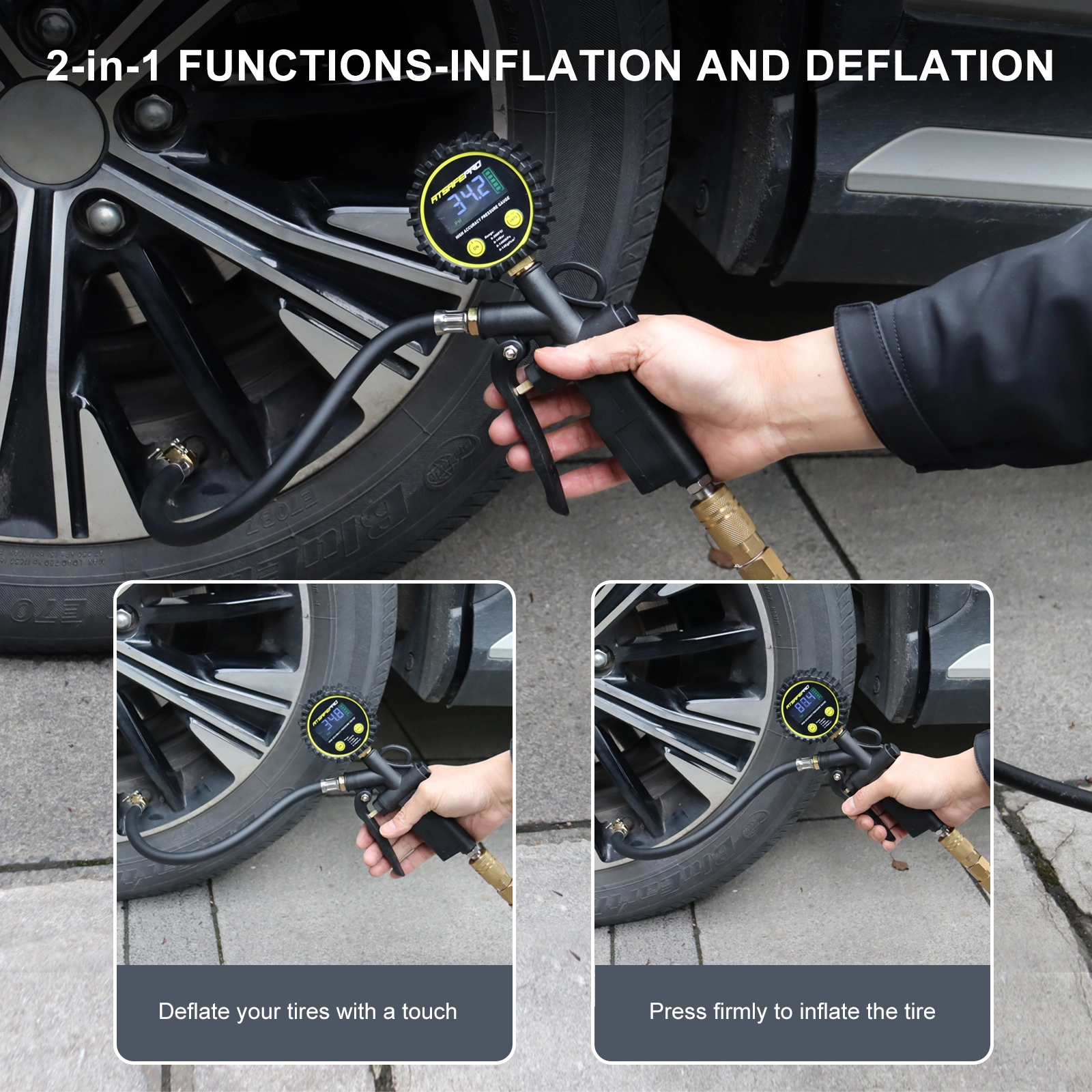
Smart Maintenance Routines: Pairing Digital Tire Inflators With Gauges and Pressure Gauges
Tire Care as a Strategic Investment in Fleet and Workshop Operations
Tire-related downtime is one of the top three cost drivers for logistics companies, public transport operators, and service fleets. A single roadside failure not only disrupts schedules but also inflates operating expenses. By integrating a Digital Tire Inflator With Gauge into regular service routines and confirming results with standalone pressure gauges, fleet managers and automotive workshops transform tire care from a reactive fix into a proactive cost-control strategy.
Dual-Tool Synergy: How Inflators and Gauges Complement Each Other
Digital inflators ensure rapid, precise inflation, while independent gauges provide a second layer of verification. The synergy between the two eliminates inconsistencies and reinforces workshop credibility.
| Challenge in Tire Maintenance | Impact on Fleets/Workshops | Solution with Inflator + Gauge Pairing |
|---|---|---|
| PSI variations across operators | Uneven tire wear, liability risk | Digital inflator standardizes pressure; gauge confirms |
| Hidden leaks or gradual losses | Costly roadside breakdowns | Regular gauge checks detect early-stage issues |
| Time wasted in repeated inspections | Lower service throughput | Digital readouts cut time; gauge ensures final accuracy |
| Customer trust in professional services | Disputes over service quality | Dual readings provide transparency |
Application Scenarios Across Vehicle Segments
1. Commercial Fleets and Logistics Operators
Large-scale fleets operating trucks and delivery vans lose significant money from downtime caused by tire failures. By incorporating Digital Tire Inflators With Gauges into routine checks, fleet managers can enforce standardized tire care protocols, reduce irregular wear, and extend tire lifecycles. According to American Trucking Associations, consistent tire inflation can improve fuel efficiency by 1–2%, which translates into major savings across hundreds of vehicles.
2. Automotive Workshops and Service Chains
For repair shops, accuracy is not just technical—it’s a matter of customer trust. Workshops that provide digital readouts from inflators, verified with pressure gauges, can show customers transparent before-and-after PSI values. This practice reduces disputes, boosts credibility, and helps retain long-term clients in an increasingly competitive service market.
3. OEM and Distributor Supply Chains
Manufacturers and distributors benefit from offering bundled inflator-and-gauge kits as value-added packages. These kits appeal to B2B buyers such as tire retailers, regional distributors, and automotive part suppliers who are looking for scalable, ready-to-sell solutions with cross-vehicle compatibility.
4. Motorcycles, SUVs, and Specialty Vehicles
Smaller tire volumes on motorcycles and off-road vehicles are highly sensitive to minor pressure changes. An underinflated motorcycle tire can reduce cornering grip by up to 15%, significantly increasing accident risks. Pairing a Digital Tire Inflator With Gauge with a standalone gauge ensures riders and SUV owners maintain precise PSI levels for safety and performance.
Practical Implementation for Smarter Routines
-
Daily Checks by Drivers – Pressure gauges detect minor PSI changes before they become critical.
-
Scheduled Workshop Inspections – Digital inflators correct deviations quickly and precisely.
-
Cross-Verification Protocol – Every inflation is confirmed with an independent gauge to prevent error.
-
Data Logging for Fleets – PSI records support audits, warranty claims, and predictive maintenance.
-
Calibration Cycles – Annual recalibration of both digital inflators and gauges maintains accuracy.
Buyer-Oriented Q&A
Q: Can fleets justify the cost of using both tools?
A: Yes. By reducing premature tire replacements and improving fuel economy, fleets often achieve measurable savings of 10–15% annually.
Q: How do dual-tool routines impact customer perception in workshops?
A: Verified readings from both devices reassure customers, making them more likely to return for repeat services.
Q: Are these tools suitable for OEM supply chains?
A: Absolutely. Bundled solutions appeal to distributors, offering ready-to-sell maintenance kits for diverse vehicle segments.
Why ATSAFEPRO Tools Deliver Long-Term Value
ATSAFEPRO manufactures both Digital Tire Inflators With Gauges and precision pressure gauges using industrial-grade components. Together, they offer:
-
Cross-vehicle compatibility for cars, SUVs, trucks, and motorcycles.
-
Durability in high-volume workshop and fleet environments.
-
User-friendly designs for drivers, technicians, and professional buyers.
-
Reliability backed by strict quality standards for international markets.
By aligning precision inflators with verification gauges, ATSAFEPRO helps organizations build smart maintenance routines that scale across industries.
Building Smarter Systems for Safer Roads
Tire maintenance should not rely on a single tool or rushed inspection. A combined approach, using inflators for correction and gauges for confirmation, creates a cycle of accuracy and trust. For fleets, workshops, and professional distributors, this method reduces costs, enhances safety, and strengthens customer relationships.
Discover ATSAFEPRO’s integrated tire care solutions on the homepage or request tailored recommendations through the contact page.





