What problem does this gauge solve?
Interviewer: When people look at an ATsafepro tire pressure gauge, what should they understand first?
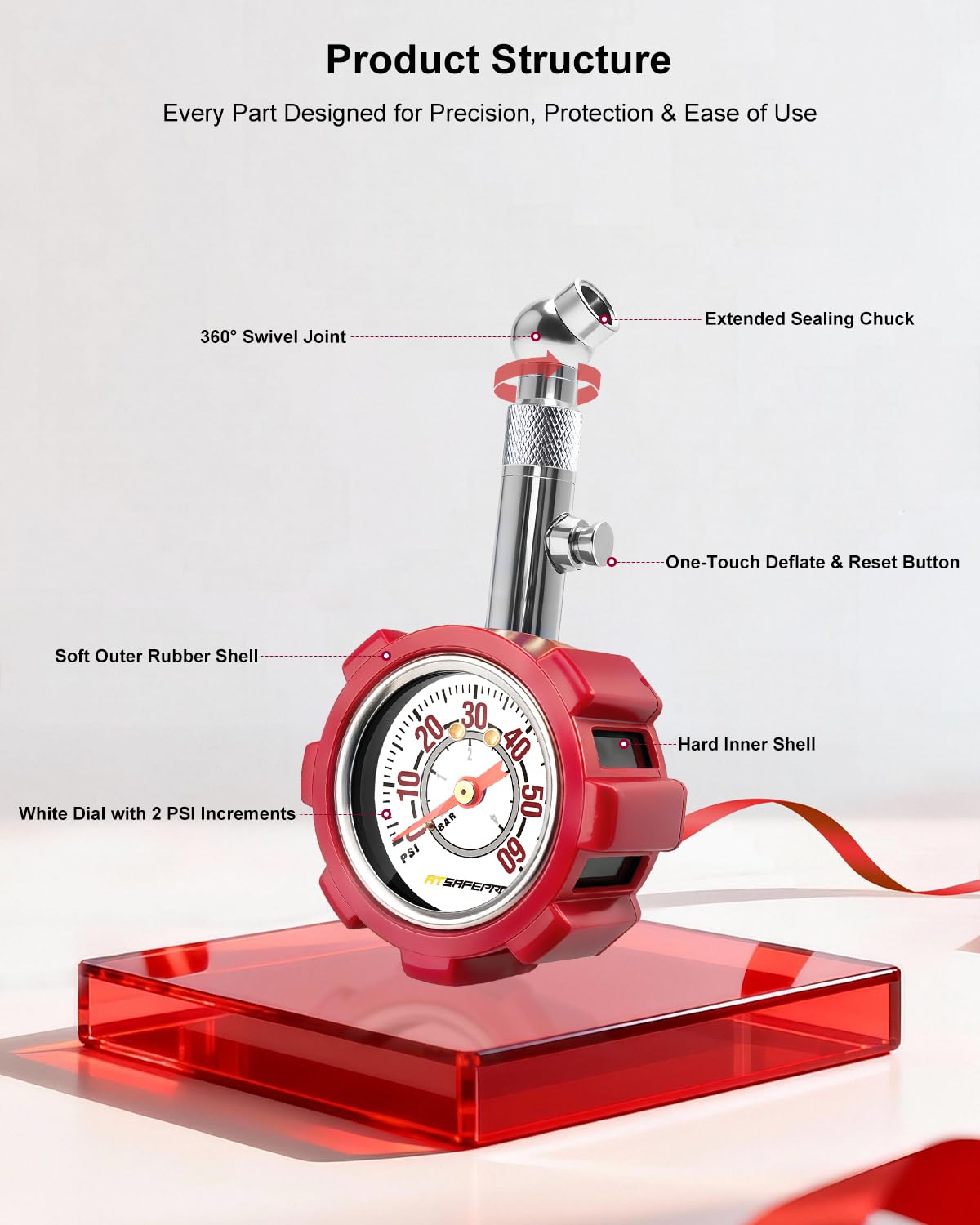
Engineer: It is a practical analog tool for checking and adjusting tire pressure, and that sounds ordinary until you are standing in a workshop with a tire that is a little soft, a fleet vehicle that has to leave on time, or a motorcycle that needs a careful top-up. The ATsafepro tire pressure gauge gives you a direct dial reading in PSI and BAR, with a valve chuck shaped for access at an angle. That combination matters because tire service is often done in awkward positions, not on a clean bench under perfect light.
For sourcing managers and product teams, the real question is not whether a gauge can read air pressure. It is whether the tool is easy to handle, quick to interpret, and durable enough for repeated use in garages, fuel stations, repair bays, and home maintenance. This is where the visible design choices start to matter.
Why choose analog in a digital market?
Interviewer: Digital tools get a lot of attention. Why would a buyer still consider an analog gauge like this one?
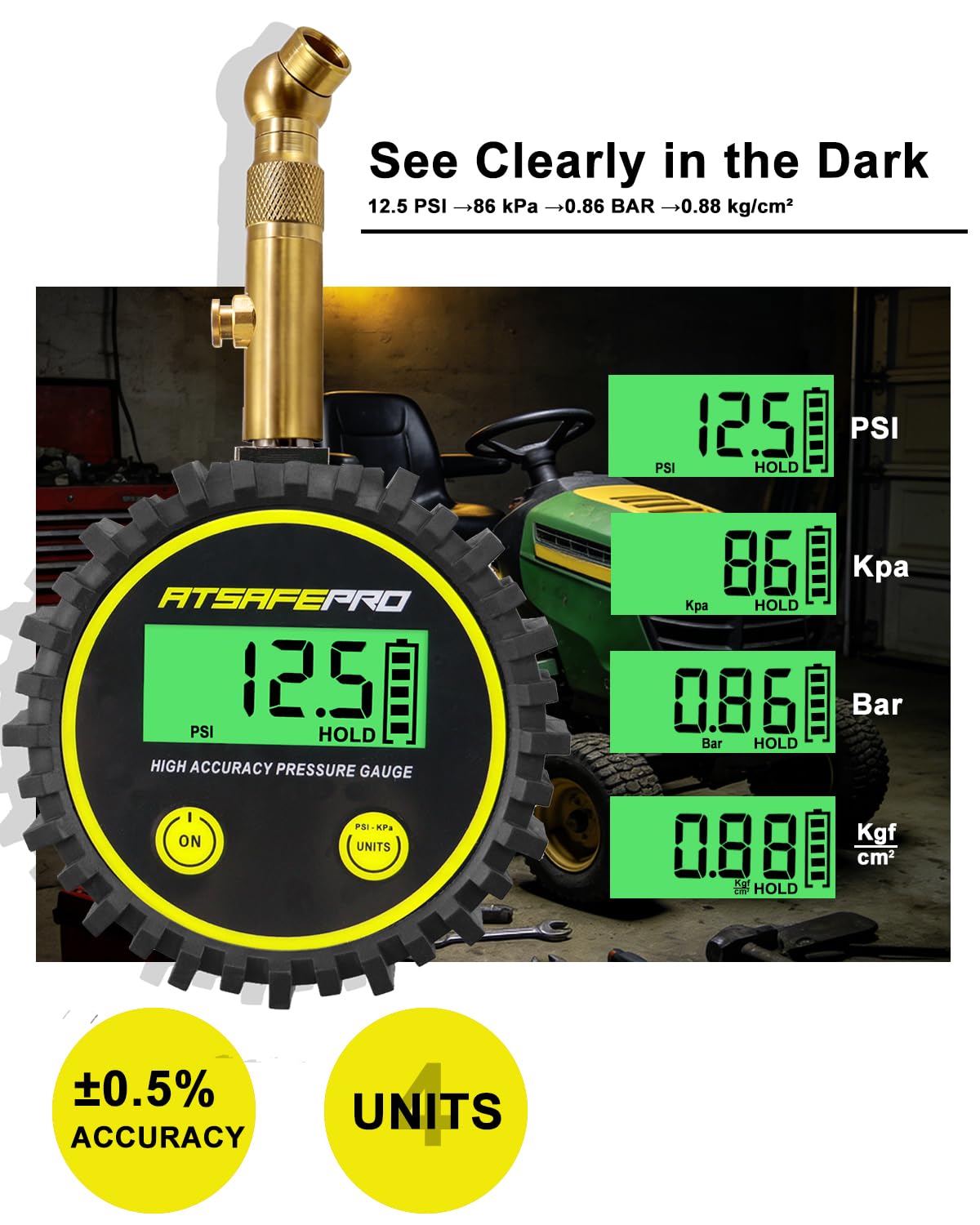
Engineer: Because analog still has a place. A mechanical dial is immediate, battery-free, and familiar to many technicians. If the use case is routine tire pressure checking, there is value in a tool that can be picked up and read at a glance without worrying about power, startup behavior, or screen visibility in direct sunlight. That does not make digital tools obsolete, but it does make analog a sensible option for many service environments.
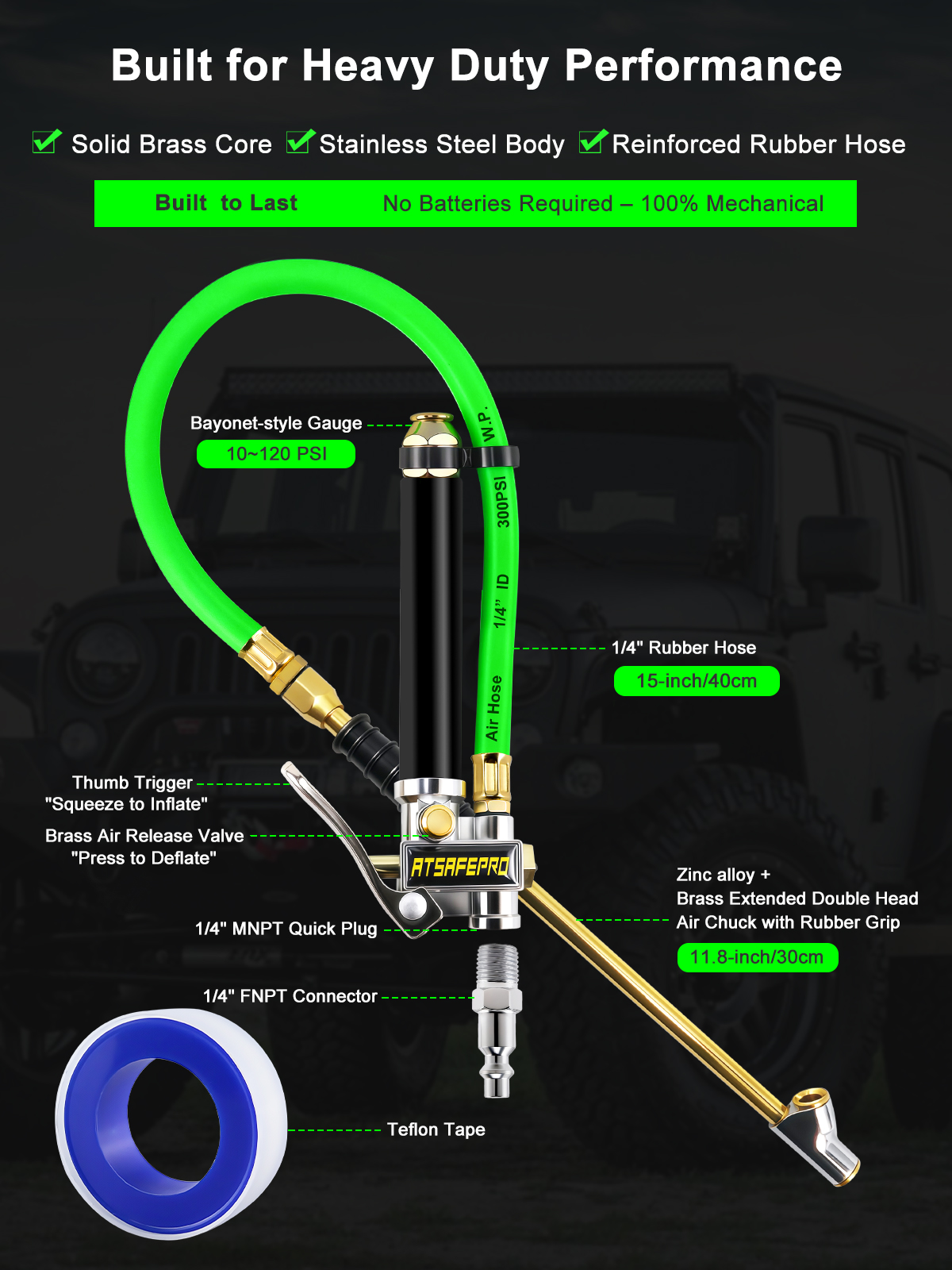
The ATsafepro tire pressure gauge also appears to combine measurement and inflation-related handling in one hand-held format. That is useful in shops where the operator wants to check pressure and make a quick adjustment without changing tools. The side-mounted control element may serve as a release or adjustment function, but that cannot be confirmed from the image alone, so buyers should verify the exact operation before purchasing in volume.
What stands out in the construction?
Interviewer: What can you tell from the visible build?
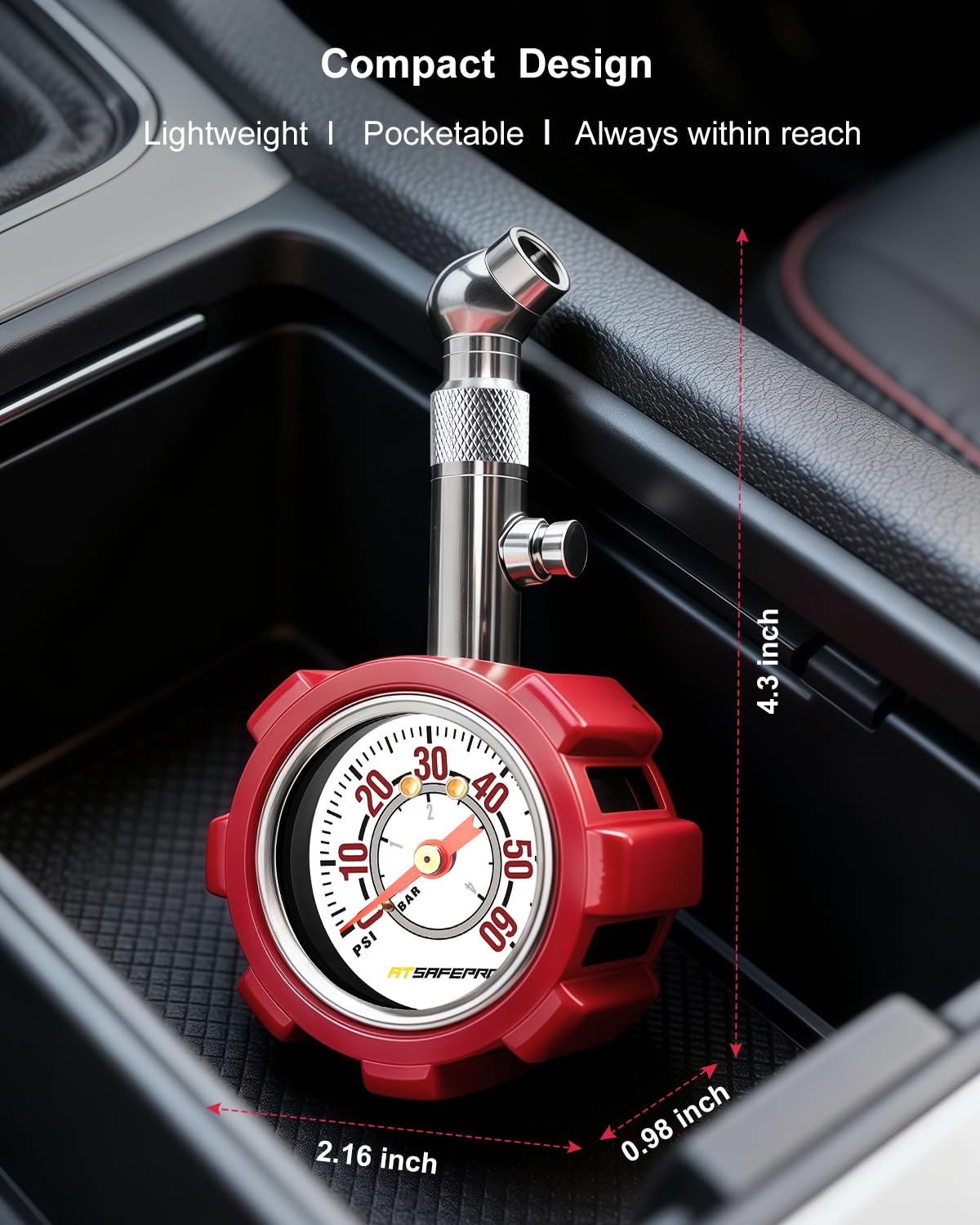
Engineer: Several things are easy to see. The outer housing is glossy red, and it looks like a molded protective body, likely plastic or a rubberized overmold. That kind of shell is not only cosmetic. It can help the tool survive knocks, bench drops, and rough storage in a service cart. The body around the gauge appears bulky on purpose, with recessed openings or windows that may reduce weight or provide access around the mechanism.
Then there is the metal section. The stem, chuck, and grip area appear chrome- or nickel-plated, which is a sensible choice for a pneumatic hand tool exposed to repeated handling and shop air. The knurled grip is especially practical. It gives the hand something to hold when the tool is oily, cold, or used with gloves. Those are small details, but in manufacturing tools, small details often decide whether a product feels dependable or fussy.
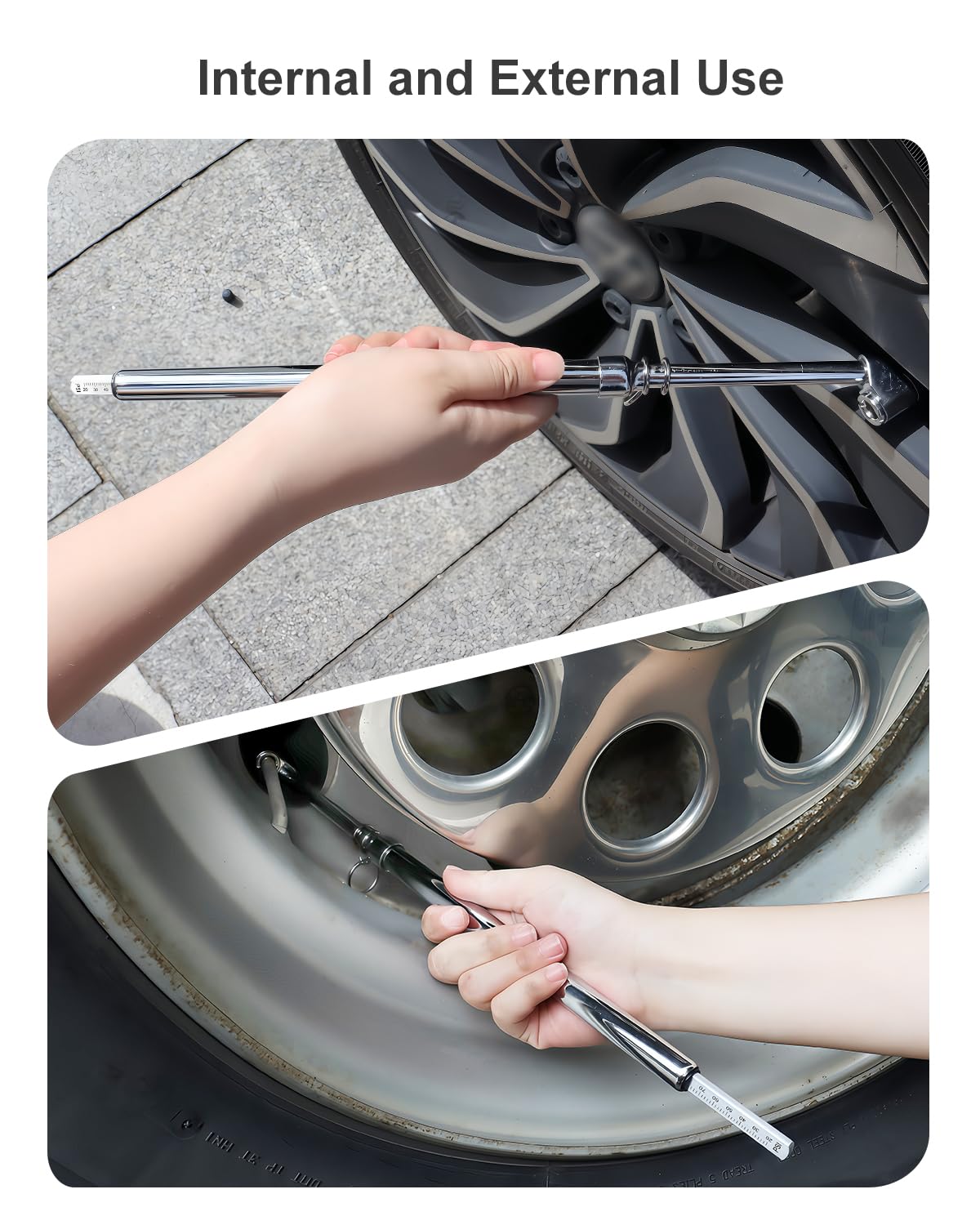
The angled head is also worth noting. A 90-degree chuck is not a novelty. It is there because valve stems are not always in convenient positions, especially on certain wheel designs or tighter clearances. A straight chuck can force awkward wrist angles, and that slows down service. The angled head improves access and, in many real-world use cases, that is reason enough to choose it.
How should buyers think about the dial?
Interviewer: The face shows both PSI and BAR. Why does that matter?
Engineer: Dual-unit marking is simple, but it is useful. PSI remains common in automotive service, while BAR is widely used in many markets and technical documents. A dual-scale dial reduces conversion mistakes and makes the tool easier to use across teams, suppliers, or regions. If you work in a mixed environment, that can save time and avoid wrong-inflation errors that are annoyingly easy to make when people are moving quickly.
The analog display also makes reading behavior important. Buyers should look at dial size, mark clarity, and how the needle settles. Those details are not visible enough here to judge calibration quality or accuracy class, and they should not be assumed. But in any pressure tool, a clean face and legible scale are more than presentation. They affect whether operators trust the reading.
Where does this kind of tool fit in the workshop?
Interviewer: In practice, who is most likely to use it?
Engineer: The most obvious users are automotive repair shops, tire service counters, fuel stations with air service, fleet maintenance teams, and do-it-yourself vehicle owners. It also has a place in motorcycle service and similar pneumatic tire applications. The key is not the vehicle category alone. It is the workflow. If the operator checks pressures often and wants a hand tool that can take some abuse, an analog gauge with a protective housing makes sense.
In fleet settings, consistency matters. Tires that are off-spec can affect wear patterns, fuel use, and vehicle behavior. In a retail garage, speed matters just as much because technicians may be working across multiple vehicles with different wheel layouts. A tool like this is not trying to be exotic. It is trying to be available, readable, and easy to keep in hand.
What should a buyer verify before placing an order?
Interviewer: What would you tell a procurement team to confirm before buying?
Engineer: Start with the unknowns. Do not assume the accuracy class, calibration standard, maximum pressure rating, connector type, hose length, or the exact function of the side control unless the supplier states them clearly. Those are the details that determine whether the tool fits a service line or only looks right in a catalog photo. The image shows the visible scale, but it does not prove the full operating envelope.
Next, ask how the housing is built and assembled. The visible design suggests a combination of injection-molded outer protection and metal pneumatic fittings, but buyers should confirm the materials and finishing. If the tool will be used in a greasy shop environment, surface quality is not trivial. A grip that stays usable matters more than a polished look.
Finally, verify how it is intended to connect to the valve. The angled chuck is an advantage, but different valve and connector designs can affect usability. Anyone sourcing for a multi-site operation should test the tool on the actual vehicles in the fleet, not just on a bench fitting.
What are the common mistakes people make with tire gauges?
Interviewer: Where do users go wrong?
Engineer: The biggest mistake is assuming all tire pressure tools are interchangeable. They are not. A gauge may be readable but awkward, durable but poorly marked, or convenient but not suitable for the expected pressure range. Another common issue is poor handling discipline. If the chuck does not seat well on the valve, users may get leakage during measurement and blame the gauge instead of the technique.
There is also a habit of ignoring storage and inspection. A protective housing helps, but it does not make a tool maintenance-free. In busy shops, gauges can be knocked around, dragged through drawers, or left exposed to grime. Buyers should treat the outer shell and the metal chuck as part of the service life story, not as decoration.
How would you compare this style of gauge to heavier-duty alternatives?
Interviewer: Is this the right choice for every operation?
Engineer: No, and that is worth saying plainly. If a facility needs documented calibration control, specialized high-pressure use, or strict metrology documentation, it may need a different class of instrument. This product, as visible, looks like a practical hand tool rather than an industrial measurement system. That is not a flaw. It just means the buyer should match the tool to the job.
For everyday inflation and pressure checking, the balance here is attractive: dual-scale readability, angled valve access, protective body, and a metal grip section that should be easier to handle in real shop conditions. For many users, that is exactly the right middle ground.
What is the practical buying advice?
Interviewer: If you were advising a sourcing team, what would you tell them to look for?
Engineer: I would focus on three things. First, ask for full specification confirmation rather than relying on the photo. Second, test usability with the vehicles and valves you actually service. Third, check whether the readout is easy to interpret under typical shop lighting, because a gauge that looks fine in a product image may be harder to use in a dim bay or outdoors.
There is also a supply-side question. If your team buys tools in batches, consistency of assembly matters. A hand tool with moving parts, plated fittings, and a dial face should be inspected for repeatability. That is especially true when the product is meant for broad use across different operators.
What should readers take away from the ATsafepro tire pressure gauge?
Interviewer: If you had to give one straightforward takeaway, what would it be?
Engineer: This is a straightforward analog tire pressure gauge with a practical shape and a workshop-friendly build. Its visible strengths are clear: PSI and BAR on the dial, an angled chuck for valve access, a protective red housing, and a knurled metal grip. That makes it the kind of tool that fits everyday tire service rather than showroom language.
For readers making a purchasing decision, the important step is to confirm the technical details that are not visible in the image. If those checks line up with the job, this type of gauge can be a sensible addition to garage equipment, fleet kits, and maintenance benches. It is not trying to do everything. It is trying to make a common task easier, and in manufacturing and service work, that is often enough.
Next step
If you are evaluating this product for procurement, request the full specification sheet, confirm the valve connection and pressure range, and test the tool on your own service vehicles before standardizing it across the shop.