Ensuring your vehicle's tires are properly inflated is one of the most critical aspects of routine car maintenance. It directly impacts your safety on the road, your car's fuel efficiency, and the lifespan of your tires. The essential tool for this job is a reliable tire pressure gauge, but walking into any auto parts store reveals a fundamental choice: should you go with a classic analog model or a modern digital one? Both have their merits, and understanding their differences is key to choosing the right tool for your needs.
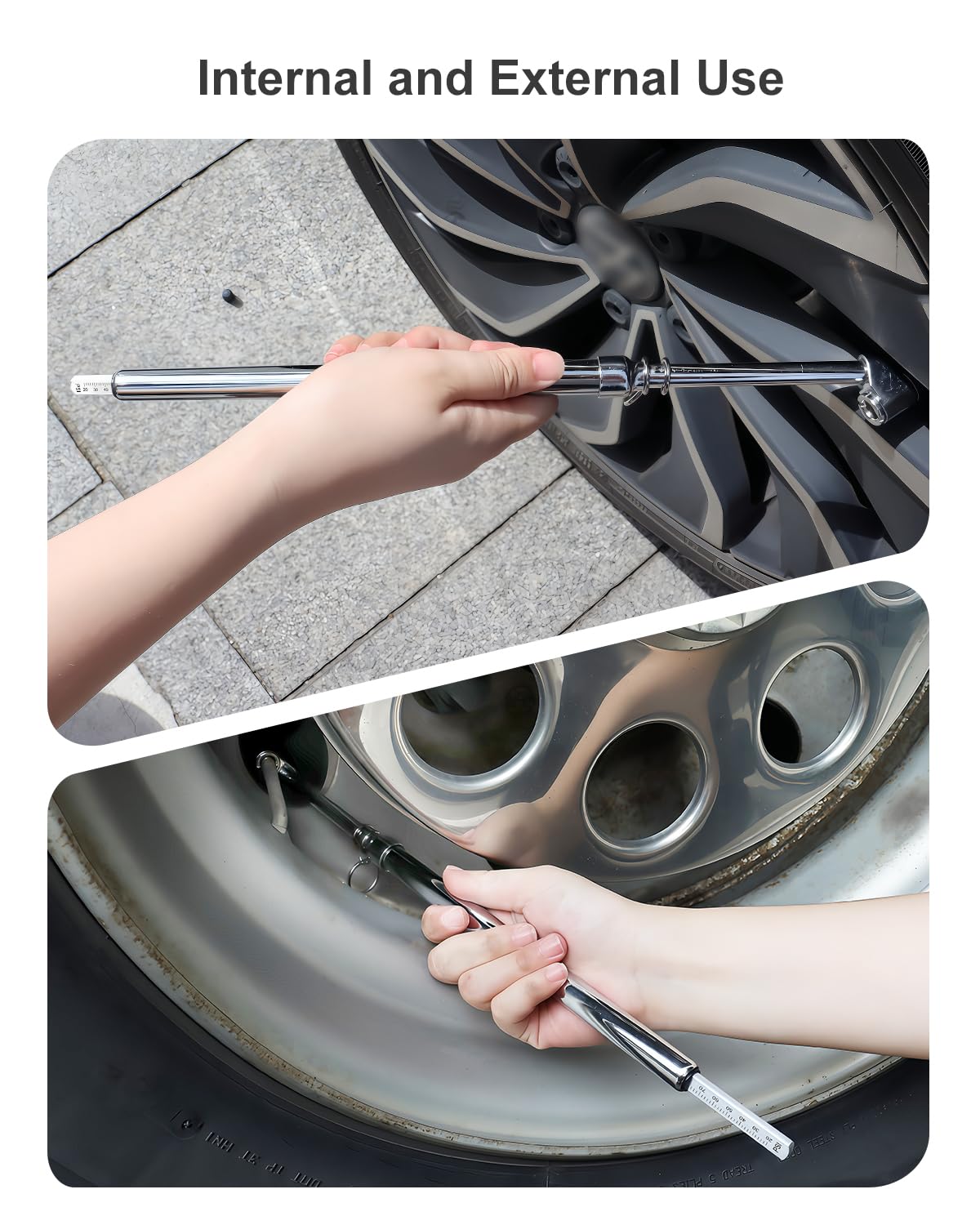
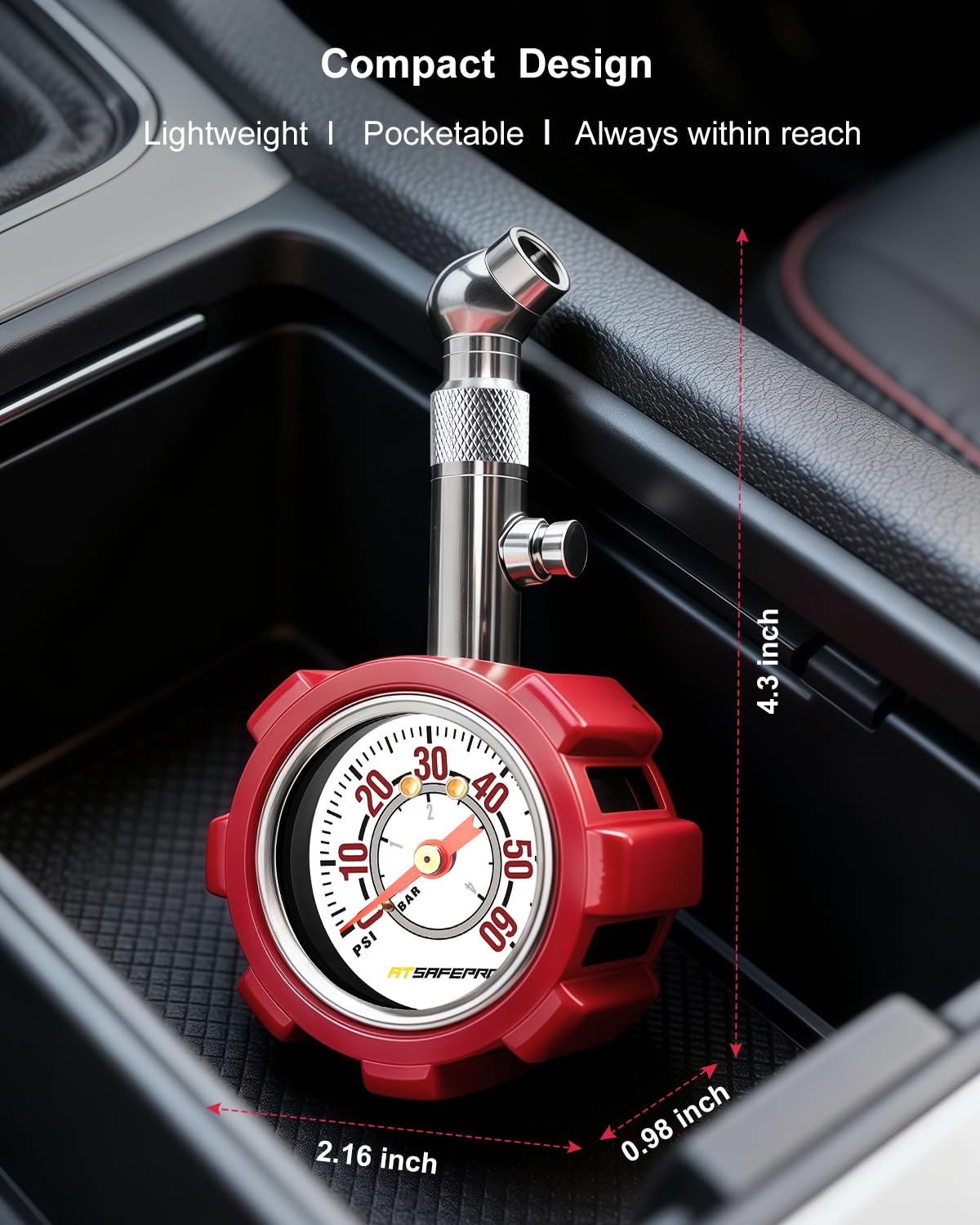
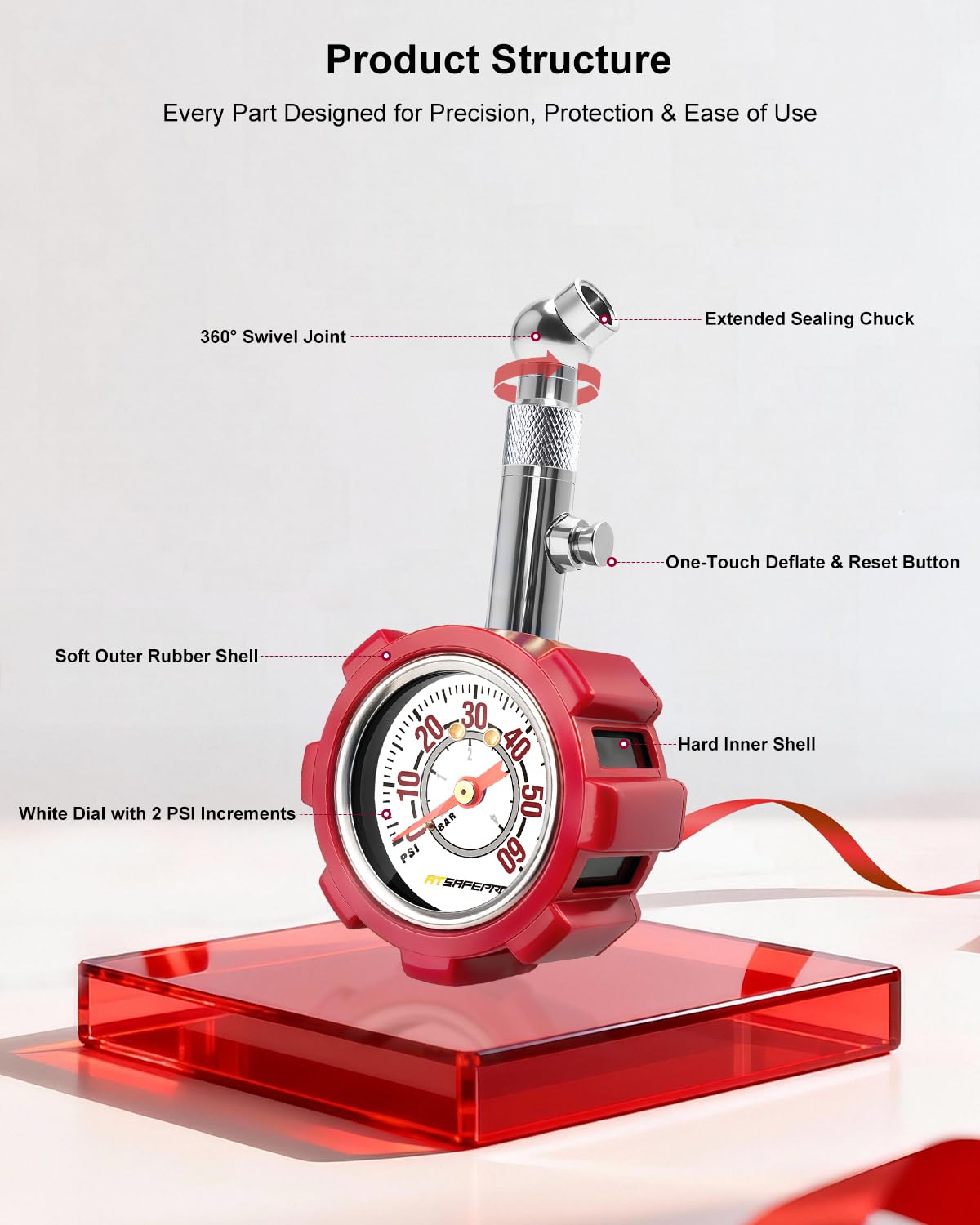
For decades, the analog tire pressure gauge has been the trusted companion of mechanics and car enthusiasts alike. Its strength lies in its simplicity and unwavering reliability. Unlike digital counterparts, an analog gauge requires no batteries, meaning it's always ready to perform, whether it's been sitting in your glove box for a week or a year. The mechanics are straightforward, typically using a Bourdon tube that straightens under pressure, moving a needle on a calibrated dial. This simplicity often translates to superior durability. A well-built model, like the GODESON Tire Gauge, features a robust design with a protective rubber housing, making it resistant to drops and impacts. The clear, easy-to-read dial, often featuring dual readings in psi and bar, provides all the necessary information at a glance without the need to power anything on. For those who appreciate tactile feedback and a tool that performs its one job flawlessly without fail, the analog option remains a top contender.
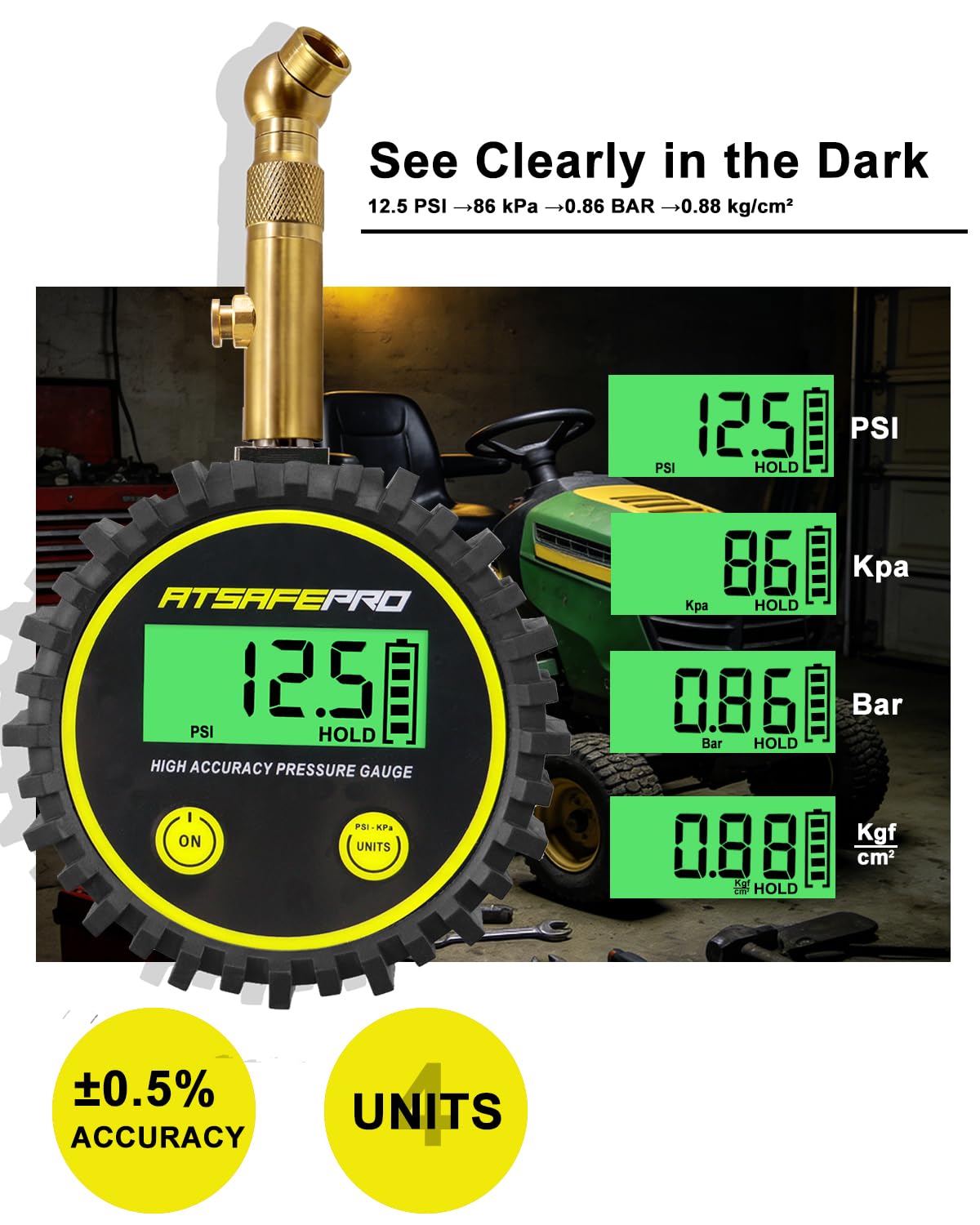
On the other side of the spectrum is the digital tire pressure gauge. Its primary advantage is perceived precision and ease of reading. Digital models present the pressure reading as a clear, exact number on an LCD screen, often to a decimal point. This eliminates any guesswork that can sometimes occur when interpreting a needle's position between two markings on an analog dial. Many digital gauges also come with backlit screens, making them incredibly easy to use in low-light conditions, such as a dark garage or at night. Furthermore, they often pack in extra features, such as the ability to switch between different units of measurement (psi, bar, kPa) with the push of a button or even a function to store the previous reading. For the tech-savvy driver who values exact readouts and modern conveniences, the digital gauge is a compelling choice.
A direct comparison reveals a trade-off between timeless reliability and modern features. While digital gauges boast specific numerical readouts, a high-quality analog gauge is meticulously calibrated for accuracy you can trust for years. The key differentiator is reliability. A digital gauge is useless with a dead battery, a scenario that an analog user never has to consider. In terms of durability, the fewer electronic components an analog model has, the less there is to break. When it comes to usability, the choice is subjective. Some find a digital number quicker to read, while others are perfectly comfortable with a classic dial and appreciate the intuitive, battery-free operation. The GODESON gauge, for example, proves that an analog interface can be both stylish and highly functional, with a clear display and a comfortable, rugged feel.
Ultimately, the best tire pressure gauge is the one you will use regularly. Your decision between analog and digital should be based on your personal priorities. If you value absolute dependability, a rugged build, and the freedom from batteries, a high-quality analog tire pressure gauge is an unbeatable choice. It offers a lifetime of service with minimal fuss. However, if you prefer a precise numerical display, backlit screens for nighttime use, and other convenient electronic features, a digital model will serve you well. Whichever path you choose, investing in a quality tool and checking your tires monthly is a small step that pays huge dividends in safety and vehicle performance.
The Enduring Appeal of the Analog Tire Pressure Gauge
For decades, the analog tire pressure gauge has been the trusted companion of mechanics and car enthusiasts alike. Its strength lies in its simplicity and unwavering reliability. Unlike digital counterparts, an analog gauge requires no batteries, meaning it's always ready to perform, whether it's been sitting in your glove box for a week or a year. The mechanics are straightforward, typically using a Bourdon tube that straightens under pressure, moving a needle on a calibrated dial. This simplicity often translates to superior durability. A well-built model, like the GODESON Tire Gauge, features a robust design with a protective rubber housing, making it resistant to drops and impacts. The clear, easy-to-read dial, often featuring dual readings in psi and bar, provides all the necessary information at a glance without the need to power anything on. For those who appreciate tactile feedback and a tool that performs its one job flawlessly without fail, the analog option remains a top contender.
The Precision and Convenience of Digital Gauges
On the other side of the spectrum is the digital tire pressure gauge. Its primary advantage is perceived precision and ease of reading. Digital models present the pressure reading as a clear, exact number on an LCD screen, often to a decimal point. This eliminates any guesswork that can sometimes occur when interpreting a needle's position between two markings on an analog dial. Many digital gauges also come with backlit screens, making them incredibly easy to use in low-light conditions, such as a dark garage or at night. Furthermore, they often pack in extra features, such as the ability to switch between different units of measurement (psi, bar, kPa) with the push of a button or even a function to store the previous reading. For the tech-savvy driver who values exact readouts and modern conveniences, the digital gauge is a compelling choice.
Analog vs. Digital: Which Gauge is Right for You?
A direct comparison reveals a trade-off between timeless reliability and modern features. While digital gauges boast specific numerical readouts, a high-quality analog gauge is meticulously calibrated for accuracy you can trust for years. The key differentiator is reliability. A digital gauge is useless with a dead battery, a scenario that an analog user never has to consider. In terms of durability, the fewer electronic components an analog model has, the less there is to break. When it comes to usability, the choice is subjective. Some find a digital number quicker to read, while others are perfectly comfortable with a classic dial and appreciate the intuitive, battery-free operation. The GODESON gauge, for example, proves that an analog interface can be both stylish and highly functional, with a clear display and a comfortable, rugged feel.
Making the Final Choice
Ultimately, the best tire pressure gauge is the one you will use regularly. Your decision between analog and digital should be based on your personal priorities. If you value absolute dependability, a rugged build, and the freedom from batteries, a high-quality analog tire pressure gauge is an unbeatable choice. It offers a lifetime of service with minimal fuss. However, if you prefer a precise numerical display, backlit screens for nighttime use, and other convenient electronic features, a digital model will serve you well. Whichever path you choose, investing in a quality tool and checking your tires monthly is a small step that pays huge dividends in safety and vehicle performance.