Why a tread depth gauge still matters in a digital shop
A GODESON tire tread depth gauge sits in that practical middle ground between a simple inspection tool and a small electronic instrument. For anyone responsible for vehicle safety, service intervals, or tire replacement decisions, tread depth is not a theoretical number. It is one of the few measurements that can quickly tell you how much usable life remains, how much wet-weather grip is left, and whether a tire is approaching the point where replacement should move from “soon” to “now.”
That matters in service bays, fleet garages, used-car inspection, and even for individual drivers who do their own checks. Tread depth affects braking, hydroplaning resistance, and whether a vehicle meets the standard a buyer or technician expects. A digital gauge makes the reading easier to see and record than a plain mechanical stick gauge, which is one reason these tools have become common in workshops that value speed and repeatability.
The question for a buyer is not whether the gauge can read a number. It is whether the tool is precise enough, durable enough, and simple enough to live on a bench or in a glovebox without becoming a nuisance. That is the real purchasing decision.
What the kit appears to include
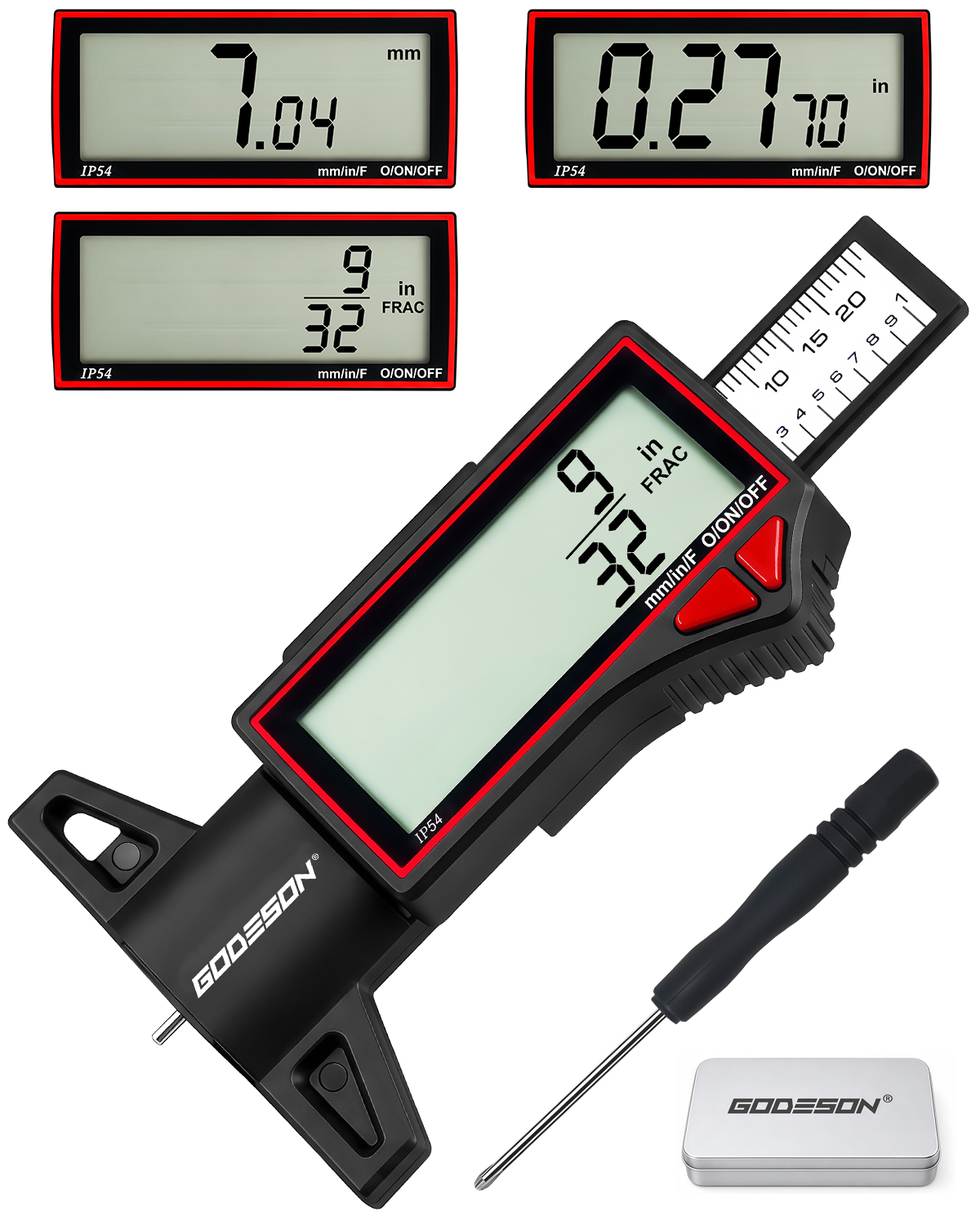
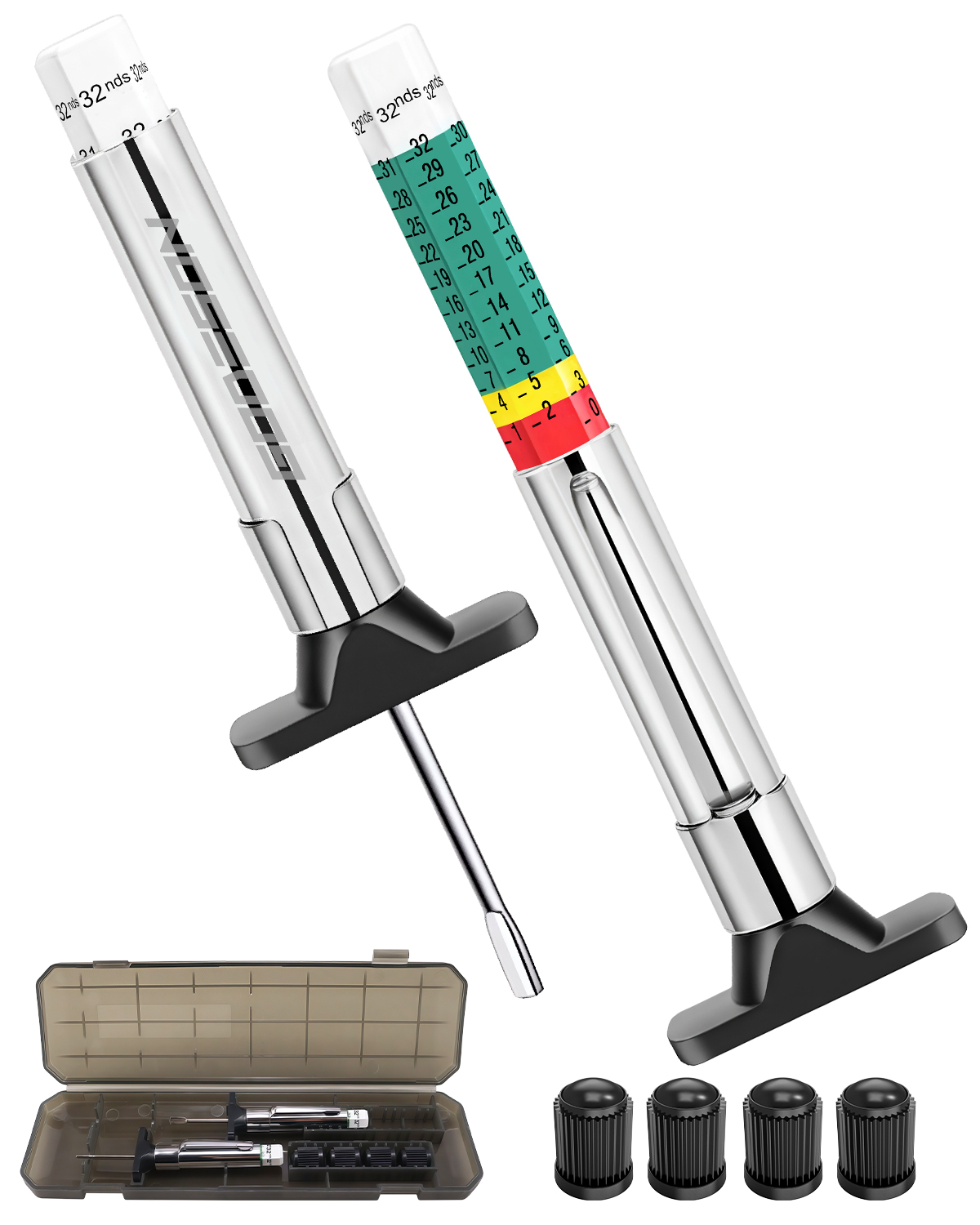
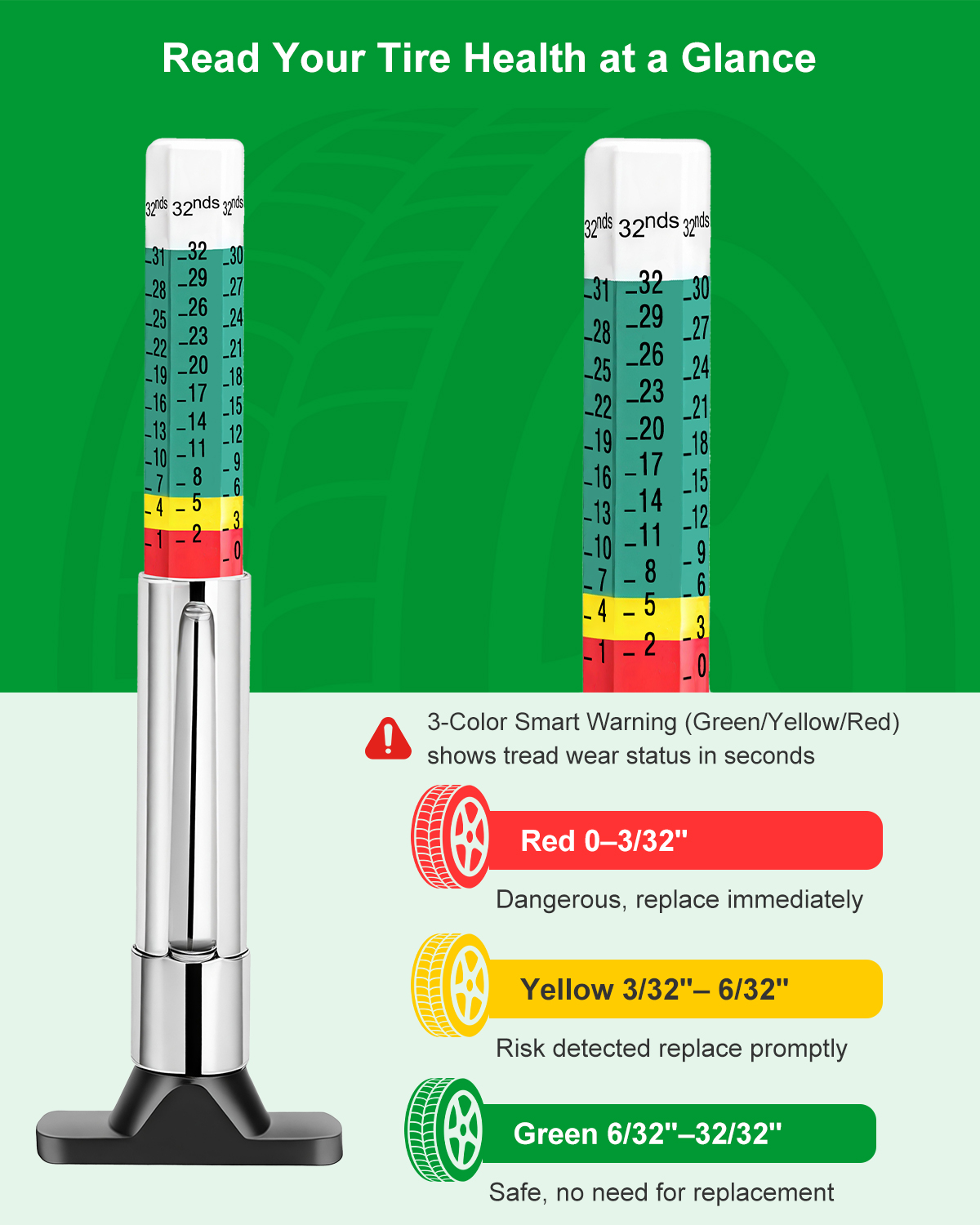
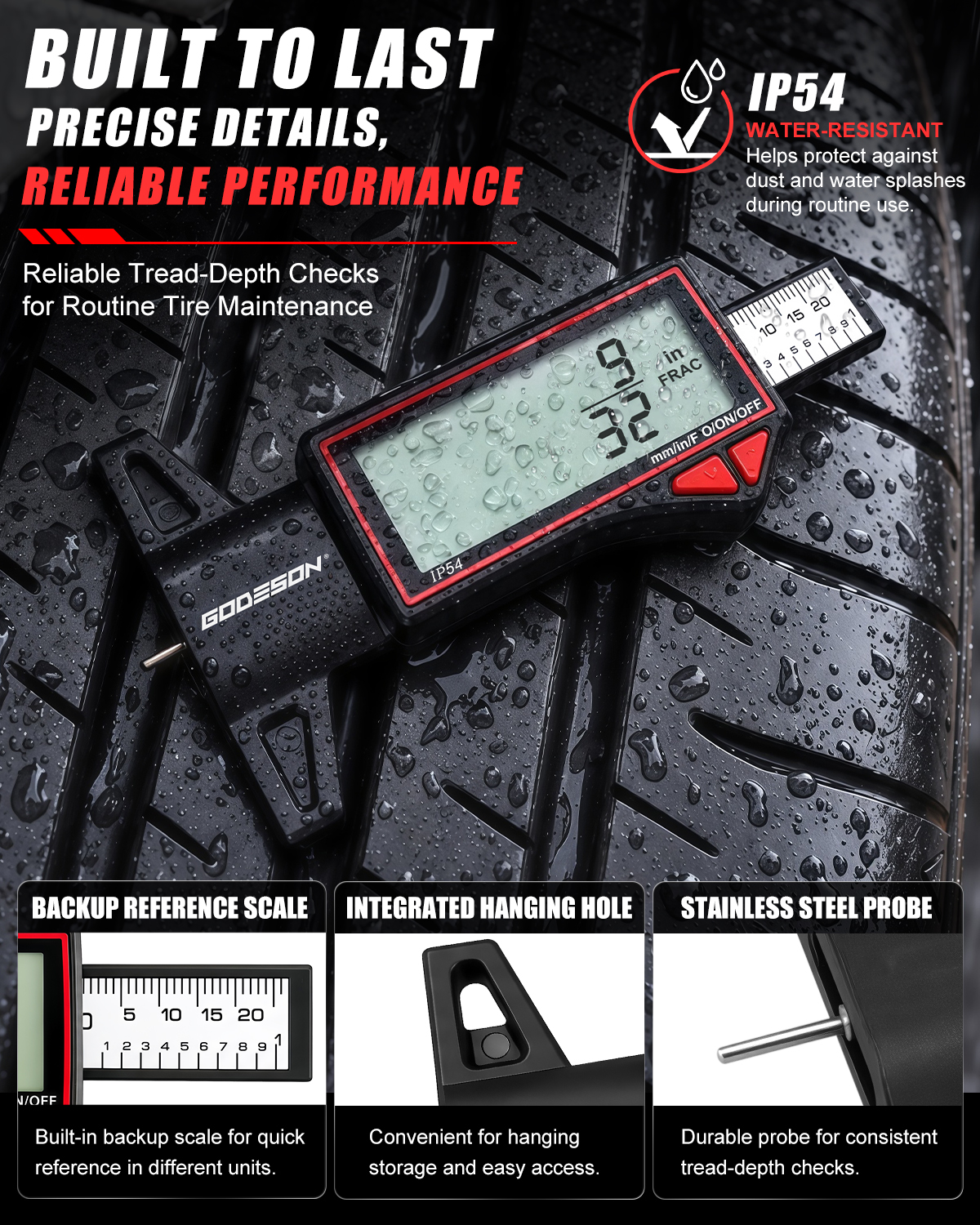
Based on the product information, this is a digital tire tread depth gauge kit with a handheld body, LCD display, measurement probe or slider, two red buttons, a black molded housing with grip-like trim, and a metal storage tin. The kit also includes a small screwdriver and a user manual. That accessory set is modest, but in manufacturing and maintenance work modest often beats elaborate. A tool that arrives with the basics and a protective case is more likely to stay calibrated, clean, and available when needed.
The visible dimensions suggest a compact hand tool, roughly 4.57 inches long and 2.36 inches high, with a storage box around 5.12 by 3.15 inches. In practical terms, that means it should fit into a service drawer, mobile inspection kit, or technician bag without demanding much space.
Key specifications buyers will care about
Several printed specifications are especially relevant for a sourcing manager or workshop lead. The measurement range is listed as 0.00 mm to 25.4 mm, which covers the range most tire inspection work needs. Resolution is given as 0.01 mm, and accuracy is stated at ±0.1 mm. For routine tread checks, that is fine-grained enough to see wear trends and compare tires on the same vehicle, provided the user handles the probe consistently.
The operating temperature range is 0°C to 50°C, which is sensible for garage and inspection environments. The power source is listed as an XR032 battery, and the unit is said to carry an IP54 water resistance rating, meaning protection against dust and splashes. That is useful, though it should be read as workshop practicality rather than a license to leave the gauge in wet conditions or wash it down like a sealed instrument.
One small buyer caution: the published figures tell you what the tool is intended to do, not how it feels in daily use. A gauge can have impressive numbers on paper and still be awkward if the probe action is sticky or the display is hard to read under bay lighting. That is why the physical design matters nearly as much as the specification sheet.
How this kind of digital gauge is used in the field
In the field, a tire tread depth gauge is used for straightforward measurement. The probe is placed into the tread groove, the gauge references the tire surface, and the digital readout shows remaining depth. The value helps determine whether the tire is suitable for continued service, whether all four tires are wearing evenly, and whether a wear pattern suggests alignment, inflation, or rotation issues.
For fleet work, this is especially useful. A technician can move through a row of vehicles and note differences quickly. For a passenger-car service bay, the gauge helps support replacement recommendations with a number rather than a vague visual judgment. That is a small thing, but in customer conversations a number can make the difference between a deferred sale and a decision made on the spot.
Motorcycle and truck applications add their own wrinkle. Motorcycle tires often wear in ways that are easy to misread by eye, and heavy-duty tires may look acceptable from a distance while having less usable tread than expected. A digital gauge provides a more defensible check in both cases.
Why digital matters, and where it doesn’t
Digital tread gauges are popular because they reduce eyeballing. They are easier for new technicians to interpret, and the display can speed up documentation. If your team records tire condition in inspection reports, the number on a screen is more convenient than a fraction on a mechanical scale. It is also easier to train around, which matters in shops with rotating staff or seasonal labor.
Still, digital does not automatically mean better. The tool depends on power, and electronic instruments can be more vulnerable to drops or contamination than a plain analog gauge. A smart buyer treats a digital gauge as a precision convenience, not as a replacement for proper inspection habits. The operator still needs to check multiple grooves, not just one center point, and should not assume one reading tells the whole story.
What to look for when comparing gauges
If you are comparing a GODESON tire tread depth gauge against other options, focus on the conditions of use first. Will it live in a shop drawer, ride in a mobile inspection kit, or be used by a consumer who only checks tires a few times a year? That answer changes what matters most.
Readability
A clear LCD display is worth more than fancy packaging. If the user has to tilt the tool under light to read the number, efficiency drops. Since the product information does not confirm backlighting, it is safer to assume normal screen visibility rather than specialty visibility in low light.
Probe feel and reset behavior
For this type of gauge, the probe action should be smooth and repeatable. A rough slider or inconsistent zeroing undermines confidence fast. The available information does not describe the internal sensor or calibration method, so buyers should treat this as a point to verify on receipt or during sample testing.
Case and handling
The included metal tin is a practical detail. A storage case helps protect the display and probe from knocks, which is useful because small measuring tools tend to disappear into drawers, gloveboxes, and work carts where they pick up scratches and dust. A hard case also makes the kit easier to issue to field personnel.
Common mistakes in tread-depth measurement
The most common error is measuring only one spot and calling it good. Tire wear is rarely perfectly uniform. Inner shoulder, outer shoulder, and center tread can tell different stories, especially on vehicles with alignment issues or uneven inflation history. A serviceable gauge becomes much more valuable when the user checks more than one location.
Another frequent mistake is reading tread depth when the probe is not properly seated in the groove. That can lead to optimistic numbers. The measurement surface should be stable, and the user should avoid pressing too hard or tilting the gauge body in a way that changes the contact point.
There is also the human factor. Some operators trust a tread gauge so much that they stop looking at cracks, chunking, embedded debris, or sidewall damage. A depth reading is only one part of tire inspection. In a workshop, it should be treated as evidence, not the whole verdict.
Who this tool is best suited for
This kind of digital gauge fits best in environments that need quick, repeatable checks without a lot of setup: tire shops, general repair bays, fleet maintenance rooms, and inspection stations. It also makes sense for distributors or resellers looking for a compact, giftable measuring tool with a protective case and small accessory bundle.
For individual drivers, the appeal is simpler. If you want to monitor tire wear yourself and prefer a numeric display over a manual scale, a digital gauge is easy to keep in the car or garage. The only real tradeoff is the battery dependence, which is acceptable for most users but still something to remember when the tool sits unused for months.
Practical buying advice
If you are sourcing this for a shop, ask a few plain questions before you commit: Is the display easy to read in normal lighting? Does the probe return smoothly? Is the included case sturdy enough for daily handling? Can your team access the battery compartment without fuss? These are basic questions, but they reveal more than a glossy product photo ever will.
For procurement teams, the deeper issue is consistency. Inspection tools only help when the whole team uses them the same way. A good tread depth gauge should be easy to standardize across technicians. If it slows people down or encourages guesswork, the measurement advantage disappears.
If you are buying for resale, the selling points are straightforward: compact size, digital readout, a metal storage tin, visible measurement range, and workshop-friendly dust and splash protection. Those are tangible features. They are also the kind of features customers can understand without a long explanation.
FAQ
Is this gauge only for cars?
No. The stated applications include cars, trucks, motorcycles, fleet vehicles, and general maintenance or inspection work.
Does the 0.01 mm resolution mean it is laboratory-grade?
Not necessarily. Resolution is only one part of performance. The listed accuracy is ±0.1 mm, and real-world consistency still depends on handling, tire condition, and how the operator places the probe.
Can it be used in a wet shop?
The IP54 claim suggests protection against dust and splashes, which is useful in a workshop. It is not the same as full waterproofing, so common sense still applies.
Is the battery included?
The available information names the battery type as XR032, but it does not clearly state installation details or confirm what is included in the box. That is worth checking before purchase.
A final buyer’s note
For a tool this size, the value is not in complexity. It is in reliable, easy measurement. A GODESON tire tread depth gauge appears designed for exactly that: a compact digital readout, a practical range, a protected case, and the kind of simple kit that belongs in a bay or inspection bag. If your operation depends on quick tire decisions, this is the sort of instrument that earns shelf space by being used, not admired.
If you are evaluating tread gauges for procurement or resale, compare the reading feel, durability, and storage setup first. The numbers matter, but so does the way the tool behaves after a month in the real world.