Why a tire tread gauge still matters in a digital workshop
A GODESON tire tread depth gauge is a small tool, but it solves a large and very practical problem: knowing when a tire still has useful tread and when it has crossed into a wear state that deserves attention. For engineers, fleet managers, tire shops, and careful vehicle owners, that decision is not just about compliance. It affects stopping distance, wet traction, rotating costs, and the timing of replacement work. A tread gauge gives you a number instead of a guess, and in maintenance work that difference matters.
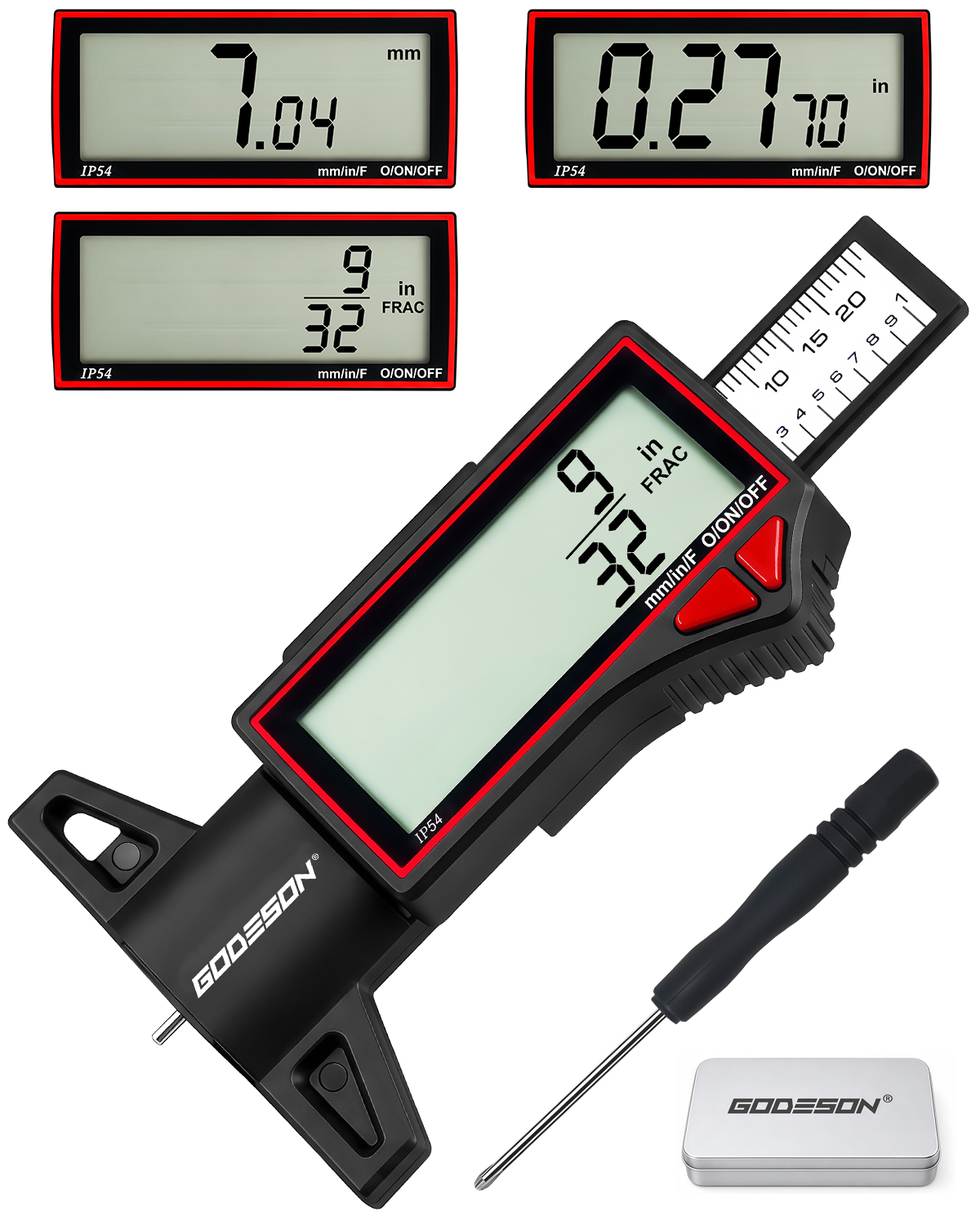
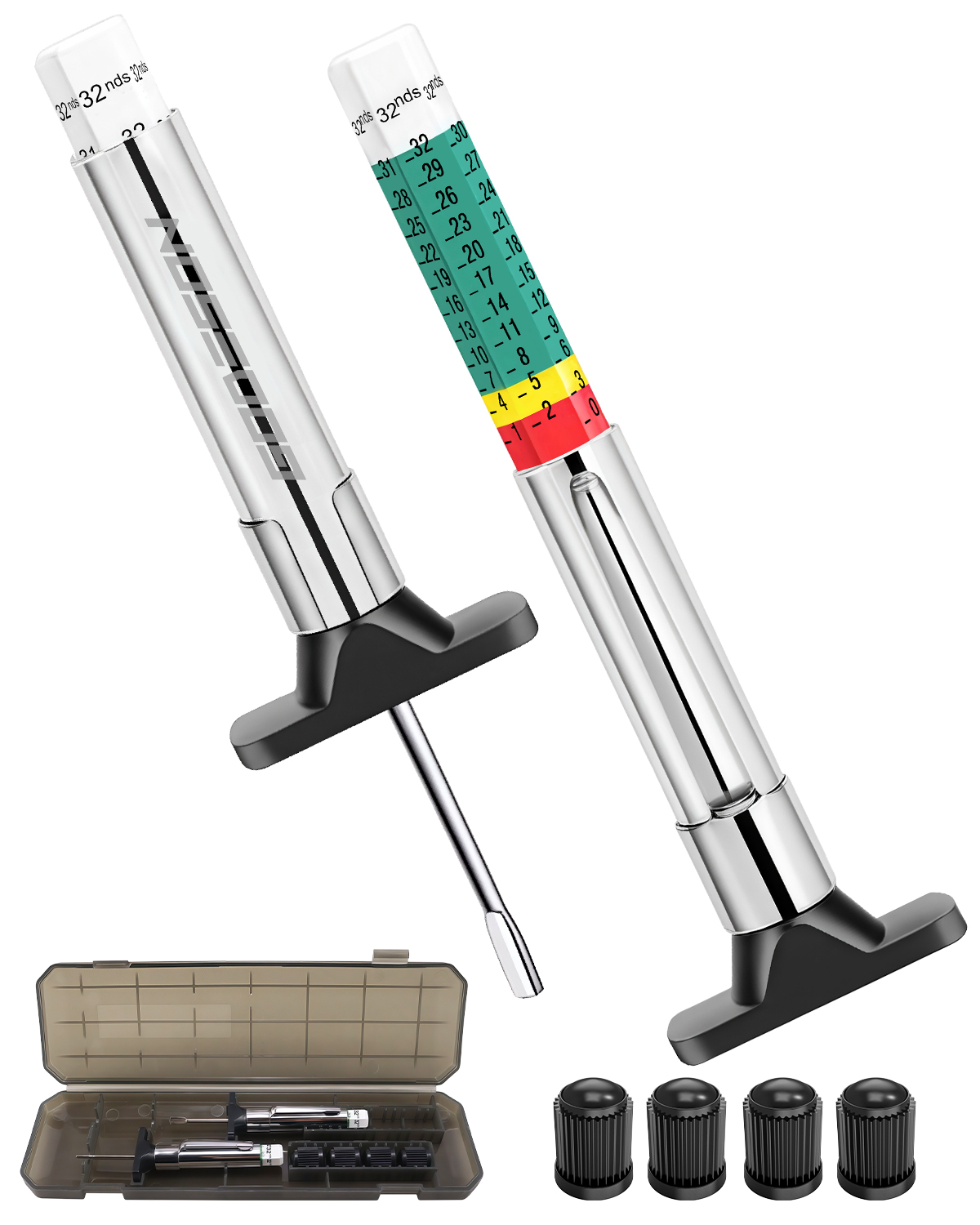
The appeal of this type of gauge is straightforward. It is compact, easy to carry, and quick to use at the wheel well or on a lift. The version described here is a digital tire tread depth gauge kit with a handheld LCD unit, a small screwdriver, a user manual, and a metal storage box. That combination says something useful about the intended use: this is not a one-time novelty tool, but a shop-friendly measuring instrument meant to live in a drawer, a service cart, or a glovebox between checks.
What this kit is designed to do
The core job is to measure remaining tread depth on automotive tires. The visible manual specifications point to a measurement range of 0.00 mm to 25.4 mm, a resolution of 0.01 mm, and an accuracy of ±0.1 mm. Those are the kinds of numbers that make the tool useful for routine inspection work, where a technician wants a clear reading rather than a rough visual estimate.
The display shows units in in/mm/frac, along with battery and function markings. That matters more than it sounds. In mixed workshop environments, one technician may think in millimeters while another prefers inches or fractional inches. A readable display reduces conversion errors and keeps the conversation with the customer simple: here is the tread depth now, here is the threshold you are working toward, and here is why the tire is still serviceable or no longer worth keeping.
The gauge body appears to be black plastic with a red accent trim, and the measuring probe/rod is metal. That is a sensible construction for this class of instrument. Plastic keeps weight down, while the metal probe is the part most likely to experience repeated contact with the tire grooves. The T-shaped measuring head also makes the tool easier to stabilize on the tread surface, especially when you are checking several tires in sequence.
Quick reference: where this tool fits in the maintenance workflow
For a buyer or shop manager, the real question is not “what does it look like?” but “where does it save time or reduce risk?”
This kind of digital tread gauge is useful when you need:
- fast tread checks during preventive maintenance
- repeatable readings across multiple tires or vehicles
- simple wear documentation for service records
- a portable tool for field inspection or fleet rounds
- a clearer replacement decision before wet-weather performance falls off
It is less about lab-style metrology and more about disciplined shop measurement. That distinction is worth keeping in mind. A good tread gauge is a decision tool, not a substitute for a full tire condition inspection. Sidewall damage, uneven wear patterns, cupping, and alignment issues still need a human eye.
Reading the specifications without overreading them
The manual information supplied with this product gives several useful operating limits. The gauge is shown with a 1 × CR2032 battery, operating temperature of 0°C to 50°C, and IP54 water resistance. Those are practical features for a garage environment, where dust and occasional moisture are normal.
IP54 is not the same as waterproof, and it should not be treated that way. It is a reasonable protection level for routine service use, but not something to abuse with washdown procedures or heavy contamination. That small caution is worth saying because hand tools often get treated better in theory than in a real service bay.
The operating temperature range is also a reminder that electronics can be temperamental at the edges. Most shops will never notice a problem in normal indoor use, but if the tool sits in a cold truck cabin or a hot service van, the battery and display may not behave exactly the same as they do on a bench.
Why digital tread measurement helps decision-making
Tread depth is one of those figures that becomes meaningful only when you compare it with a threshold. New tires are not the point; remaining usable tread is. A digital gauge makes that comparison easier because it reduces ambiguity. You can measure several grooves, compare inner and outer wear, and keep a record over time.
That is especially useful in fleet service and workshop settings. If one axle wears faster than expected, the data supports the next step: alignment inspection, rotation scheduling, inflation review, or replacement planning. A visual check might catch the problem late. A measured check can catch it early enough to matter.
For product teams and sourcing managers, this is also the kind of instrument whose value sits in workflow, not in flashy features. The LCD display, the compact form factor, and the storage case are not extravagant, but they support repeat use. That is often the right answer for a shop tool.
What to look at when choosing a tread depth gauge
If you are comparing tread gauges for workshop or fleet use, the most important criteria are not complicated.
1. Measurement range and resolution
A range up to 25.4 mm covers ordinary passenger vehicle tire inspection comfortably. The 0.01 mm resolution is finer than many users will need in daily work, but it provides a stable reading and helps when you want to spot small differences between tires.
2. Display readability
A clear LCD with unit selection matters in a shared workspace. If the reading is hard to see under poor lighting, the “precision” advantage disappears quickly.
3. Probe design
The probe should contact the groove cleanly and retract smoothly. In practice, that means the tool should feel solid in the hand and not wobble when you take the reading. The visible T-shaped head is a good sign for stability.
4. Storage and portability
The included rectangular metal box is a small but useful detail. It helps protect the gauge from drawer damage, loose tools, and the usual workshop clutter. A compact kit is easier to keep in circulation, which is often the real challenge.
5. Power and upkeep
A CR2032 battery is convenient because it is common and easy to replace. The included small screwdriver suggests the battery compartment can be opened for routine maintenance, though buyers should always confirm the battery access method before assuming serviceability.
Common mistakes when using a tread depth gauge
Even a simple tool can be used badly.
One common mistake is measuring only one groove on one tire and treating that as the whole story. Tire wear is rarely that cooperative. Inner and outer edges can tell a different story from the center tread, especially if alignment or inflation has been off.
Another mistake is pressing the probe at an angle. That can distort the reading and makes it harder to compare tires consistently. A steadier hand and a repeatable technique matter more than people expect.
A third issue is forgetting that tread depth is only one part of the safety picture. A tire with acceptable tread can still be aged, cracked, damaged, or worn unevenly. The gauge gives you a number, but the technician still has to interpret it in context.
How this kit may suit different buyers
For a workshop, the appeal is obvious: a digital gauge is fast enough for routine use and simple enough that different staff members can adopt it without much training. For a fleet operator, it can support scheduled inspections and recordkeeping. For an individual vehicle owner, the kit offers a practical way to stop relying on memory or visual impressions.
The included manual and storage case make it feel closer to a proper service tool than a loose gadget. That matters if the gauge is going to be shared, transported, or stored alongside other equipment.
There is a broader point here too. Tools like this help shift tire maintenance from reactive to planned. That does not eliminate replacements, but it does make them less abrupt and less expensive than a last-minute emergency.
Practical buyer advice before you order
If you are purchasing for a shop or maintenance program, verify how the unit presents measurements in the modes you actually use. The display supports in/mm/frac, which is helpful, but your team should not have to fight the interface to get a quick reading.
Also confirm how the gauge is stored and who will be responsible for battery replacement. Small electronic tools often disappear into a drawer until the battery is flat. A tidy case and simple routine checks help prevent that.
Finally, do not overstate what the tool does. A digital tread depth gauge is excellent for tread measurement, but it is still only one instrument in a broader tire inspection process. Buyers who understand that tend to get more value from it than buyers who expect it to answer every question about tire health.
A sensible next step for sourcing teams and service buyers
If you are evaluating the GODESON tire tread depth gauge for workshop use, start by matching the specification to your actual inspection routine. The listed range, resolution, and IP54 protection suggest a compact service tool rather than a specialty lab device. That is probably the right fit for most tire wear checks.
From there, compare the ergonomics, display clarity, and storage setup against the way your team works in practice. In this category, the best product is usually the one that gets used correctly every day, not the one with the longest feature list.
For buyers, that is the real test: will this gauge make tire inspection faster, more consistent, and easier to document? If the answer is yes, it earns its place in the kit pretty quickly.