Why a tread depth gauge still matters in a digital maintenance workflow
A GODESON tire tread depth gauge looks like a small tool, but it solves a large and very practical problem: knowing when a tire is still safe to run and when it is getting close to the point where performance drops off. For engineers, sourcing managers, and service teams, that decision is not academic. Tread depth affects wet grip, stopping distance, replacement timing, and the consistency of fleet maintenance records. A quick visual inspection can miss wear patterns. A digital tire tread depth gauge gives the shop a repeatable number instead of a guess.
That matters whether the tires are on passenger cars, trucks, motorcycles, or mixed fleets. Once tread gets low, the margin for error narrows fast. The difference between “looks fine” and “needs replacement soon” is often just a few millimeters, and that is exactly where a measurable tool earns its place on the bench.
What this gauge is designed to do
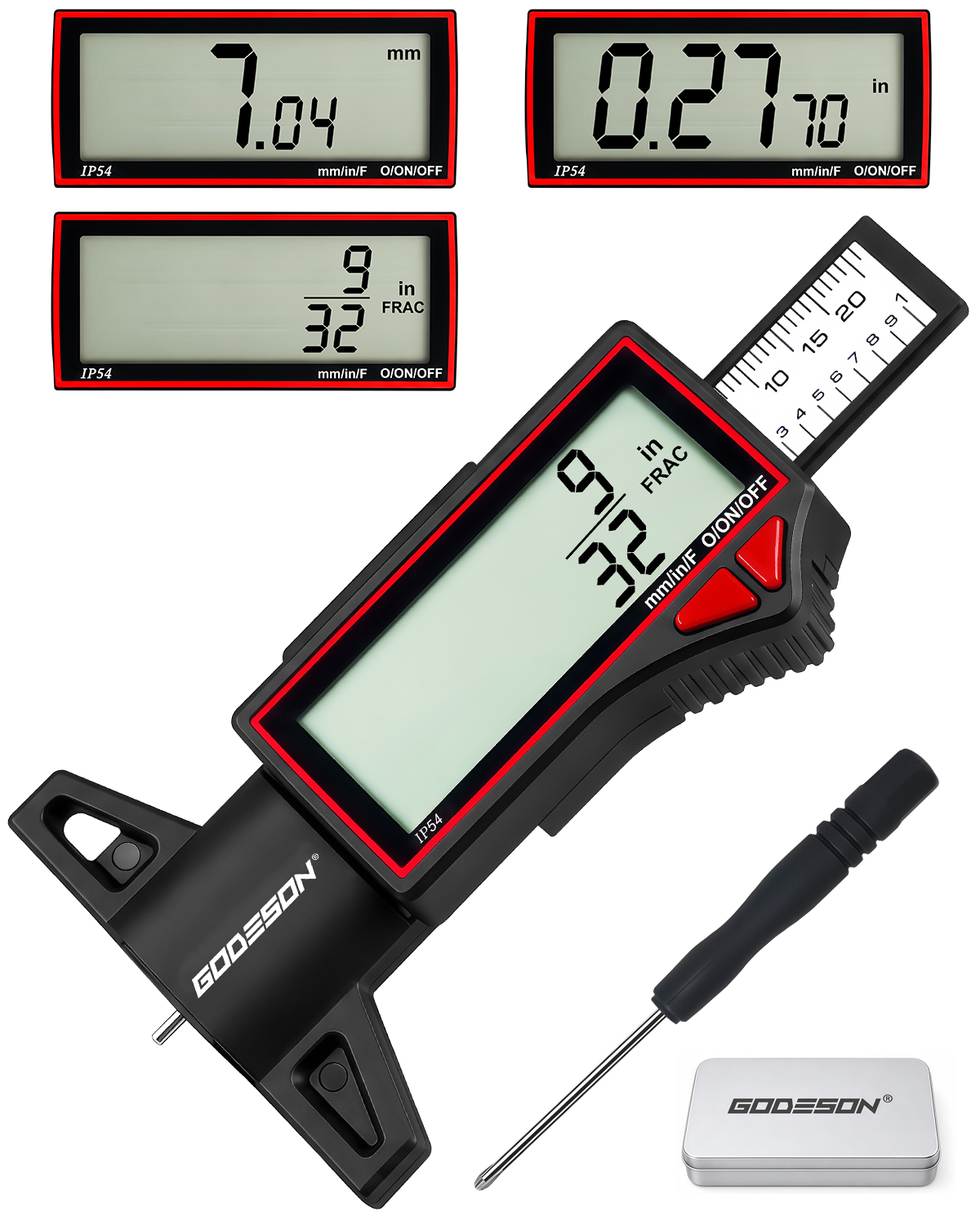
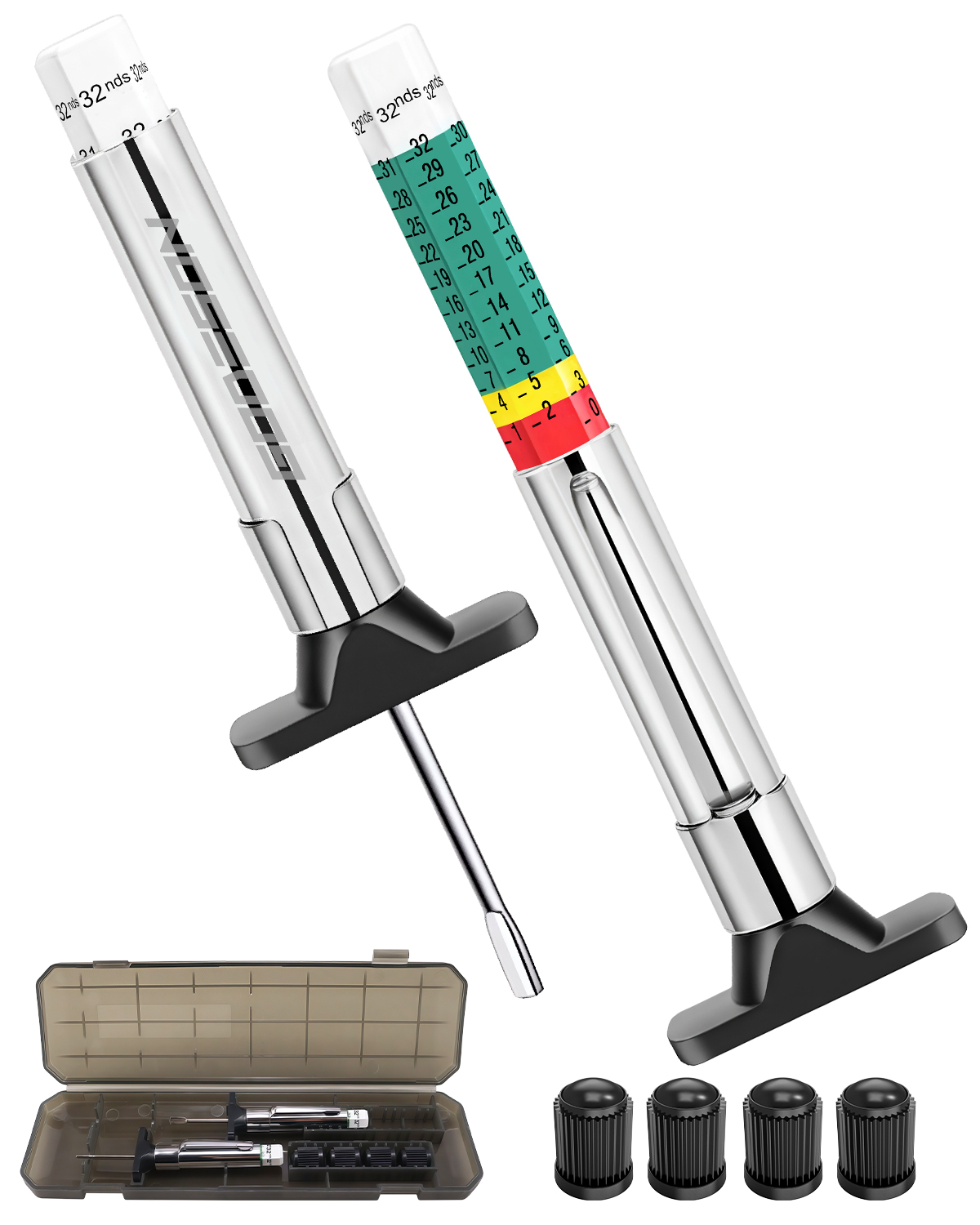
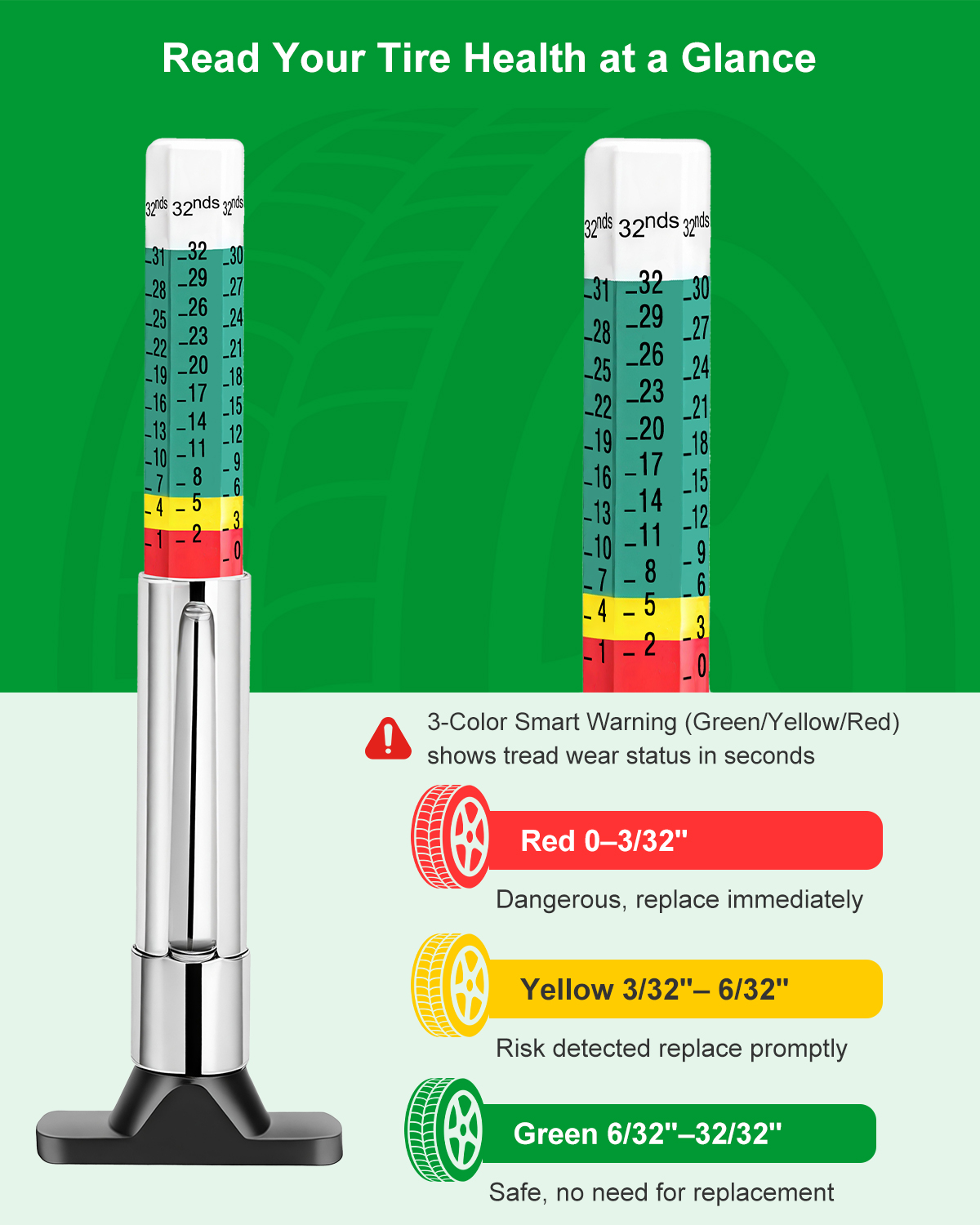
Based on the supplied product information, this is a digital tire tread depth gauge kit with a handheld gauge, LCD screen, probe stem, side buttons, a metal storage tin, a small screwdriver, and a user manual. The housing appears to be molded plastic with a black finish and red trim around the display. The measurement rod is metal, which is what you want in a wear-contact tool because the probe is the part that repeatedly touches the tread surface.
The visible specifications are straightforward and useful:
- Measurement range: 0.00 mm to 25.4 mm
- Resolution: 0.01 mm
- Accuracy: ±0.1 mm
- Power: 1 x CR2032 battery
- Operating temperature: 0°C to 50°C
- Water resistance: IP54
Those figures place the tool in the category of a compact inspection instrument rather than a rough shop accessory. The range covers ordinary tire tread checks comfortably, and the fine resolution is more than enough for maintenance decisions. In practical terms, the question is rarely whether a tire is 6.32 mm or 6.33 mm deep. The useful question is whether the tire is still comfortably above the replacement threshold, trending down quickly, or wearing unevenly across the tread width.
Why buyers should care about measurement consistency
Tread depth decisions are often made in the field, under time pressure, and by different people. That is where inconsistency creeps in. One technician reads the center groove. Another checks the outer shoulder. A third uses a coin test or a worn manual gauge. The result is a maintenance record that is harder to trust than it should be.
A digital gauge helps standardize the process. It gives the buyer a clearer workflow for inspections before and after driving, during service intervals, and during pre-delivery checks. For fleet operators, that consistency is especially important because tire wear patterns can point to pressure issues, alignment problems, loading imbalance, or rotation mistakes. A tread depth reading is not just a pass/fail number; it can become an early warning signal.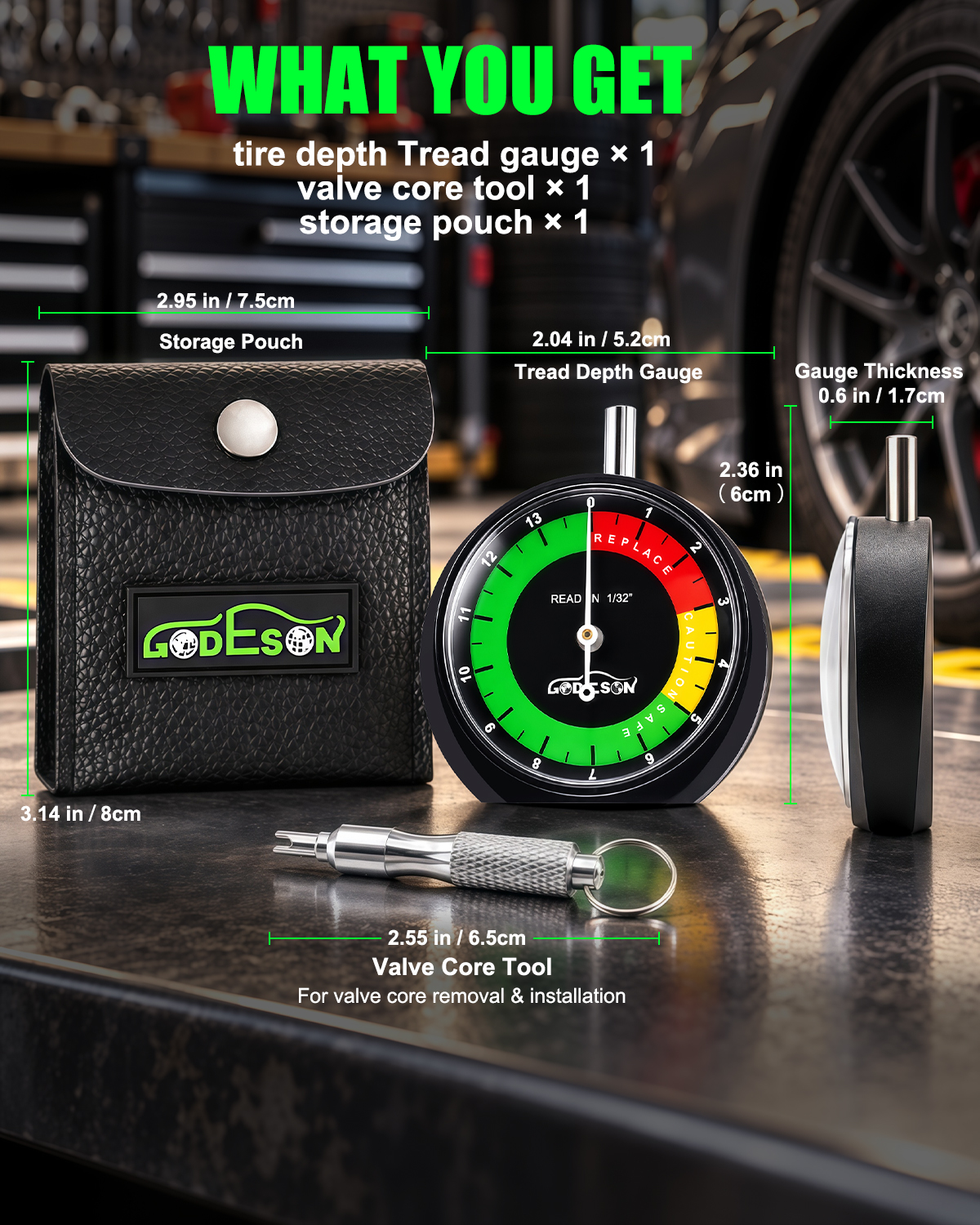
There is a small caveat here. No gauge replaces judgment. A tire can have acceptable depth and still be a poor candidate for continued service if the tread is uneven, cracked, or damaged. The gauge tells you one thing very well. It does not tell you everything.
What the product structure suggests about everyday use
The construction details are useful because they hint at how the tool will behave in a workshop. The black plastic body should keep weight down and make handheld use easier. The visible metal probe is important because tread measurement depends on a stable contact point. The separate storage tin suggests the kit is meant to be kept together rather than tossed loosely into a toolbox where the stem can get bent or the electronics can be damaged.
The small screwdriver in the kit is also a practical touch. It may be for battery access or minor adjustment, though the exact function is not specified. That is one of those details buyers should confirm before purchasing in volume. Accessories often look complete in a product photo but differ slightly across shipments or versions.
The IP54 rating is another meaningful detail, even if buyers should not overread it. In a shop or roadside environment, dust and occasional moisture are normal. IP54 suggests some resistance to those conditions, which is better than having a tool that demands careful indoor handling only. Still, it is not the same as a ruggedized industrial instrument designed for abuse.
How to think about the measurement range and resolution
A tread depth gauge is not valuable because it sounds precise. It is valuable because its precision is useful. The supplied range of 0.00 mm to 25.4 mm is broad enough for a wide span of tires and wear conditions. The 0.01 mm resolution sounds very fine, but in a real maintenance environment, the important figure is often the stated accuracy of ±0.1 mm. That is the number that helps the buyer judge how much confidence to place in each reading.
For most tire maintenance decisions, 0.1 mm accuracy is more than adequate. The larger problem in the field is not usually instrument limitation; it is operator technique. If the probe is not placed squarely in the groove, or if the tire surface is muddy or packed with stones, the reading can be skewed. A digital gauge reduces some of that uncertainty, but it does not eliminate the need for a clean tread surface and a consistent measuring method.
A practical measuring routine
A simple workshop routine tends to work best:
- Clean loose debris from the groove before measuring
- Measure at several points across the tread, not just one spot
- Compare inner, center, and outer readings
- Record the numbers if the vehicle is part of a fleet or service log
- Recheck suspiciously low or uneven readings before making a replacement call
That last step is worth emphasizing. A single reading taken at a bad angle can send a tire to the scrap pile earlier than necessary.
Where this type of gauge fits in the buying decision
For sourcing teams, the question is not simply whether the product measures tread depth. It is whether it fits the service environment, the expected usage frequency, and the operator skill level. A digital gauge like this is a reasonable fit for dealerships, repair shops, tire retailers, and fleet maintenance departments that want a compact, readable tool for regular inspections.
It is also suitable for personal vehicle owners who prefer a more exact check than a coin or visual estimate. The storage tin makes it easy to keep in a glovebox, desk drawer, or service cart. That matters more than it sounds like it should. Tools that are easy to store are tools that actually get used.
For bulk buyers, a few commercial questions are worth asking before purchase:
- Is the battery included, or does the kit require separate sourcing of CR2032 cells?
- Are the buttons and display easy to use with gloves on?
- Is the stem robust enough for repeated daily inspections?
- Does the supplier provide consistent packaging and manual content across orders?
Those are not glamorous questions, but they are the ones that often determine whether a product becomes a dependable part of the maintenance workflow or ends up in a drawer.
Common mistakes when checking tire tread
One common mistake is treating a tread gauge as a one-point decision tool. Tires rarely wear perfectly evenly. Inner edge wear, shoulder wear, and center wear can tell different stories. If you only measure one groove, you may miss the real condition of the tire.
Another mistake is ignoring the broader service context. Low tread depth is a replacement trigger, but uneven wear may point to pressure or alignment issues that need correction first. Replacing tires without understanding why they wore unevenly can create the same problem again.
A third mistake is assuming all digital gauges are equally durable. The display may be easy to read and the numbers may be precise, but shop conditions are still shop conditions. Dust, vibration, and careless storage wear down small instruments quickly. The metal tin included in this kit is a smart sign, but buyers should still train staff to store the tool properly.
FAQ buyers usually ask
Is this only for passenger cars?
No. The supplied information suggests it can be used for passenger cars, trucks, motorcycles, and fleet tires, as long as the tread geometry allows the probe to reach the groove cleanly.
Why choose digital over a basic manual gauge?
Digital readout is easier to read quickly, especially in lower light or when multiple technicians are sharing the same tool. It also helps reduce interpretation errors.
Can it be used for maintenance logging?
Yes, that is one of its more useful roles. A digital gauge is well suited to documented inspections before and after driving or during scheduled fleet checks.
Does the kit include everything needed?
The visible kit includes the gauge, a metal storage tin, a screwdriver, and a user manual. Buyers should confirm battery inclusion and any version-specific accessory differences before ordering.
What this tool helps a buyer decide
The real decision an instrument like this supports is not just “how deep is the tread?” It is whether to keep a tire in service, schedule rotation, investigate wear patterns, or plan replacement before the tire reaches a risky state. That is a small, practical decision with safety and cost consequences.
For a workshop or fleet, the value lies in repeatability. For a sourcing manager, the value lies in getting a compact inspection tool that is simple to deploy, easy to store, and specific enough to support real maintenance calls. For product teams, the takeaway is that the market still rewards tools that reduce ambiguity.
If you are evaluating a digital tread gauge for a service counter, a fleet bay, or a general maintenance kit, start with the basics: measurement range, accuracy, ease of reading, battery type, and whether the housing and probe look suited to daily handling. The GODESON tire tread depth gauge, based on the available information, checks many of those boxes without trying to be more complicated than the job requires.
Next step for buyers
Before placing an order, confirm the exact kit contents, battery inclusion, and any version details that matter to your workflow. If the tool is being bought for a shop or fleet, it is also worth asking how staff will record readings and where the gauge will be stored between uses. Small instruments are easy to underestimate until they disappear from the bench.
A good tread gauge does not need to be fancy. It needs to be readable, durable enough for regular use, and consistent enough that the numbers mean something when a tire is close to its service limit. That is the standard this category should be judged against.