GODESON Digital Caliper: What Buyers Should Compare Before They Choose
If you are looking at a GODESON Digital Caliper, you are probably not shopping for a novelty tool. You want a measuring instrument that can live on a bench, in a toolbox, or near a machine and give fast, readable dimensions without the squinting that comes with a dial or vernier scale. That makes the comparison job more practical than glamorous: what matters most is not the display alone, but the material, protection level, jaw design, and how well the tool fits the kind of work you actually do.
This matters because digital calipers are often bought once and used everywhere. A machinist may need it for quick inspection on the floor. A maintenance team may use it for replacement parts and fit checks. A garage technician may need a dependable dimension check on shafts, bearings, or fasteners. When a caliper is the wrong choice, the result is not usually dramatic; it is just annoying, slow, and occasionally wrong. That is enough to waste time and create rework.
Quick comparison: why this style of caliper stands out
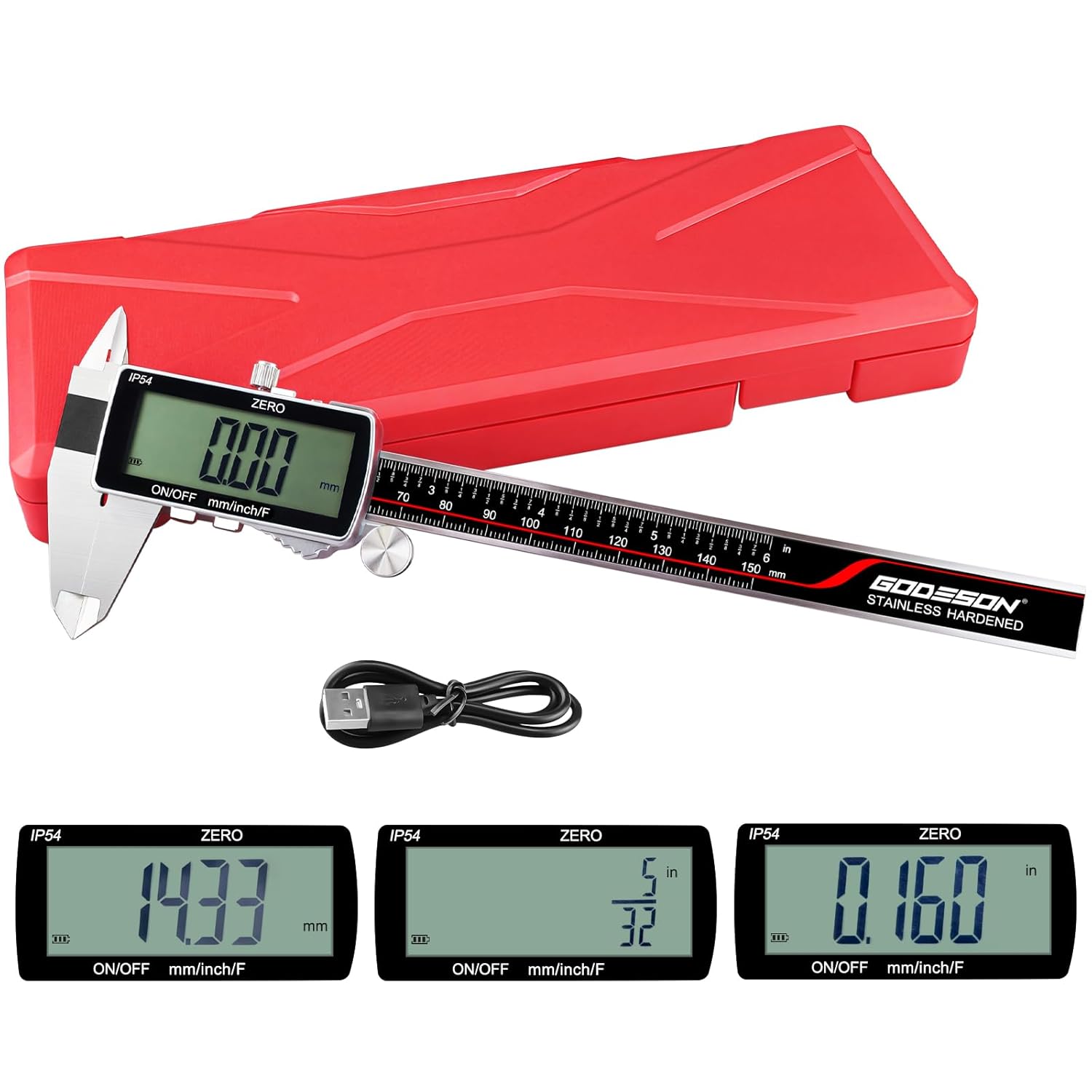
The GODESON Digital Caliper shown here appears to follow the familiar digital caliper format, but with a few buyer-relevant features that separate it from lighter consumer tools. The body is described as full stainless steel, which immediately changes the conversation. Stainless construction usually means better wear resistance, better stability in a busy shop, and a more confidence-inspiring feel in the hand than thin alloy or plastic-bodied tools. It also tends to survive everyday handling better, especially when it is moved between benches, drawers, and machines all day long.
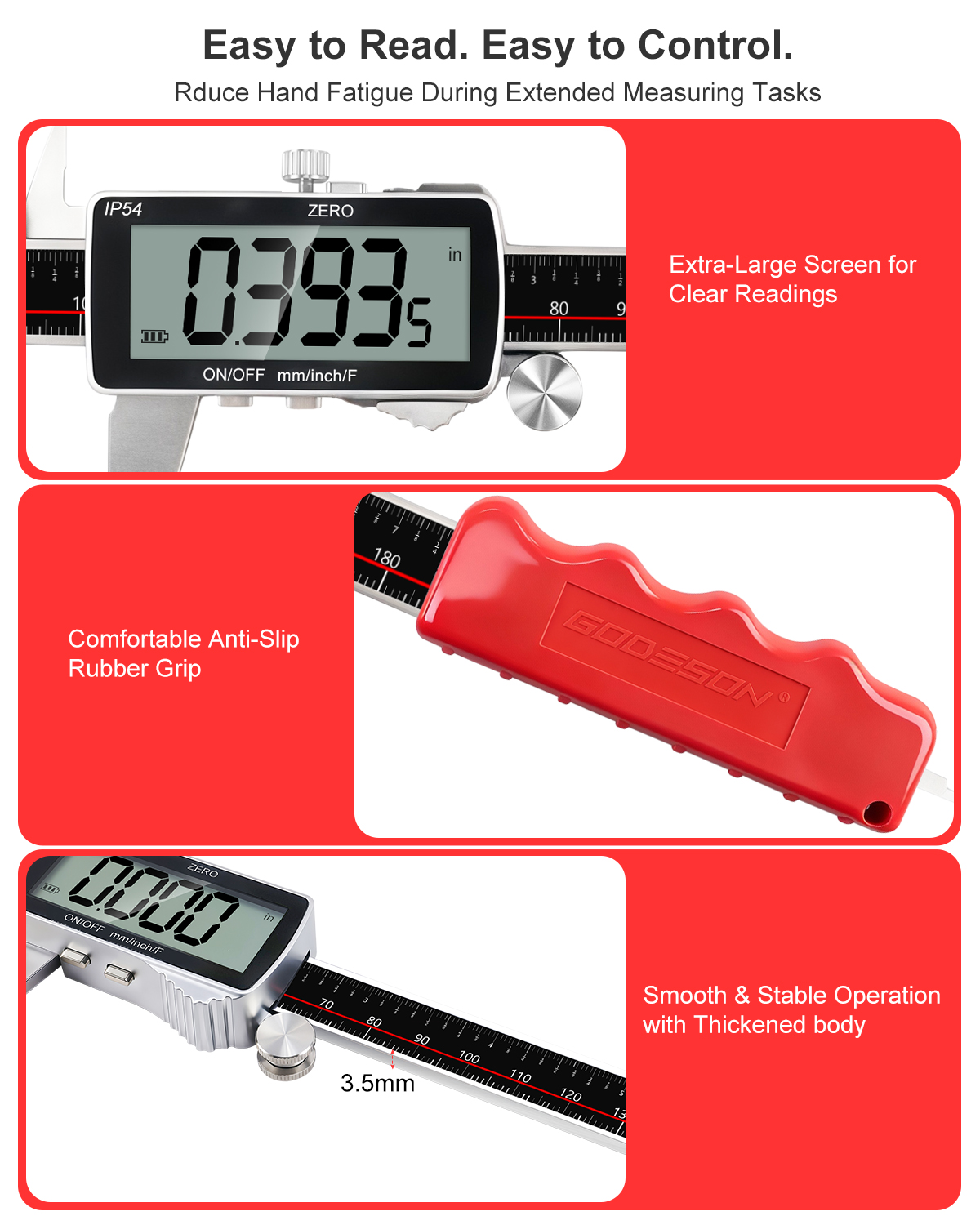
Another point in its favor is the IP54 dust and splash protection. That rating does not make a tool waterproof, and it should not be treated as such. Still, for normal workshop, garage, and light industrial use, it is a practical advantage. Metal chips, coolant mist, dust, and the occasional splash are common realities, not edge cases. A caliper that can tolerate those conditions is often the one that gets used instead of the one that gets left in the case.
What the product design tells a buyer
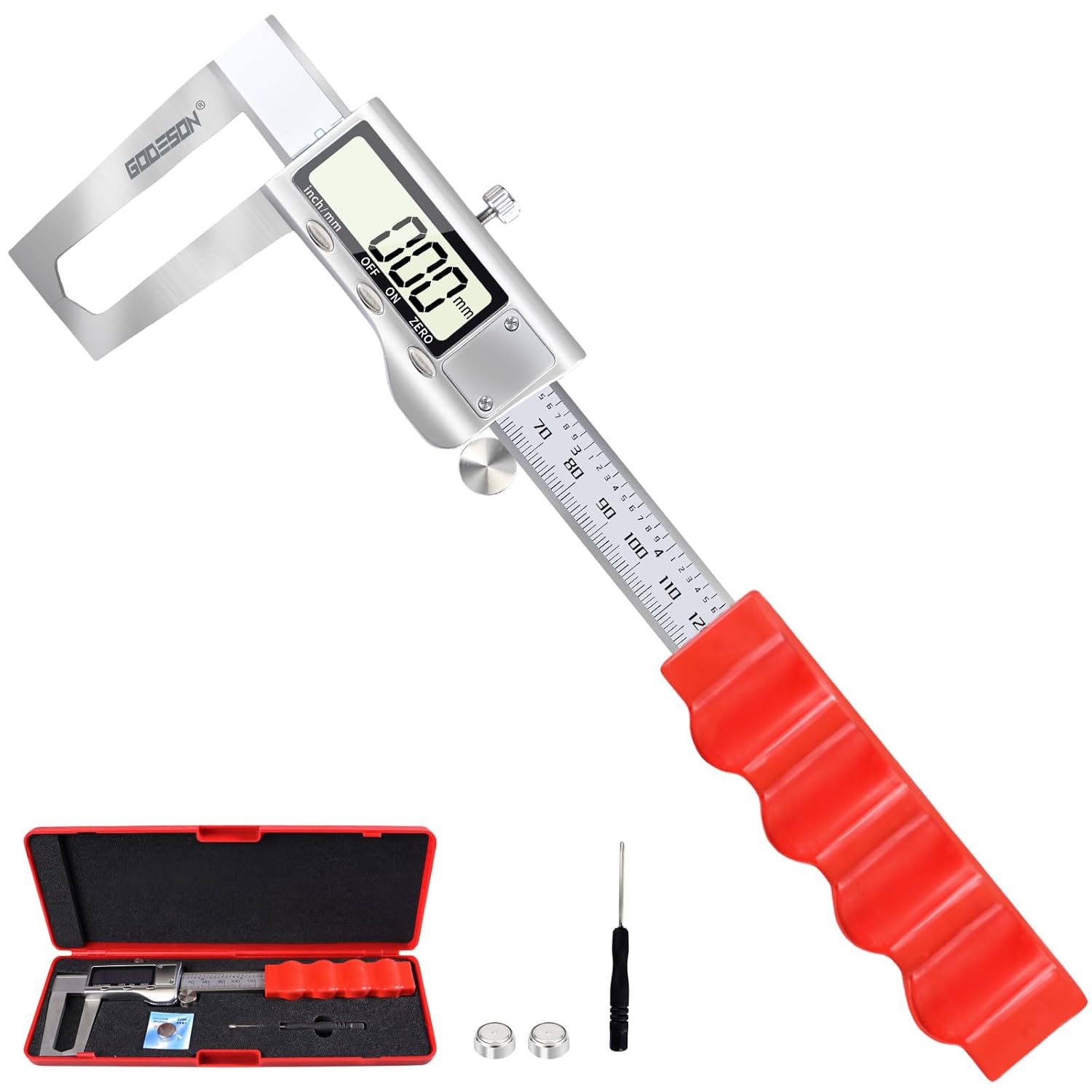
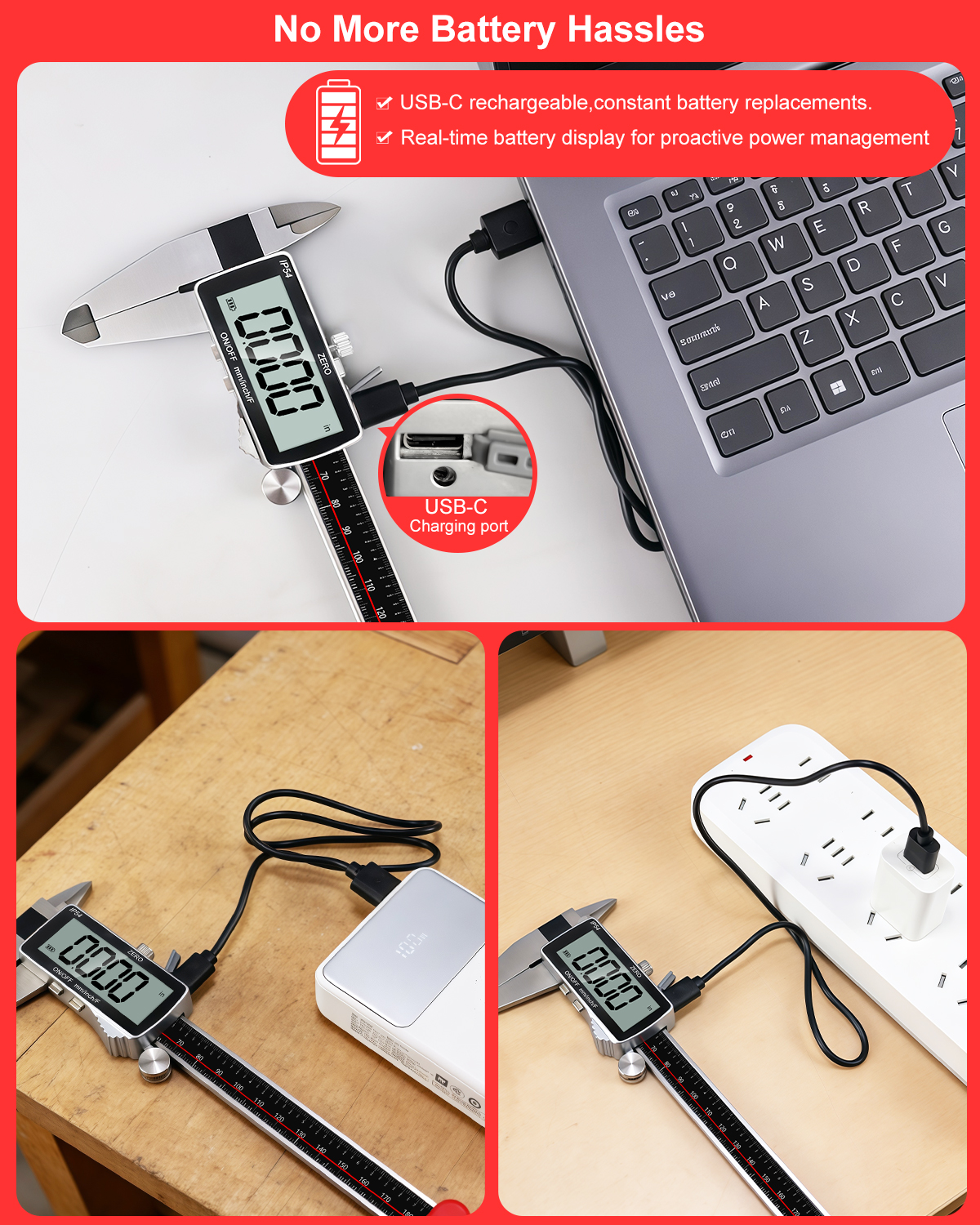
The visible structure is classic and sensible: a long stainless steel beam with a printed measurement scale, a digital LCD readout head, a sliding jaw assembly, and a thumb wheel for fine movement. Metal jaws are used for internal and external measurement. In other words, it is built for the standard dimensional tasks most shops need every day: outside diameters, inside diameters, depths, and step measurements. That broad utility is one reason digital calipers remain a staple in machining and inspection.
The brushed or satin finish on the stainless surface is not just cosmetic. It usually helps the tool look clean longer and reduces the harsh glare that polished metal sometimes creates under shop lighting. The black scale with red accent markings also improves legibility for those who still want a visual reference even when using the digital display. In practice, that mix is useful when the display is off, the battery is weak, or someone wants to confirm a measurement by eye.
Digital readout versus traditional scales
One of the key decisions buyers make is whether they want a digital caliper at all, or whether a vernier or dial caliper would suit their work better. This is a comparison worth making honestly.
Digital caliper advantages
A digital caliper is fast to read. That simple fact is why many inspection stations and fabrication benches keep one within reach. It reduces interpretation error, especially for users who do not want to calculate a vernier reading under time pressure. It also works well in repetitive tasks where the same operator is checking the same parts many times a day. In that setting, speed and clarity matter more than the romance of a mechanical scale.
Traditional caliper advantages
Mechanical calipers still have a place. They do not rely on batteries, and some users trust them in environments where electronics are treated with caution. They can also be easier to justify in rougher shops if the tool is likely to be handled by many people. But for quick inspection and general workshop use, the digital format usually wins on convenience.
The trade-off is simple: digital calipers offer easier reading, while traditional styles can offer a different kind of rugged familiarity. The right choice depends on who is using the tool, how often, and whether the job rewards speed or old-school independence from electronics.
Where a stainless steel digital caliper makes the most sense
Full stainless steel construction is especially relevant in machining, maintenance, fabrication, and industrial dimensional checking. In a machine shop, a caliper is often the first tool pulled out for a quick verification before a more formal measurement step. In maintenance work, it can confirm replacement part dimensions without dragging a larger gauge set into the process. In a garage, it is useful for brake work, bearing checks, hardware identification, and general fit confirmation.
The IP54 protection adds another layer of practicality for these environments. It is not a license to abuse the tool, but it does signal that the design is not delicate in the way some low-cost measuring tools are. If you regularly work around dust, light coolant residue, or repeated handling, that matters. Tools in this category are judged less by their brochure language and more by whether they still read clearly after a hard week on the bench.
Selection criteria that actually matter
When comparing a GODESON Digital Caliper to other options, focus on the following practical points rather than broad marketing claims:
Material: Stainless steel is a strong sign of better durability and better day-to-day handling.
Protection: IP54 is useful for dust and splash resistance, but it is not full waterproof protection.
Jaw style: Make sure the internal and external jaws suit the parts you measure most often.
Readability: A clear LCD and a readable printed scale both matter, especially in changing light.
Handling: The thumb wheel and sliding action should feel controlled, not gritty or loose.
That list may sound basic, but it is where many buyer mistakes happen. People often chase one headline feature and ignore the rest. A caliper with a nice display is not especially useful if the beam feels flimsy. A stainless body is welcome, but it should also move smoothly and hold zero consistently during normal use.
Common mistakes buyers make
The biggest mistake is treating all digital calipers as equivalent. They are not. Some are built for occasional home use, while others are clearly intended for repetitive shop work. The GODESON Digital Caliper, based on the visible stainless construction and IP54 protection, sits closer to the second group. That does not make it an automatic fit for metrology labs or high-certainty inspection tasks, but it does make it more credible for workshop duty than a lightweight novelty tool.
Another common mistake is assuming a splash-resistant tool can be used carelessly around liquids. It cannot. IP54 means limited protection against dust and splashing water, not a free pass to wash the tool or leave it exposed. In the real world, that distinction is often ignored until the display becomes unreliable or the slide action starts to feel rough.
A third mistake is buying on range and resolution alone. Those specifications matter, but they are not the full story. The visible design, the finish, the jaw geometry, and the user environment matter just as much. For a shop buying multiple tools, consistency and ease of use are often more important than a long list of numbers.
Buyer-facing advice for sourcing teams and shop managers
If you are sourcing for a team, ask where the caliper will actually live. A tool used at a clean inspection station has different needs than one carried through fabrication, maintenance, or field service. The GODESON Digital Caliper’s stainless steel body and IP54 protection are especially attractive when you want a general-purpose tool that can move between those environments without feeling fragile.
Also think about user behavior. In many shops, measuring tools are shared. That means the best tool is not only accurate enough for the task, but easy to read, easy to reset, and tough enough to survive less-than-careful handling. A clear digital display helps reduce errors by new users. A solid metal body helps reduce the slow damage that accumulates over months of use. Those are small advantages individually, but they add up.
FAQ: common questions before buying
Is this caliper suitable for workshop use?
Yes. Based on the visible stainless steel construction and IP54 protection, it is clearly aimed at workshop, garage, and industrial applications.
Can it handle dust and splash exposure?
It is described as IP54, which means dust and splash protection, not full waterproofing. That is useful, but it still needs normal care.
Does the stainless steel body matter?
Yes, especially in shops where tools are handled often. Stainless steel usually offers better durability and a more solid feel than lighter-bodied alternatives.
What measurements can it perform?
Like most digital calipers in this format, it is intended for lengths, diameters, depths, and step measurements. The exact range and resolution are not provided here, so those should be confirmed before purchase if they are critical to your process.
What to confirm before placing an order
There are a few details you should verify before treating any digital caliper as a final fit: measuring range, resolution, accuracy, battery type, jaw length, and whether calibration documentation is required for your use. Those specifics are not visible in the provided information, so they should not be assumed. If your process depends on traceable inspection records, that question becomes especially important.
For many users, though, the decision is more straightforward. If you need a durable, readable, stainless steel digital measuring tool for everyday dimensional work, the GODESON Digital Caliper fits the practical brief well. It is the kind of tool that earns its place by being easy to grab, easy to read, and hard to annoy.
If you are comparing options for a workshop, garage, or industrial bench, use the material, protection level, and handling feel as your main filters. Then confirm the technical specifications that matter to your process before you buy.