Why a digital caliper still matters on the shop floor
A GODESON Digital Caliper sits in that small category of tools that look simple until you need one that reads cleanly, survives a rough bench, and gives you a number you can trust without second-guessing it. For engineers, sourcing teams, and production people, the question is rarely whether a digital caliper is useful. It is. The real question is which one makes sense when parts are measured near coolant, metal dust, or repeated handling by different operators.
This matters because dimensional errors do not usually announce themselves in dramatic ways. A bracket that is off by a fraction, a shaft that is slightly undersized, or a depth reading that is taken on a worn tool can turn into scrap, rework, or a bad fit at assembly. A digital caliper is often the first-line instrument for quick checks on length, outside diameter, inside diameter, depth, and step dimensions. In other words, it is not just a measuring accessory; it is part of the control system for everyday manufacturing decisions.
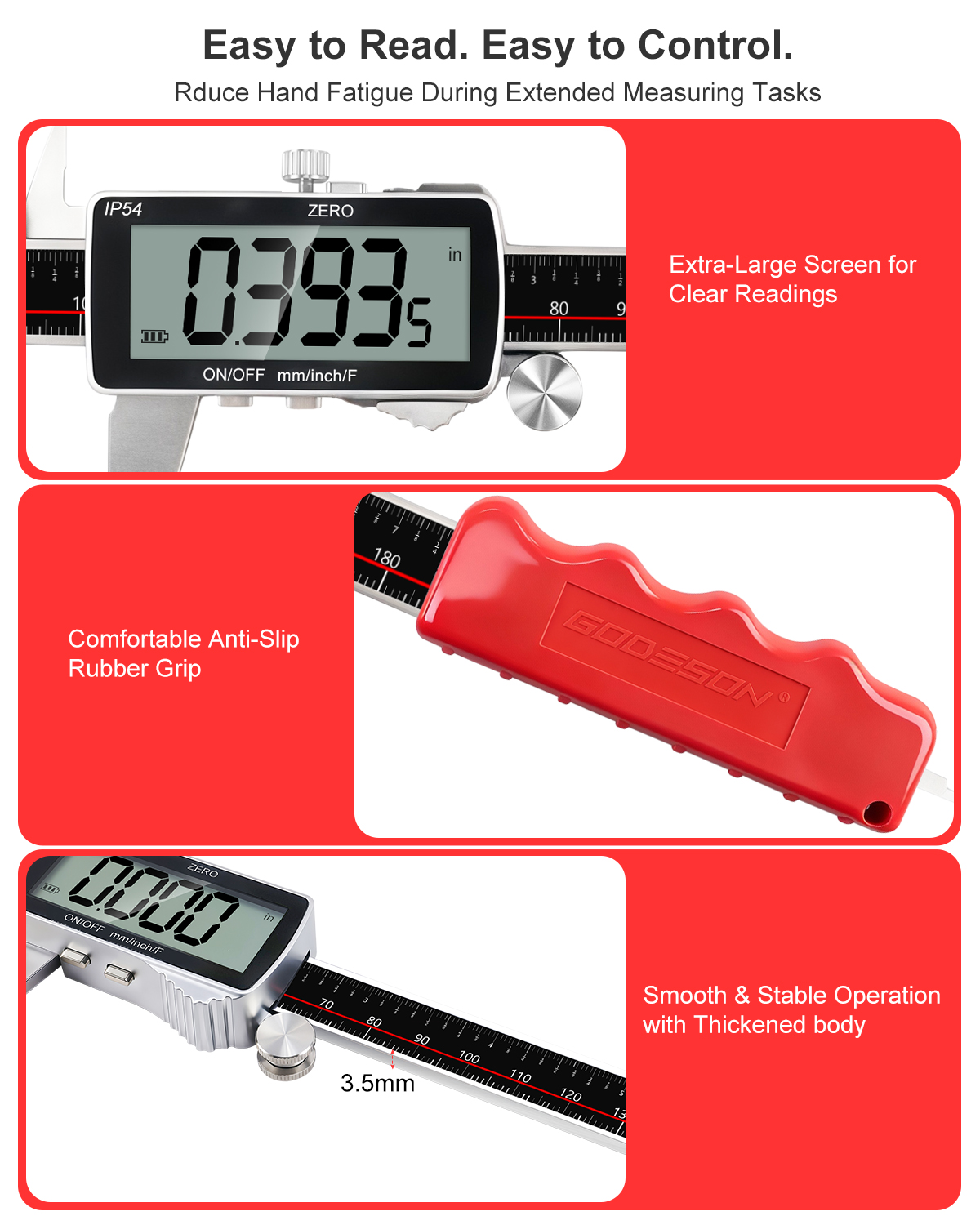
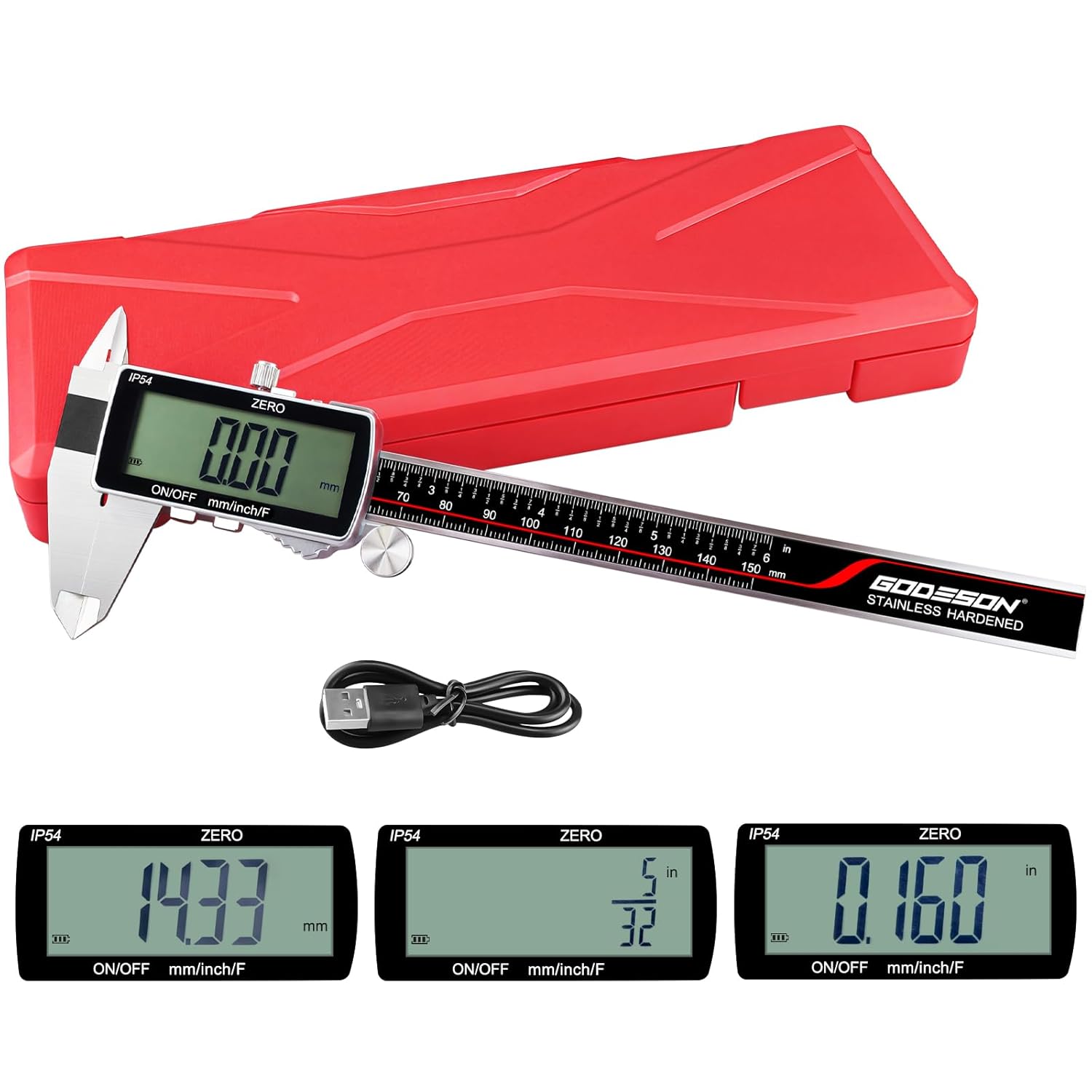
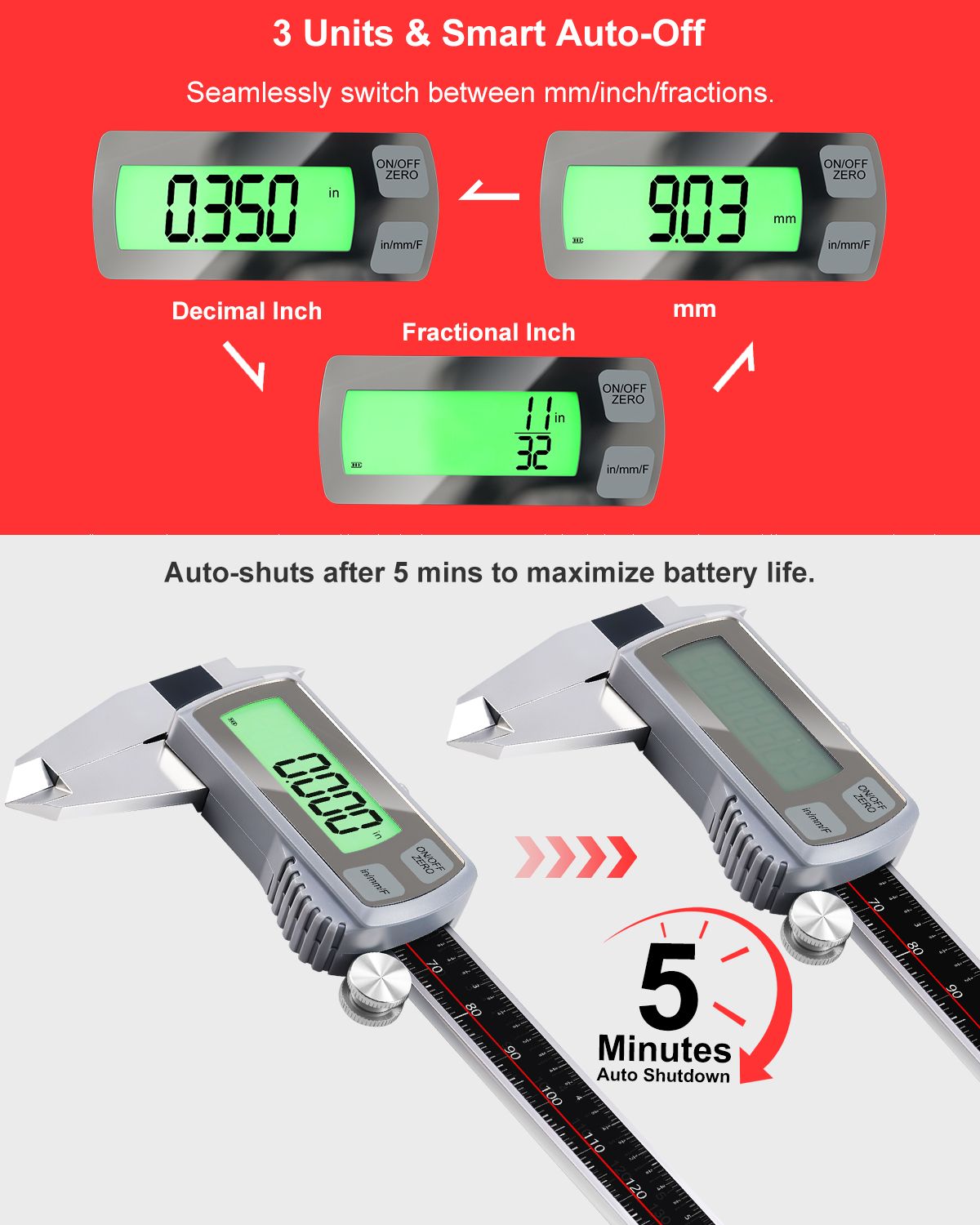
The visible product details here point to a stainless steel digital caliper with a brushed metallic finish, engraved scale markings, a digital LCD module, and IP54 protection against dust and splashes. That combination suggests a tool aimed at practical shop use rather than a delicate bench-only instrument.
What the visible product details tell a buyer
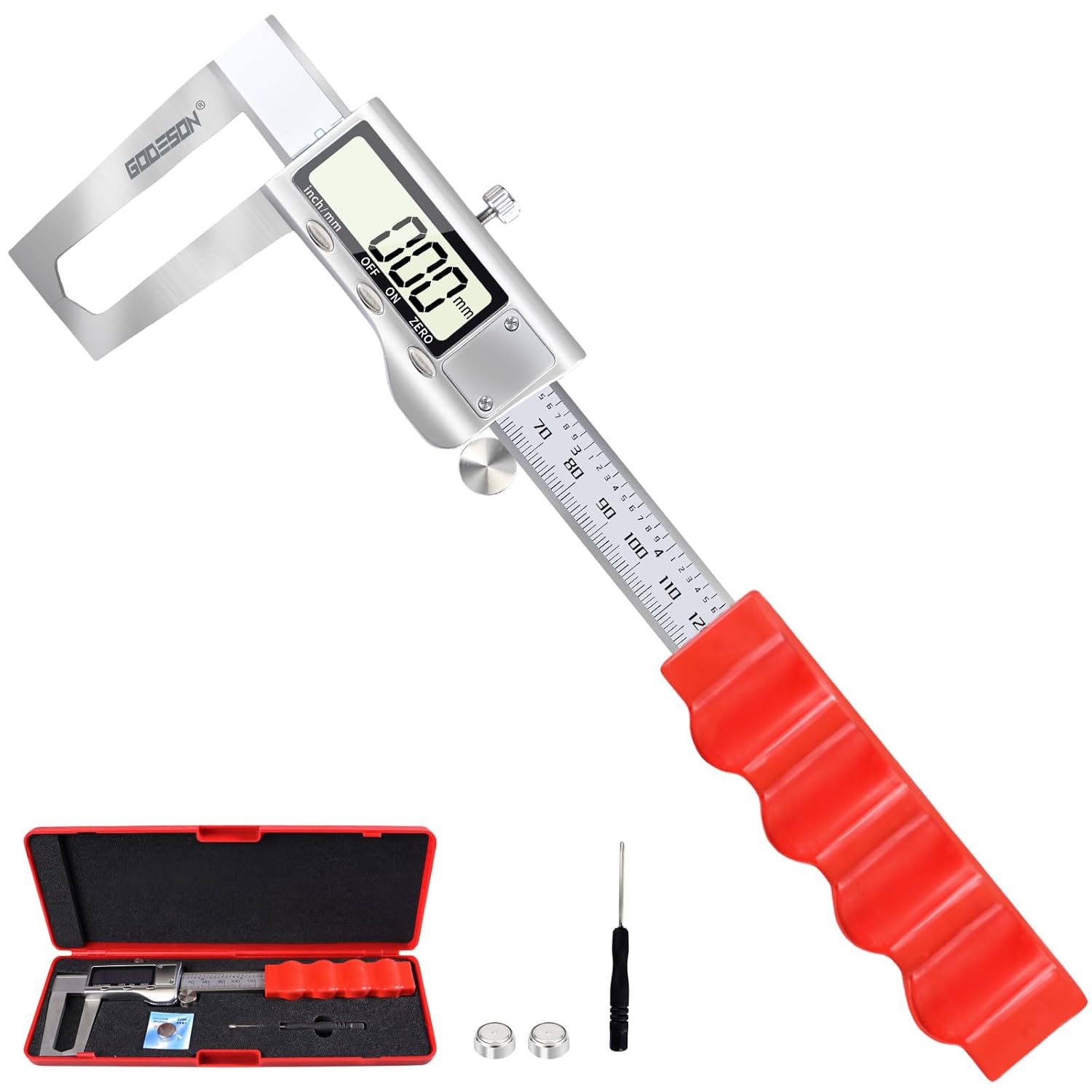
The construction is straightforward and familiar. The beam is stainless steel, with a long linear body and engraved scale markings. The jaws are also metal, which is what most users want for a tool that will be handled often and stored in a toolbox rather than a lab drawer. The digital readout sits in a gray or silver housing on the sliding head, which is typical of modern calipers designed for fast readings.
That full stainless steel construction is worth noting. It does not make the caliper indestructible, but it does usually improve wear resistance and gives the tool a more stable feel in use. A satin or brushed finish also helps with grip and reduces the “cheap tool” impression that some lighter materials create. For buyers comparing options, these are small details, but they affect how the instrument performs over time in a real production environment.
The IP54 claim is also practical. It indicates protection against limited dust ingress and water splashes, not full waterproofing. That is the kind of rating many maintenance bays and machine shops actually need. It is not a reason to wash the tool under a tap, and it should not be treated as an excuse for careless storage, but it does offer a margin of protection when the bench is not perfectly clean.
Where a digital caliper fits better than other measuring tools
People sometimes ask whether a caliper is “accurate enough” for industrial work. That depends on the decision being made. For rapid part checks, setup verification, incoming inspection, and general quality screening, it is often the right balance between speed and precision. It gives a reading quickly, and the operator can move from one feature to another without changing tools.
A micrometer is usually more specialized and can offer better precision for narrow ranges. A height gauge or bore gauge may be the better choice for specific geometries. But a digital caliper earns its place because it can handle several measurement types with one instrument. For many teams, that flexibility is the real value. One tool can verify stock size, confirm a slot width, check a shoulder depth, and spot a drift in a machined feature before the part moves downstream.
That said, a caliper is not the tool to force into every job. If a feature needs tight process control, or if a drawing calls for very fine measurement uncertainty, the caliper should be seen as a screening tool unless a more precise instrument confirms the result. That is an important buyer-side caution, especially for teams trying to reduce tool count. Fewer tools is not always better if it weakens inspection discipline.
Typical workshop and industrial uses
The visible application range is broad, but familiar. In machine shops, the caliper is useful for checking turned parts, milled edges, and drilled depths. In maintenance settings, it helps identify worn components, verify replacement dimensions, and compare old parts against new ones. In general metalworking, it supports quick dimensional inspection before parts are committed to the next operation.
Because the tool is stainless steel and carries an IP54 protection level, it should be especially attractive where light splash exposure or airborne dust is common. That includes garages, fabrication bays, and general industrial QA stations where tools rarely live in a pristine environment. A reading tool that resists a bit of grime is often more useful than a more delicate option that requires constant coddling.
It is also worth saying that a digital display can speed up work when several operators share a tool. Numbers are easier to read than a fine vernier scale under poor lighting, and that can reduce eye strain and reading mistakes. Of course, the display is only part of the equation. The slider should move smoothly, the jaws should close properly, and the tool should be handled with enough care to avoid introducing its own errors.
Key buying criteria for engineering and sourcing teams
When evaluating a digital caliper, buyers tend to focus on the headline features first. That is sensible, but the practical questions are more specific.
Material and durability
Stainless steel construction is a meaningful signal for everyday use. It suggests better resistance to wear and a more robust feel than lighter plastic-bodied alternatives. In a shared tool room, that matters because the caliper will be picked up, dropped, wiped, and returned far more often than a lab instrument.
Protection level
IP54 is a useful middle ground. It tells the buyer that the tool is intended for a working environment with dust and occasional splashes. It does not mean the caliper should be left in coolant or stored wet. That distinction is easy to miss in procurement conversations, and it can lead to disappointment later.
Readability and handling
The LCD readout should be clear enough to read quickly at a glance. The sliding action also matters more than many spec sheets admit. A caliper that feels rough or inconsistent can make repeated measurements frustrating, even if the numbers on the screen are technically sound. Small ergonomic details matter when the tool is used dozens of times a day.
Measurement confidence
Because the exact range, resolution, and accuracy are not specified here, buyers should confirm those values directly before committing to a production or inspection workflow. This is especially important if the caliper is intended for controlled inspection records or regulated environments. If the team needs calibration traceability, that needs to be confirmed separately rather than assumed from the product type alone.
Common mistakes buyers make with digital calipers
One common mistake is assuming all digital calipers behave the same once the display turns on. They do not. Some are fine for casual use and basic checks, while others are built to hold up to repeated industrial handling. The difference often shows up in the feel of the slide, the resilience of the housing, and the way the tool performs after months of use.
Another mistake is overlooking environment. A clean office bench and a machining cell are not the same world. If the tool will be exposed to dust, cutting fluid mist, or frequent wiping, protection level and material construction are not optional details. They are central to whether the instrument remains useful.
A third issue is expecting a caliper to replace every other gauge. It cannot. It is best used as part of a measuring strategy, not as a universal substitute. That sounds obvious, but in practice teams sometimes buy one “general purpose” measuring tool and then ask it to do too much.
What the product form suggests about manufacturing quality
From a manufacturing standpoint, a stainless steel digital caliper is a blend of metalworking and electronics assembly. The beam and jaws require accurate machining and finishing so the slide motion stays consistent and the measuring faces remain reliable. The electronic head then has to be integrated without compromising that mechanical stability. It is a fairly ordinary product category on paper, but quality can vary widely in execution.
The engraved scale markings and the brushed finish are encouraging signs because they usually reflect attention to the readable and functional parts of the tool. Still, the buyer should not read too much into appearance alone. A neat finish does not automatically guarantee long-term stability or measurement reliability. That is where specification confirmation, sampling, and internal acceptance checks come in.
Practical advice before you place an order
If you are sourcing a GODESON Digital Caliper for a workshop, maintenance team, or industrial inspection desk, start by matching the tool to the environment. If it will live near coolant or in a dusty area, the IP54 feature is relevant. If the tool is intended for cleaner metrology work, you may care more about resolution, repeatability, and calibration documentation.
Ask for the missing technical details before purchase: measuring range, resolution, accuracy, battery information, and whether the display supports the units your team needs. Those items are not visible in the product description provided here, so they should be verified directly. That is not being picky; it is standard buying discipline.
It is also wise to define who will use the tool. If it will rotate between multiple operators, readability and durability matter more than fancy extras. If it is assigned to a single technician for one type of job, the priorities may shift toward feel and convenience. Either way, a clean, simple digital caliper often wins because it is fast to use and easy to understand.
FAQ
Is this caliper meant for wet conditions?
No. The visible IP54 claim indicates resistance to limited dust and splashes, not full waterproof performance.
Can it measure more than outside dimensions?
Yes, the product category is a standard digital caliper used for length, diameter, depth, and step measurements.
Is stainless steel important?
For shop-floor use, yes. It generally improves durability and helps the tool feel more robust in daily handling.
Should buyers assume calibration is included?
No. Calibration status is not specified here and should be confirmed directly if it matters to your process.
A sensible next step for buyers
If your team needs a straightforward measuring tool for workshop, maintenance, or industrial QA use, the visible feature set makes this digital caliper worth a closer look. The important part is to confirm the missing technical details before it enters a controlled workflow. Once those basics are checked, you can judge whether the balance of stainless steel construction, digital readability, and IP54 protection fits the job at hand.
For sourcing teams, that is usually the real decision: not whether a caliper is useful, but whether this one is the right tool for the environment, the operators, and the level of inspection confidence your process requires.