Why a digital caliper still earns bench space
A GODESON Digital Caliper sits in the same category as a tape measure and micrometer, but it solves a different problem. When a part has to fit, slide, seal, or mate with something else, a quick eyeball estimate is not enough. That is where a digital caliper earns its place: one tool for outside diameters, inside dimensions, step measurements, and depth checks, all in a form that is fast enough for everyday use.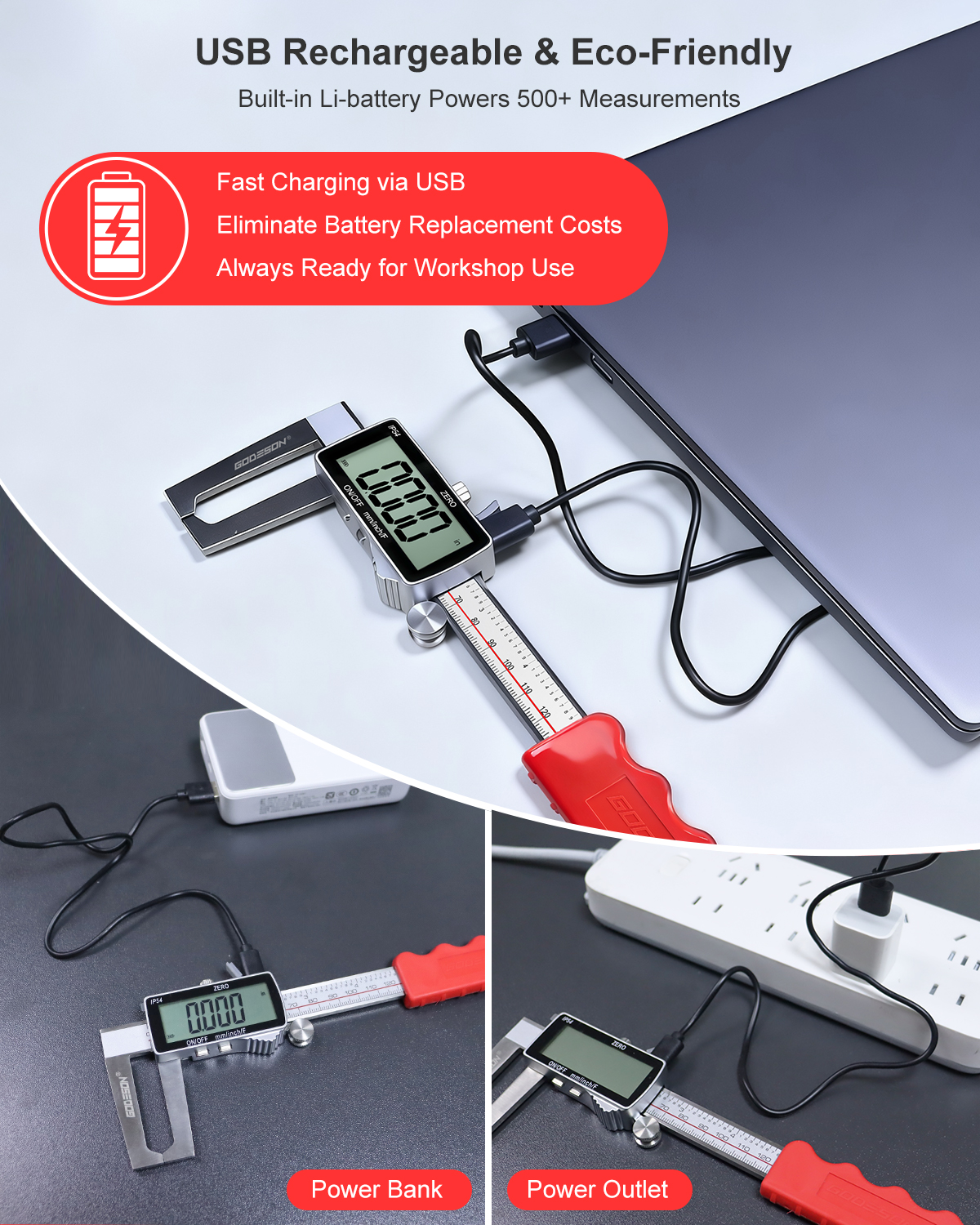
For engineers, sourcing managers, and shop-floor teams, the real question is not whether a digital caliper is useful. It is whether the build, protection level, and readability match the work environment. A stainless steel body and IP54 dust-and-splash protection make this style of tool more suitable for workshops, fabrication benches, and mechanical maintenance than a bare-bones plastic gauge. That does not make it a laboratory instrument, and it should not be treated like one, but it does make it a practical measuring hand tool for real production conditions.
What the visible design tells you
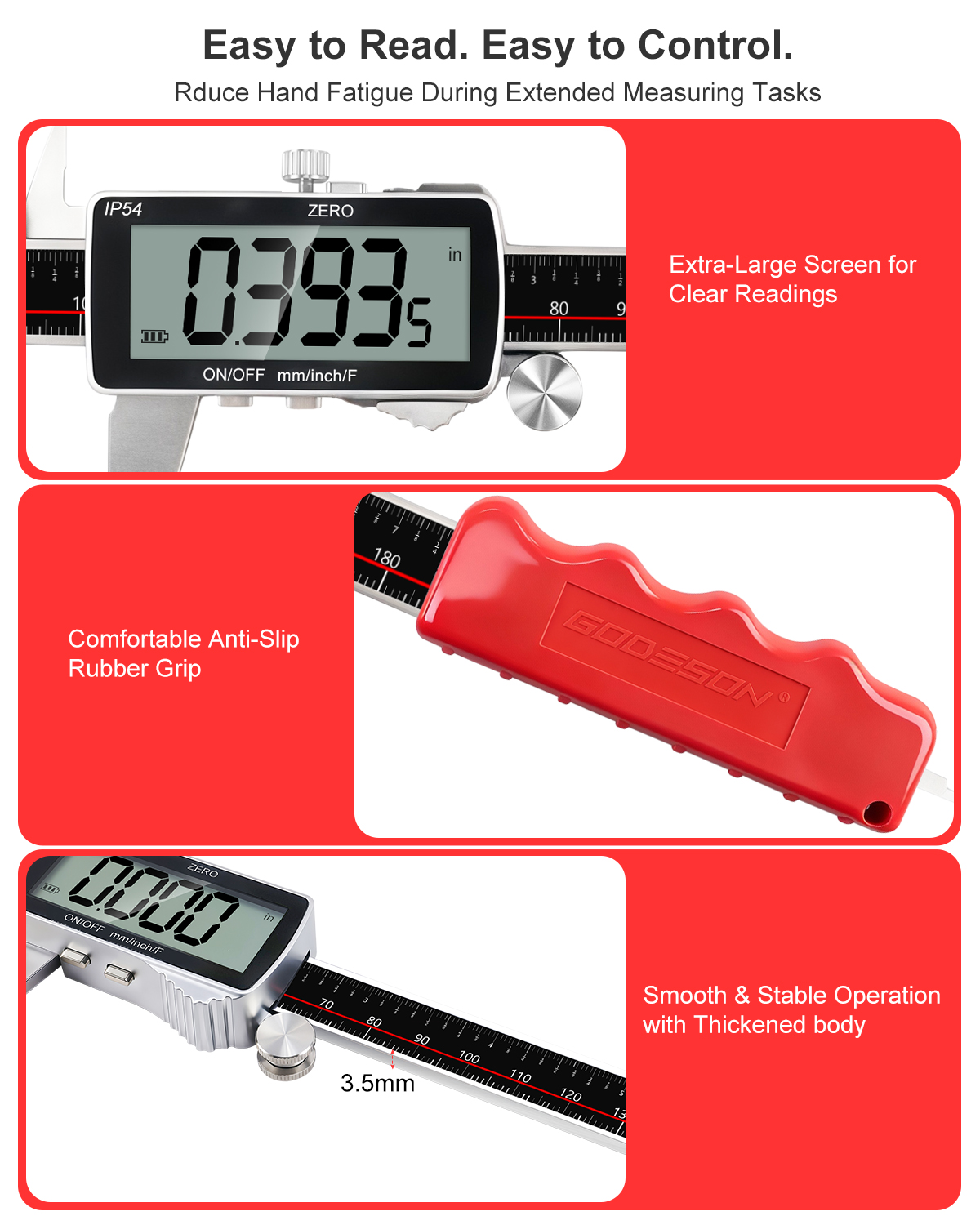
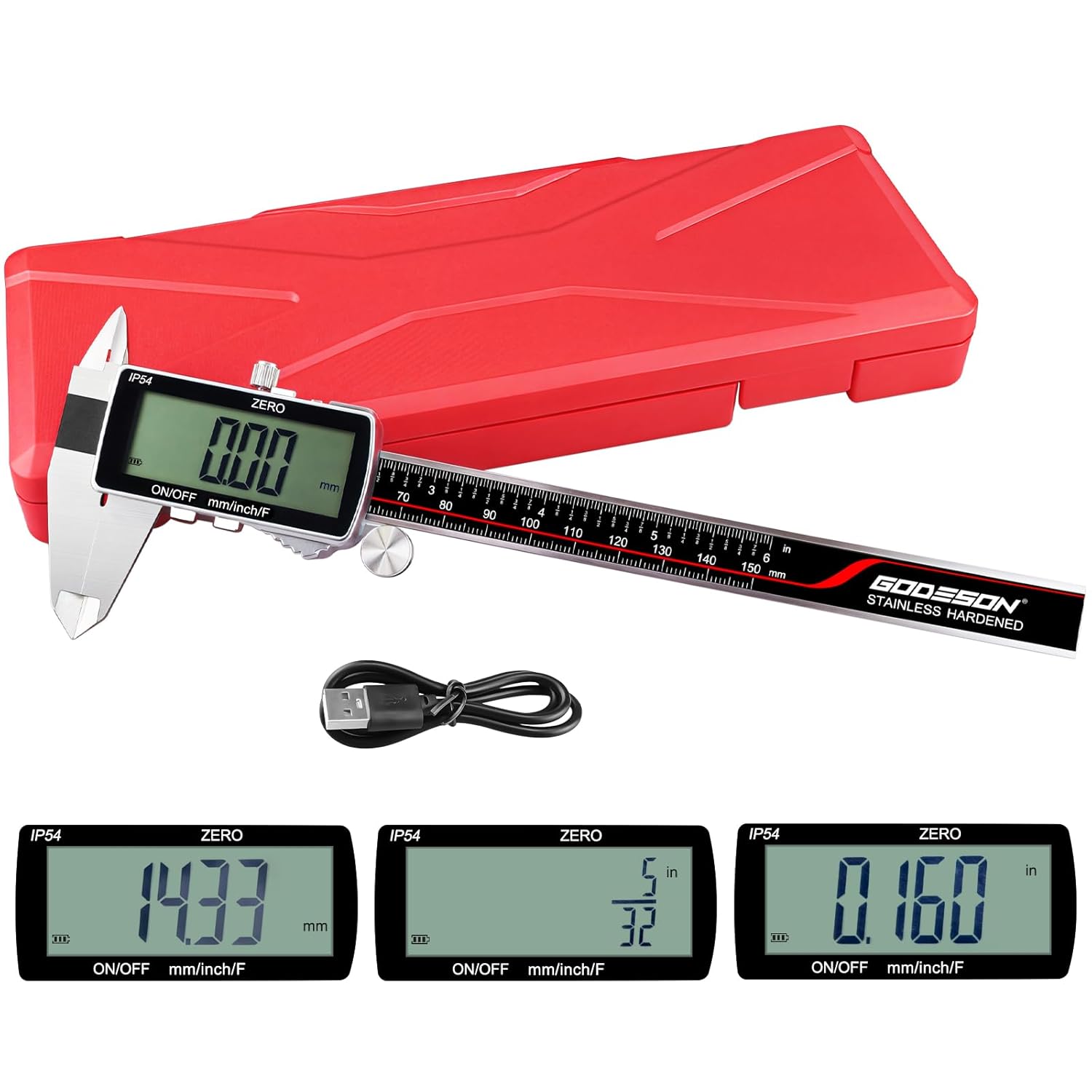
The visible construction of the GODESON Digital Caliper is straightforward and familiar. The long beam uses a flat, rectangular profile with measurement markings along the scale. A sliding digital display carriage moves along the beam, and a knurled thumb wheel is positioned for controlled adjustment. At the left end, the jaw set is arranged for standard caliper work: external measurement on the larger jaws and internal measurement with the smaller upper jaws.
The body appears to be stainless steel, which matters more than many buyers first assume. Stainless steel gives the tool a more rigid feel, resists corrosion better than plain carbon steel in many shop settings, and generally holds up better when the caliper is handled with oily fingers, coolant mist, or the occasional wipe-down. The IP54 marking is also worth noticing. In plain language, it suggests resistance to dust and light liquid exposure, which is helpful in machining, maintenance, and garage use. It is not a blank check to dunk the tool in coolant or leave it sitting in a puddle, and buyers should be careful not to overread that mark.
The LCD head is large enough to support quick reading without squinting. That sounds minor until you are standing beside a machine or reaching into a fixture and trying to confirm a dimension with one hand. A clean display reduces reading mistakes, and mistakes are expensive when they turn into scrap, rework, or a delayed approval.
What this type of caliper is good at
A digital caliper is often chosen because it is versatile rather than specialized. That versatility matters in mixed-use environments where one person may need to check a shaft one minute and a counterbore the next. In practice, this tool type is commonly used for:
- external dimensions on rods, pins, bolts, tubes, and turned parts
- internal diameters of holes and bores
- step height on machined components and housings
- depth on slots, recesses, and pockets
- general dimensional verification during fabrication and assembly
For routine inspection, that broad capability saves time. It is also useful for first-piece checks and incoming inspection, where a buyer or technician needs to confirm whether a part is at least in the right neighborhood before more formal metrology takes over.
That said, calipers are not magic. They are fast, versatile, and easy to use, but they are still contact instruments with limits. If a tolerance band is tight enough that the whole job depends on a few hundredths, a micrometer or a more formal inspection setup may be the better call. A caliper is often the right first answer, not always the final one.
Where stainless steel and IP54 protection matter
In a clean office, almost any decent caliper can survive. In a machine shop, things are different. Chips, dust, cutting fluid, and frequent handling create a harsher environment. That is why the material and protection claim deserve attention.
A stainless steel digital caliper is usually easier to justify in:
Machine shops and fabrication areas
Where metal fines and occasional coolant are part of daily life, corrosion resistance and wipe-clean surfaces help preserve function.
Garage and field maintenance
Mechanics and repair technicians often need a tool that can ride in a drawer or toolbox and still read correctly after exposure to dust and hand oils.
Inspection stations near production equipment
A splash-resistant tool can be more forgiving when it is used close to active processes, though it still needs sensible care.
IP54 is not the whole story, but it does help frame the tool’s intended use. Buyers sometimes assume protection ratings mean the instrument can handle anything short of complete immersion. That is a mistake. If the work environment is wet, heavy with abrasive slurry, or regularly washed down, a more robust instrument strategy may be needed.
How to judge whether this caliper fits the job
When a sourcing or engineering team reviews a digital caliper, the decision is usually less about the brand name and more about the fit between tool and task. For the GODESON Digital Caliper, the practical selection questions are simple:
- Is stainless steel important in your environment?
- Do operators need a large digital readout?
- Will the tool be used around dust, chips, or light splash exposure?
- Are you measuring general dimensions, or do you need higher-end inspection capability?
- Will the caliper be handled by multiple users with different habits?
Those questions matter because a caliper that is overqualified for the task can be wasted money, while one that is underbuilt becomes a consumable item. In production settings, consumable tools look cheap until the replacement cycle and measurement errors are counted.
Another point worth keeping in mind: not every digital caliper on the market behaves the same when it comes to battery access, zeroing, scale smoothness, or long-term stability. The product details provided here do not specify those items, so it would be unwise to assume them. If those factors are critical, buyers should ask for direct confirmation before purchase.
Common buyer mistakes with digital calipers
A few recurring mistakes show up again and again in tool selection.
One is treating all calipers as interchangeable. They are not. Beam stiffness, display legibility, surface finish, and protection level all affect day-to-day use.
Another is buying a caliper for a precision job that actually needs a different metrology approach. If a team wants repeatable sub-thousandth control, a standard digital caliper may be the wrong instrument no matter how polished it looks.
A third mistake is ignoring the working environment. A tool that looks fine in a clean catalog can become frustrating in a shop where coolant mist, dust, and glove use are normal.
Finally, there is the old habit of assuming a digital display removes the need for good technique. It does not. Jaw alignment, light touch, clean contact surfaces, and consistent measuring practice still matter. The display only makes the reading easier; it does not make the measurement itself smarter.
Practical advice for shop-floor users and buyers
If you are evaluating the GODESON Digital Caliper for a team, think about the hand that will actually use it. A tool that is easy to read and easy to slide is more likely to be used correctly. A caliper that feels flimsy or is hard to read will be set aside, and then the nearest tape measure starts doing jobs it should not do.
For purchasing, this style of instrument makes the most sense as a general-purpose shop caliper for metalworking, repair, and inspection tasks where occasional dust and splash exposure are part of the day. The stainless steel construction is a useful signal of durability, and the large digital readout should help reduce reading strain. The long beam with visible scale markings also supports quick manual cross-checking, which is still appreciated by experienced users who do not fully trust any digital tool until they have verified it twice.
A small caution: if the application involves hard daily use, shared-tool abuse, or repeated contact with coolant, it is sensible to ask about replacement parts, battery access, calibration practices, and after-sales support before standardizing on any caliper model. Those details often matter more over a year than the headline features do on the first day.
FAQ: quick questions buyers usually ask
Is this mainly for workshop use?
Yes. Based on the visible design and protection marking, it is well suited to workshop, garage, fabrication, and inspection tasks.
Can it measure inside, outside, depth, and step dimensions?
That is the normal function of this type of digital caliper, and the visible jaw and beam layout support those use cases.
Is IP54 enough for wet environments?
It suggests some dust and splash resistance, but it should not be treated as waterproof or immersion-safe.
Should it replace a micrometer?
Not necessarily. It is a versatile measuring tool, but more demanding tolerance work may still require a micrometer or another inspection instrument.
What to ask for before you commit
If your team is considering the GODESON Digital Caliper for procurement, the most useful next step is to confirm the details that were not supplied in the product information: measuring range, resolution, accuracy, battery requirements, and whether the unit is calibrated or supplied with any formal certification. Those are not small details. They determine whether the tool is a bench convenience or a legitimate part of your inspection workflow.
For buyers, the broader decision is simple enough. If you need a readable, stainless steel digital caliper for everyday dimensional checking in a workshop or light industrial setting, this one fits the profile. If the work is harsher, the tolerances tighter, or the documentation heavier, then the specification review needs to go further before anyone places a bulk order.