Why buyers keep asking about the GODESON Digital Caliper
In workshops, maintenance bays, and small production lines, a caliper is one of those tools people notice only when it stops being trustworthy. The GODESON Digital Caliper sits in that practical middle ground: a digital measuring tool meant for everyday shop use, with a stainless steel body and IP54 dust-and-splash protection that makes it more relevant to real industrial environments than a delicate bench-only instrument.
I asked a machinist what makes a caliper worth keeping on the bench, and the answer was blunt: “It has to survive the day.” That means grease, coolant mist, chips, fingerprints, and the occasional careless drop onto the bench mat. The appeal of a full stainless steel construction is obvious in that context. It does not make the tool indestructible, but it does make it more credible for workshop conditions than a flimsy plastic-bodied measuring device.
For buyers, the real question is less “Is it digital?” and more “Will it still measure cleanly after a week of actual use?” That is where the GODESON Digital Caliper earns attention. It is built for measuring lengths, diameters, and general dimensions in machining, fabrication, inspection, assembly, garage work, and maintenance tasks where the environment is not especially kind.
What the tool is trying to solve
A caliper is often the first instrument pulled out when a dimension needs confirming quickly. You may need to check a shaft diameter before fitting a bearing, verify a slot width, compare a machined part against a drawing, or confirm whether a replacement component will fit before the next operation. In those situations, speed matters, but so does repeatability.
Digital readout helps remove one source of friction: reading a vernier scale under poor lighting or from an awkward angle. That does not eliminate the need for good technique, of course. A caliper is only as reliable as the person using it. But a digital display can make day-to-day inspection faster, especially for teams where not every operator wants to interpret a traditional scale all morning.
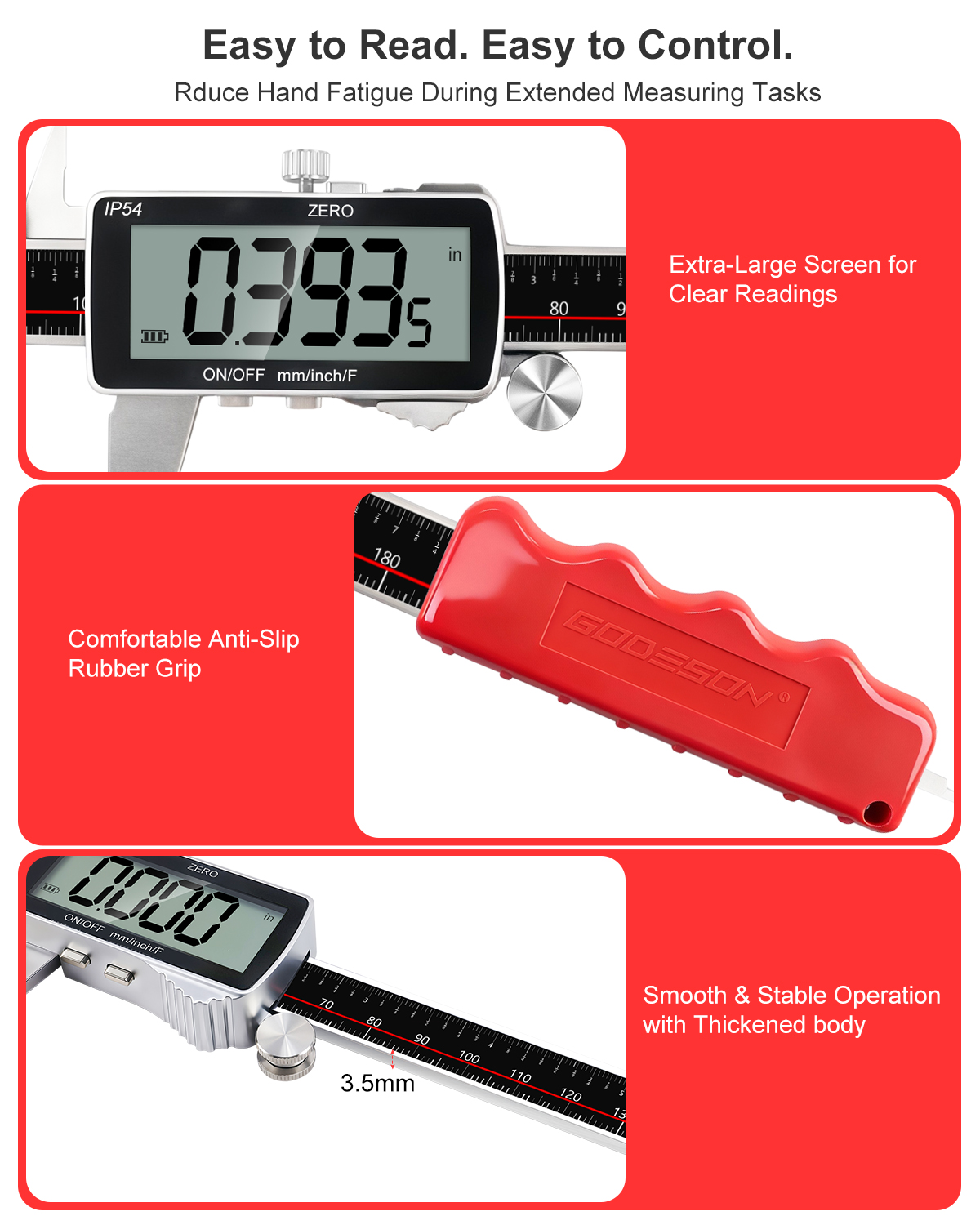
The other thing worth noting is the environment. The visible IP54 rating tells you the tool is intended for dusty workspaces and light moisture exposure. That is a practical detail, not a marketing flourish. It matters in fabrication shops, machine rooms, garages, and maintenance departments where clean-room behavior is not realistic.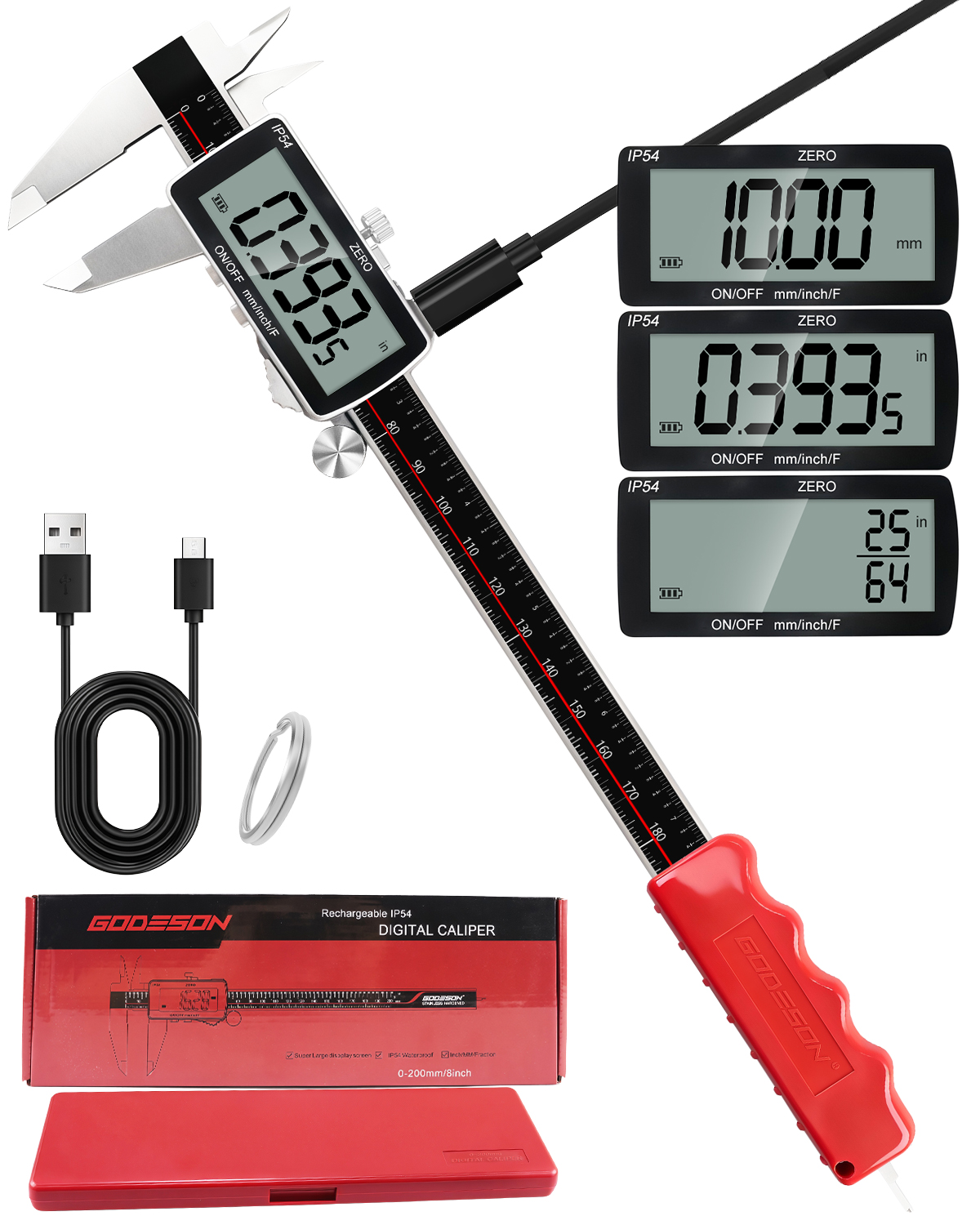
Quick take from a buyer’s point of view
If you are scanning for the essential facts, here is the short version:
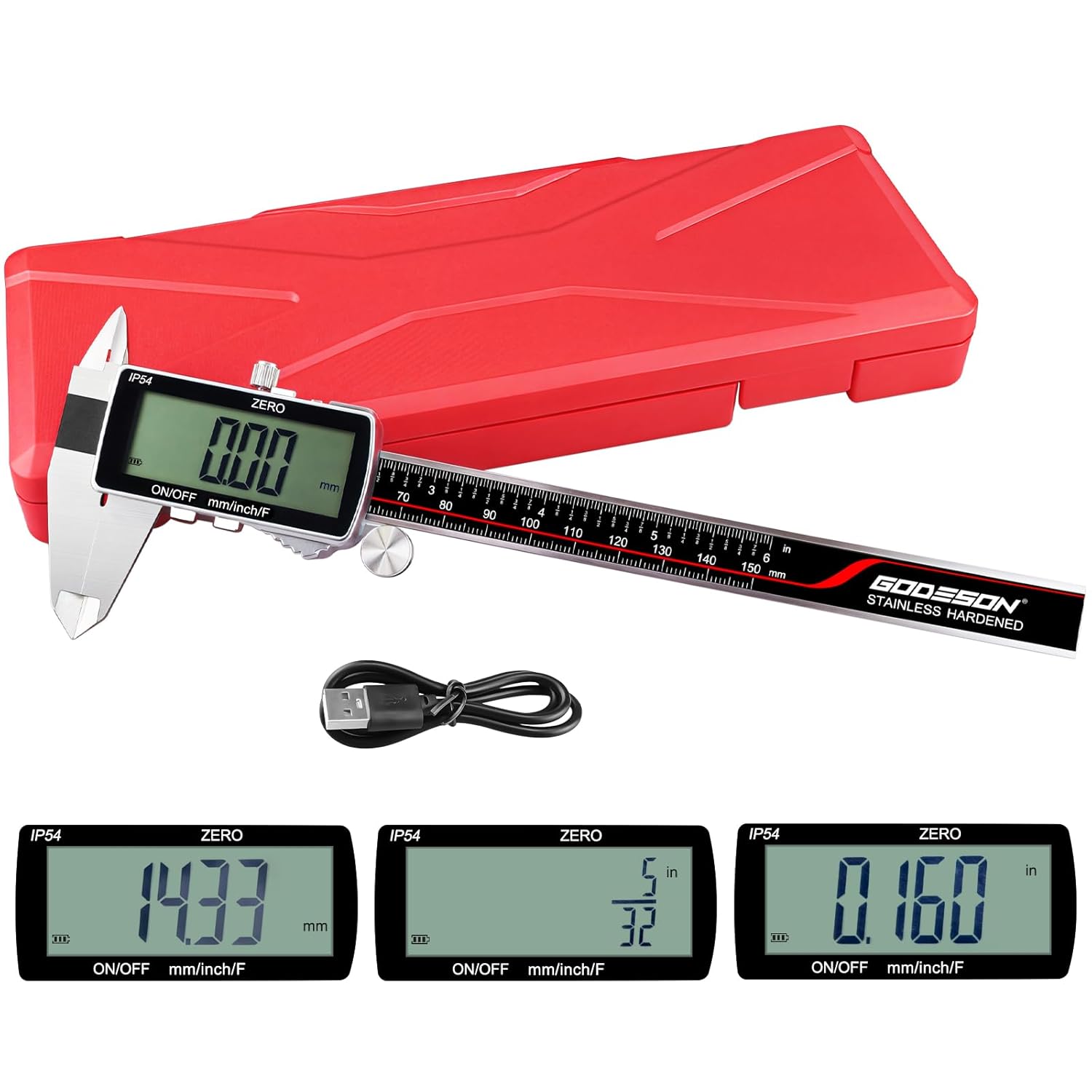
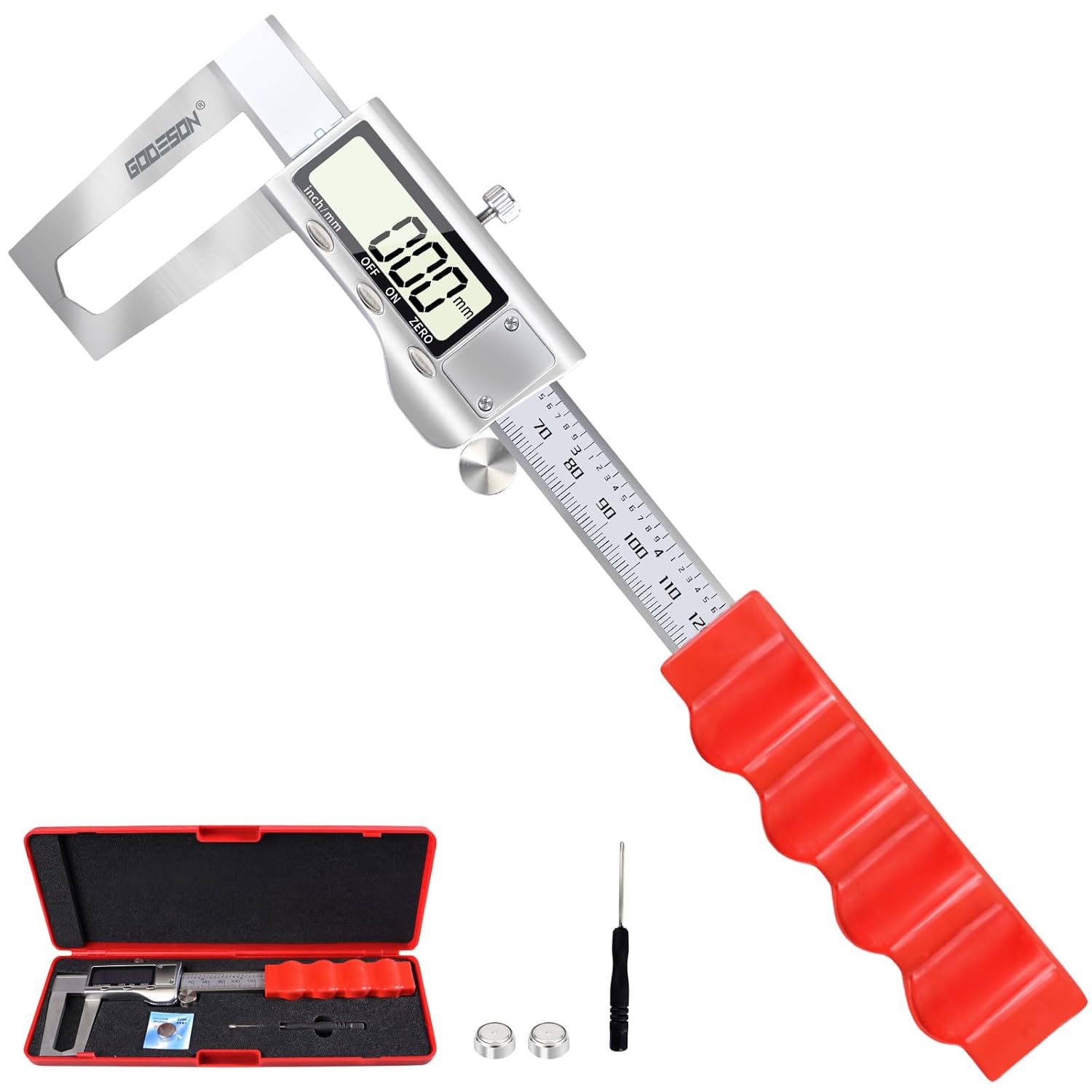
The GODESON Digital Caliper is a stainless steel digital caliper designed for workshop and industrial measurement.
It is suited to everyday checking of lengths, diameters, and dimensions.
Its IP54 protection makes it better matched to dusty or lightly damp environments than an unprotected measuring tool.
The visible construction suggests a rigid, straight beam and a practical, shop-friendly layout.
Some details buyers usually care about are not shown here, including exact range, resolution, accuracy class, battery life, and jaw capacity.
That last point is important. A caliper can look excellent in a product image and still fail to meet a particular job if the measurement range or jaw depth is wrong. Buyers should not assume the visible build tells the whole story.
Interview: what matters when evaluating a caliper like this
To keep this grounded, imagine the sort of conversation a sourcing manager might have with a production engineer.
“Why does stainless steel matter?”
Because it supports durability and day-to-day handling in a way that lighter, more disposable materials do not. It also gives the tool a more serious feel in hand, which matters more than many people admit. In shop environments, tools get grabbed quickly and used often. A rigid body and beam help the caliper feel stable when the jaws are brought into contact with a part.
“Is IP54 enough?”
Enough for what? That is the better question. IP54 suggests dust protection and resistance to splashes, which is useful in a manufacturing or garage setting. It does not mean the caliper should be submerged or treated like a sealed outdoor instrument. A buyer who needs heavy coolant resistance or washing-down capability should not overread the rating.
“Does digital always beat vernier?”
Not always. A digital display is faster to read, especially for repetitive checks. But some teams still prefer a traditional vernier scale for reasons of simplicity, battery independence, or familiarity. The right answer depends on the operator base and the workflow. For mixed teams, digital can reduce reading mistakes. For highly experienced metrology users, the difference may be smaller than sales literature suggests.
Where this caliper fits best
The practical applications are easy to see. In machining, it may be used for quick in-process checks before a part moves to the next station. In fabrication, it can confirm cut lengths, plate thicknesses, and hole-related dimensions. In maintenance, it helps confirm replacement part sizes without sending someone back to the metrology room. In mechanical assembly, it is useful for verifying that a component matches a mating feature before final fit-up.
Garage users and general industrial users tend to value different things, but the logic is similar. They want a tool that feels solid, reads quickly, and does not panic at dust on the bench. That is where a stainless steel digital caliper with visible IP54 protection makes sense.
What buyers should still verify before ordering
This is where cautious procurement beats impulse buying.
First, confirm the measurement range. A caliper that looks suitable in a photo may not have the reach you need for larger parts. Second, check the jaw capacity and the type of measurements you will actually make. Outside diameter, inside diameter, depth, and step measurements are common caliper tasks, but not every workpiece is friendly to every jaw shape.
Third, ask for the resolution and accuracy specifications if those numbers matter to your process. For inspection work, those details are not optional. For rough fitting or maintenance checks, they may be less critical, but they still belong on the buying checklist.
Fourth, confirm whether the display and electronics are easy to read in the lighting conditions you actually have. A bright shop floor, a dim maintenance pit, and a desk under fluorescent light all create different problems.
A small but important caution: do not confuse a durable-looking body with a precision-grade measuring system. The metal construction helps with handling and environmental resistance, but accuracy depends on the underlying manufacturing and calibration of the tool, not just the finish.
Common mistakes when choosing a digital caliper
One common mistake is buying on appearance alone. A satin stainless finish can suggest quality, and often it does mean the tool was built with more care than the cheapest alternatives. Still, buyers should ask for the specification sheet, not just trust the surface.
Another mistake is matching the tool to the wrong task. If you need occasional dimensional checks, a standard digital caliper may be ideal. If you need certified inspection data for a controlled process, you may need a higher level of metrology support than this general shop tool is intended to provide.
A third mistake is forgetting about the work environment. A caliper used around dust, oil residue, or coolant splash needs a different practical profile from one kept in a clean tool drawer. IP54 is a useful indicator, but it is not a free pass to neglect care.
How a sourcing team should frame the decision
The best way to approach a tool like the GODESON Digital Caliper is to treat it as a shop-floor measuring instrument first and a product listing second. Start with the actual use case. Who will use it? What will they measure? How often? In what conditions? Then compare the visible construction, protection level, and display format against those needs.
If the answer is “routine measurements in a dusty workshop,” this tool is aligned with the job. If the answer is “tight tolerance inspection in a controlled quality lab,” then the buyer should be more careful and ask for deeper specification details.
There is nothing glamorous about this decision, and that is exactly why it matters. Measuring tools are not bought for novelty; they are bought to reduce uncertainty. A caliper that is comfortable in the hand, readable at a glance, and resilient in a working environment earns its place quickly.
FAQ: practical questions buyers usually ask
Is the GODESON Digital Caliper suitable for industrial use?
Yes, based on the visible construction and stated IP54 protection, it is presented as a workshop-friendly tool for industrial measurement tasks.
Can it be used around dust and light moisture?
That is exactly what the IP54 rating suggests. It is not a sealed or submersible device, so buyers should still avoid using it where heavy liquid exposure is expected.
What can it measure?
Typical caliper uses include lengths, diameters, and general dimensions, along with common inside, outside, depth, and step checks depending on jaw design and setup.
Should buyers ask for more information?
Absolutely. Exact range, accuracy, resolution, and battery details are important if the tool will be used in a controlled process or inspection workflow.
A sensible next step
If you are sourcing a caliper for workshop or light industrial use, start by comparing the GODESON Digital Caliper against the real demands of your application rather than the most polished product photo. Confirm the measurement range, check the jaw capacity, and make sure the IP54-rated, stainless steel construction matches the environment your team actually works in.
If the job is routine measurement in a dusty, active shop, that combination is worth a serious look. If the job is stricter than that, ask for the missing specification details before you commit.