Why a GODESON Digital Caliper still matters in a shop full of gauges
A GODESON Digital Caliper sits in that useful middle ground between a quick eyeball check and a more formal metrology setup. For machinists, maintenance teams, fabricators, and garage users, that matters more than it may seem. A measuring tool that is fast, readable, and sturdy enough for everyday handling can save time on the floor and reduce the small mistakes that become expensive later.
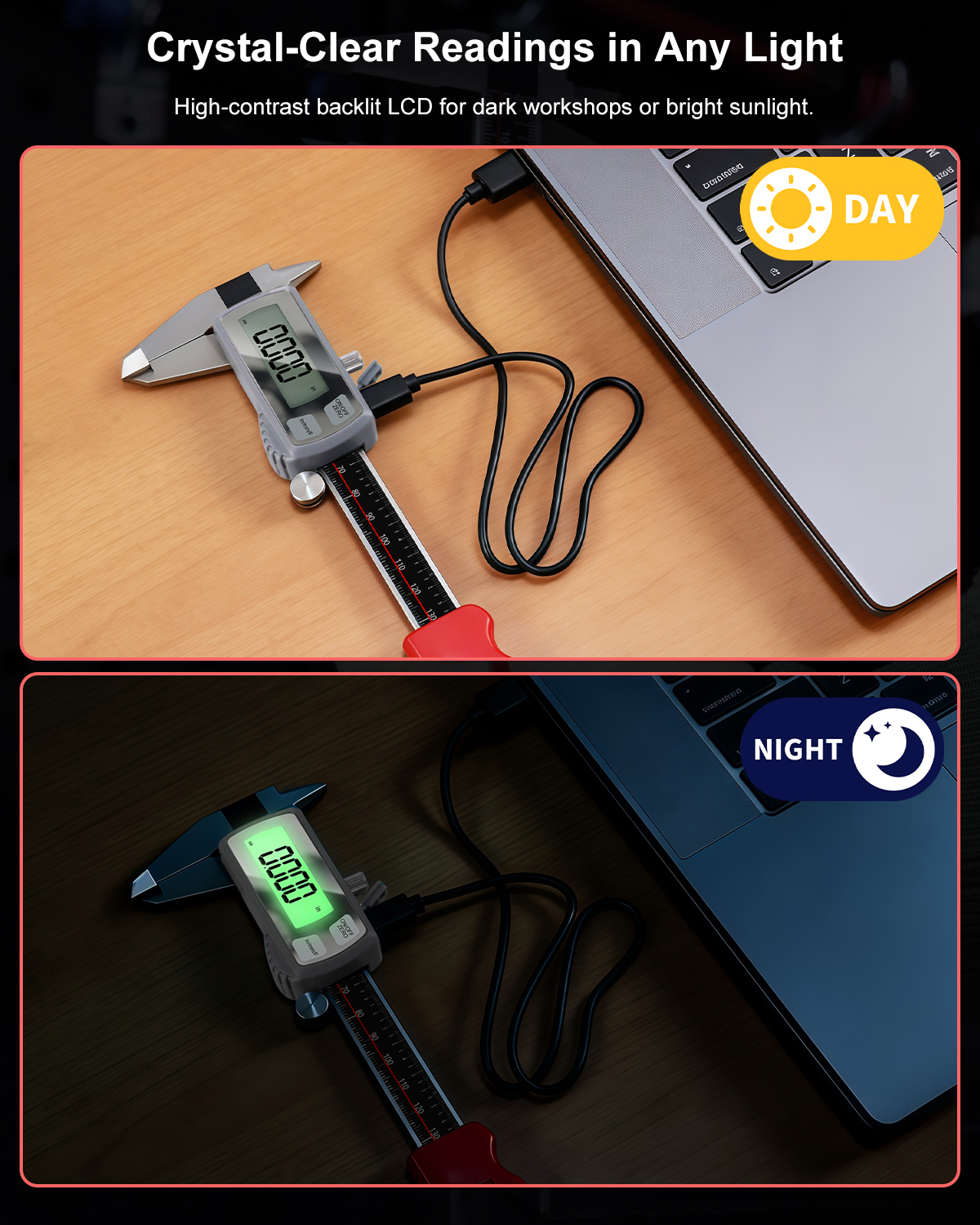
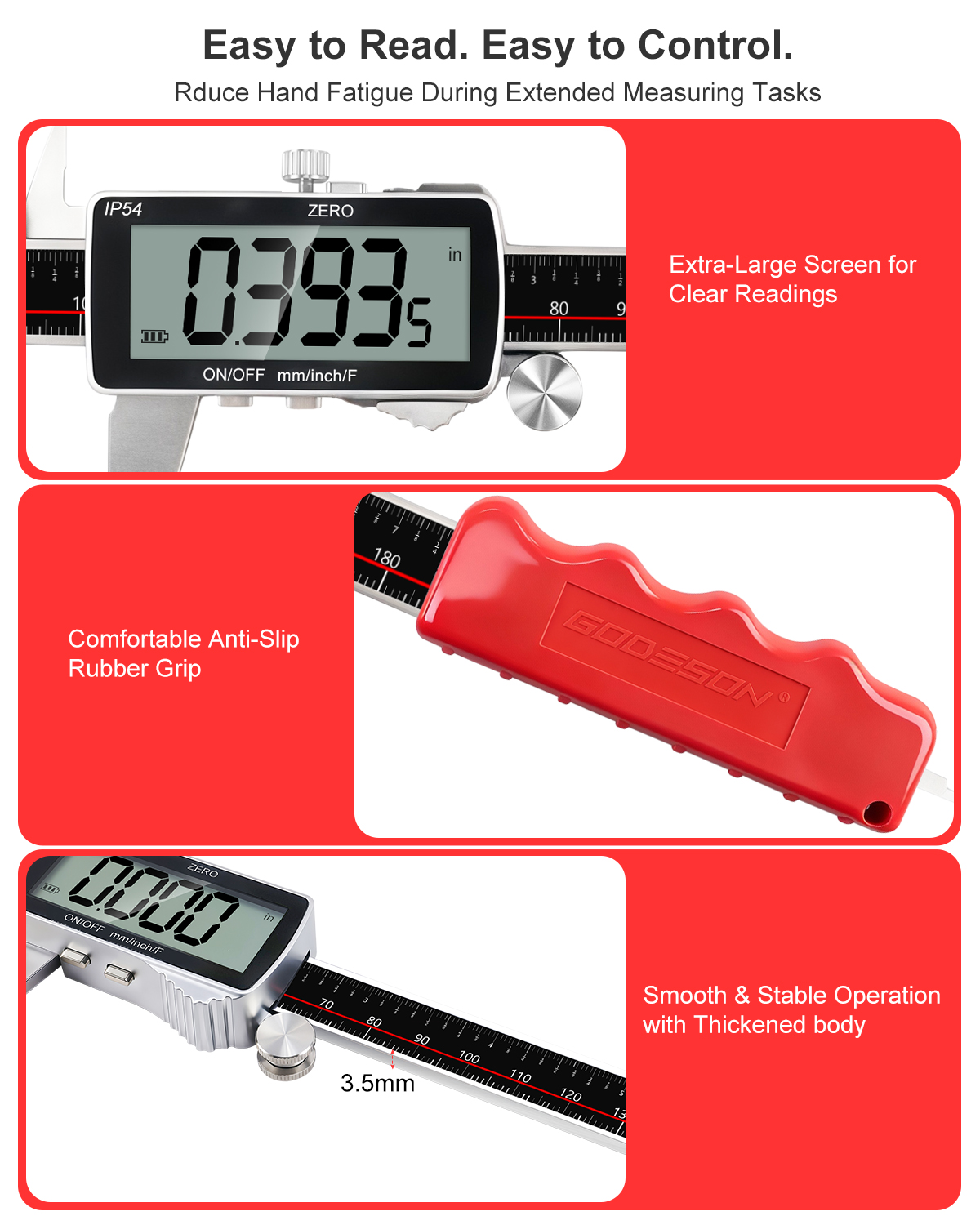
This is not just about reading numbers on a screen. It is about whether a shop can measure outside diameters, inside diameters, depth, and thickness without switching tools every few minutes. It is also about whether the tool survives real use: coolant mist, fingerprints, dust, and the occasional wet bench. The visible design cues here point to stainless steel construction and IP54 dust and splash protection, which are practical selling points in workshop conditions. That does not make it a laboratory instrument, and it should not be treated like one, but it does make it a very relevant shop tool.
If you are deciding whether this kind of caliper belongs in your kit, the question is simple: do you need a dependable inspection hand tool for everyday linear measurement, or do you need a higher-end system with documented calibration and tighter traceability? For many buyers, the answer is the first one.
What this caliper is built to do
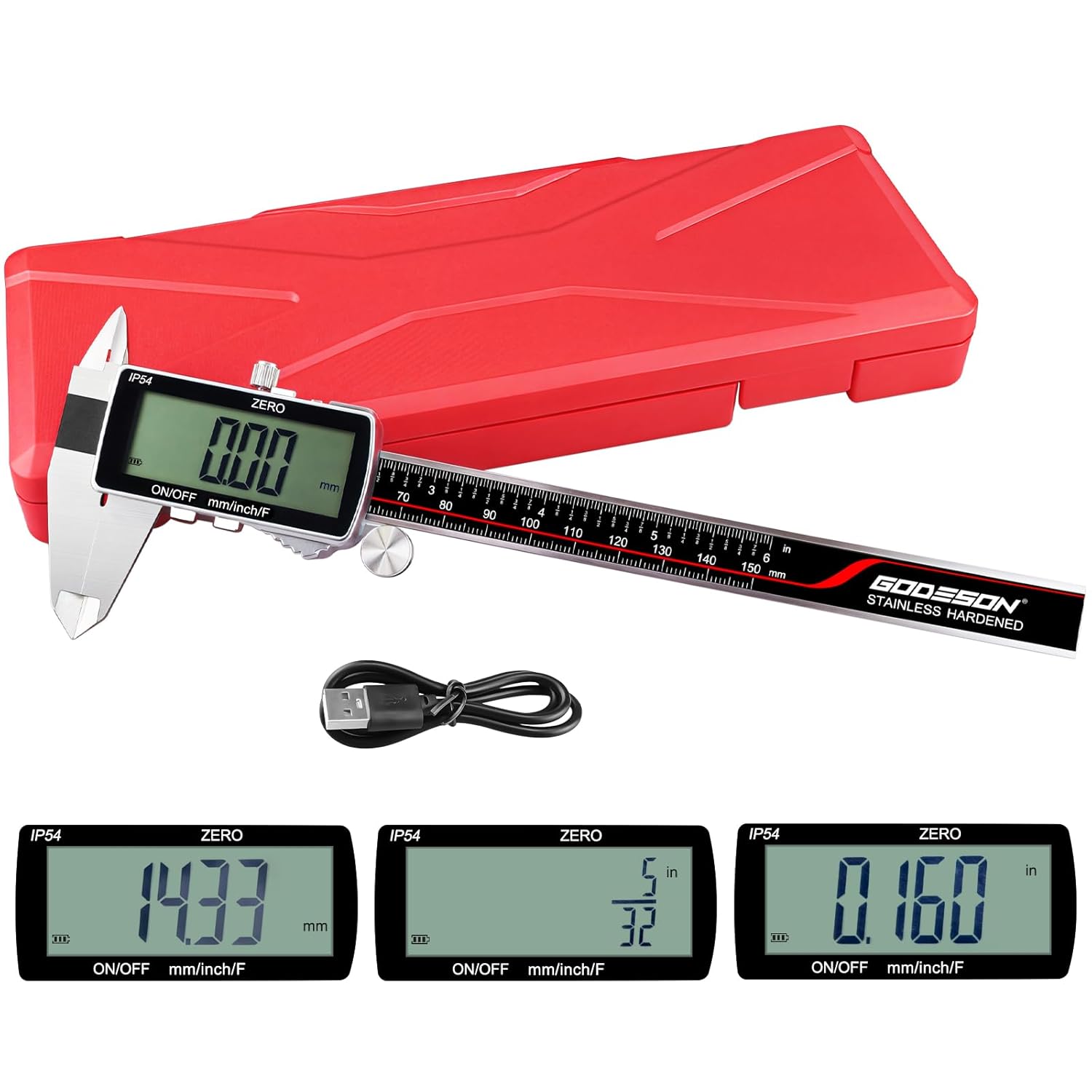
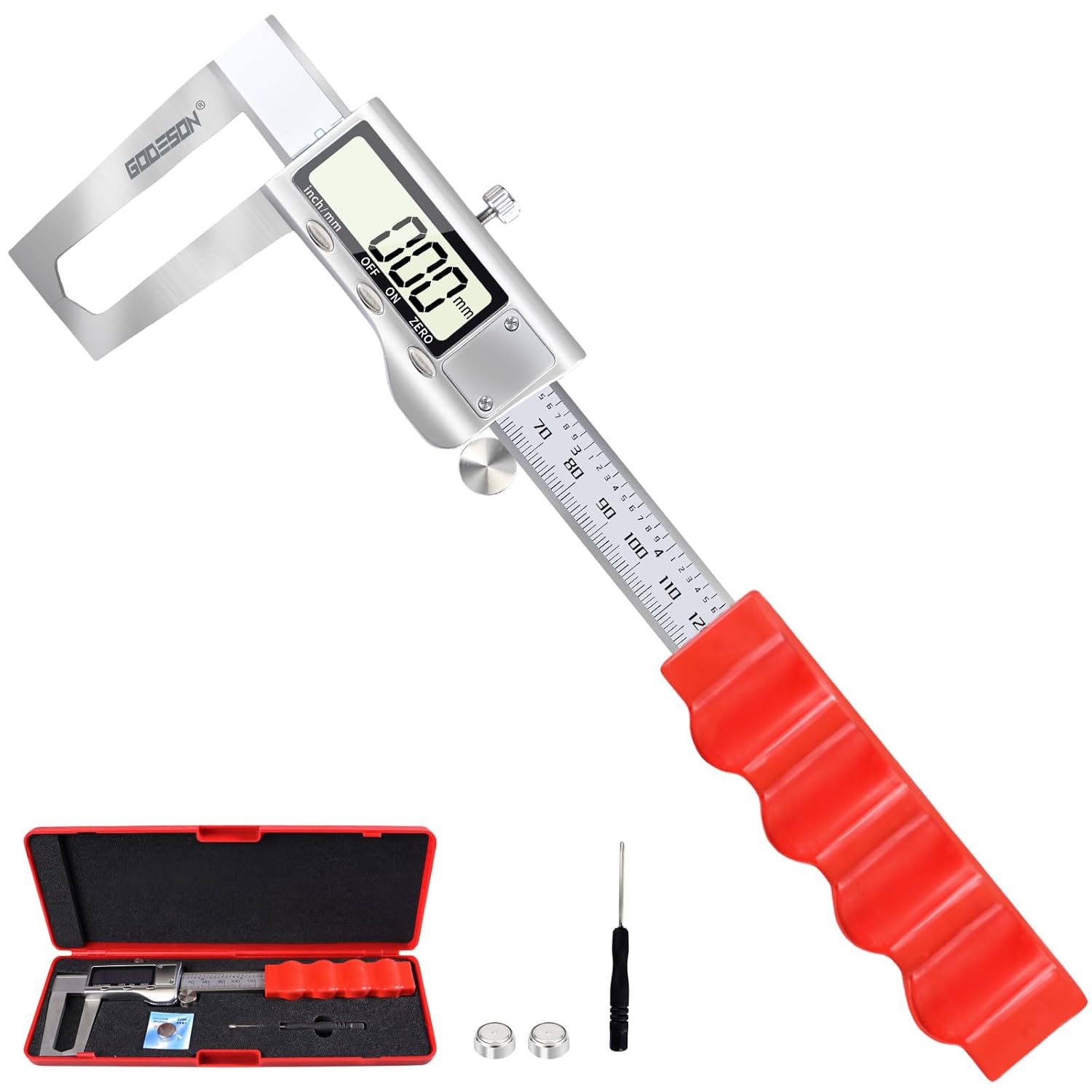
The GODESON Digital Caliper follows the familiar vernier-style layout: a long measuring beam, a fixed jaw, a sliding jaw assembly, a thumb wheel or adjustment knob, an etched or printed scale, and an LCD display. That combination is still popular because it is intuitive. A user can take a measurement visually, read the digital display, and verify position against the scale if needed. In a busy environment, that backup is useful.
The product information indicates it is intended for measuring length, diameter, thickness, and other linear dimensions in workshop or industrial settings. That covers a wide amount of ground. In practice, tools like this are commonly used for checking turned parts, sheet stock, fasteners, machined features, and wear dimensions during maintenance. It is the sort of tool that gets picked up dozens of times a day because the job rarely calls for a more complicated instrument.
One detail worth noting is the visible stainless steel construction. That is not just a matter of appearance. Stainless steel offers better resistance to corrosion than plain carbon steel, and for a hand tool that may be exposed to moisture or handled by different operators, that is a real advantage. It also gives the tool a more rigid, shop-ready feel.
Quick buyer takeaways
Where this type of caliper fits well
Use it for routine inspections, setup checks, part sorting, repair work, and general dimensional verification. It is especially useful when you need speed and readability more than document-heavy metrology.
Where to be cautious
Do not assume every digital caliper is suitable for harsh coolant exposure or heavy contamination. IP54 means dust and splash protection, not full waterproofing. That distinction matters on the floor, where a casual wipe-down is common and a dunk test is not a good idea.
What to confirm before purchasing
Buyers should still confirm the measuring range, resolution, accuracy, battery details, and any calibration paperwork if those are important to the application. Those specifications are not visible here, so it would be a mistake to guess.
Why IP54 and stainless steel are practical, not decorative, features
In a clean catalog photo, splash resistance can sound like a small feature. In a real shop, it is often the difference between a tool that stays in rotation and one that becomes annoyingly fragile. Dust, chips, light oil, and occasional moisture are normal in machining, fabrication, maintenance, and garage work. An IP54-rated tool is designed to handle limited dust ingress and splashing water. That does not make it invincible, but it does make it more realistic for everyday industrial use than a bare, delicate instrument.
The stainless steel body also supports that use case. A metal beam and sliding jaw assembly tend to feel more durable than lightweight alternatives. They also tolerate handling better, especially when operators are moving from bench work to machine-side checks. That said, stainless steel still benefits from simple care. Wipe the beam clean, keep grit out of the sliding surfaces, and do not treat the tool like a pry bar. A surprising number of caliper problems start with misuse, not manufacturing flaws.
How to evaluate a digital caliper for shop use
When sourcing a digital caliper, engineers and buyers usually care about a small set of questions. The first is whether the tool measures consistently enough for the part family. The second is whether it is readable in the environment where it will be used. The third is whether it survives the environment without becoming a maintenance burden.
For the GODESON Digital Caliper, the visible strengths line up well with those criteria. The LCD display supports quick reading, which helps reduce transcription mistakes and speeds up repetitive checks. The etched or printed scale gives a mechanical reference point that some operators still prefer for verification. The sliding jaw and thumb wheel support controlled movement, which is especially useful when the part is awkward or when the user wants a more deliberate feel than a fully loose slide would provide.
Still, a buyer should look beyond the surface. If the caliper will be used for incoming inspection, customer-facing quality checks, or work where records matter, ask whether the tool has the documentation needed by your quality system. If it is mainly for internal setup and maintenance, the decision is easier. Function, durability, and convenience may matter more than formal paperwork.
Common mistakes buyers make with digital calipers
The first mistake is assuming every digital caliper performs the same. They do not. The body material, sealing level, display quality, slide smoothness, and basic build consistency can change the user experience more than expected. A cheap-looking tool may be fine for rough checks; a better-built one may be worth the extra spend if operators use it all day.
The second mistake is overestimating water resistance. IP54 is useful, but it is not a license to leave the tool on a wet machine bed or wash it under running water. Splash resistance is a defensive feature, not a maintenance substitute. Keep that in mind, especially in coolant-heavy environments.
The third mistake is buying on appearance alone. A stainless steel body looks strong, and it often is, but the real question is whether the slide is smooth, the display is clear, and the measurement behavior fits the job. A tool can look rugged and still frustrate users if the fit and feel are poor.
Practical use cases in manufacturing and maintenance
In machining, this kind of caliper is frequently used for checking raw stock, turned diameters, step dimensions, and basic part-to-part variation. In fabrication, it helps verify thickness, hole size, and cut consistency before parts move downstream. Maintenance teams use it to confirm shaft wear, gasket dimensions, replacement part sizing, and general fit checks. Garage users and field technicians tend to value the same things: speed, readability, and a tool that does not demand babying.
Because the product is intended for workshop conditions, it makes sense for mixed-use environments where the tool might be shared across shifts. That is one reason stainless steel and IP54 protection matter. Shared tools get handled more roughly than personal ones, and they do not always return to a perfect storage case between uses.
Buying advice that saves headaches later
If you are sourcing for a plant, put the caliper in the context of its actual job. For a maintenance crib, durability and ease of reading may outweigh fine metrology features. For incoming inspection, confirm the specifications and any documentation before committing. For training labs or general shop carts, a rugged digital caliper with simple controls may be the best tradeoff.
Also think about user behavior. Operators prefer tools that are obvious at a glance. A clear LCD, straightforward sliding action, and a familiar jaw layout reduce the learning curve. That may sound minor, but in practice it keeps the tool in use instead of in a drawer.
One small caution: if the tool is going into a process where exact traceability is required, do not let the word “digital” create a false sense of precision. Digital readout helps with convenience and reduces reading errors, but it does not replace verification. The specification sheet still matters.
FAQ
Is the GODESON Digital Caliper suitable for wet environments?
It has IP54 dust and splash protection, so it is better suited to workshop moisture and incidental splashing than a non-sealed tool. It is not described as fully waterproof.
Can it be used for general industrial measurement?
Yes, that is the intended use case based on the supplied information. It is positioned as a workshop and industrial measuring hand tool.
Does stainless steel automatically mean higher precision?
No. Stainless steel mainly helps with durability and corrosion resistance. Precision still depends on the design, manufacture, and calibration of the tool, which are not specified here.
Should buyers ask for more specifications?
Absolutely. Range, resolution, accuracy, battery details, and calibration information should be confirmed if they matter to the application.
What a sensible next step looks like
If your team needs a rugged everyday caliper for shop-floor measurement, the GODESON Digital Caliper looks positioned for that role: stainless steel construction, digital readability, and IP54 protection for dusty, splash-prone work areas. If you need metrology-grade documentation or a very specific measuring envelope, you should confirm the full specification set before making it a standard issue item.
For sourcing teams, the right move is to match the tool to the task rather than overbuying or underbuying. For engineers and product teams, that means looking at the real environment, the frequency of use, and the level of proof required by your process. A good caliper should disappear into the workflow. When it does its job properly, nobody talks about it much, which is usually the best sign.