1. Why a digital caliper still matters on a busy shop floor
A GODESON Digital Caliper sits in that useful middle ground between a basic ruler and a full inspection setup. For engineers, sourcing managers, and production teams, that matters more than it sounds. Many day-to-day checks do not need a bench gauge or a coordinate measuring machine. They need a hand tool that can confirm a part is within expectation before it moves to the next operation, the packing bench, or the rework tray.
The appeal is simple: quick dimensional checks, readable output, and enough versatility to cover common workshop tasks. In machining, fabrication, maintenance, and incoming inspection, the right caliper can prevent wasted time and prevent a small dimensional mistake from becoming a larger batch issue.
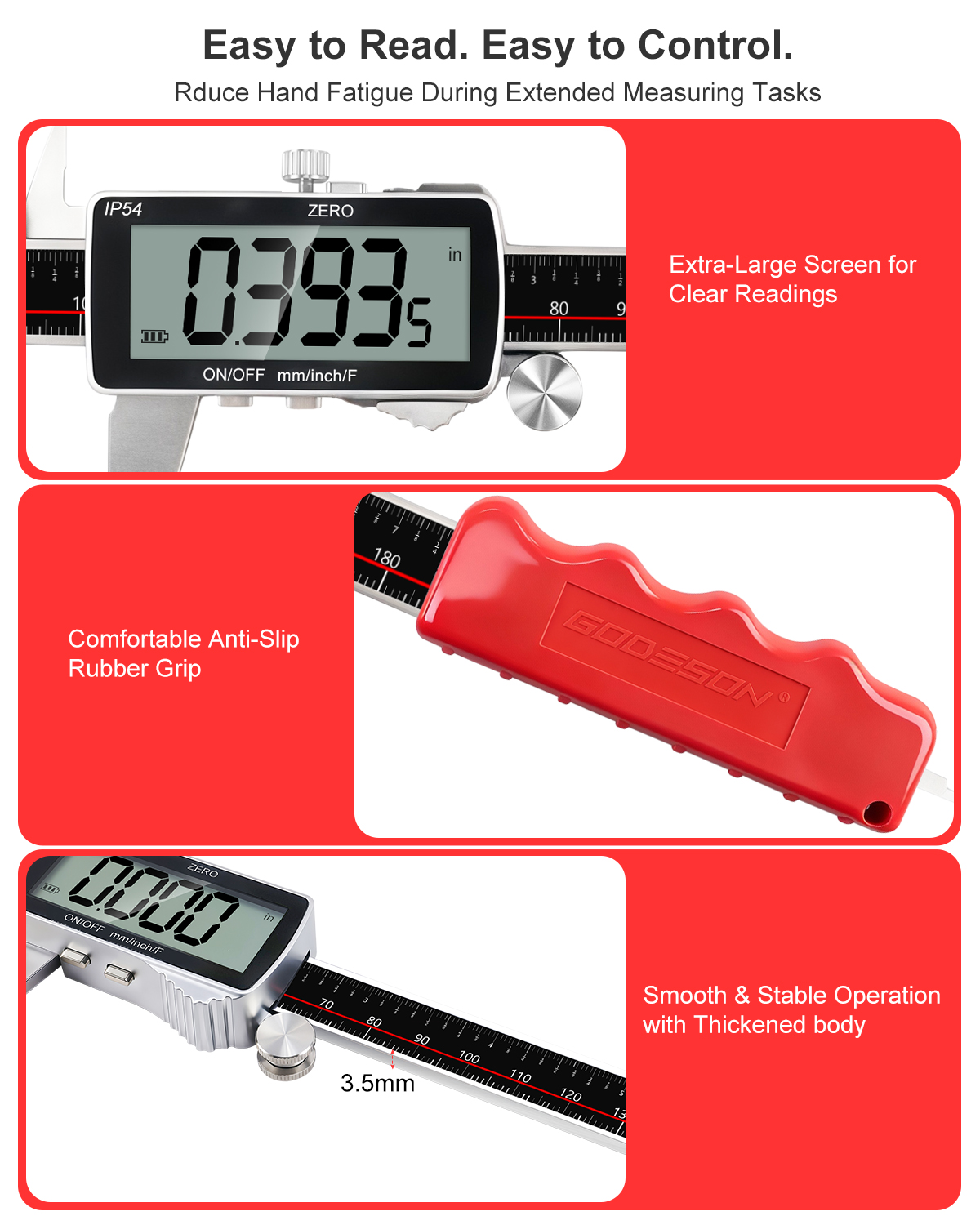
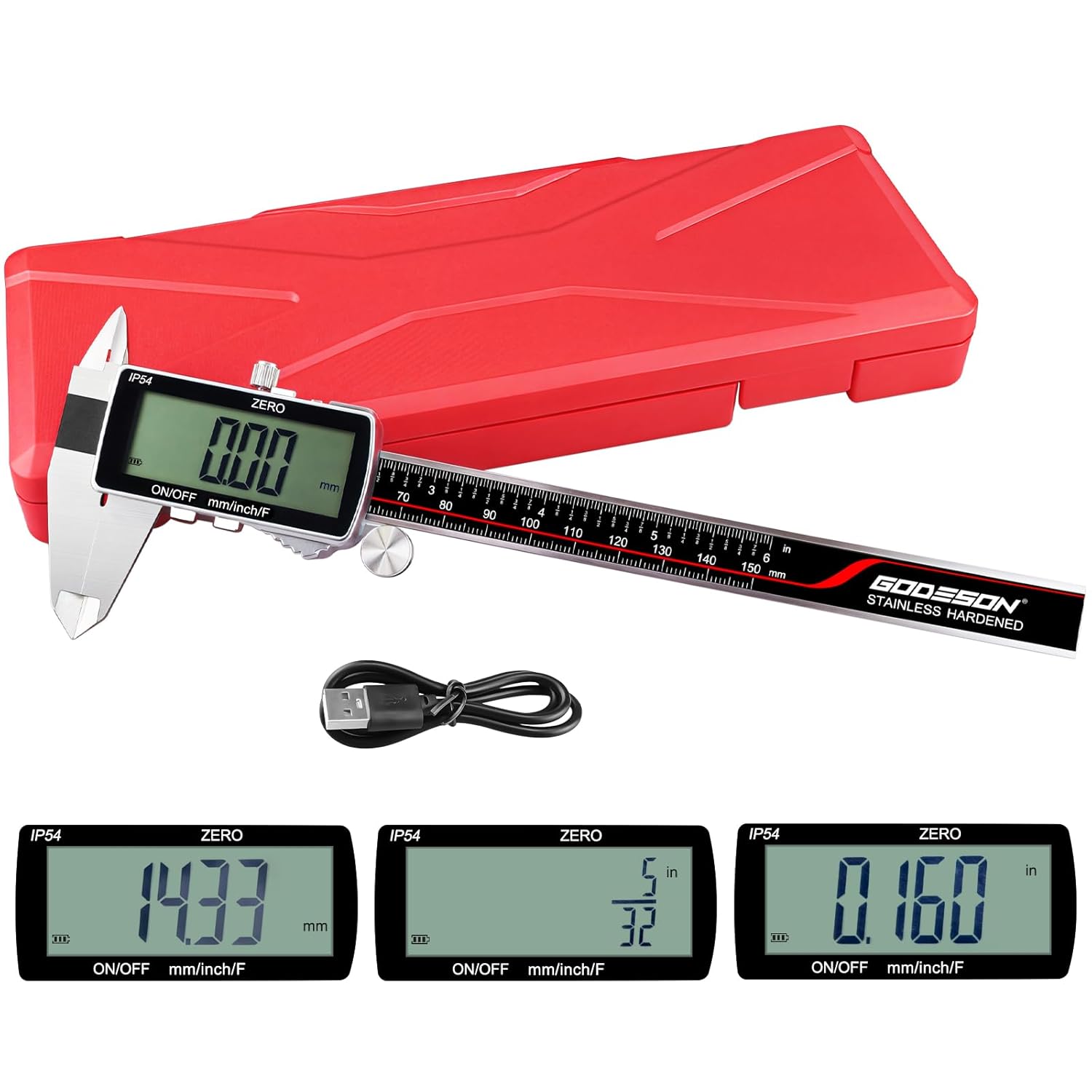
The GODESON Digital Caliper, as presented in the supplied product data, appears built for exactly that kind of practical use. It shows a stainless steel construction, a digital LCD readout, a long ruled beam, and an IP54 protection claim. That combination points toward a tool intended for real shop conditions rather than a clean demonstration bench.
2. What the visible design tells a buyer at a glance
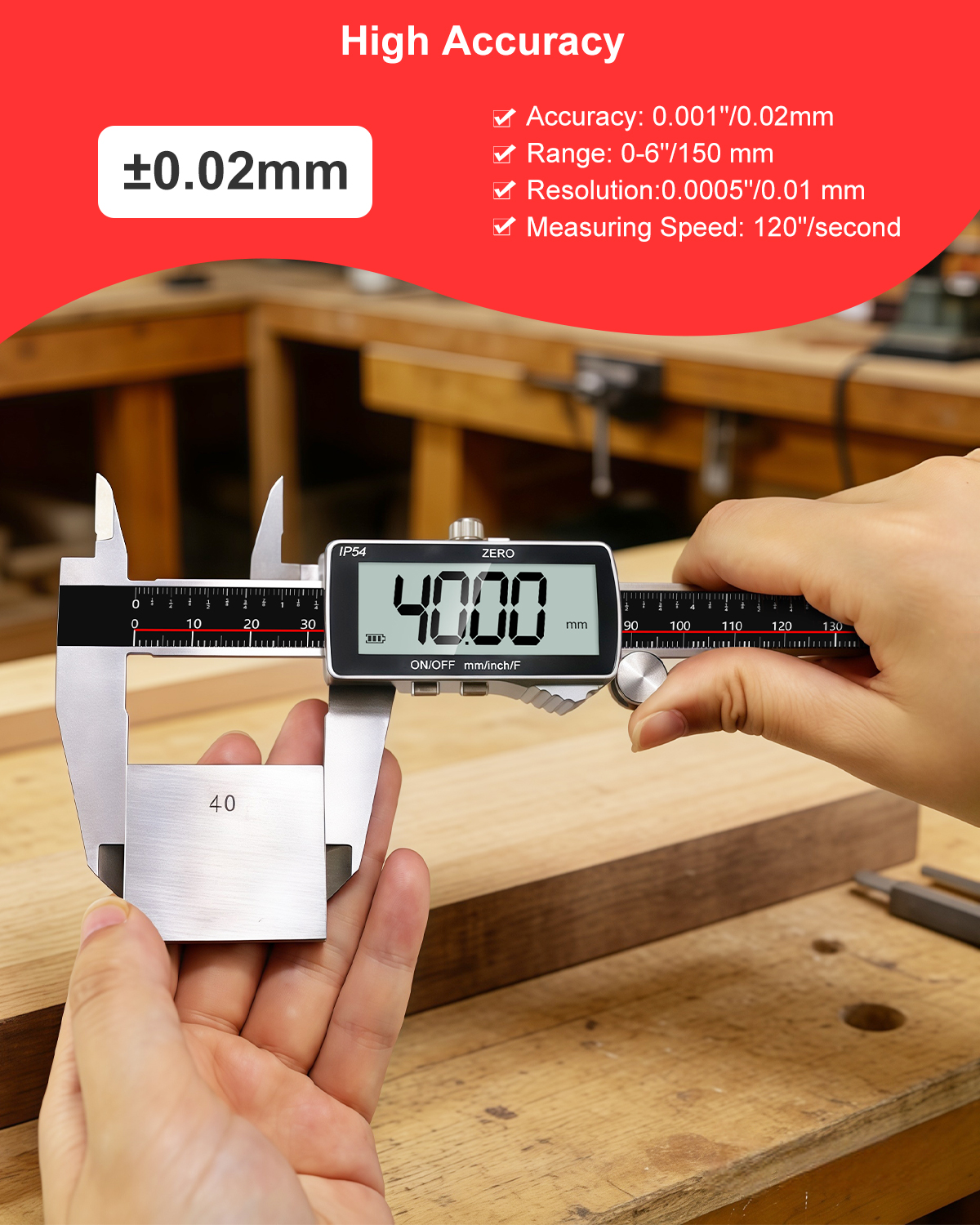
A trade buyer usually wants to know the same few things first: what can it measure, how robust is it, and will operators actually use it correctly. The visible design gives some clues.
- It is a digital caliper with an LCD readout, which is useful for fast and unambiguous reading.
- The body and scale beam appear stainless steel, which generally supports durability and corrosion resistance.
- The beam uses a clear metric scale, making it practical for workshop and industrial environments that work in millimeters.
- The sliding head and thumb wheel suggest smooth positioning during measurement.
- The IP54 marking indicates protection against dust ingress and splashing water, a helpful feature around coolant, oil mist, and routine shop contamination.
That combination does not make it a lab instrument, and it should not be treated like one. But for everyday production and maintenance work, the design is sensible.
3. Six places where this kind of caliper earns its keep
1) Machined parts verification
The most obvious use is checking turned, milled, or ground parts. Operators can verify outside dimensions, compare one feature against another, and catch obvious drift before a part leaves the machine area. A digital caliper is not the final word on critical tolerances, but it is a fast screening tool.
2) Incoming inspection
Sourcing teams often overlook the value of a hand tool at receiving. When raw stock, fittings, brackets, or supplier parts arrive, a quick measurement can confirm whether what was delivered matches the paperwork closely enough to proceed. That is especially useful when parts are not yet scheduled for full inspection.
3) Maintenance and repair work
Repair technicians often need to measure replacement parts, shafts, bushings, housings, or worn components in place. A digital caliper is convenient because it can travel from bench to machine without much ceremony. It is the sort of tool that gets used because it is already nearby.
4) Fabrication and fitting
In sheet metal, light fabrication, and assembly work, an electronic measuring caliper is handy for checking stock width, spacer thickness, and fit-up dimensions. The readout removes some of the interpretation required with a mechanical scale, which helps when several people share the same tool.
5) Coolant-prone or dusty environments
The IP54 claim matters here. It suggests the caliper is better suited to areas where dust and light splashes are part of the job. That does not mean it is waterproof, and it should not be left under slurry or washed down carelessly. Still, compared with a delicate tool that dislikes any contamination, that level of protection is practical.
6) General dimensional reference work
Sometimes the goal is not absolute metrology. It is simply to know whether a part is bigger, smaller, or consistent from batch to batch. In that context, a digital caliper offers enough speed and repeatability for routine decision-making.
4. Features buyers should notice before comparing price alone
A caliper can look similar across many listings, but the details matter. Buyers should pay attention to the same things operators notice after a week of use.
Stainless steel construction
The visible stainless steel body is one of the strongest practical signals in the supplied product data. In a workshop, that usually means better resistance to corrosion, easier cleaning, and a more rigid feel in the hand. It is not just cosmetic. The tool needs to keep its shape and slide smoothly when dust, hands, and coolant are part of the environment.
Digital display
The LCD readout reduces reading errors and speeds up measurement. That sounds basic, but in busy settings it saves real time. New operators often make fewer interpretation mistakes with a digital display than with a vernier scale.
Beam scale and measurement visibility
The long ruled beam and contrasting markings help the user orient the tool even before the screen is read. This can be useful when the battery is low or when a quick visual check is needed.
Jaws and sliding action
The pointed measuring jaws and knurled thumb wheel suggest the tool is meant to move with some precision. A caliper that feels rough or loose tends to lose trust quickly on the shop floor, even if the numbers look fine.
5. Quick buyer checklist for sourcing teams
Before approving a digital caliper for production, procurement, or MRO use, it helps to ask a short set of practical questions:
- Will it be used mainly for outside dimensions, or do users also need inside, step, and depth checks?
- Is the environment dusty, oily, or exposed to coolant splash?
- Do operators need a metric display only, or a dual-unit option?
- How important is corrosion resistance during storage and daily handling?
- Will this be a shared shop tool or an inspection-room instrument?
- Do users need simple pass/fail screening, or tighter traceable measurement control?
That last question is the one many teams skip. A caliper is useful, but it is not automatically the right tool for every tolerance decision. If the part is critical, the measurement method should match the risk.
6. Common mistakes when buying or using a digital caliper
The biggest mistake is buying only on appearance. A polished listing can hide a tool that is too light, too fragile, or not suitable for the environment. The reverse happens too: a rugged-looking tool may be perfectly serviceable, but the buyer assumes it is a precision lab device and expects more than it can reasonably deliver.
Another common issue is forgetting the working environment. If a caliper will live near coolant, fine dust, or oily hands, IP54 protection becomes more than a brochure line. It is part of the cost of ownership.
There is also a human factor. A digital caliper invites confidence, sometimes too much. Operators can read a number quickly and move on without checking whether the jaws are seated properly or whether the part has burrs. That is not a product defect; it is a workflow issue. Still, it is one worth mentioning.
7. How the GODESON Digital Caliper fits into a practical tool lineup
In a well-run shop, the measurement toolkit is layered. Micrometers, gauges, comparators, and calipers each do a different job. A GODESON Digital Caliper fits the everyday layer: the tool you reach for first, not necessarily the last one you trust before shipment.
That makes it useful for:
- screening parts at the machine
- checking stock before cutting
- verifying fit during assembly
- supporting maintenance work
- keeping production moving without overcomplicating the process
The value is in speed and accessibility. If a measurement tool is too fragile, it stays in a drawer. If it is too crude, nobody trusts it. This type of digital caliper is aiming for the middle, which is often where the actual work happens.
8. FAQ buyers usually ask
Is this caliper meant for industrial use?
Based on the supplied information, yes, it appears suited to workshop and industrial settings. The stainless steel body and IP54 claim point in that direction.
Can it handle coolant or dust?
The IP54 marking suggests a degree of protection against dust and splashing liquid, but it should still be handled as a precision hand tool, not a sealed field instrument.
Does it measure more than outside dimensions?
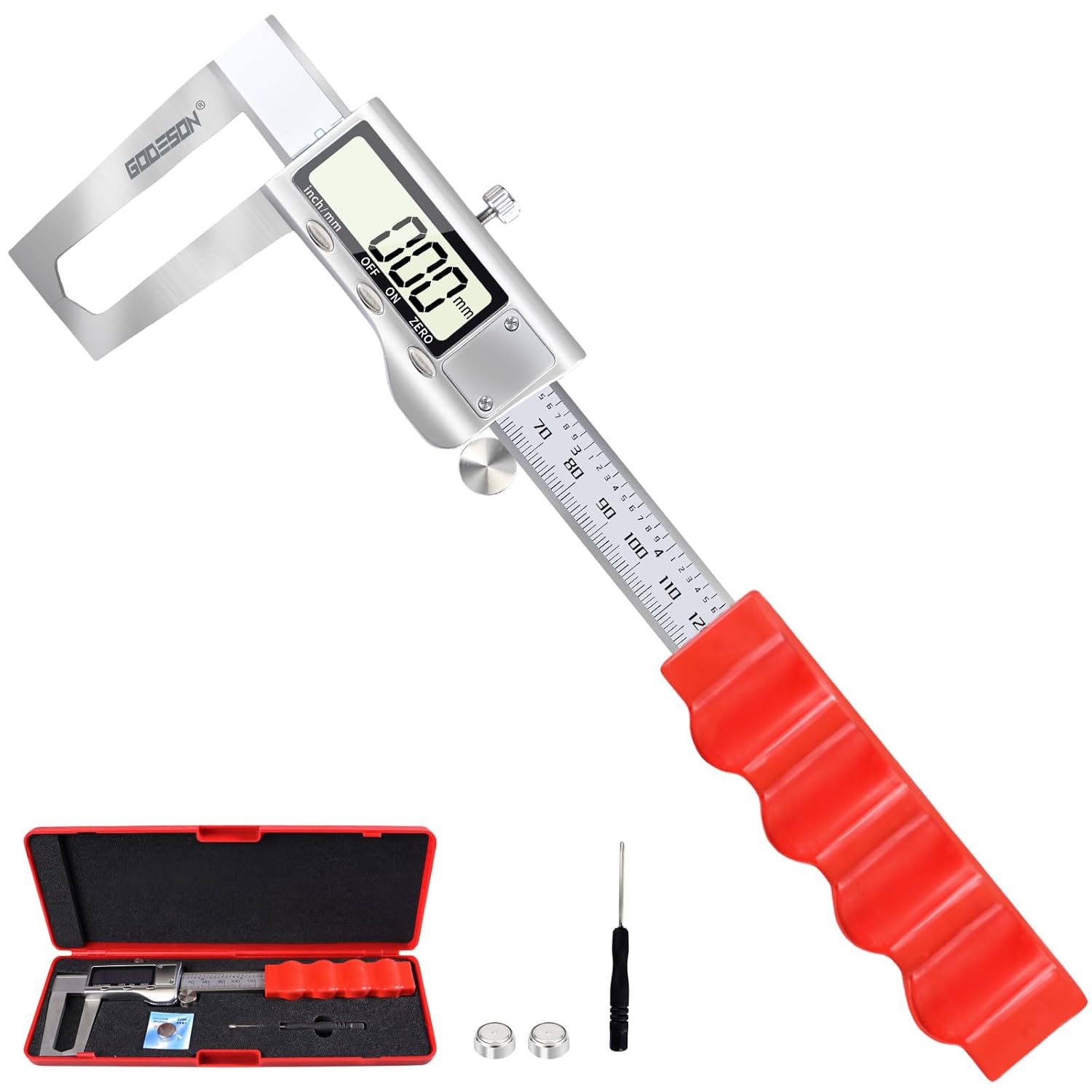
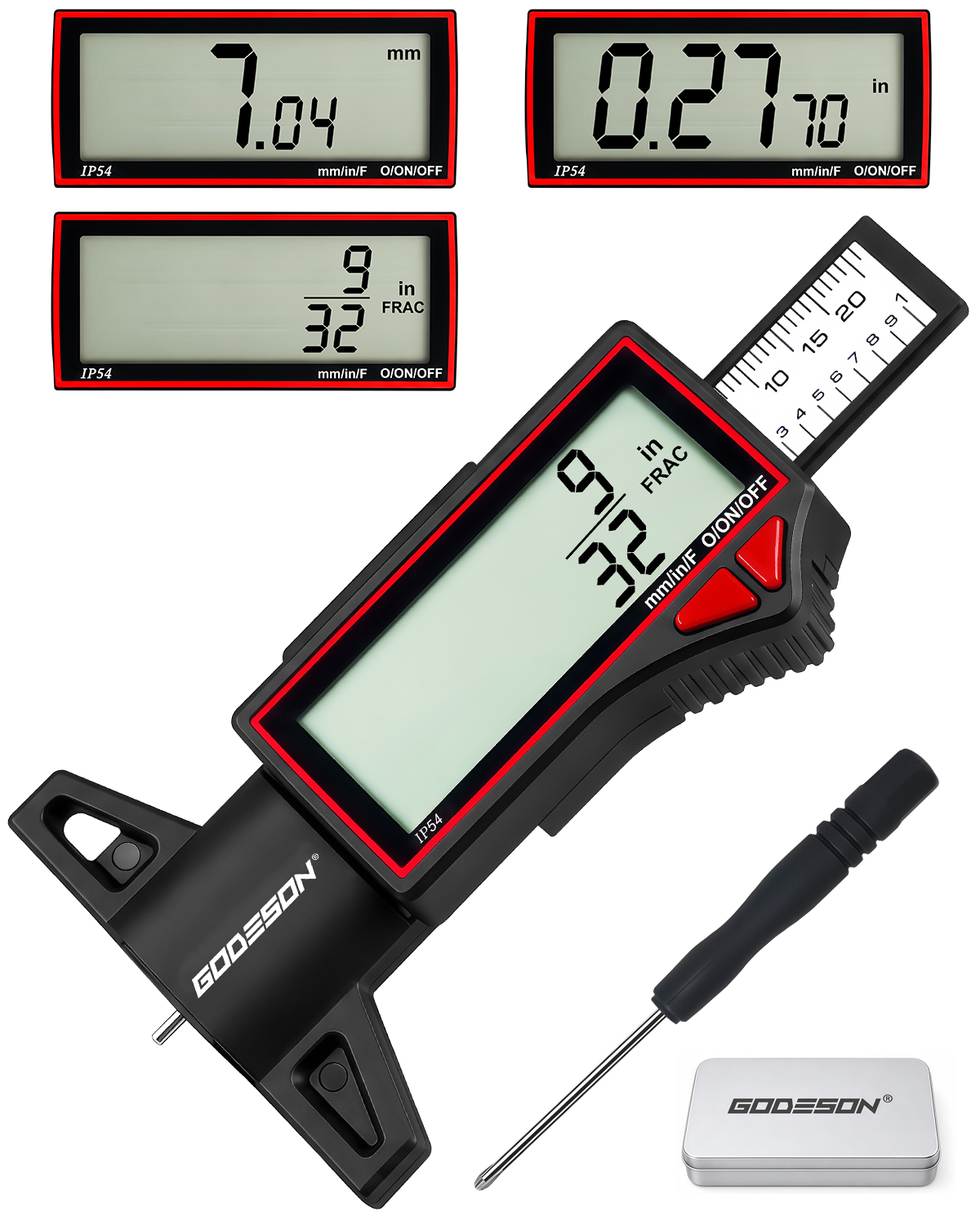
The product data clearly shows the main outside-jaw setup. Inside, step, and depth functions are common on digital calipers, but they are not fully confirmed in the provided material, so buyers should verify before ordering.
Is stainless steel actually useful, or just a selling point?
In this context it is useful. Stainless steel typically improves durability and corrosion resistance, which matters in machine shops and maintenance environments.
9. What to do next if you are evaluating one for purchase
If you are shortlisting a GODESON Digital Caliper for a workshop, production cell, or maintenance kit, compare it against the job rather than the catalog headline. Confirm the measurement functions you need, check whether the IP54 protection level fits the environment, and decide whether the tool will serve as a quick-check device or part of a more formal inspection process.
For buyers, the best caliper is usually the one operators will actually reach for, trust, and keep in service. That is a small standard on paper, but on a real floor it saves time, prevents scrap, and avoids arguments over whether a part was checked at all.