What a GODESON air fitting is really for
If you are looking at a GODESON air fitting, you are probably not shopping for decoration. You are trying to solve a very ordinary but very important shop problem: how to connect compressed air cleanly, reliably, and without wasting time on mismatched threads or awkward adapters. In practice, that means the part has to do three things well: seal, stay put under use, and be easy enough to install that it does not become the weak link in a pneumatic setup.
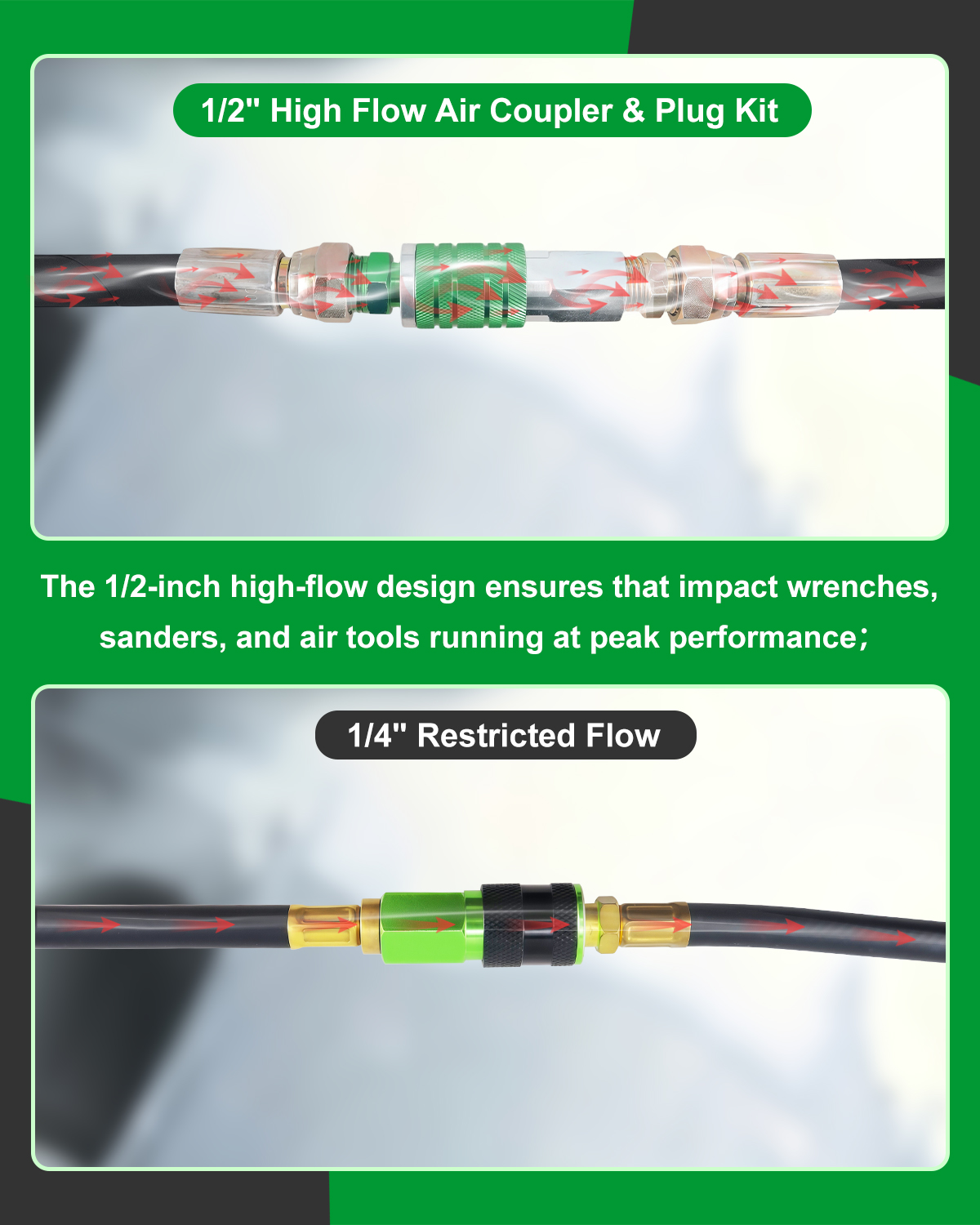
The visible parts in this style of fitting point to a CNC-machined metal connector or adapter set for compressed air lines, utility air hookups, or test connections. The geometry matters here. You can see threaded ends, hex flats for wrench tightening, and knurled grip sections on some pieces. Those are small clues, but they tell an engineer or buyer a lot about how the part is meant to be handled on the bench or in the field.
For sourcing teams, the real decision is not whether an air fitting looks sturdy. It is whether the fitting type, finish, and interface match the rest of the system. Get that wrong and you end up with leaks, cross-threading, unnecessary adapters, or a maintenance headache every time the line is opened.
Quick takeaways for buyers
These fittings appear to be compact machined metal components for air connection duties, likely combining a male plug or nipple style form with threaded adapter features. That makes them useful in compressed air systems, pneumatic tools, shop manifolds, custom hose assemblies, and general maintenance work where two connection standards need to meet.
The visible design features suggest practical benefits rather than cosmetic ones: wrench-friendly flats, threaded ends for secure attachment, and grip surfaces that help during hand installation or removal. A small sealing ring or insert is also visible, which is worth noting because sealing details often decide whether a fitting performs well in service or becomes a slow leak nobody wants to chase.
How these fittings are typically used in real shops
In a compressed air environment, fittings like these often sit at the point where flexibility matters most. That can mean the connection between a hose and a tool, a manifold and a branch line, or a test station and an instrument port. They are also common in custom assemblies, where the air system does not match off-the-shelf lengths or connector standards.
A part with a male threaded end and a compact body is especially handy when space is tight. Maintenance crews tend to like parts that can be tightened with a wrench but do not require a large amount of clearance. The knurled sections visible on some pieces are useful when a technician wants to start the connection by hand before finishing with tools. That small detail sounds minor until you are working over a compressor cabinet or behind a machine frame.
Why the finish and body shape matter
The finish on the visible parts appears bright and metallic, with green-toned components and a silver-toned larger body. The exact coating or material grade is not stated, so it is safer to treat the finish as an appearance and corrosion-resistance clue rather than a specification. Still, in pneumatic hardware, surface finish is not just about looks. It affects wear during repeated tightening, resistance to grime buildup, and how easily the part can be inspected for damage.
The stepped cylindrical profile also suggests the fitting may have been turned on a lathe or CNC machine before threading and surface finishing. That kind of manufacturing route is common for small metal pneumatic parts because it gives good control over concentricity and thread quality. For buyers, that usually means a more consistent part than a loosely cast or stamped alternative, although the actual performance still depends on the exact design and material used.
What to check before you order
This is where a lot of procurement mistakes happen. A fitting can look correct in a product image and still be wrong for the application. Before committing, check the connector type, thread size, and whether the component is intended for a quick-connect interface, a straight threaded port, or a hybrid adapter role.
Thread compatibility is the first trap. Air systems are full of similar-looking standards, and a part that is “almost right” can still leak or bind. Do not rely on visual similarity alone. If the supplier does not list the exact fitting standard, ask for it. That sounds basic, but basic questions prevent the kind of rework that eats up maintenance time.
Sealing is the next issue. The small ring-like piece shown with the fitting suggests some kind of seal, insert, or bushing component may be included, but its exact function is not defined. If the assembly depends on a soft seal, confirm whether it is replaceable and whether spare seals are available. A hard-metal connection with no proper sealing strategy can be fine in some utility air uses, but it is not something to guess about.
Also consider how often the part will be disconnected. If the fitting will see frequent cycling, the grip surfaces and thread durability matter more than they do in a permanent installation. A tight shop environment is hard on small parts, and a connector that is convenient in a catalog can become annoying after a few months of actual use if the finish wears quickly or the wrench flats are too small.
Machined air fittings versus simpler alternatives
For buyers comparing options, the main choice is usually between a machined metal fitting and a lower-cost alternative made from a simpler process or lighter-duty material. Machined parts tend to offer better dimensional control and a more refined thread profile. That can be useful when the fitting is part of a repeatable industrial process or a custom assembly where consistency matters.
On the other hand, not every air line needs a premium-style machined connector. If the application is low duty, non-critical, or only used occasionally, a simpler fitting might be enough. The point is to match the part to the task. There is no prize for over-specifying a basic utility connection, but there is also no savings in buying something cheap that gets replaced twice.
A useful rule of thumb: choose the better-machined fitting when installation space is limited, when thread integrity matters, or when the assembly will be handled repeatedly. Choose the simpler option only when the application is forgiving and the performance demand is low.
Common mistakes with air fittings
One frequent mistake is mixing connector families that look compatible but are not actually the same. Another is assuming that a visible seal is enough without checking how the internal interface is designed. In compressed air, a small mismatch can create nuisance leaks that waste energy and time, and those leaks are often dismissed until someone starts tracing them with soap solution or sound detection.
Another mistake is forgetting service access. A fitting with attractive compact geometry may still be difficult to wrench if it sits too close to another component. That is where hex sizing and body length become practical, not theoretical. If the part is hard to reach, technicians will overuse pliers or skip proper tightening methods, and that usually ends badly.
Buyers also sometimes overlook finish compatibility. In a shop with oils, moisture, and metal dust, surface wear can become a maintenance issue. The exact material for these visible parts is not specified, so the safest approach is to confirm whether the finish and substrate are suitable for the environment you actually have, not the clean bench version in the brochure.
How to evaluate a supplier listing
When reviewing a listing for a GODESON air fitting, look for clarity over marketing language. You want dimensions, thread description, connection type, and a straightforward application statement. A good listing should tell you what the part connects to and what it is not meant to do. If the description is vague, you will spend more time identifying the part than using it.
Also pay attention to whether the listing shows multiple size variants. The image details suggest several related pieces in one product family, which is often useful for buyers building out a system with different adapter points. That can simplify procurement, provided the variants are clearly labeled. If the supplier cannot distinguish the versions, the risk is obvious: the wrong part lands in the wrong bin.
For engineering teams, ask for the interface drawing if available. Even a simple dimension sketch can help confirm whether the fitting will clear adjacent components, whether the threads match, and how the sealing face is intended to work. That is usually more valuable than a polished photo.
FAQ
Is this fitting only for compressors?
Not necessarily. While compressed air systems are the most obvious use, fittings of this type are also used in pneumatic tools, workshop air lines, manifolds, and utility test connections.
Can I identify the standard from the photo alone?
No. The photo shows useful physical features, but it does not confirm the exact thread size or coupling standard. That information should come from the supplier specification or a measured sample.
Does the green finish tell me the material?
Not with certainty. The finish suggests a metal part with a colored surface treatment, but the exact base material and coating process are not supplied. Treat the finish as a clue, not proof.
A practical buying next step
If you are sourcing a GODESON air fitting for a shop, maintenance kit, or custom pneumatic assembly, start with the interface rather than the photo. Confirm the thread standard, check how the seal is formed, and make sure the wrench access matches your installation space. If those three things line up, the rest is usually straightforward.
For procurement teams, that means requesting a dimensioned spec or sample before you place a larger order. For engineers, it means checking the fitting in the actual system context, not just on a clean desktop. Small air connectors rarely cause dramatic failures, but they are exactly the sort of parts that quietly decide whether a pneumatic system feels professional or finicky.