Case Study: Choosing an Analog Tire Gauge for Busy Tire Checks
The ATsafepro tire pressure gauge sits in a familiar category: a handheld analog tire tool with an angled air chuck, a dial face, and what appears to be a side control for release or inflation. In a workshop or fleet bay, that simple combination matters more than it looks. Tire pressure is one of those maintenance details that rarely gets attention until wear patterns, fuel complaints, or a roadside issue force the conversation.
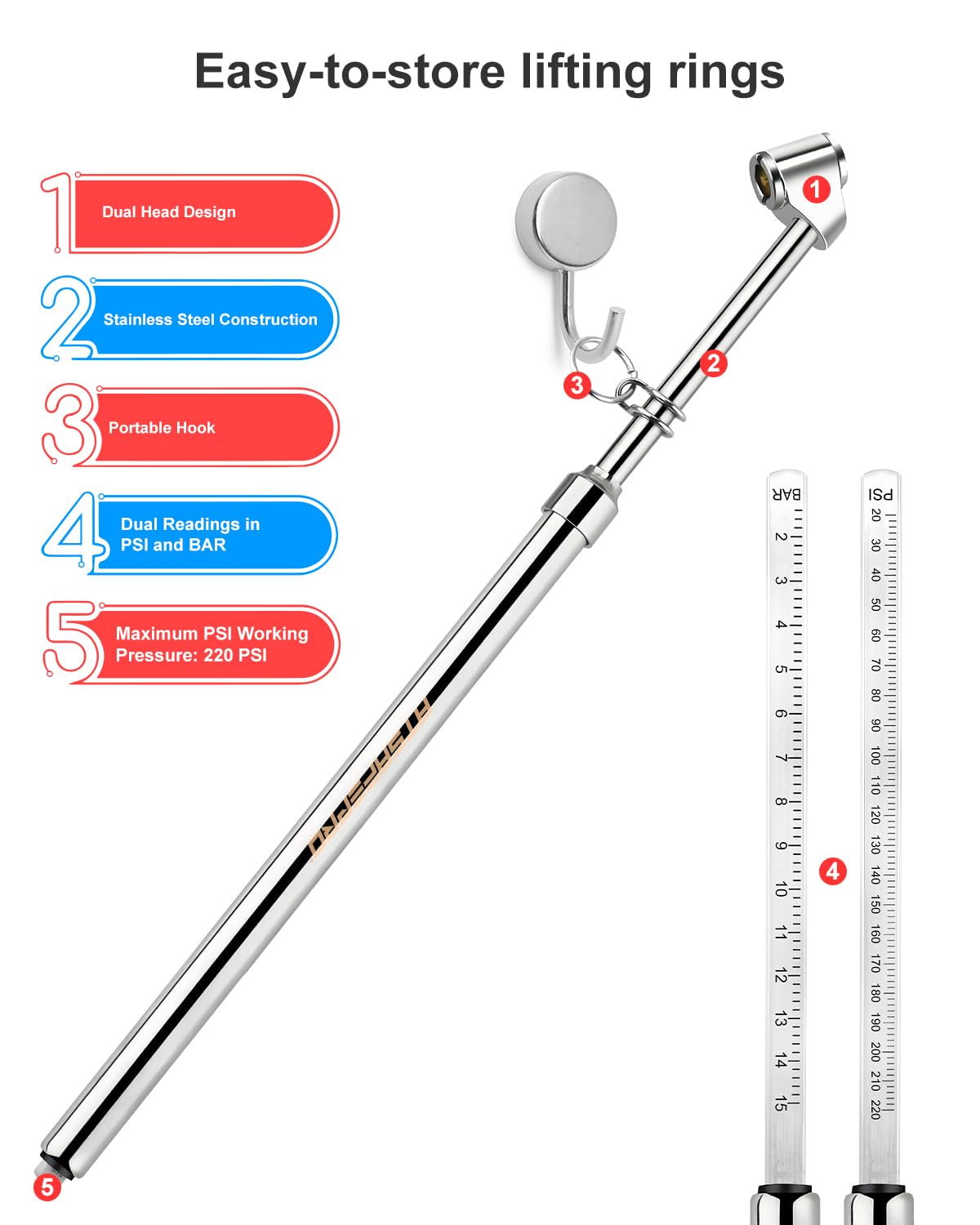
This case study looks at why a tool like this still has a place in automotive, truck, motorcycle, and general pneumatic tire maintenance. The point is not novelty. It is speed, readability, and the ability to move from check to adjustment without changing tools for every tire.
The Maintenance Problem
Any buyer who has handled tire service knows the real issue is not measuring pressure once. It is doing it repeatedly, quickly, and with enough consistency that the result can be trusted. A tire bay may check a vehicle before delivery, after service, after a road complaint, or as part of a regular fleet routine. A DIY owner may only need the tool a few times a month, but still wants something that reads clearly and survives being tossed into a toolbox.
Underinflation and overinflation both create avoidable problems. The first can increase heat, irregular wear, and rolling resistance. The second can reduce contact patch and make the tire feel overly stiff. Neither is ideal, and both are easier to prevent than to explain later. That is why a straightforward analog tire pressure gauge remains relevant, even in shops that also use more specialized equipment.
In practice, the challenge is not only the number on the dial. It is whether the tool fits the workflow. If the chuck is awkward, the body is hard to grip, or the scale is difficult to read at a glance, the operator loses time on every tire. Over a day, that time adds up.
What This Tool Appears Built to Do
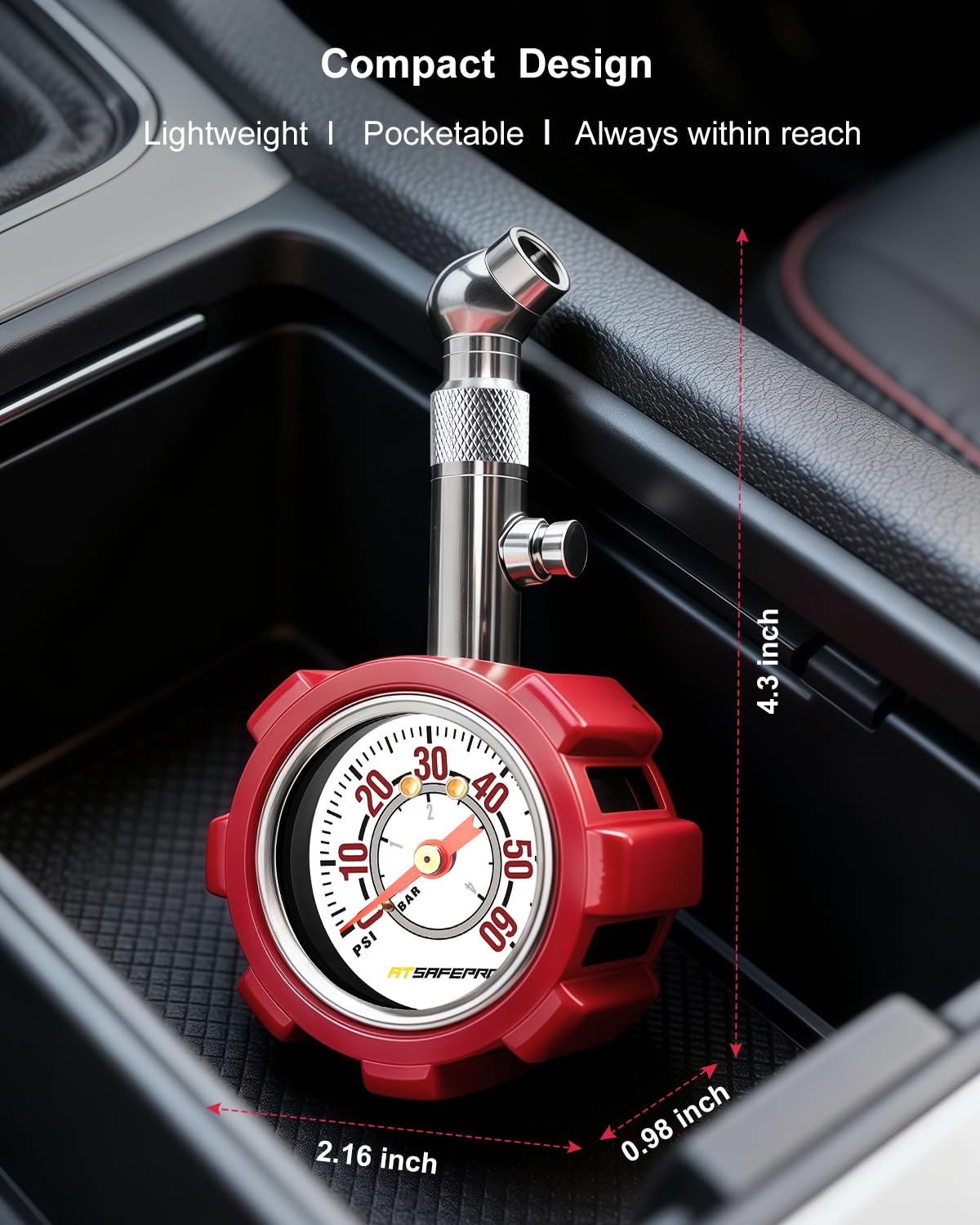
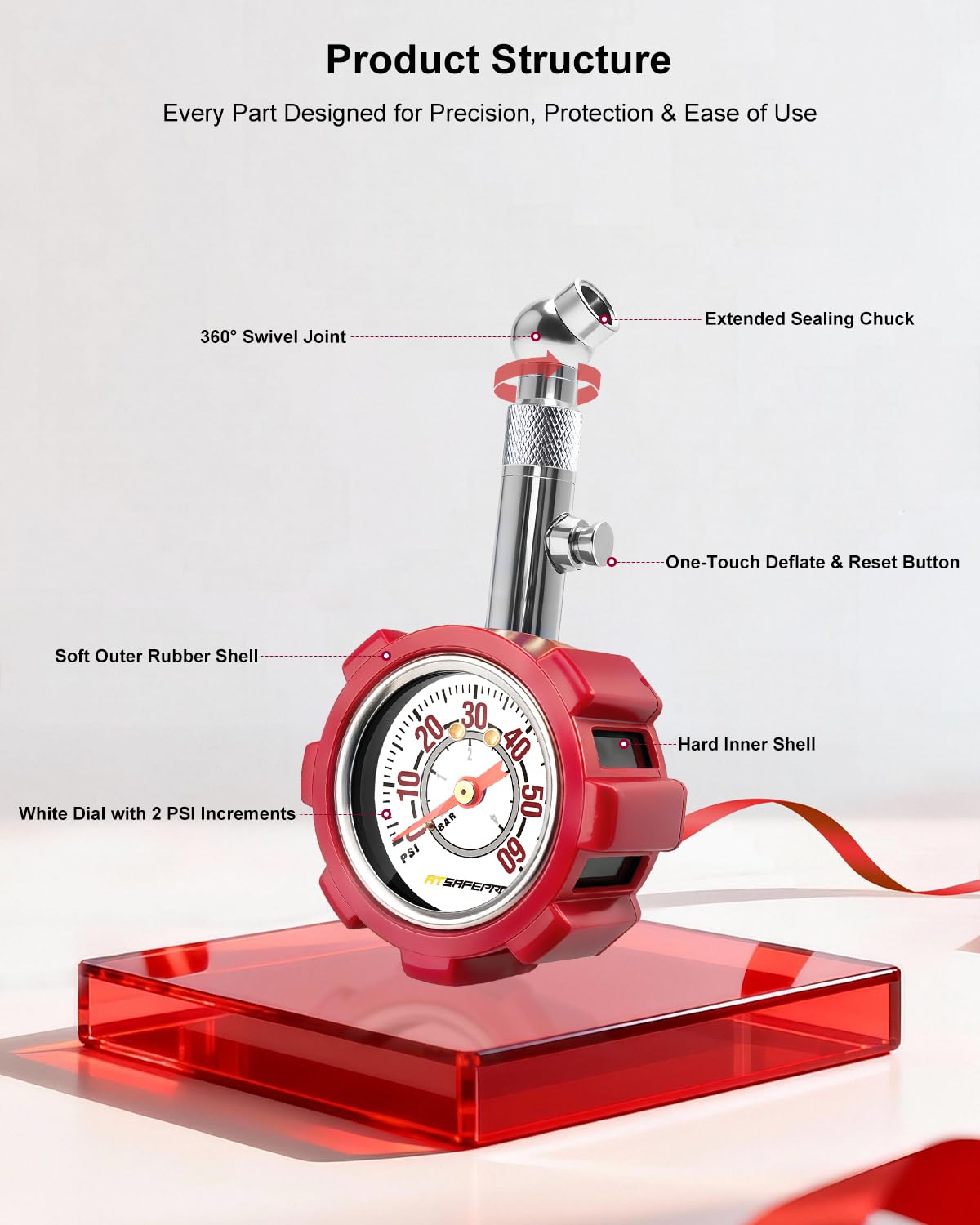
From the visible design, this tool combines the familiar job of a pressure gauge with the shape of an inflator-style service tool. The round dial face shows PSI and BAR scales, with visible PSI markings up to 60. The angled air chuck suggests easier access on valve stems that are tucked behind wheel spokes or set at an awkward angle. That is a small detail, but anyone who has tried to reach a valve in a cramped wheel well knows it matters.
The body also appears practical rather than decorative. There is a chrome-colored metal upper stem and chuck, a glossy red molded outer housing, a clear lens over the dial, and a knurled metal collar section that should help with grip. Protective ribs or bumps around the housing suggest the design is meant to handle ordinary shop use instead of sitting in a display case.
A side-mounted button or knob is visible as well. Based on the product information, it may serve as an air-release or inflation control, but the exact operating mode is not fully verifiable from the image alone. That uncertainty is worth stating plainly. Buyers should confirm how the control behaves before assuming it is a gauge-only device or a combined inflator gauge.
Why analog still makes sense
Analog tools are not automatically old-fashioned. In a working garage, they often remain popular because they are easy to read in one motion, do not depend on batteries, and are usually robust enough for rough handling. A dial can be glanced at quickly, even if the user is wearing gloves or standing in less-than-ideal lighting. For routine tire service, that simplicity is often the feature that matters most.
There is also a practical reason technicians continue to keep analog tools nearby: fewer moving parts usually means fewer things to manage. That does not make every analog gauge equal, of course. Calibration, build quality, and fit at the chuck still matter. But the format itself remains useful.
How It Fits a Real Workflow
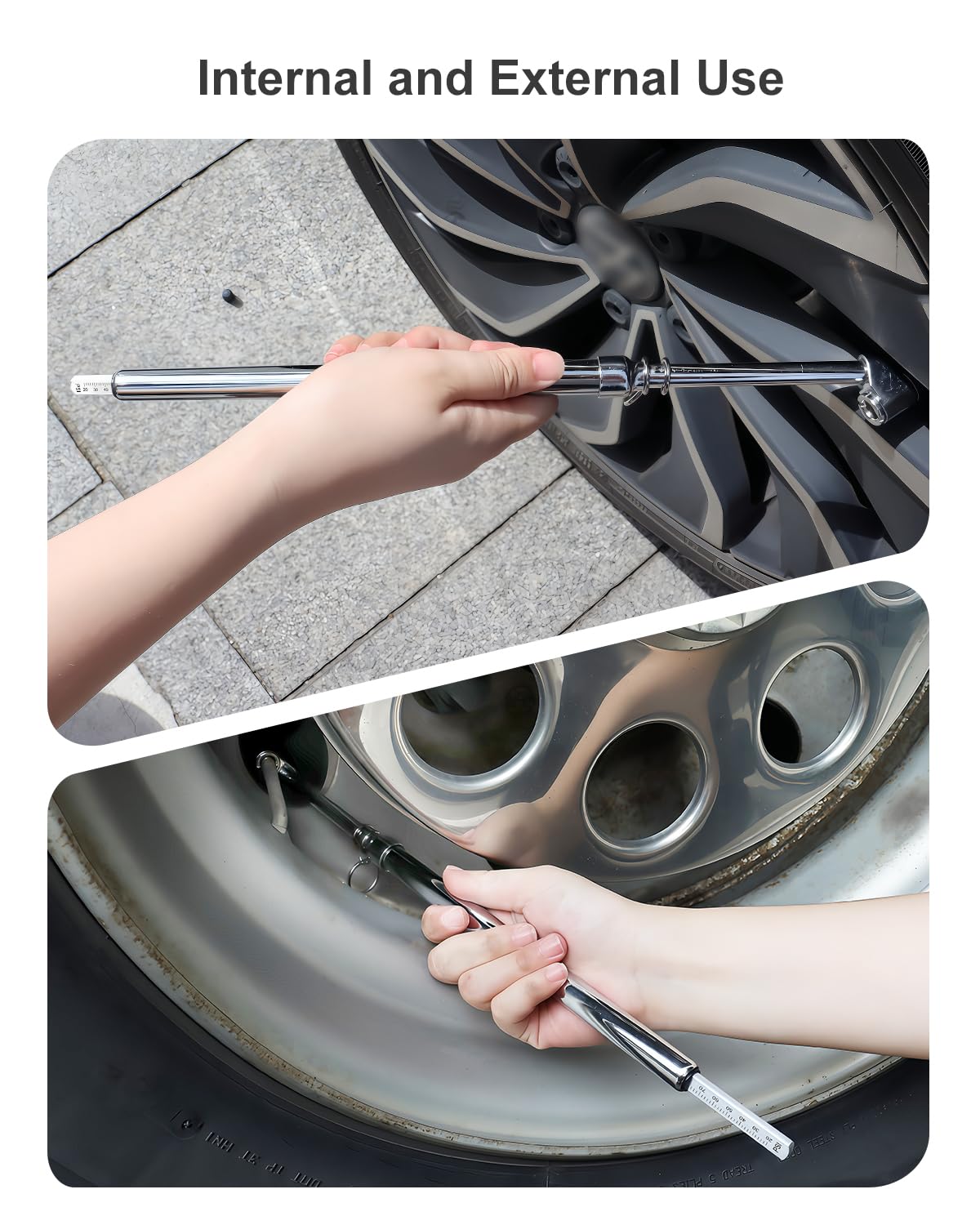
In a shop setting, the value of a tire pressure tool comes from the sequence of use. A technician approaches the valve, connects the angled chuck, reads the pressure, and then decides whether the tire needs air or a small release. If the side control is indeed a pressure adjustment feature, that could shorten the time between measurement and correction. The user would not need to reach for a separate inflator immediately after checking the tire.
That workflow matters most in jobs where repeatability counts. Fleet maintenance is the obvious example. So is motorcycle service, where access can be tight and pressure differences are felt quickly on the road. Truck applications may demand more attention to range and fit, especially if the dial scale is used across different tire types. For general automotive work, the convenience comes from not having to swap between tools for every tire.
Still, buyers should avoid assuming too much from appearance. The visible dial suggests the tool is suitable for typical low-to-moderate tire pressures, but the exact pressure range beyond the visible markings is not confirmed. If a buyer needs to service a wider range of pneumatic systems, that detail should be checked before purchase. It is a small due-diligence step that can prevent the wrong tool from landing in the cart.
What Buyers Should Verify Before Ordering
For a tool like this, the buying decision usually comes down to a few practical questions rather than a long specification sheet.
First, confirm the operating mode. Is this a pure tire pressure gauge, or a combined inflator gauge with a control button? The visible side control suggests the latter might be possible, but the exact function should be verified.
Second, check the pressure range and calibration details. The dial clearly shows PSI and BAR, which is helpful for users working across different measurement preferences. But the important point is not only whether the unit can display both scales. It is whether the visible range suits the tires being serviced.
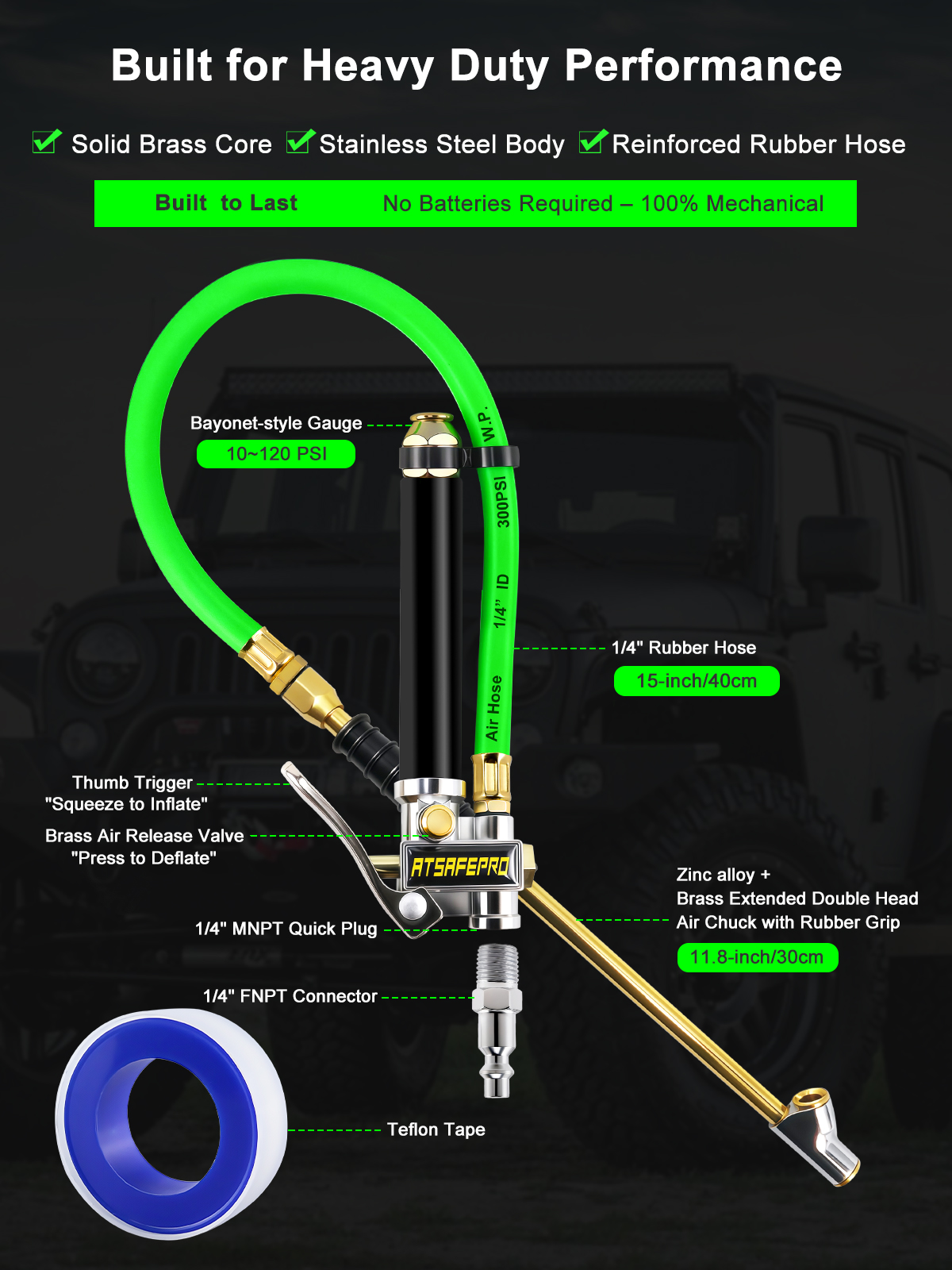
Third, review the chuck style and connection compatibility. Angled chucks are often easier to use, but the thread type, hose presence, and overall fit are not visible here. Those details matter more than people admit, especially in fleet settings where one awkward fitting can slow down a shift.
Fourth, think about the environment. A chrome-and-plastic body with a clear dial lens is a sensible combination for regular shop handling, but any gauge that lives in a truck cab, a service cart, or a busy bay should still be selected with durability in mind. A compact handheld form factor helps, yet the tool has to feel solid in the hand, not merely look solid in a product photo.
Common Mistakes in This Category
The most common mistake is buying by appearance alone. A bright housing and a polished chuck can suggest quality, but the real test is whether the tool fits the actual tire service task. Another mistake is overlooking the importance of readability. If the dial is clear only in perfect light, it is less useful than a simpler face with good contrast.
Buyers also sometimes ignore the difference between PSI and BAR users within the same operation. That can sound minor until a team works across mixed vehicle types or different regional practices. A dual-scale dial helps, but only if the markings are clear and the user knows which scale to trust for a given specification.
One more practical caution: do not assume every angled chuck behaves the same on every valve stem. Geometry matters. A head that looks convenient in a catalog image may still be fiddly on certain wheels. That is not a defect; it is just the kind of real-world issue that separates a tool that looks right from one that works right.
What Makes This Format Attractive to Different Buyers
For a garage owner, the appeal is straightforward: one compact tool that can help check pressure and, depending on the exact internal function, possibly make small adjustments on the spot. For a fleet manager, the attraction is speed and repeatability across many vehicles. For a motorcycle owner, the compact shape and angled head may be more valuable than any other feature. For a DIY user, the benefit is having a readable, no-nonsense tool that does not feel fragile.
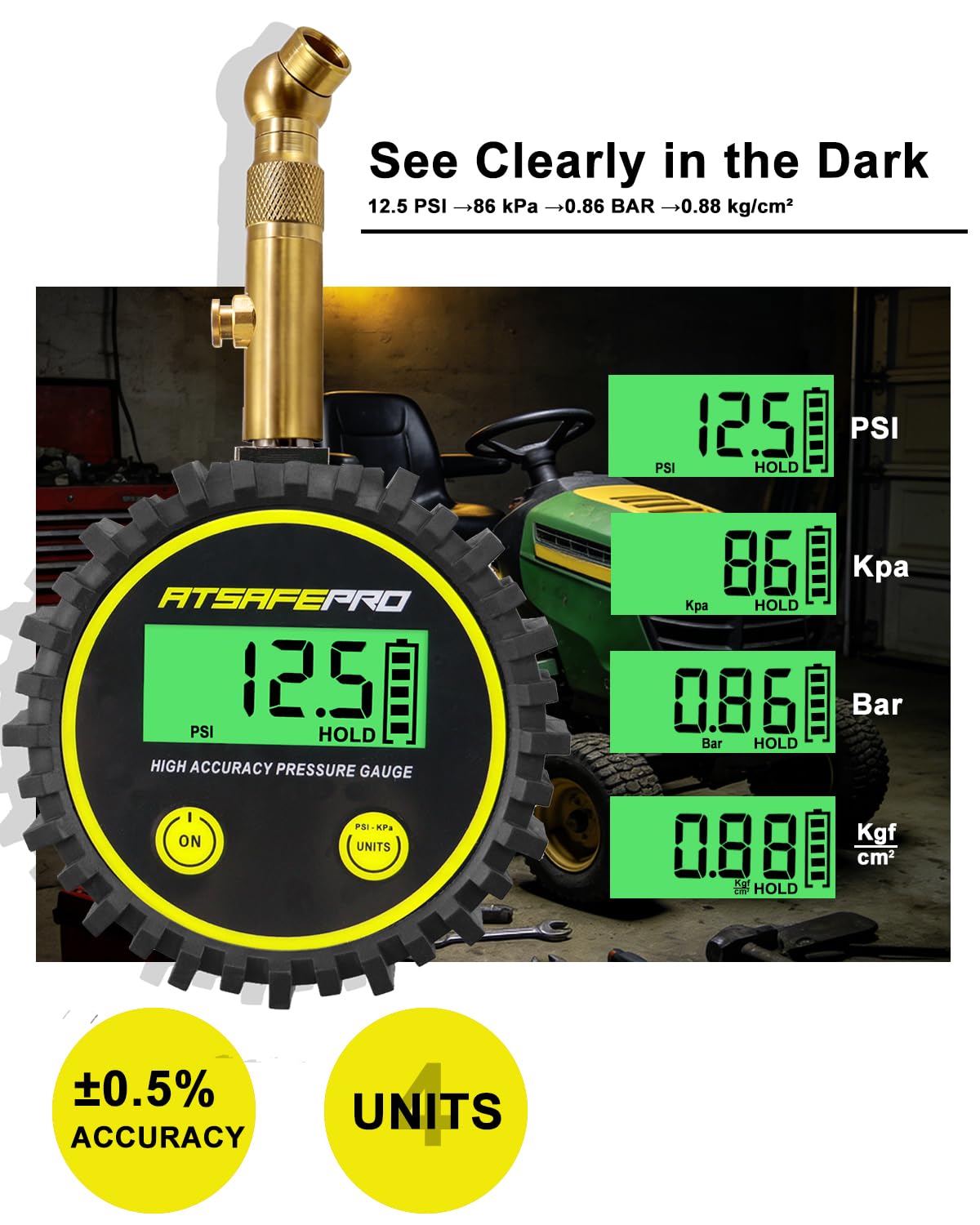
That broad usefulness is one reason the ATsafepro tire pressure gauge format is worth a closer look. It is not trying to be a digital multifunction device, and that restraint can actually be a strength. In many workshops, the best tool is the one an operator can pick up without checking a manual every time.
Practical Buyer Takeaway
If you are comparing tire service tools for a shop, truck, motorcycle bay, or home garage, this type of gauge makes sense when you want a clear analog readout, an angled chuck for tighter access, and a body that looks ready for regular handling. It is especially appealing when the priority is quick tire checks rather than a complex diagnostic workflow.
The final decision should still rest on the details that are not visible in the photo: exact pressure range, accuracy or tolerance, hose length if present, fitting type, and whether the side control is for release, inflation, or both. Those are not optional questions. They are the difference between a tool that merely looks useful and one that genuinely fits the job.
For buyers narrowing the field, the next step is simple: confirm the operating mode, verify the range, and make sure the chuck and scale match the vehicles you service most often. That short checklist usually tells you more than any polished product image ever will.