Why this kind of tool still matters
The ATsafepro tire pressure gauge sits in a familiar but still useful category: a handheld analog tire pressure gauge that also appears to function as a tire inflator-gauge tool. For workshops, tire bays, and fleet maintenance teams, that combination solves a very plain problem that never goes away. Tires lose pressure gradually, readings need to be checked quickly, and not every job calls for a digital device with batteries, menus, or a screen that gets hard to read in bright light.
That is the real reason this style of gauge continues to earn space on the bench. It is simple, mechanical, and easy to understand at a glance. When a tool is meant to be used many times a day, those qualities matter more than marketing language. The question for a buyer is not whether a gauge looks modern enough. It is whether the tool is readable, controllable, and practical in ordinary shop conditions.
What the ATsafepro tire pressure gauge appears designed to do
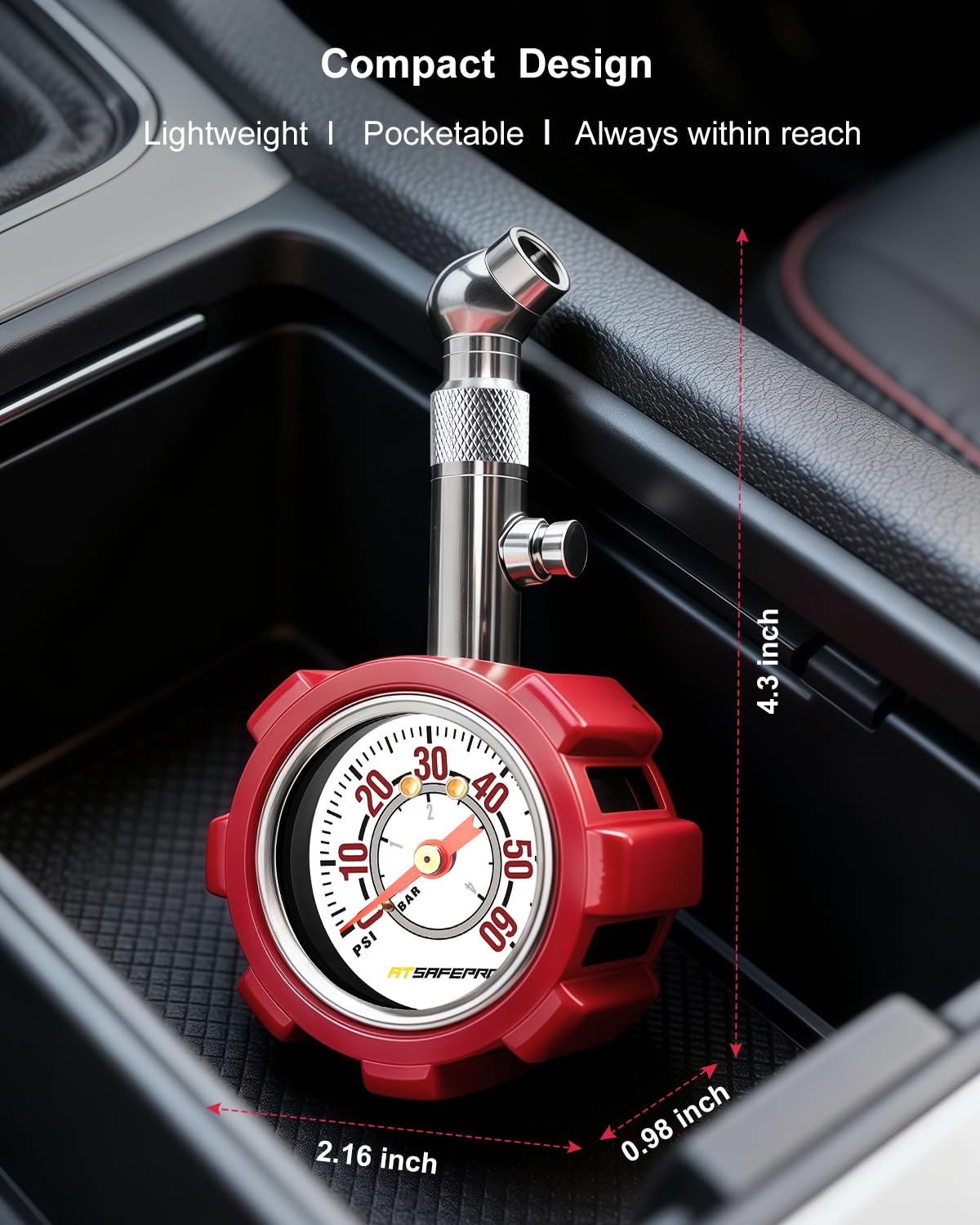
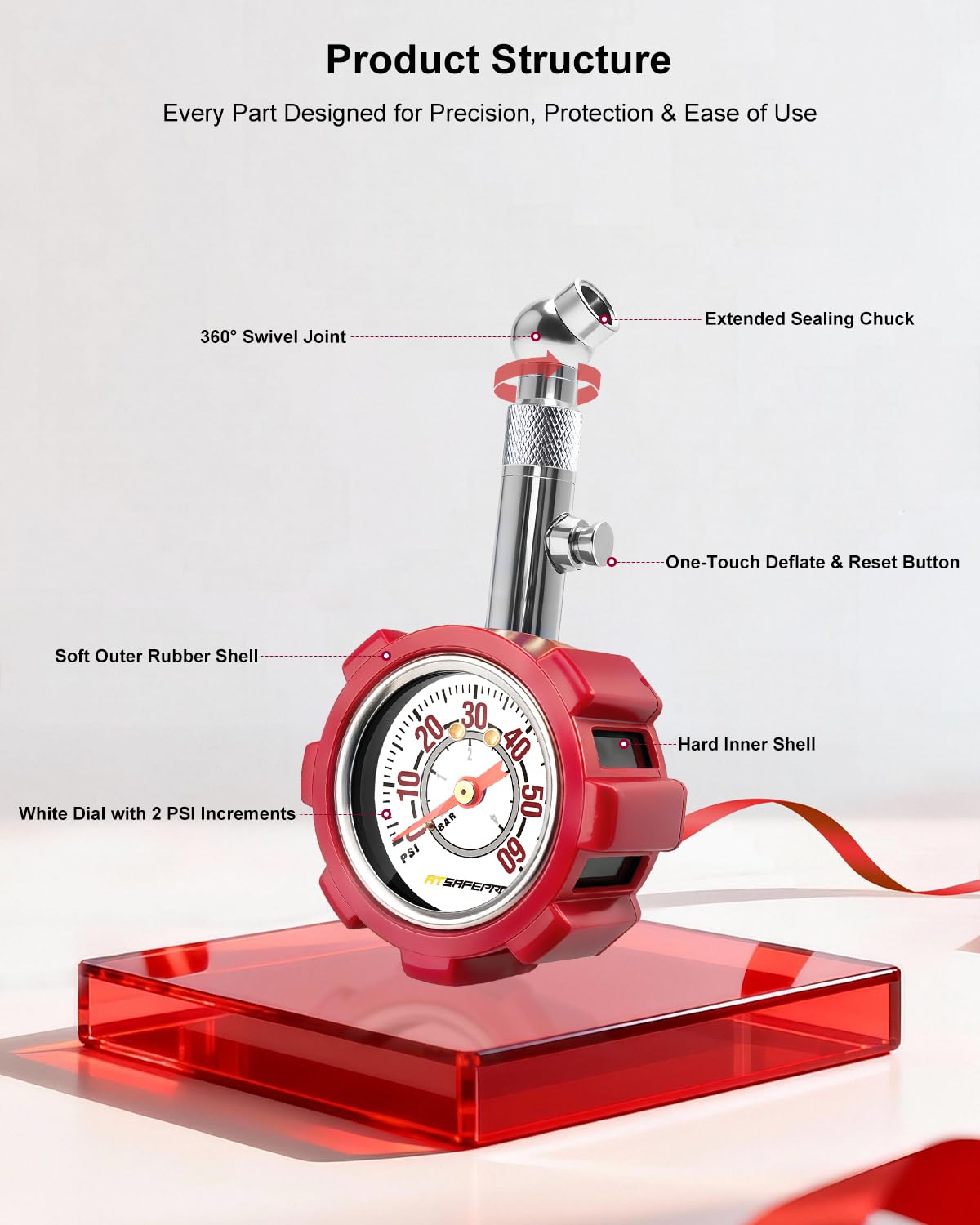
From the visible construction, this tool uses a round dial with dual units, marked in PSI and BAR, and a range that runs from 0 to 60 PSI on the face shown. The body has a chrome-colored metal upper section, a glossy red outer housing, a clear lens over the dial, and a knurled grip section for hand tightening. The angled chuck suggests easier access to valve stems in tighter positions, which is a small detail but one that technicians notice quickly.
The side-mounted button is likely a bleed or release control, which would allow the user to remove air in small increments during adjustment. That makes the tool more than a simple reader. It becomes part of the inflation process, which is helpful when a tire is slightly overfilled and needs correction on the spot. Since the exact internal design is not verified here, that function should be treated as likely rather than guaranteed.
Quick takeaways for buyers
If you are comparing this kind of analog gauge against a basic handheld checker, the main advantage is workflow. A dual-scale dial is easy to read, and an integrated control button can reduce the number of tools you reach for during tire service. For routine checks on cars, motorcycles, and light trucks, that can save time.
The compact shape is also useful. Large floor-standing inflation tools have their place, but a handheld unit is easier to store, carry, and use in service vehicles or small shops. The tradeoff, naturally, is that compact tools can feel less substantial than larger shop equipment. Buyers should pay attention to grip comfort, dial clarity, and how confidently the chuck seats on the valve.
Design details that affect day-to-day use
Readable dial
The dial face is one of the strongest visible features. Large numerals, a clear scale, and dual-unit marking help reduce hesitation during checks. In real shop use, a gauge should answer the pressure question in one glance. If a mechanic has to tilt the tool, squint at the markings, or mentally convert units, the tool has already slowed the job.
The visible 0 to 60 PSI scale is practical for many passenger-vehicle and light-duty tire applications. The BAR scale adds flexibility for users who prefer metric pressure readings or work across mixed markets. That matters more than it sounds; technicians often use whichever unit the customer, fleet, or service standard expects.
Angled chuck and side button
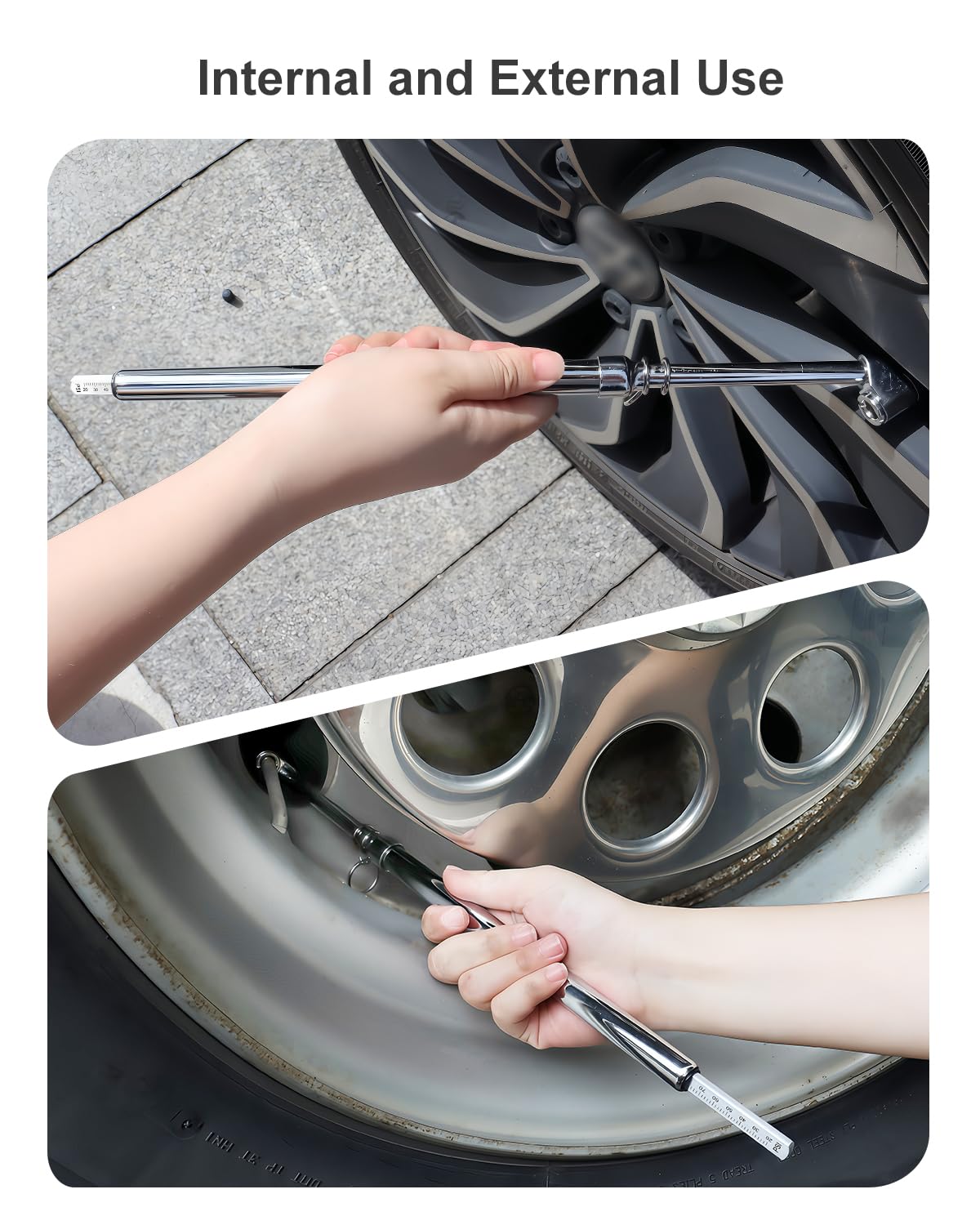
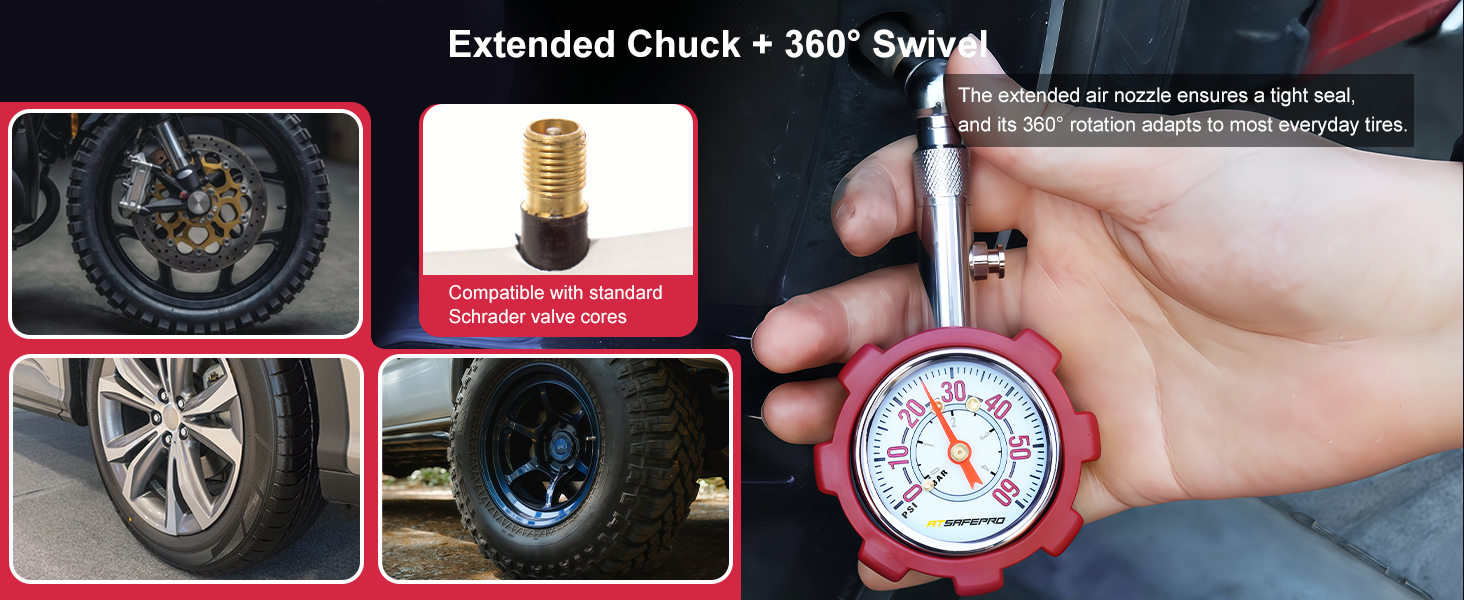
The angled connector head should help on valves that are tucked behind wheel designs or placed in awkward positions. Anyone who has tried to seat a straight chuck on a difficult rim knows how quickly a simple pressure check can become fiddly. An angled head usually improves access, though the exact feel depends on the machining and the seal quality at the valve.
The side push button is another practical feature, especially if the gauge is used for fine adjustments rather than inspection only. A release control lets the operator bring pressure down in small steps without disconnecting and reconnecting the tool. That is a modest convenience, but in shop work modest conveniences add up.
Housing and grip
The glossy red outer housing looks protective rather than decorative. Around a gauge body, protective protrusions can help shield the dial from minor knocks on a cart, bench, or workshop floor. The chrome-colored metal stem and knurled section suggest a design meant for hand tightening and repeated use.
That said, finish alone does not tell you everything about durability. An assembled industrial tool like this may combine machined or die-cast metal parts with injection-molded plastic or rubber housing, but exact materials and process details are not visible. Buyers should treat the finish as a clue, not proof of longevity. A glossy surface can still be rugged, but only if the internal build supports it.
Where this tool fits best
This type of product is most at home in automotive service shops, tire inflation stations, and routine maintenance settings. It should also suit motorcycle maintenance and light-truck tire checks, where a compact gauge is easier to maneuver than larger equipment. For operators who want a tool that both reads and helps adjust pressure, the format is especially sensible.
For occasional personal use, the case is a little different. A driver who checks pressure once a month may not need an inflator-gauge tool with a bleed button. But a user who wants one handheld device for checking and topping up tires will probably find the format convenient. The choice depends on how often the tool will actually be used and whether speed matters more than simplicity.
What buyers should compare before choosing
Even when two gauges look similar, the details can change the experience a lot. The first thing to compare is dial legibility. If the numbers can be read quickly in a dim bay or outdoors in daylight, the tool is doing its main job well. The second is the feel of the chuck. A poor connection wastes time and can make the user doubt every reading.
After that, look at how the release button behaves. It should feel controlled, not abrupt. In a real workshop, overcorrection is common when a valve is being adjusted in a hurry. A smooth bleed response is easier to live with than a button that dumps air too quickly. Also consider whether the tool feels balanced in the hand. A gauge that is awkward to hold is often left on the cart more than it should be.
One practical caution: do not assume that dual units or a larger dial automatically mean higher accuracy. Visibility improves usability, but actual measurement quality depends on the internal mechanism and manufacturing consistency. Since those details are not stated here, a buyer should verify them separately if precision is critical to the application.
Common mistakes when buying an analog gauge
The first mistake is choosing by appearance alone. A bright housing and a polished metal stem may look reassuring, but shop tools need to work repeatedly, not just photograph well. The second mistake is ignoring the connection style. If the chuck is not easy to seat, even a good gauge becomes irritating in use.
Another common issue is buying a pressure range that does not match the job. The visible 0 to 60 PSI face may be suitable for many everyday tires, but it may not fit every service need. Buyers should match the scale to the tires they actually service. Oversizing a gauge range can make the lower end harder to use; undersizing it can be obviously limiting.
There is also the human factor. Teams sometimes buy a device because it seems straightforward, then discover that no one wants to use it because it is uncomfortable, hard to read, or too slow to place on the valve. That is why tactile evaluation matters. A pressure gauge is a hand tool first and a specification sheet second.
Practical advice for sourcing teams
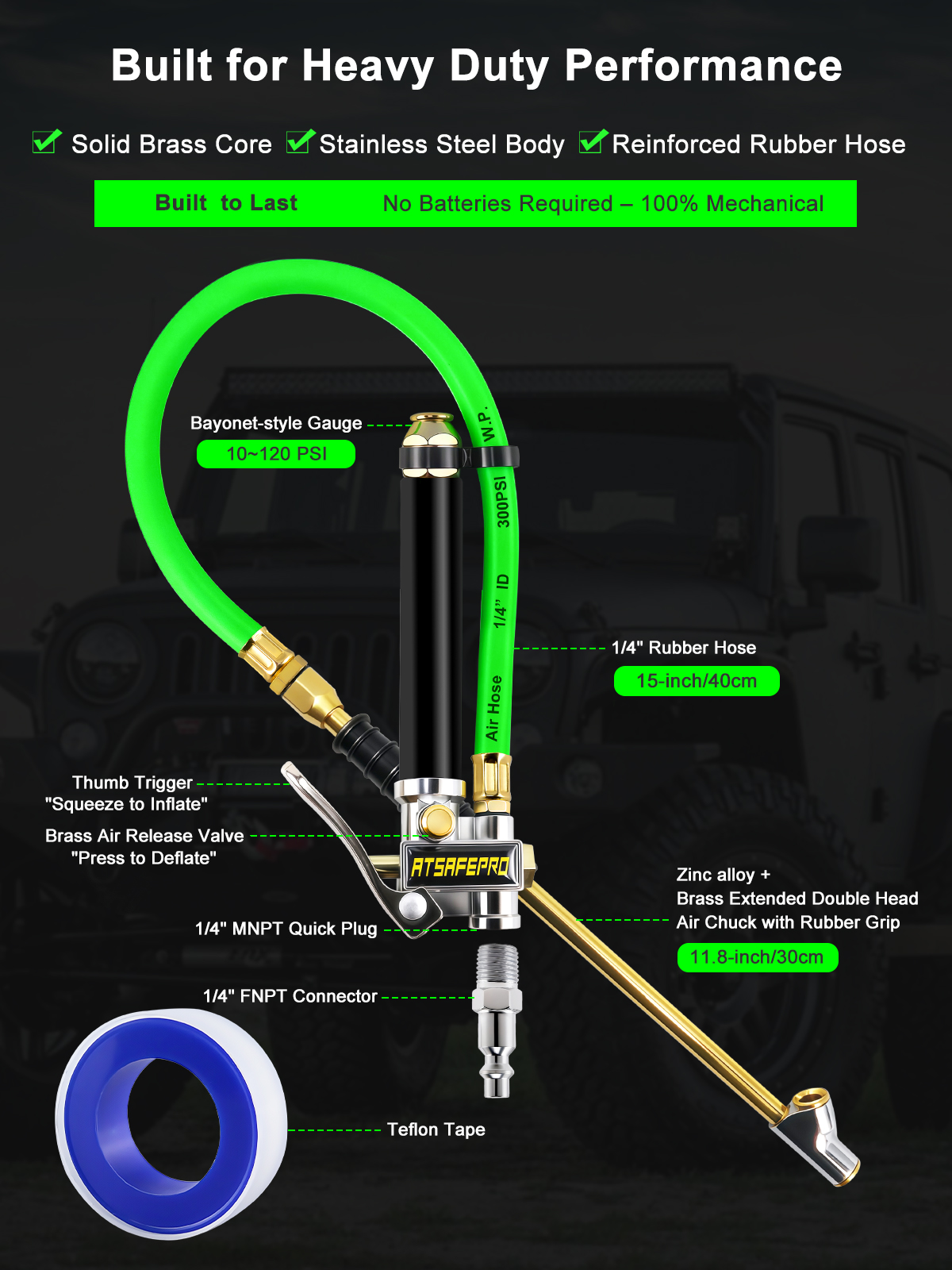
If you are sourcing this as a product line item rather than a one-off tool, ask for clear confirmation of the details that are not visible in the product photos. That includes exact measurement accuracy, internal mechanism type, hose or inlet configuration if any, and whether the tool is designed for inflation, deflation, or both. Those points change how it fits into a service workflow.
It is also smart to test how easily the dial can be read by different users. Mechanics do not all hold tools the same way, and not every workspace offers perfect lighting. A gauge that looks good in a product image may behave differently under a wheel arch or inside a busy bay. Small differences in lens clarity and marker contrast can become large differences in daily use.
FAQ
Is this mainly a pressure checker or an inflator tool?
Based on the visible side button and angled chuck, it appears to be a tire inflator-gauge style tool that can likely support pressure adjustment as well as reading. The exact function should be confirmed with the seller before procurement.
What tires is it suited for?
It appears suited for cars, motorcycles, light trucks, and similar pneumatic tires. The visible dial range suggests it is aimed at common service ranges rather than heavy-duty industrial tires.
Why choose analog over digital?
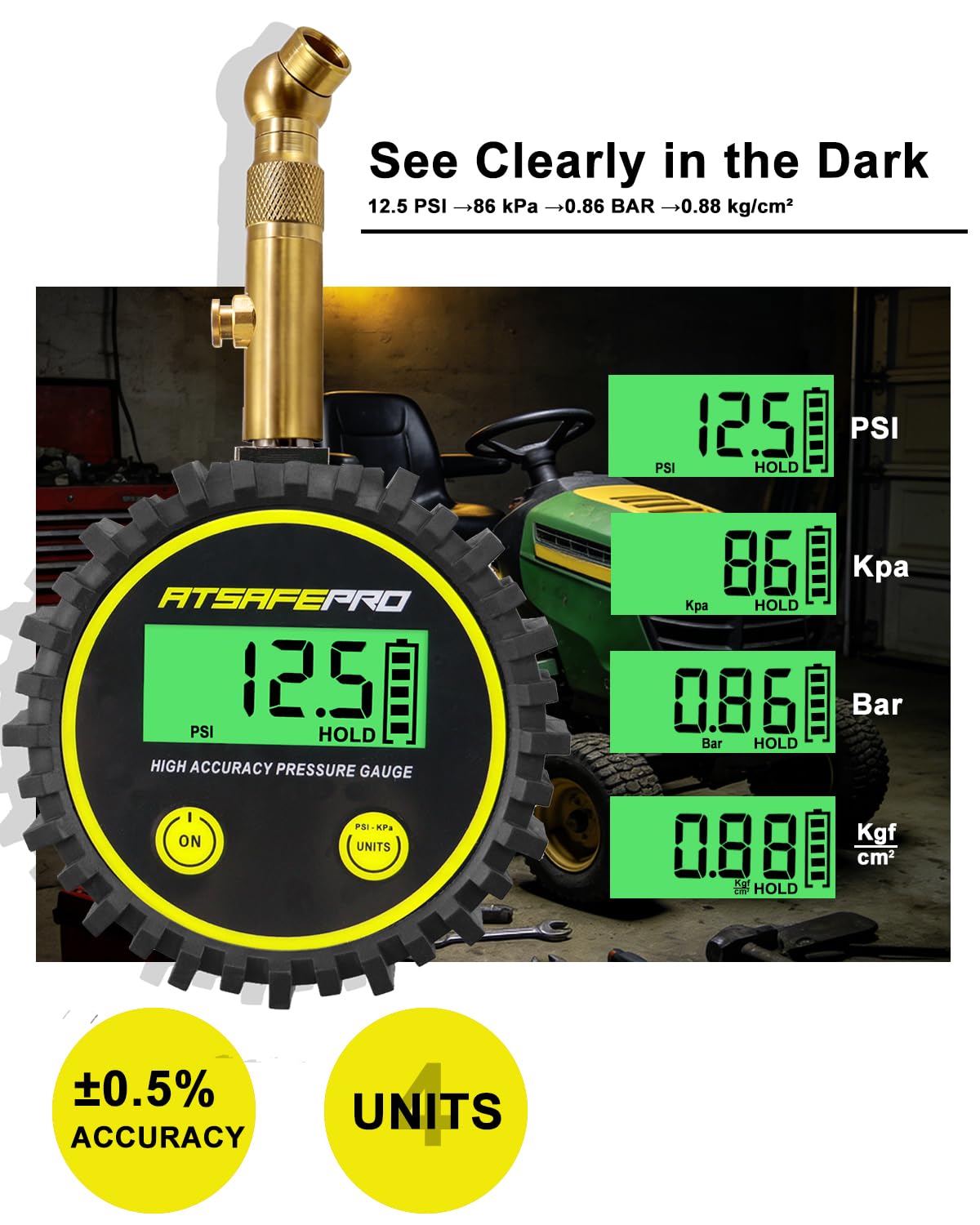
Many shops still prefer analog for its simplicity, quick visual reading, and lack of batteries. Digital tools have their place, but analog units are often easier to keep ready in high-use environments.
What should a buyer verify first?
Verify accuracy, actual operating behavior, and connection type. Those are the details that determine whether the tool is a useful shop instrument or just a decent-looking accessory.
Closing thought for buyers
The ATsafepro tire pressure gauge looks like the kind of tool that is judged best with gloves on and a wheel in front of you, not from a catalog page. Its visible strengths are straightforward: a readable dual-scale dial, a compact handheld form, an angled chuck, and a release button for practical pressure adjustment. Those are the right ingredients for a useful service tool.
If you are evaluating it for shop use, the next step is simple: confirm the unlisted technical details, then judge the tool by handling feel and workflow fit. For tire service, that usually tells the real story faster than any glossy product photo ever will.