Anyone comparing a handheld analog inflator and gauge will notice the same basic tension: you want something simple enough for routine shop use, but not so crude that every reading feels like a guess. The ATsafepro tire pressure gauge sits right in that middle ground, combining a dial gauge with an air chuck assembly for checking and adjusting pressure through a compressor hose connection. For service bays, tire shops, and anyone maintaining a few vehicles at home, that combination is often more practical than carrying separate check and inflate tools.
Why this style of gauge still matters
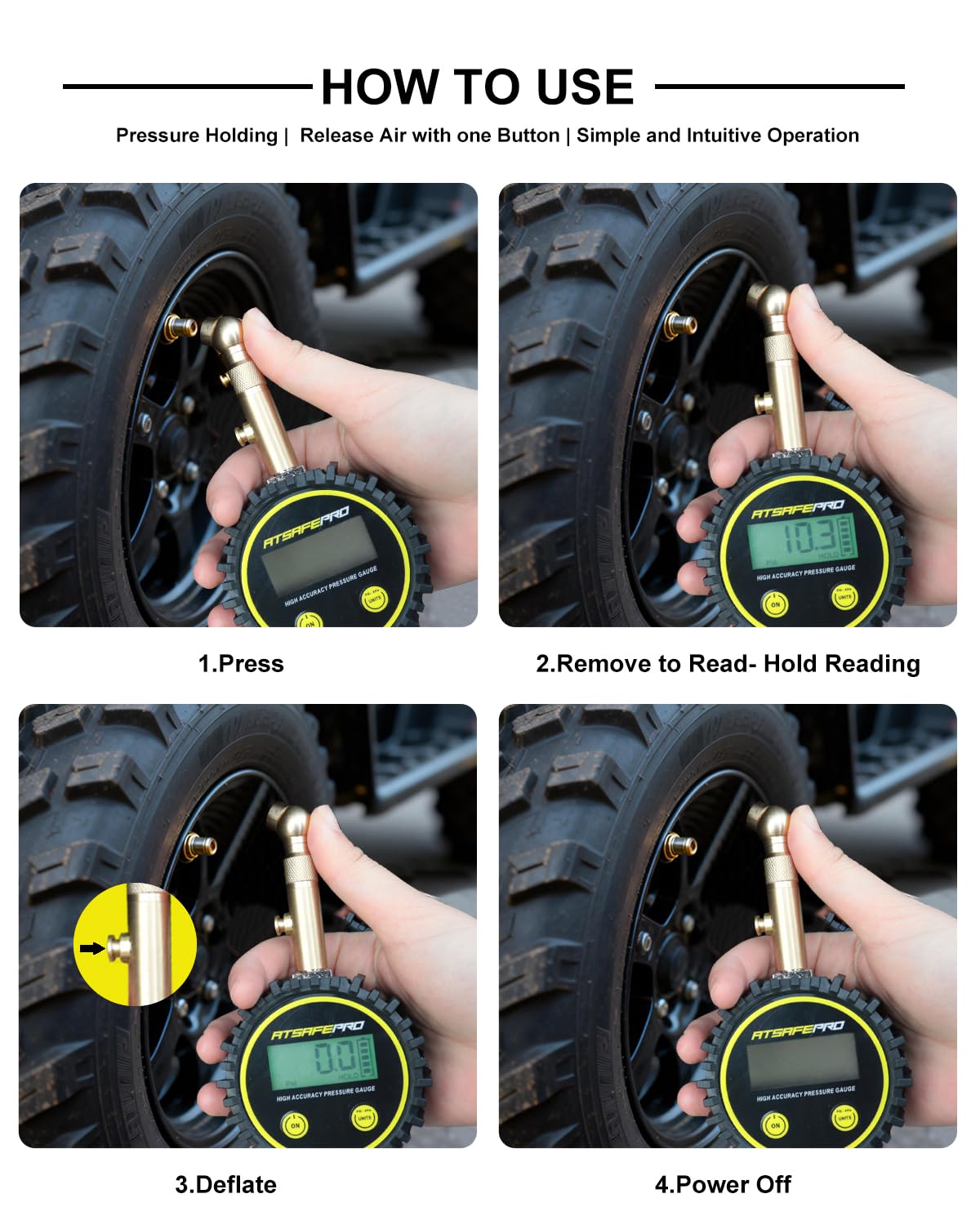
Digital tools get a lot of attention, but analog tire gauges remain in wide use for one practical reason: they are fast to read, mechanically straightforward, and easy to keep in a compressor-based workflow. When a vehicle rolls into a bay with low tire pressure, the operator usually wants one motion to connect, read, and correct the pressure without bouncing between multiple tools. That is where a gauge-and-chuck assembly earns its keep.
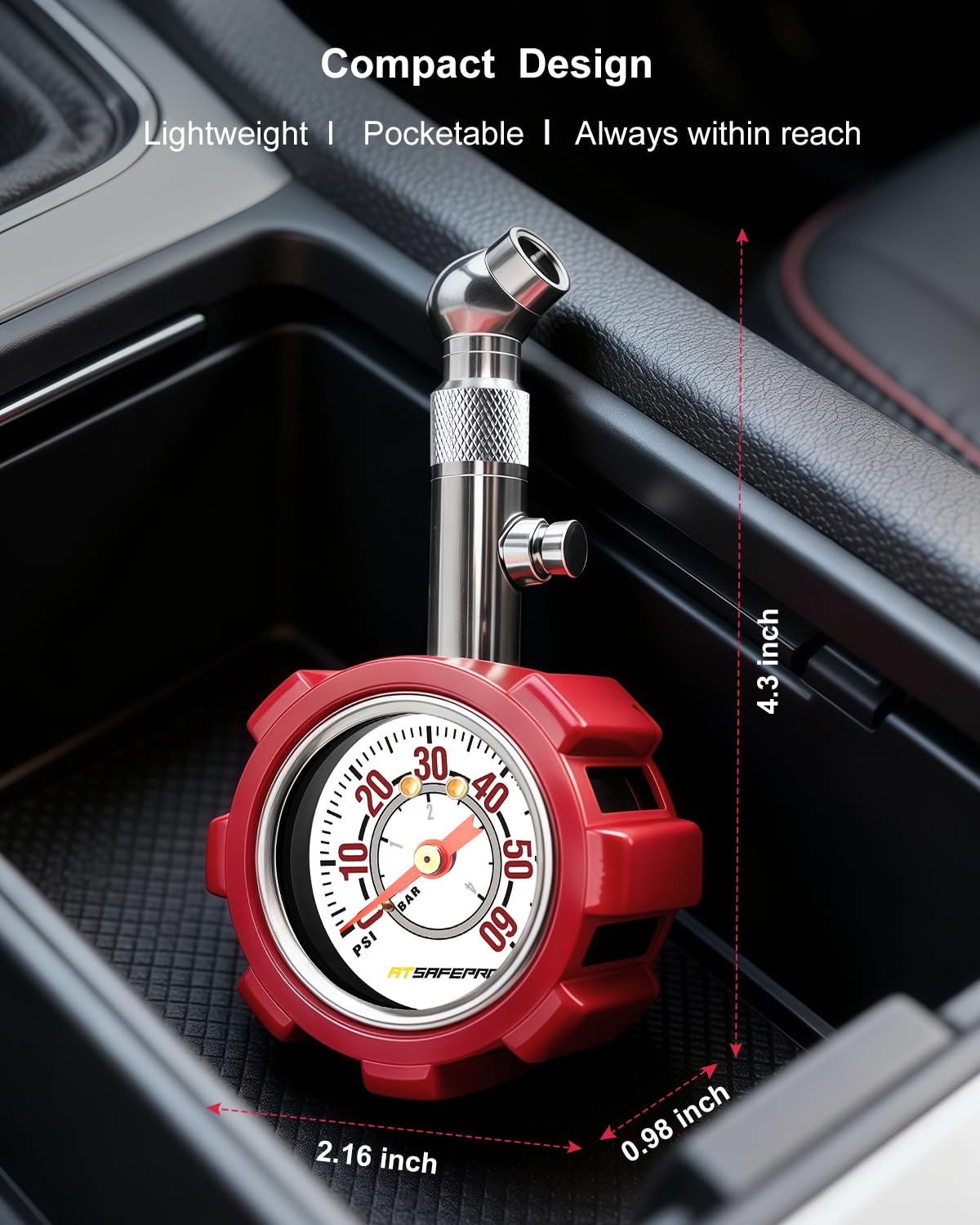
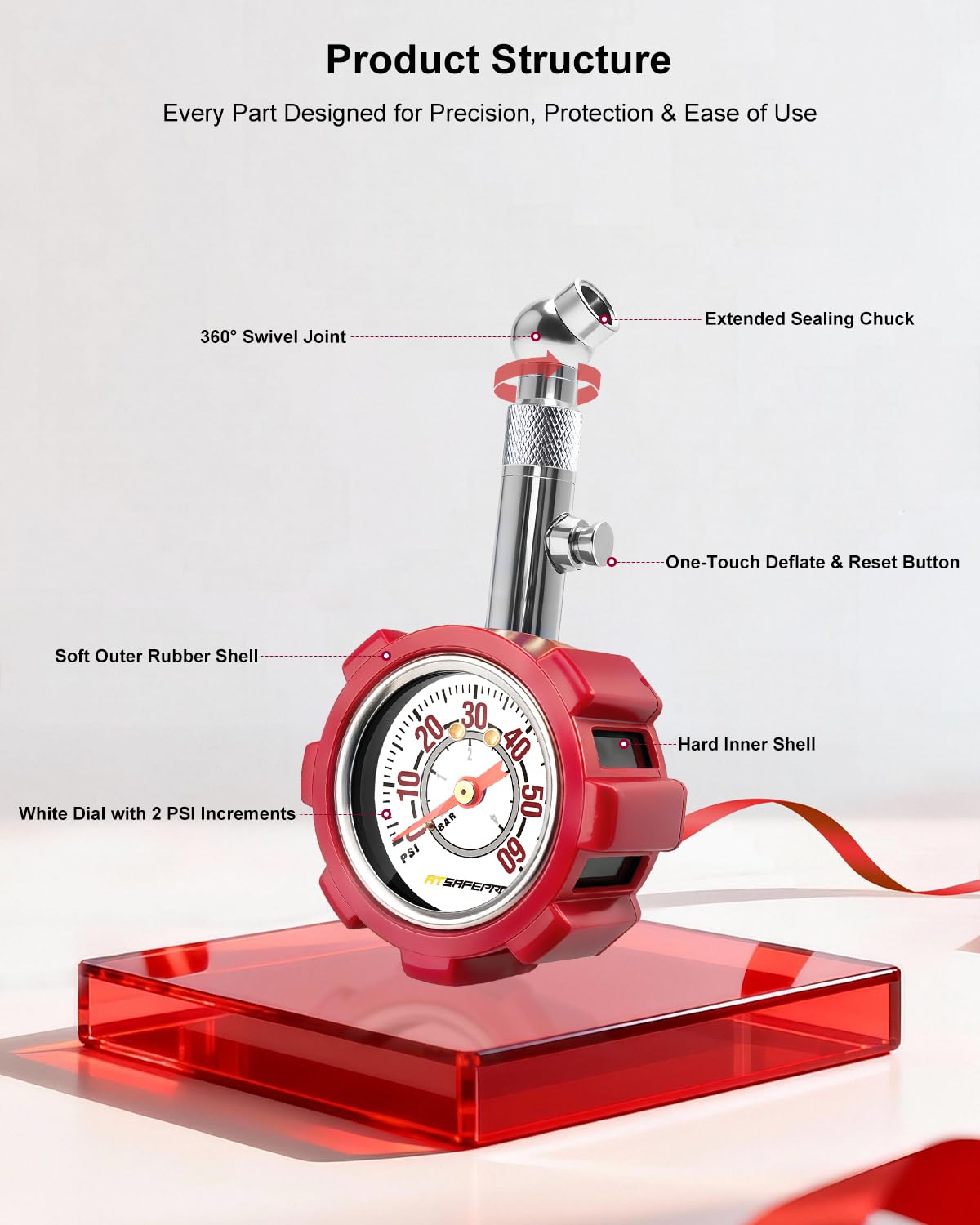
The visible design here suggests exactly that workflow. The red molded body gives the tool a familiar shop-tool look, while the polished metal stem and angled chuck head are set up for direct attachment to a tire valve. A side button or valve protrusion may help with pressure release or tool control, though the internal function is not fully visible from the product description. Buyers should treat that as a useful possibility, not a promised feature, unless the supplier confirms it in writing.
What the dial tells you, and what it does not
The gauge face is marked in PSI and BAR, with the outer scale reading to 60 PSI and the inner scale to 4 BAR. For many passenger vehicles, light trucks, motorcycles, and general garage work, that range is perfectly sensible. It covers the pressures most technicians and vehicle owners need to check without forcing them to look through a crowded high-pressure scale that is better suited to other applications.
That said, a dial range is not the same thing as a calibration guarantee. A buyer evaluating the ATsafepro tire pressure gauge should still ask the ordinary questions that matter in a shop: how the gauge is calibrated, how often it should be checked, and whether the reading tolerance is documented. Those details are not visible from the product description, and they are the difference between a handy tool and a tool you trust on every vehicle.
It is also worth noting that tire pressure should ideally be checked under consistent conditions. Tires warm up during driving, and pressure can drift with temperature. That is not a flaw in the gauge; it is just the reality of pneumatic systems. A good mechanic knows that the reading is only as useful as the context around it.
Construction clues that matter in daily use
The visible construction tells a fairly practical story. The red outer housing appears to be injection-molded plastic, which is a sensible choice for impact resistance and low-cost assembly. The metal stem and head look chrome-plated or polished, which should help with wear at the connection point and make the tool easier to wipe clean. A clear lens over the dial is also a standard but important detail, because a cloudy or easily scratched window makes even a decent gauge annoying to use.
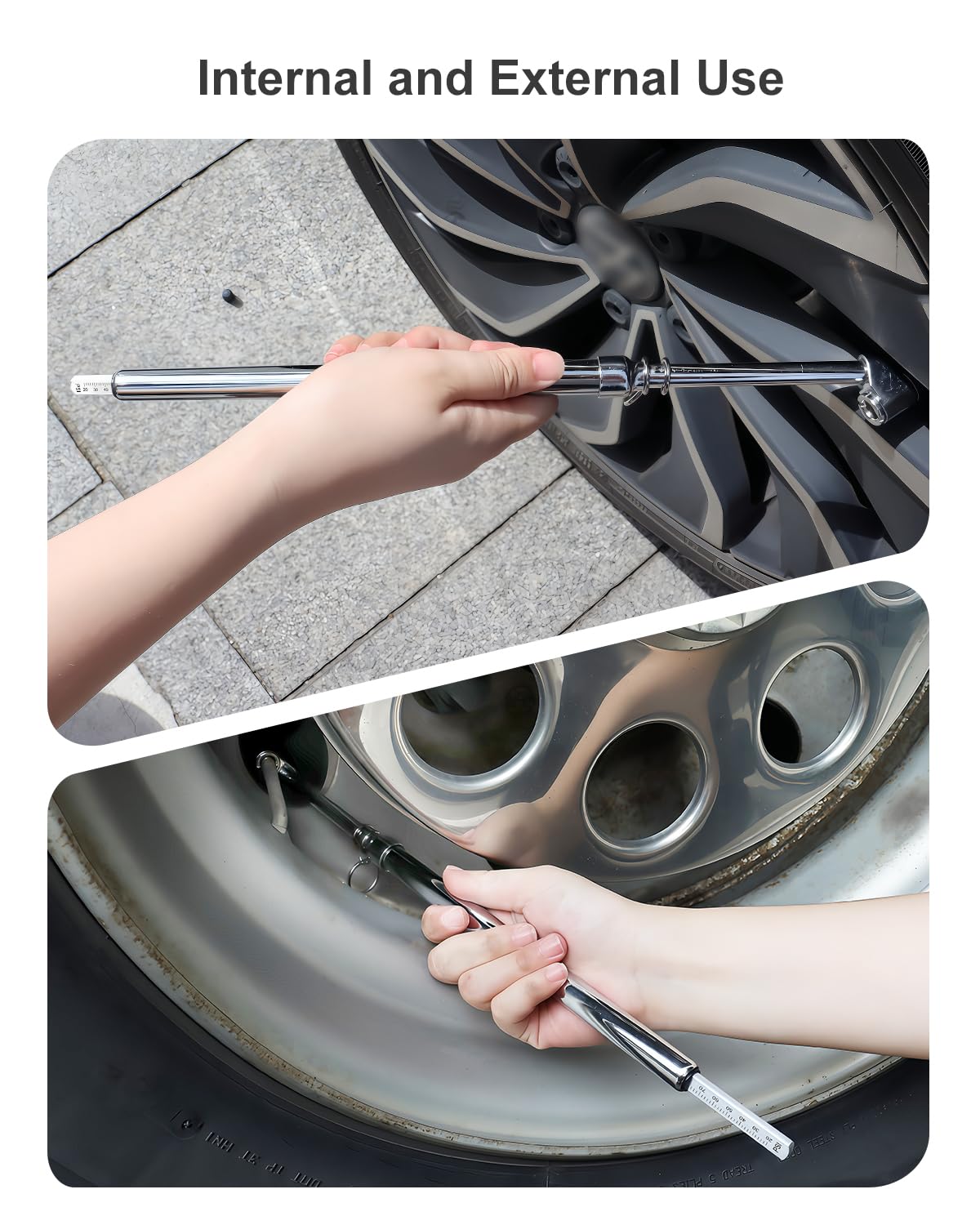
The knurled grip section on the upper stem is another small but welcome feature. Anyone who has used pressure tools in a cold garage or with gloved hands knows that grip is not cosmetic. It helps with control, especially when attaching the chuck to a valve stem at an awkward angle. These are not glamorous details, but they are the features that separate a tool people keep from one they misplace in the bottom of a drawer.
One caution: a robust-looking shell does not tell you everything about internal durability. The mechanism inside an analog gauge is doing the real work, and that mechanism is not visible here. If the tool will be used all day in a tire service operation, buyers should ask about serviceability, replacement parts, and how the internal movement is protected from contamination.
Where a combined gauge-chuck tool fits best
The ATsafepro tire pressure gauge is best understood as a workflow tool. It suits service bays where speed matters, auto repair shops that need a general-purpose inflation accessory, and personal garages that already rely on an air compressor. It also makes sense for light-duty fleet maintenance, where quick checks across multiple vehicles are more important than collecting formal test data.
For passenger vehicles, motorcycles, and light trucks, a gauge with a dual PSI and BAR face is usually easier to live with than a single-unit tool. Mechanics and shop owners often work across brands, imported equipment, and different service references, so having both scales on the dial reduces friction. It sounds minor until someone is trying to top off tires while reading a spec sheet, a service tag, and a compressor all at once.
Still, one size does not fit every application. If the job regularly involves unusually high pressures, specialized industrial tires, or a formal quality-control environment, this kind of tool may be too general-purpose. That is not a criticism; it is simply the line between a practical garage instrument and a calibrated industrial measuring device.
How buyers should compare it with other options
When comparing any analog tire gauge, the real decision is not just shape or finish. The buyer should look at four things: readout clarity, connection quality, pressure range, and confidence in the measurement itself. A clean dial with clear markings matters because a technician has only seconds to read it. A solid chuck matters because air loss at the connection can create false impressions. A sensible pressure range matters because the needle should live in the part of the scale people actually use. And documented accuracy matters because the entire tool exists to answer one question: what is the tire pressure right now?
The ATsafepro tire pressure gauge appears to address the first three reasonably well from its visible design. The remaining question is the one buyers should never skip: how precisely does it read, and under what standard? If the supplier cannot answer that clearly, the tool may still be useful, but it should be purchased with the right expectation. In a workshop, expectations are as important as hardware.
Selection points worth asking before purchase
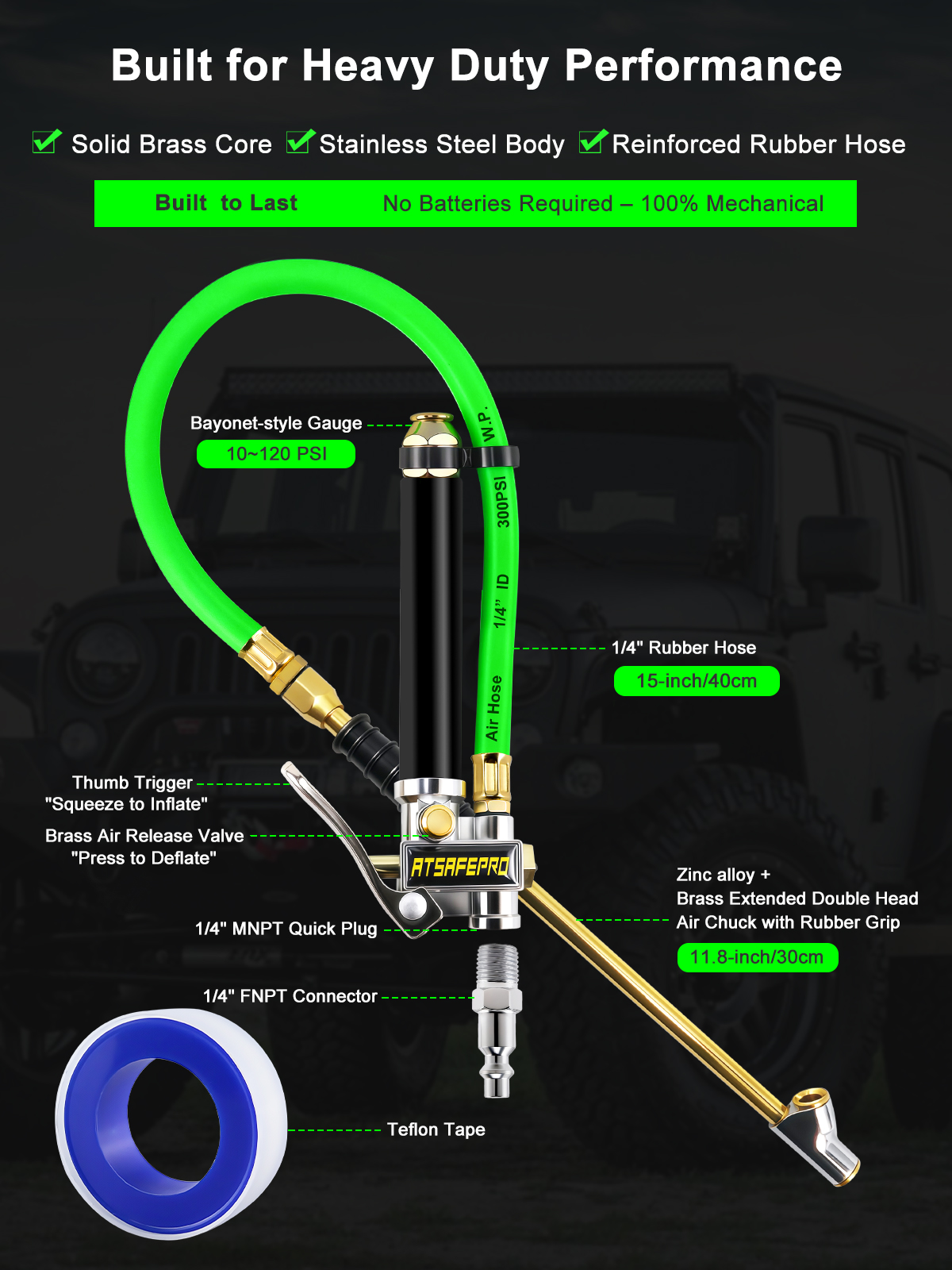
Does the chuck fit the compressor and valve setup you already use? Is the dial easy to read in low light? Does the tool include a bleed function, or does pressure adjustment require a separate step? Is there any published calibration standard? These are not fussy questions. They are the questions that determine whether a tool speeds up work or creates another small bottleneck on the bench.
Common mistakes with analog tire gauges
The most common mistake is treating any pressure gauge as interchangeable with any other. Two dials can look almost identical and still behave differently under real-world use. Another mistake is pressing too hard or too lightly when connecting the chuck, which can distort the reading or let air escape at the seal. A third is relying on a reading taken at the wrong time, such as immediately after a long drive, without accounting for heat.
There is also a buyer-side mistake: choosing based only on appearance. The red housing and chrome stem are useful, but they do not tell you how the gauge will age after hundreds of valve connections. Buyers should think in terms of use cycles, not just first impressions. That is especially true in service operations, where tools do not live on a shelf for long.
FAQ
Is this tool only for cars?
No, not based on the available product description. The visible scale and listed applications suggest it is suited to passenger vehicles, light trucks, motorcycles, and general workshop compressor use. For specialized or industrial tires, buyers should verify suitability before ordering.
Does the gauge show both PSI and BAR?
Yes. The face is marked in both units, with the outer scale up to 60 PSI and the inner scale up to 4 BAR.
Can I assume it is highly accurate?
No. Accuracy, calibration class, and testing standard are not provided in the available information, so that should be confirmed with the supplier.
Is it suitable for daily shop use?
Likely yes for general bay work, based on its combined gauge and chuck layout. But daily use is hard on any tool, so the real test is whether the internal mechanism, seal quality, and connector fit are documented well enough for the volume you expect.
What a sensible buyer should do next
If you are considering the ATsafepro tire pressure gauge for a workshop, the next step is not to overthink the housing or the color. It is to confirm the practical details that are still unknown: connector type, bleed-valve behavior, calibration status, and whether the tool is intended for light-duty service or broader industrial use. Those answers will tell you whether this is a good everyday inflation accessory or just a reasonable-looking general-purpose gauge.
For most buyers, that is the real decision. Not whether the tool looks the part, but whether it fits into the way they actually check, inflate, and verify tires day after day.