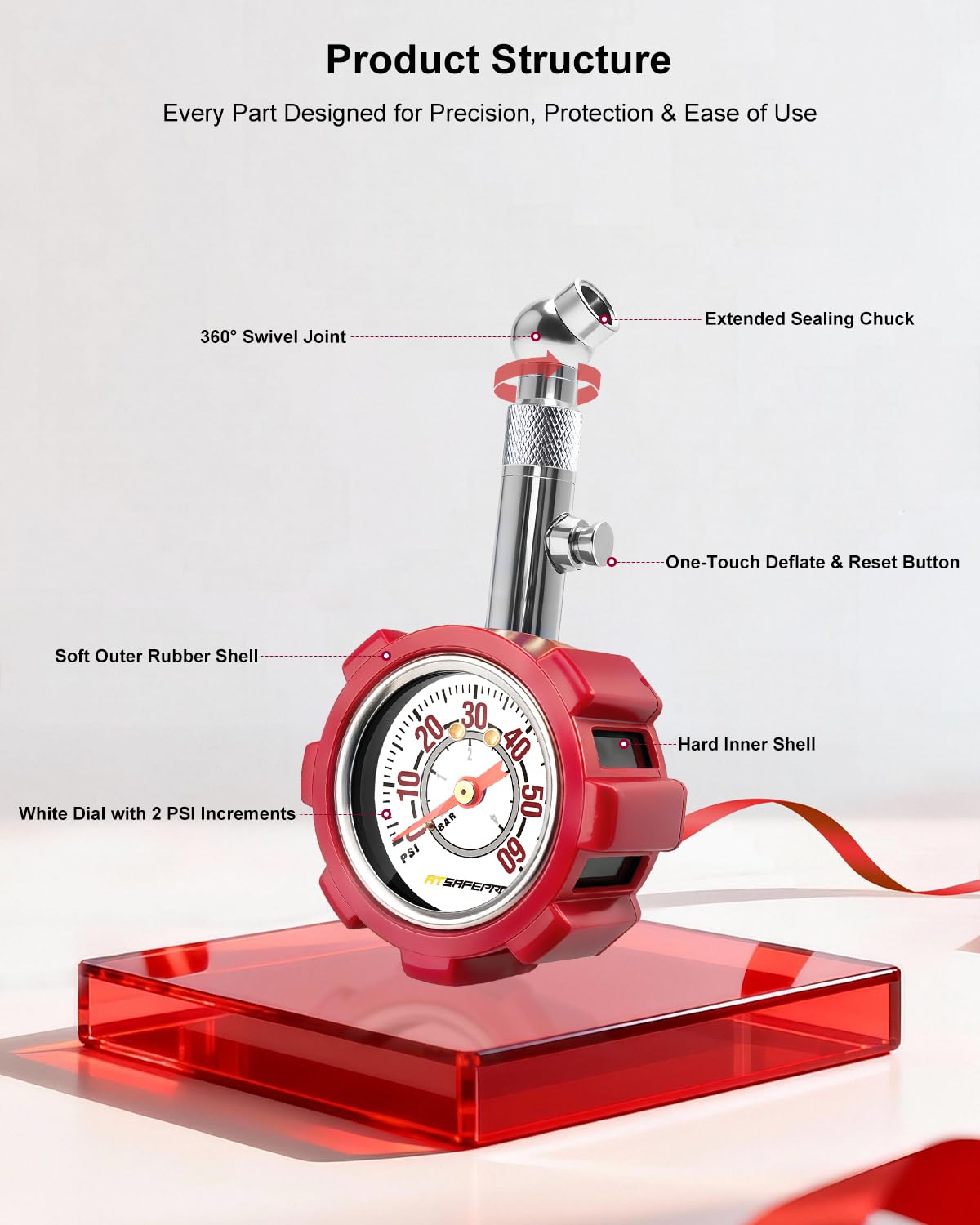
The ATsafepro tire pressure gauge sits in a useful middle ground for workshops and vehicle owners who want a straightforward analog tool for checking and adjusting tire pressure without opening a screen or navigating menus. In practice, that simplicity matters more than people admit. Tire pressure is one of those small maintenance items that can affect handling, fuel use, tread wear, and driver confidence, yet it is often checked only when something feels wrong.
For sourcing managers, garage operators, and technical buyers, the real question is not whether a tire gauge can show pressure. It is whether the tool is easy to read, durable enough for daily handling, and practical in the environments where it will actually be used. The ATsafepro tire pressure gauge appears designed for that sort of routine service work, with a compact handheld form, a visible dial face, and a mixed-material build that suggests a balance of grip, protection, and mechanical robustness.
What the tool is trying to solve
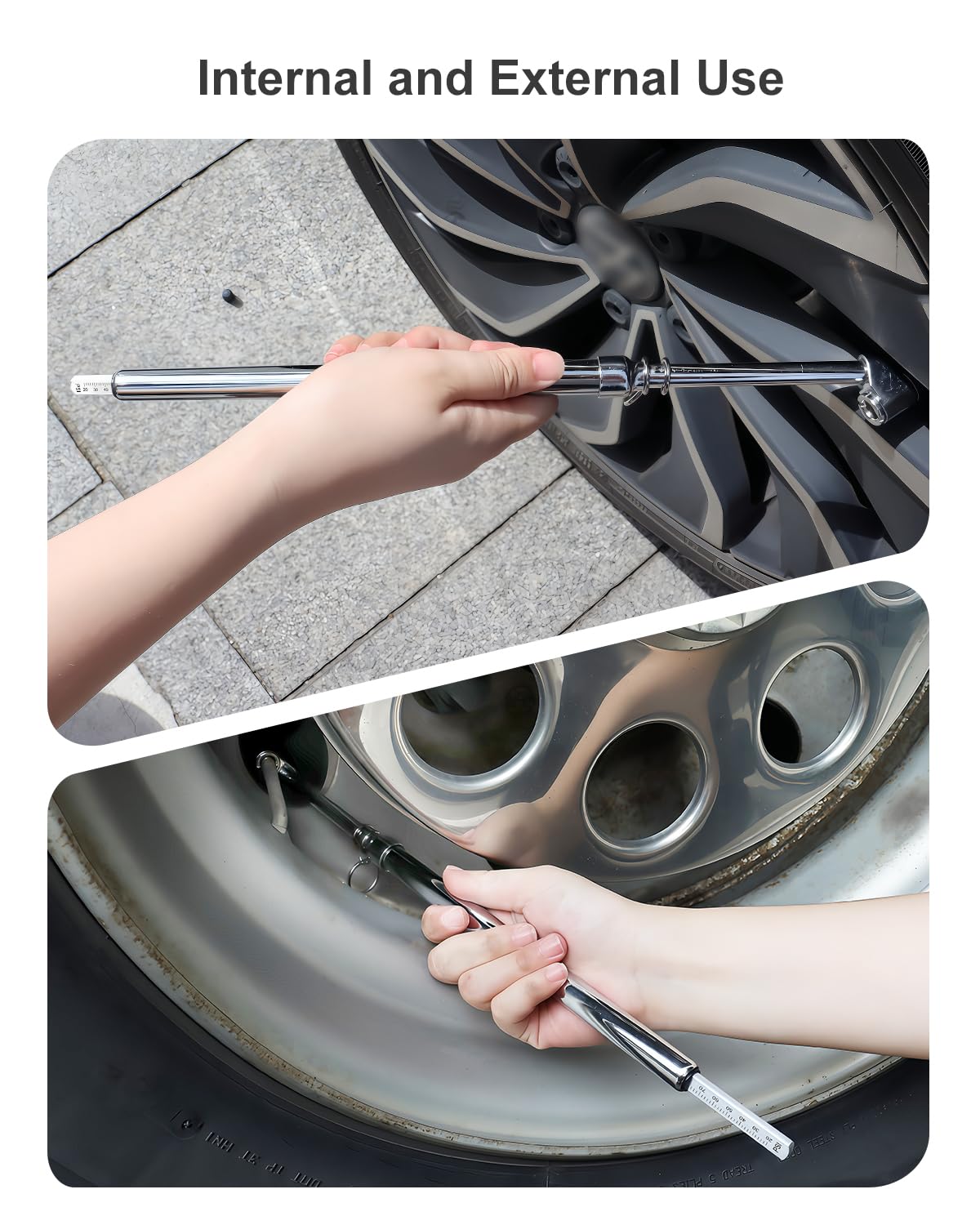
At a basic level, this type of analog gauge answers a simple need: check tire pressure quickly, then inflate or release air as needed. That sounds ordinary until you consider the range of settings where it gets used. In a busy service bay, a tool may be passed from hand to hand, dropped on concrete, or attached to valves in poor lighting. On a roadside check, it may be used with cold fingers and no bench nearby. In a small workshop, it may be pulled out just to confirm whether a vehicle is road-ready.
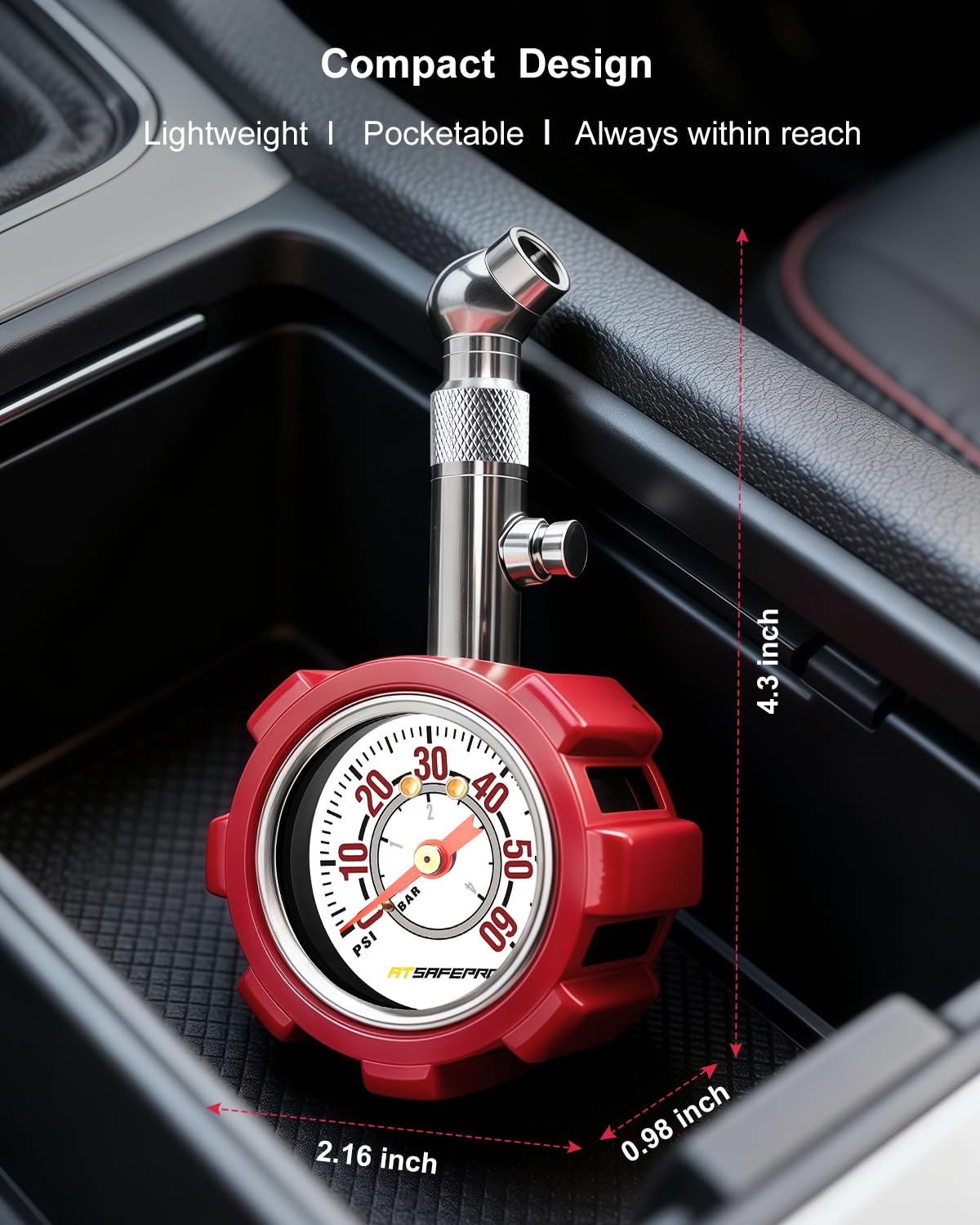
The visible design cues on the ATsafepro tire pressure gauge suggest a tool aimed at exactly those conditions. The red molded outer housing should improve handling and visibility. The polished metal body and chuck point to a more rigid connection than a purely plastic tool. The clear lens over the dial helps protect the markings while keeping the face legible. None of that makes the gauge magical, but it does make the day-to-day job easier.
Visible features that matter
From the product details available, a few features stand out immediately. The dial uses dual PSI and BAR markings, which is useful in workshops that serve mixed vehicle fleets or teams that work across different measurement habits. The outer scale appears to go to 60 PSI, which fits common passenger-car and light-duty tire checks, though buyers should not assume any capability beyond what is visibly shown.
The structure also matters. The gauge has a round face with a large bezel, a vertical cylindrical stem, an angled top connector, and a side control/button. That combination usually signals a tool meant not only for checking pressure but also for supporting inflation or pressure release through the chuck and control point. If that is the intended function, it can reduce the number of separate tools on the bench. Still, the exact connection style, hose length, and valve compatibility are not specified here, so procurement teams should confirm those details before ordering at scale.
Where an analog gauge still makes sense
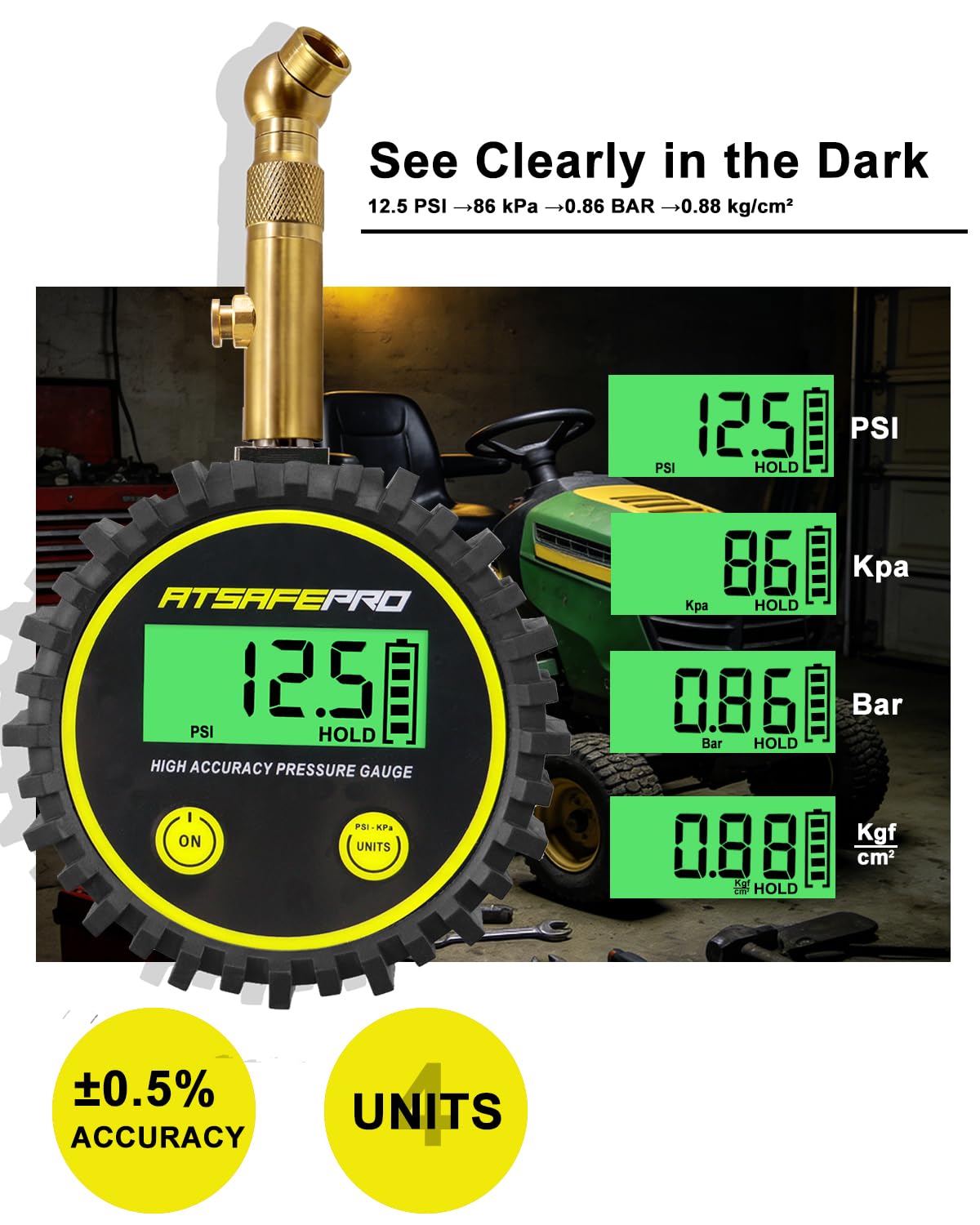
Digital tools get a lot of attention, but analog gauges keep their place for practical reasons. They are often quick to read at arm's length, do not rely on batteries, and tend to survive rough handling better than more delicate electronic units. For service teams that need a simple, repeatable check rather than data logging, that is enough.
The ATsafepro tire pressure gauge also fits a broad set of uses: cars, motorcycles, bicycles, small utility vehicles, and general workshop air-pressure checks. That versatility is useful, but it should be treated carefully. One gauge can serve several applications only if the pressure range, valve fit, and operator technique are appropriate. A bicycle application may involve lower pressures than a passenger car tire, while light utility vehicles can demand different handling altogether. This is not a problem with the tool; it is a reminder that one gauge rarely solves every use case equally well.
How buyers should evaluate a tool like this
When comparing analog tire gauges, the first thing to look at is not the marketing line but the dial itself. Readability is everything. A gauge that looks attractive on a product page can still be frustrating in a dim garage if the markings are too small or the needle is hard to see at a glance. The visible face on this model appears intentionally simple, which is usually a good sign.
Readability and scale
Dual-scale PSI/BAR labeling is practical, especially for teams that work with mixed documentation or international sourcing. The visible 60 PSI outer scale should cover a lot of routine work, but buyers should verify whether that range aligns with their vehicles or service targets. If your application includes higher-pressure tires or specialty equipment, a different gauge may be more appropriate.
Durability and handling
The red molded housing, knurled grip section, and metal fittings suggest a tool built for manual use rather than occasional display. In a workshop, that is worth more than a polished spec sheet. A comfortable grip reduces slipping, and a protected lens can help preserve calibration visibility over time, even if the instrument itself is still a mechanical device that should be handled with care.
Function fit
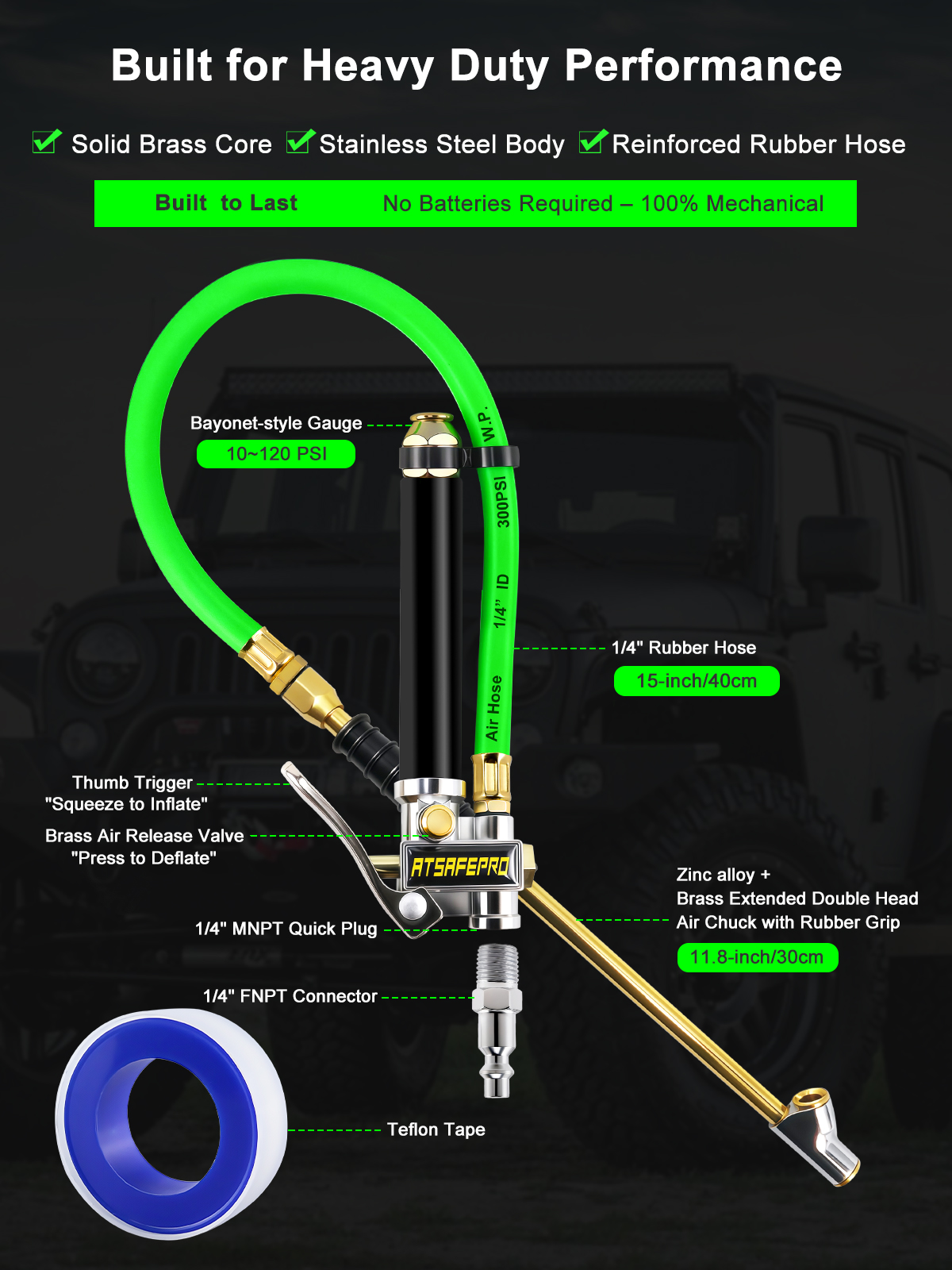
Some buyers want only a pressure check. Others want a gauge that can also support inflation or bleed-off during adjustment. The visible side control on this product implies broader function, but the exact operating sequence is not fully described. That is where a prudent buyer should ask for a sample, a datasheet, or direct clarification before committing to a production order.
Common mistakes with tire pressure tools
One common mistake is treating any pressure gauge as interchangeable with any job. The shape of the chuck, the scale range, and the trigger or release mechanism all affect how useful the tool feels in real use. Another mistake is assuming that a familiar dial means consistent accuracy forever. Mechanical gauges can drift with wear, shock, or contamination, so routine verification remains important in any quality-minded shop.
It is also easy to overlook operator habits. A gauge can be perfectly adequate and still produce poor results if it is not seated firmly on the valve, or if the tire is checked under inconsistent conditions. Even a good analog tool needs basic discipline: use the same method each time, check at similar tire temperatures when possible, and avoid treating a quick glance as a full maintenance decision.
Practical buying advice for sourcing teams
If you are evaluating the ATsafepro tire pressure gauge for resale, workshop use, or fleet support, the safest approach is to match the visible design to your actual job flow. For a general service counter, a compact analog gauge can be a strong fit because it is easy to issue, easy to understand, and less dependent on training than more complex devices. For a purchasing team, that can reduce friction in day-to-day use.
Ask for the details that are not visible in the image set. Confirm calibration information, valve compatibility, connection type, and whether the product is intended as a pure gauge or a gauge-inflator attachment. Those points sound minor until the first batch lands in a workshop and someone discovers the chuck does not suit the expected valve style. That sort of mismatch is expensive in a very ordinary way.
If you are stocking tools for mixed users, the dual PSI/BAR face is a small but meaningful advantage. It reduces translation errors and makes the tool more usable across teams. If your environment is harsh, the mix of molded housing and metal body may also be preferable to a fully lightweight design, though the final judgment depends on the unseen internal assembly and finish quality.
FAQ
Is this tool only for one type of vehicle?
No, the visible product description points to broad use across cars, motorcycles, bicycles, small utility vehicles, and workshop checks. The actual fit still depends on valve compatibility and pressure range.
Does the gauge show both PSI and BAR?
Yes, the visible dial includes both PSI and BAR markings, which makes it easier to use in mixed measurement environments.
Can it inflate tires as well as measure pressure?
The product structure suggests it may support inflation or pressure release through the top chuck and side control, but that should be confirmed before purchase because the exact function is not fully specified.
Is the visible 60 PSI scale enough?
For many passenger-car and light-duty checks, it may be enough. For higher-pressure or specialty applications, buyers should confirm the required range rather than assuming.
What to do next
If your team needs a portable analog gauge for routine tire service, the ATsafepro tire pressure gauge is worth reviewing as a practical workshop tool rather than a decorative accessory. The design looks aimed at quick checks, straightforward reading, and basic inflation support, which is exactly what many users want. The remaining decision is procurement discipline: verify the fit, the pressure range, and the operating details before you standardize it across a fleet or store program.
For buyers, that last step is the real filter. A tire pressure gauge only earns its place when it disappears into routine work and does not create questions. That is usually the best sign you chose the right one.