Anyone shopping for an ATsafepro tire pressure gauge is usually trying to solve a very unglamorous problem: the tire looks fine until it is not. Pressure is one of those workshop details that hides in plain sight, then shows up later as poor handling, odd wear, or a driver saying the car feels "a bit vague," which is shop language for "something is off and I would like you to guess what." A simple analog gauge can make that conversation shorter.
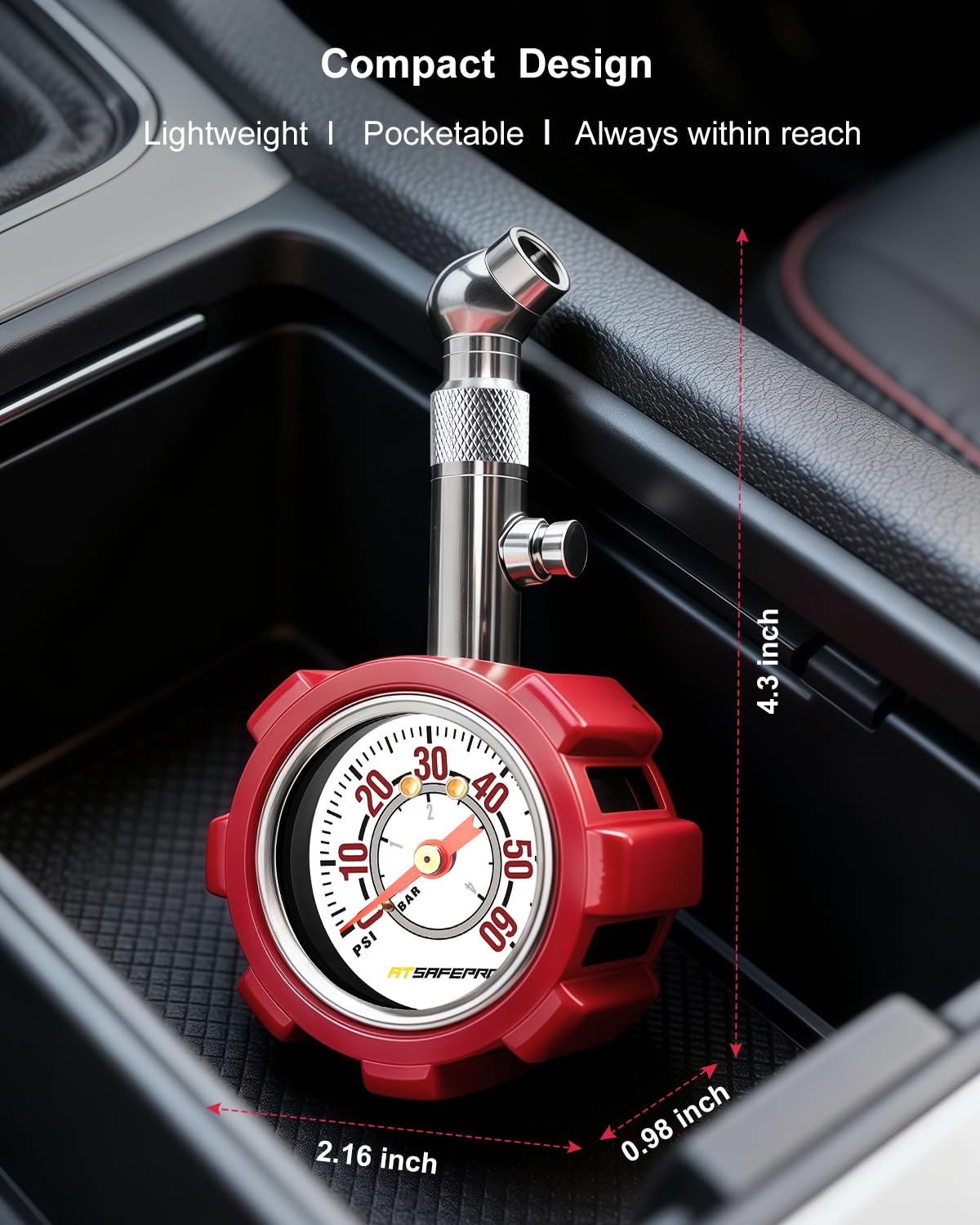
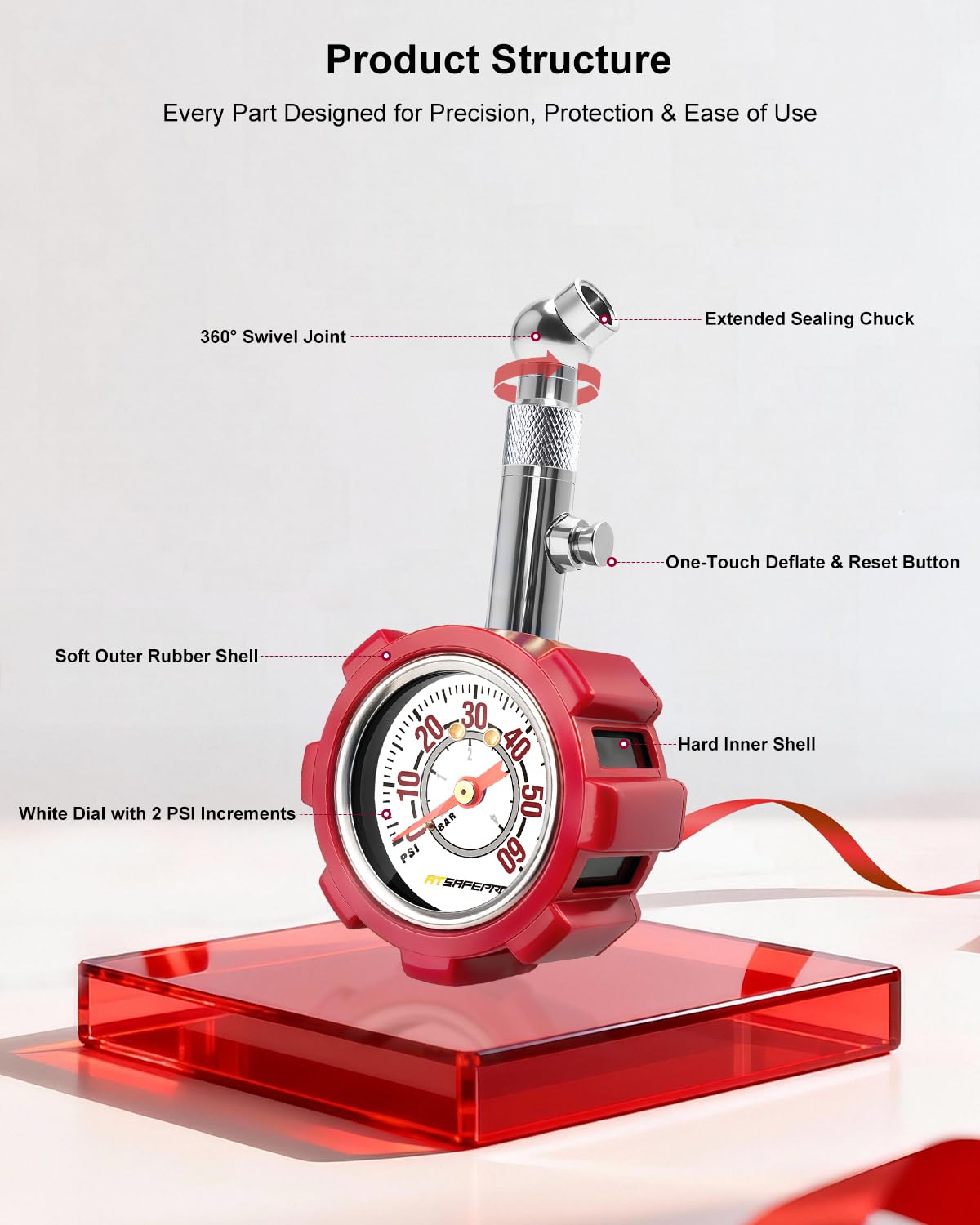
This particular unit, based on the visible product details, is a handheld analog tire pressure gauge or air chuck inflator gauge with a round dial, dual-scale PSI and BAR markings, a red molded housing, and a chrome-colored metal tube and connector. That already tells a buyer something useful: it is built for quick, mechanical reading rather than app dependence, battery checks, or a menu that asks for your location before showing a number. For many garages, tire shops, and DIY drivers, that is still the right kind of old-school.
What the gauge appears to do well
The most obvious feature is the dual-scale dial. The PSI scale runs to 60 in visible 10-step intervals, and the BAR scale is shown as well. That matters because different shops, regions, and vehicle documentation do not always speak the same pressure language. A gauge that lets you read both units without mental gymnastics is practical, especially when you are working across mixed fleets or comparing a door-jamb sticker to a workshop habit that has been repeated, incorrectly, for years.
The analog format also has a small but real advantage: it is immediate. There is no screen contrast to squint at, no charging cable hiding under the bench, and no software update ruining your morning. You glance at the needle, make a decision, and move on. In a tire bay, that kind of simplicity is not nostalgia; it is throughput.
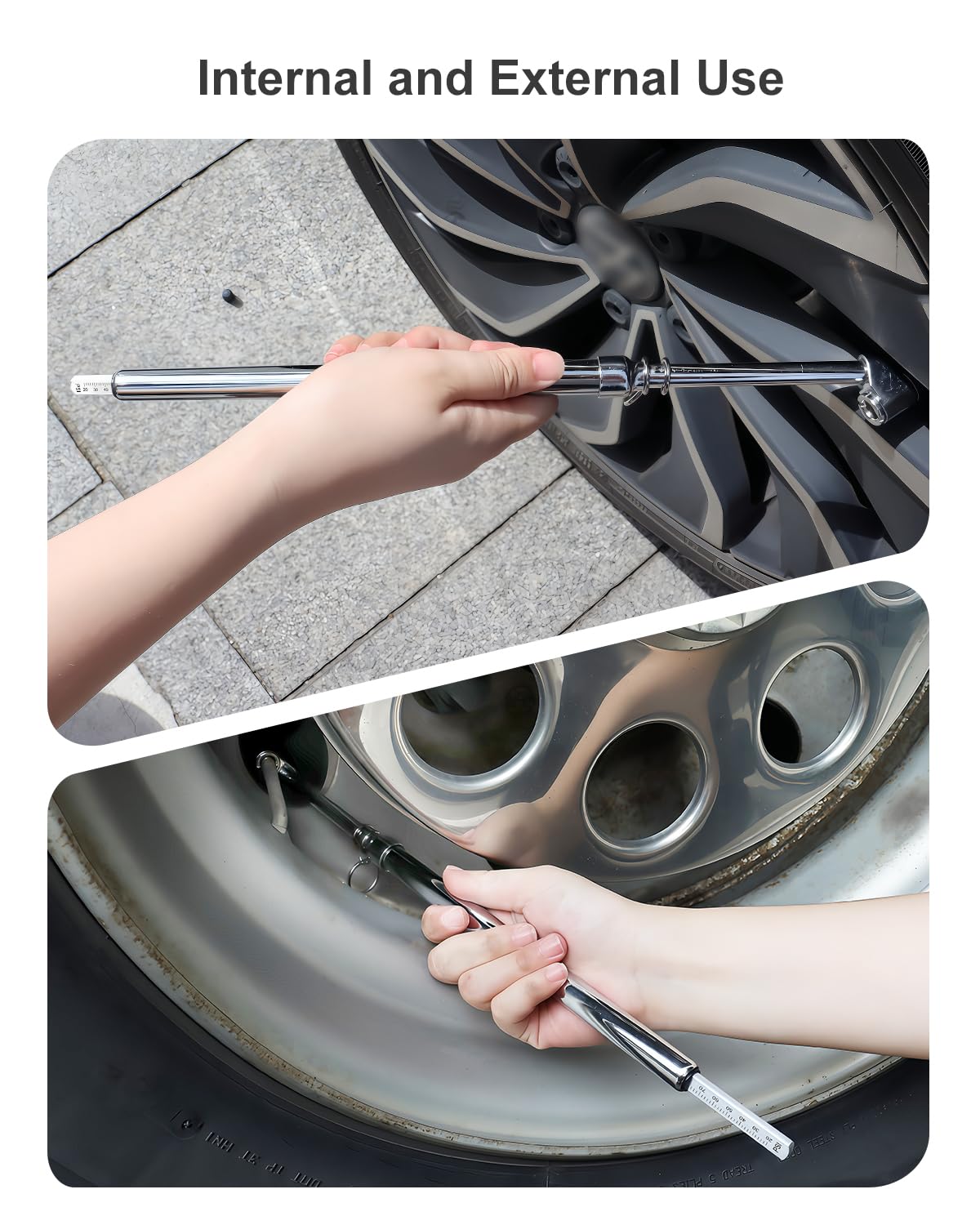
From the visible construction, the tool also looks suited to regular handling. The red molded outer housing should give the hand something substantial to hold, while the chrome or silver metal tube and connector suggest a more durable interface at the working end. The angled top fitting is a practical touch too, because tire work rarely happens in a showroom pose. You are usually reaching around a wheel, around a hose, or around someone’s second guess.
Why pressure checks still matter more than most people admit
Tire pressure is one of those maintenance items that seems too ordinary to deserve attention until the car starts reminding you otherwise. Underinflation can affect wear patterns, rolling resistance, and steering feel. Overinflation can make a tire less forgiving over bumps and reduce the contact patch more than a cautious driver would like. Neither outcome improves the mood of the person paying for the tires.
For that reason, a gauge is not just a measuring accessory. It is a decision tool. A workshop needs to know whether a tire is actually low, whether a customer complaint matches reality, and whether the adjustment made at the compressor was the adjustment intended. A gauge with a visible, easy-to-read dial reduces the chances of “close enough” becoming the unofficial engineering standard.
How this style of gauge fits shop work
The product profile suggests an assembled pneumatic measurement tool, likely combining molded plastic, machined or turned metal parts, plated or polished surfaces, and printed dial graphics. That mix is common for shop tools that need to be rugged without turning into expensive jewelry. Nobody in a tire bay needs a gadget that feels like a piece of modern art; they need something that can be grabbed, used, and set down without being babied.
For passenger cars and light trucks, a compact handheld gauge makes sense because these jobs are repetitive. Check the tire, note the reading, adjust if needed, recheck, and move on. In a tire shop or garage service station, that workflow happens dozens of times a day. In a DIY setting, the same gauge gives a driver a way to confirm pressure before a road trip, a temperature swing, or that yearly moment when every tire on the car seems to have quietly made the same poor life choice.
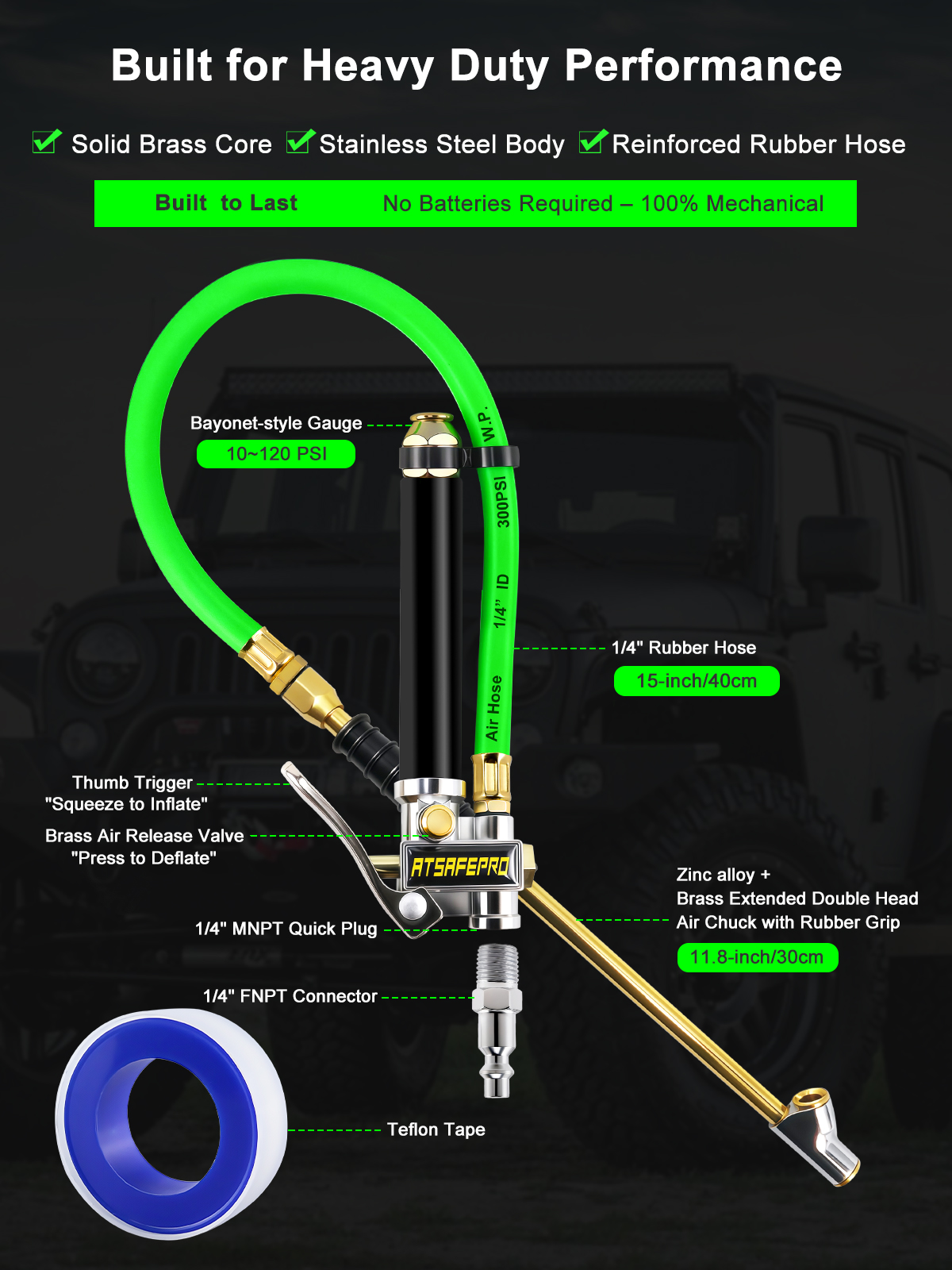
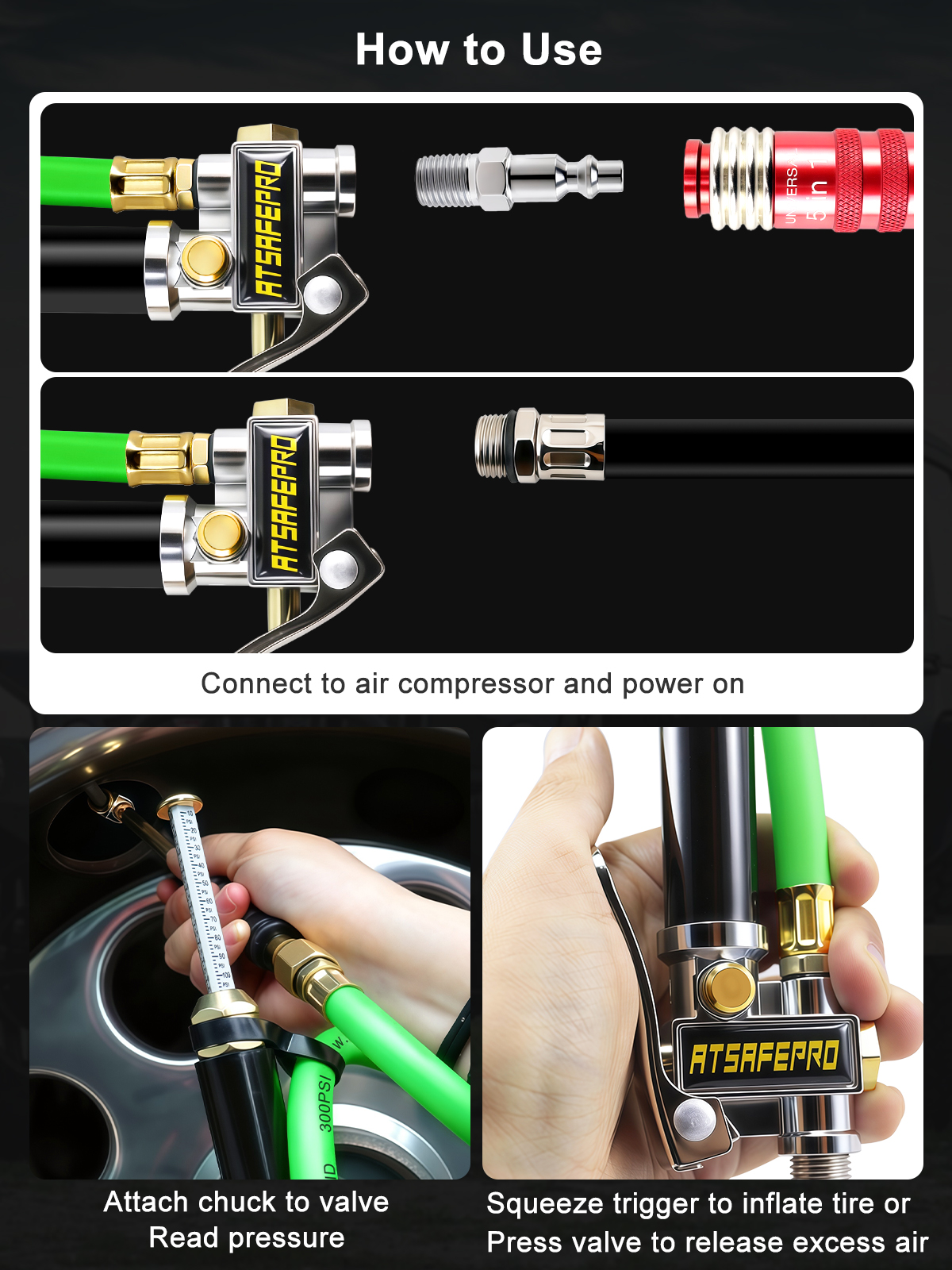
One important caution: the visible information does not confirm whether this is a gauge-only tool or a gauge integrated with inflation hardware. It may be used for checking pressure, inflating, or both, depending on the final configuration. Buyers should verify the exact function before assuming it includes a bleed valve, lock-on chuck, or any specific hose compatibility. Shop tools have a funny habit of looking like they do everything right up until you need one exact feature they never promised.
How to judge whether it is the right fit
Start with the reading style
If your team prefers analog gauges, this design fits that habit. The needle indicator is visible, the dial face is circular and protected by a bezel, and the scale is easy to parse at a glance. For fast-paced work, that can be more efficient than a digital display that needs waking up, resetting, or interpreting in bright sunlight.
Check the pressure range you actually use
The visible PSI scale goes to 60. That will suit many passenger car and light truck applications, but it may or may not suit every service scenario. If your operation deals with unusually high-pressure tires or specialized equipment, verify the usable range before buying. A gauge that is perfect for everyday road vehicles can still be the wrong tool for the oddball jobs that show up on a Tuesday afternoon and ruin everyone’s confidence.
Look at the connector and handling
The angled metal fitting is a useful clue for ergonomics, not a guarantee of compatibility. If your shop uses a particular chuck style or hose system, confirm how this unit interfaces with it. The visible build suggests a practical, service-oriented tool, but the exact connection details are still the sort of thing that should be checked rather than assumed. Assumption is cheap; replacement parts are not.
Common mistakes buyers make
The first mistake is treating all tire gauges as interchangeable. They are not. Some are built for quick checks, some are meant to sit on an airline, and some combine measuring and inflation functions. If you need a specific workflow, buy for that workflow.
The second mistake is ignoring readability. A gauge can be mechanically sound and still annoying if the dial is cramped, the markings are hard to see, or the needle is difficult to read in the actual environment where it will be used. The visible dual-scale layout on this model is a good sign, but shops should still think about the lighting, dirt, and pace of real-world use.
The third mistake is overpromising precision to yourself. Without supplied information on calibration standard or exact accuracy, it is better to treat this as a practical service instrument rather than a laboratory reference. That is not a criticism; it is just how most shop tools should be judged. A good trade gauge helps you make the right call consistently. It does not need to act like a moon lander.
Practical advice for buyers and users
If you are buying for a garage, think in terms of repeatability and durability. The red molded housing and polished metal sections suggest a tool intended for frequent handling, which is useful in a shared shop environment where things get dropped, borrowed, and mysteriously relocated. If you are buying for personal use, the compact handheld form factor is attractive because it will not take over the glovebox like a small and judgmental anchor.
As with any tire-pressure tool, it is smart to compare readings on the same tire at roughly the same conditions. Tire pressure changes with temperature and with how recently the vehicle was driven. That is not a defect in the gauge; that is physics being tiresome, as usual. A consistent method matters more than a heroic one.
If the gauge is being used in a shop, it is worth assigning it a clear role. For example, one tool may be used for checks, another for inflation, and a third as a quick verification instrument. This reduces confusion, especially when multiple technicians are working in parallel and everyone is convinced their own method is the best method, which is how tire rooms become philosophy seminars.
FAQ-style questions buyers tend to ask
Is this only for cars?
Based on the visible product information, it is suitable for passenger cars, light trucks, garage service stations, tire shops, automotive maintenance, and DIY pressure checks. That makes it broadly useful, though exact fit still depends on the final connector and the vehicle or valve setup.
Does the dual scale matter in daily use?
Yes. PSI is common in many shop environments, while BAR is useful in others and in cross-market work. A dual-scale dial prevents constant conversion and cuts down on avoidable mistakes.
Is analog still a good choice?
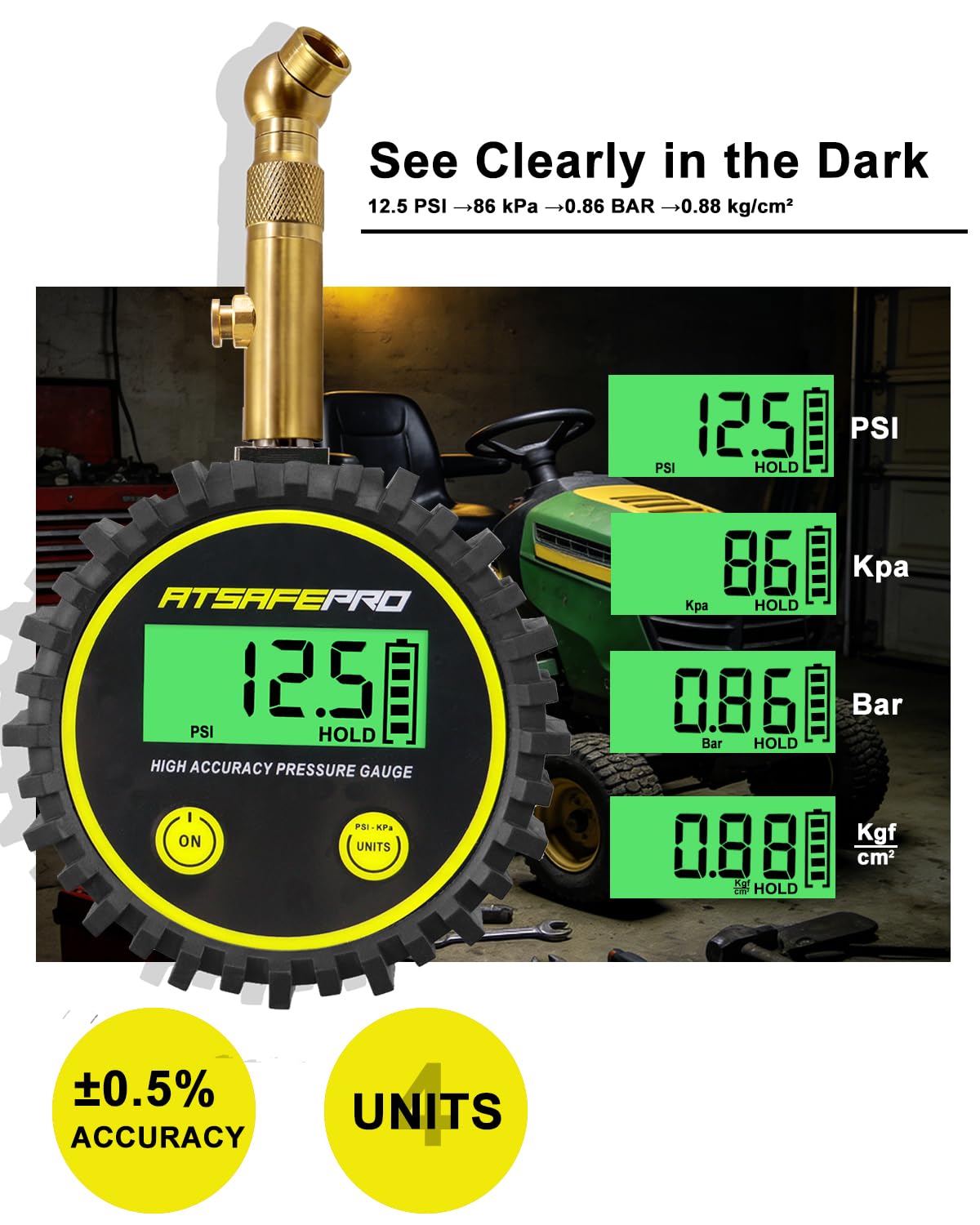
Very much so, especially when you want speed, visibility, and no dependency on power. Analog gauges remain popular because they are straightforward tools for straightforward jobs. There is elegance in that, even if the elegance has a chrome tube and a slightly old-school face.
What this gauge is really for
The ATsafepro tire pressure gauge appears aimed at the practical side of tire service: fast reads, dual units, compact handling, and a construction style that looks ready for routine shop use. It is not trying to be clever. That is part of its appeal. For engineers, sourcing managers, and product teams, the relevant question is not whether it is flashy. The question is whether it helps a technician confirm pressure quickly, consistently, and without needless fuss.
If that is the buying goal, this kind of tool is easy to justify. Tire pressure is too important to leave to guesswork, and too ordinary to deserve theatrics. When a gauge does its job cleanly, the best compliment it gets is silence from the bay and fewer comebacks at the counter.
Next step
If you are evaluating the ATsafepro tire pressure gauge for shop stocking or personal use, verify the exact connector style, whether it is gauge-only or gauge-plus-inflation, and the pressure range your application actually needs. Those three checks will tell you more than a glossy product photo ever will.