Precision in Every Millimeter: Inside the Metal Tire Depth Gauge Manufacturing Process
The Problem with Inconsistent Tread Measurement
For fleet managers, auto technicians, and tire retailers, inaccurate tread readings mean safety risks, wasted resources, and liability exposure. Rubber wear levels that differ by even 1 mm can affect braking distance by up to 10%, according to data from the European Tyre and Rim Technical Organisation (ETRTO).
Yet, many workshops still rely on plastic or non-calibrated gauges prone to deformation and reading errors. The result? Inconsistent data across inspections and premature tire replacements — both of which increase operational costs.
Engineering Principles Behind ATSAFEPRO Metal Gauges
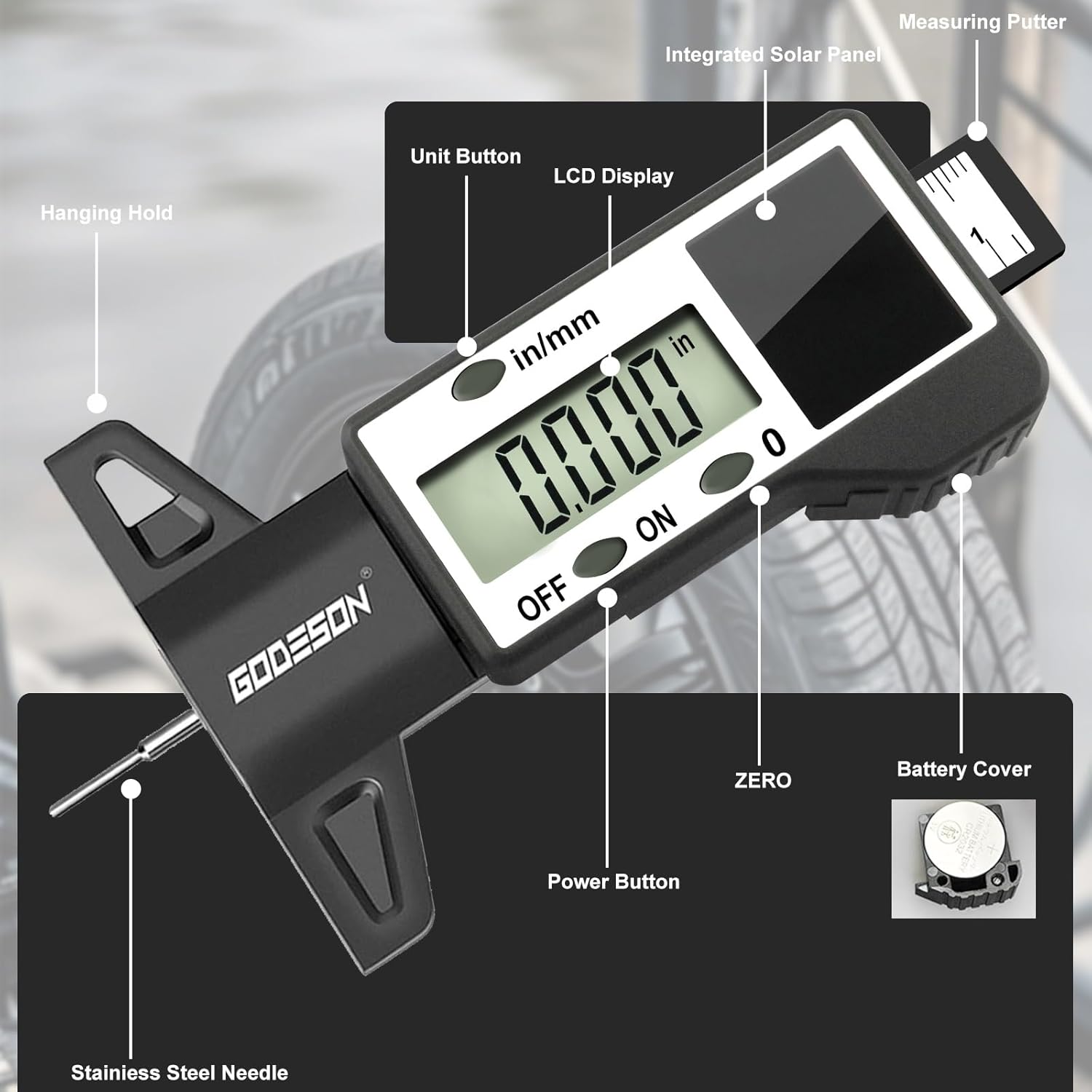
ATSAFEPRO metal tire depth gauges are engineered to eliminate these inconsistencies. Built with CNC-machined stainless steel bodies and digital micrometer modules, they combine structural stability with high-resolution accuracy.
Each gauge undergoes:
-
Laser calibration under ISO/IEC 17025 standards
-
Micron-level tolerance testing (±0.02 mm deviation)
-
Anti-corrosion anodic treatment for long-term reliability
Unlike injection-molded plastic units, metal depth gauges maintain precise alignment between probe and scale, even under temperature variation and workshop vibration.
| Parameter | Plastic Gauge | Metal Digital Gauge (ATSAFEPRO) |
|---|---|---|
| Material Stability | Prone to warping | CNC stainless steel |
| Accuracy Range | ±0.2 mm | ±0.02 mm |
| Calibration Need | Frequent | Annual |
| Impact Resistance | Low | Industrial-grade |
| Service Life | 6–12 months | 5+ years |
Source: ATSAFEPRO internal QC testing, 2025.
Manufacturing Excellence: Combining Durability with Micron Accuracy
Every ATSAFEPRO gauge is assembled in a controlled cleanroom environment to prevent dust contamination on sensor components. The production integrates automated alignment robots to calibrate the probe position, ensuring mechanical stability across mass production.
Moreover, digital variants feature OLED displays and auto shut-off systems that extend battery life by 35%, optimizing field usability for inspection teams and fleet operators.
Real-World Applications in Automotive and Industrial Sectors
Metal tire depth gauges are not limited to auto repair shops — they are vital across multiple industries:
-
Fleet Management: Routine tire wear audits ensure compliance and reduce accident risks.
-
Tire Manufacturing QC: Used during final inspection before shipment for uniform tread standards.
-
Commercial Inspection Services: Integrated into roadworthiness certification protocols.
-
OEM Vehicle Plants: As part of post-assembly tire and alignment verification.
For example, a logistics operator in Germany introduced ATSAFEPRO’s digital depth gauges to its inspection line, reducing inspection time per vehicle from 4 minutes to under 2 while maintaining standardized accuracy across 1,200 trucks monthly.
Selecting the Right Gauge for Your Operation
Choosing between mechanical and digital models depends on your operational scale and precision needs:
-
Digital Metal Gauges: Ideal for high-volume workshops demanding data logging and consistent calibration.
-
Mechanical Metal Gauges: Durable and affordable for field inspections or environments with limited power access.
-
Hybrid Depth Indicators: Combine analog readability with digital calibration for versatile industrial use.
ATSAFEPRO recommends selecting a metal gauge with ISO calibration support and shock-resistant housing for long-term investment value.
Buyer Insights: Frequently Asked Technical Questions
Q1: How often should a metal tire depth gauge be recalibrated?
Typically every 12 months, or after 10,000 measurements for certified accuracy.
Q2: Can digital depth gauges be used outdoors?
Yes. ATSAFEPRO designs IP54-rated casings resistant to dust and light moisture.
Q3: What’s the accuracy difference between analog and digital models?
Digital models maintain ±0.02 mm accuracy; analog ones are ±0.05 mm.
Q4: Do these tools require battery replacement?
Digital models use replaceable lithium cells with a 12-month lifespan under normal use.
Building Long-Term Reliability Through Precision Tools
For every fleet, inspection center, or auto service chain, accurate measurement tools are not optional — they are fundamental to safety and efficiency.
ATSAFEPRO’s metal tire depth gauges combine industrial precision, long service life, and certified calibration to ensure every reading counts.
Learn more about our full range of measurement tools on the ATSAFEPRO Homepage or get tailored recommendations through our Contact Us page.