Mechanical Tire Inflator Supplier: A Reliable Choice for Tire Maintenance
Why Reliability Matters in Tire Maintenance
Tire maintenance is one of the most frequent yet critical operations in automotive service. For workshops and fleet operators, tool reliability directly determines efficiency, cost, and safety. A mechanical tire inflator supplier that provides consistent quality helps businesses avoid costly downtime and ensures technicians can work with precision every day.
Unlike digital tools that rely on electronic sensors or batteries, mechanical inflators use robust, purely physical calibration systems. This not only ensures long-term accuracy but also reduces dependency on maintenance cycles—an advantage that’s especially valuable for high-volume service centers.
Mechanical Inflators: The Durable Core of Tire Service Operations
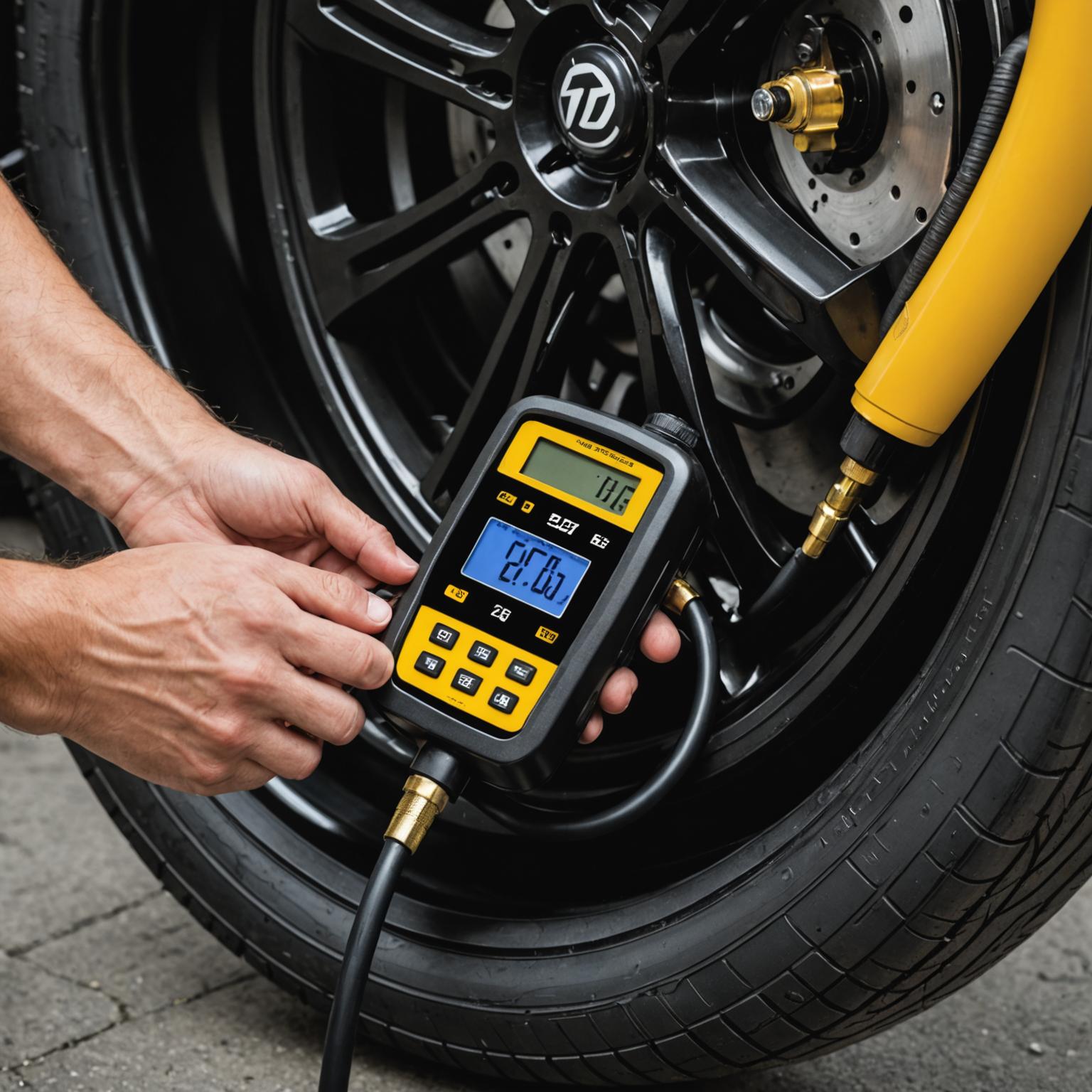
The strength of a mechanical tire inflator lies in its simplicity and endurance. These tools have been proven to outperform digital models in harsh environments like workshops exposed to oil, dust, and temperature fluctuations.
ATSAFEPRO mechanical inflators are built with:
-
Reinforced brass fittings for minimal air leakage.
-
Corrosion-resistant housings for long service life.
-
Shock-proof gauges calibrated to ±1 PSI accuracy.
-
Universal connectors supporting PSI/BAR/KPA units.
Such features make mechanical inflators an ideal investment for automotive service networks that value consistency, standardization, and return on investment.
Comparing Mechanical vs. Digital Tire Inflators
| Feature | Mechanical Tire Inflator | Digital Tire Inflator |
|---|---|---|
| Accuracy | ±1 PSI | ±0.5 PSI (requires recalibration) |
| Maintenance | Minimal, calibration-free | Requires periodic recalibration |
| Durability | Excellent under high volume | Sensitive to moisture or shock |
| Power Requirement | None | Battery or power supply needed |
| Cost Efficiency | Low total ownership cost | Higher due to maintenance |
| Ideal Application | Fleets, workshops, industrial garages | Fleet monitoring systems |
This comparison highlights why professional service chains continue to rely on mechanical inflators as the backbone of daily tire maintenance.
Real-World Use Cases: Where Mechanical Inflators Excel
1. Automotive Workshops and Tire Centers
Service chains rely on mechanical inflators for their stability and simplicity—technicians can perform hundreds of inflations daily without downtime or recalibration interruptions.
2. Fleet Maintenance Operations
Logistics fleets benefit from standardized mechanical inflators across depots, ensuring consistent PSI levels and extending tire lifespan by 10–15%.
3. Industrial Service Applications
Factories and heavy machinery depots often prefer mechanical models due to their resistance to dust and vibration, which commonly affect digital sensors.
4. Developing Market Environments
In areas where electronic repair and calibration services are limited, mechanical inflators provide unmatched reliability with zero dependency on external maintenance.
Key Considerations When Choosing a Supplier
When evaluating a mechanical tire inflator supplier, professional buyers should consider three essential factors:
-
Material Quality – Look for suppliers using industrial-grade brass, reinforced hoses, and stainless-steel gauges.
-
Calibration Assurance – Each inflator should be factory-tested to meet accuracy standards for both light and heavy-duty applications.
-
After-Sales Support – Reliable suppliers like ATSAFEPRO offer parts replacement, OEM customization, and regional distribution support.
Buyer FAQ
Q: Why are mechanical inflators still preferred by many workshops?
A: Their reliability, simple operation, and low maintenance cost make them ideal for daily use in high-traffic service centers.
Q: Can ATSAFEPRO offer customized inflator designs?
A: Yes, we support OEM/ODM customization, including logo printing, packaging, and regional standard adjustments.
Q: How long do ATSAFEPRO mechanical inflators last?
A: On average, each unit can serve for 5–10 years under regular workshop conditions with only minimal maintenance.
ATSAFEPRO — Your Partner in Durable Tire Inflation Solutions
As a professional mechanical tire inflator supplier, ATSAFEPRO is dedicated to combining precision engineering with long-term reliability. Our products are used by global distributors, workshop chains, and fleet operators who demand equipment that performs consistently under pressure.
Every ATSAFEPRO inflator is designed to simplify maintenance, reduce operational costs, and promote sustainable performance across automotive service industries.
Reliability That Lasts — Precision That Pays Off
Choosing the right inflator is not just a technical decision—it’s a long-term investment in safety, efficiency, and sustainability. ATSAFEPRO’s mechanical inflators have proven their worth in thousands of workshops and fleet operations worldwide.
Explore more about ATSAFEPRO’s durable tire tools on the homepage or reach our team directly via the contact page for OEM or distributor inquiries.