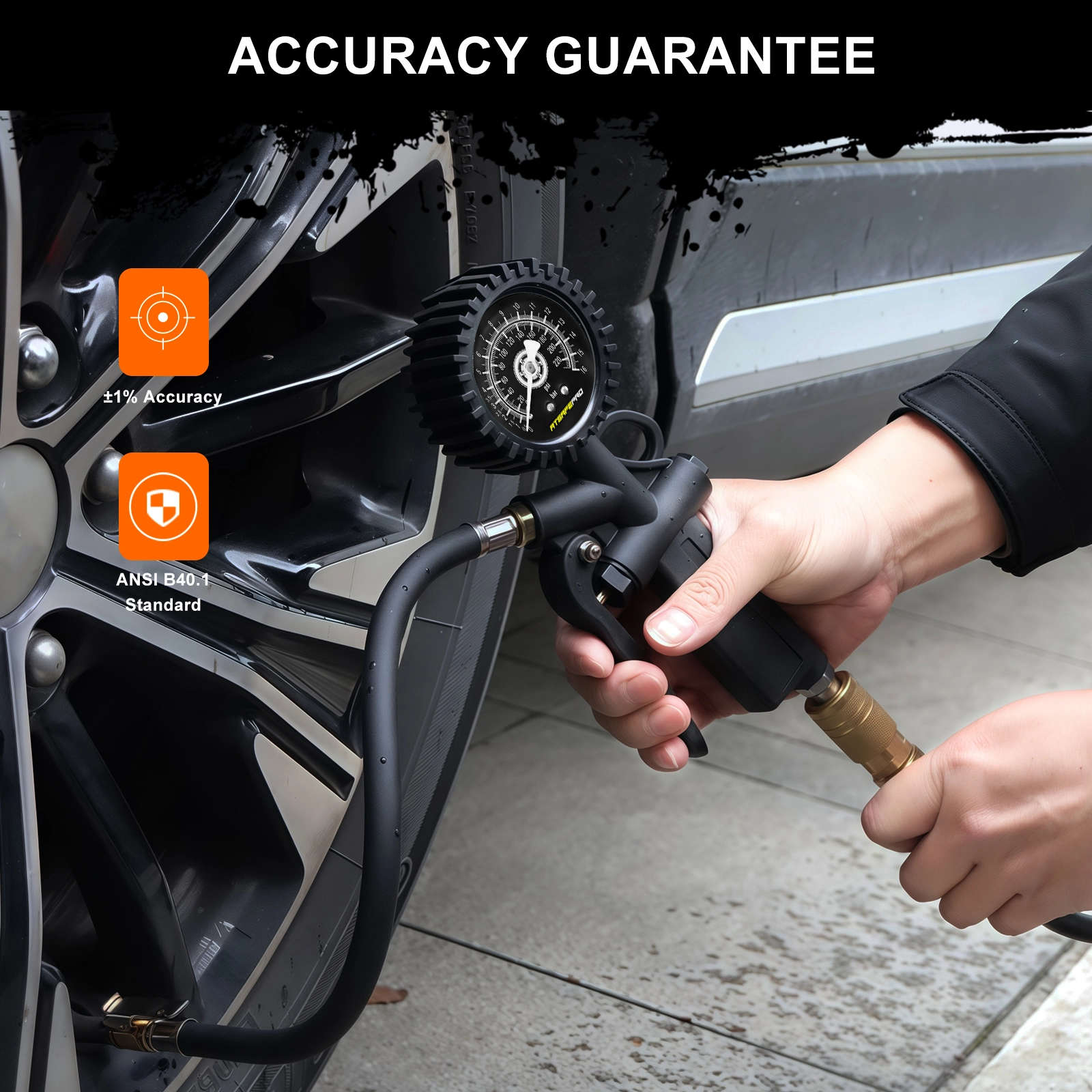
Fleet Efficiency: How Digital Tire Inflators With Gauges Save Time and Reduce Costs

  • blog
Posted by ATSAFEPRO On Sep 29 2025

Digital Tire Inflator With Gauge

Fleet Efficiency: How Digital Tire Inflators With Gauges Save Time and Reduce Costs

Tire Maintenance: The Hidden Cost in Fleet Operations

For fleet managers, the cost of tires extends beyond the initial purchase. Fuel consumption, downtime from blowouts, and premature replacements all drive expenses upward. According to the American Trucking Associations, tire-related issues account for nearly 20% of roadside breakdowns. This makes tire care not only a maintenance task but a direct factor in fleet profitability.

A Digital Tire Inflator With Gauge helps fleets standardize inflation practices, ensuring every tire meets manufacturer specifications with accuracy. By reducing underinflation and overinflation, fleets can extend tire lifespan, cut fuel costs, and minimize roadside emergencies.

How Digital Tools Improve Efficiency

Unlike analog inflators, digital models provide exact PSI readings and automated features that eliminate guesswork. This improves both speed and consistency during fleet checks.

Challenge Impact on Fleets Digital Inflator Solution
Manual checks are slow Drivers spend extra minutes per vehicle Digital display shortens inspection time
Inconsistent readings Leads to uneven wear and wasted fuel Precise sensors provide uniform results
Overinflation risks Increases chance of blowouts Auto shut-off prevents mistakes
Lack of recordkeeping Hard to track tire performance Some digital tools allow integration with logs

Real-World Applications in Fleet Management

  • Trucking Companies: Accurate checks reduce blowout risks on highways, preventing costly delays and liability.

  • Delivery Fleets: With dozens of vehicles on tight schedules, fast and consistent inflation reduces downtime.

  • Public Transport: Safety standards demand reliable pressure monitoring; digital inflators ensure compliance.

  • Construction Fleets: Heavy equipment requires stable pressure to handle loads; digital tools reduce tire strain.

Practical Tips for Fleet Use

  1. Train drivers to perform daily digital pressure checks before leaving the depot.

  2. Schedule weekly inspections with supervisors using professional-grade digital inflators.

  3. Store inflators in dry, dust-free areas to protect sensors.

  4. Combine inflator use with tread depth monitoring for a complete tire care strategy.

  5. Track PSI logs to identify vehicles with recurring tire issues before they escalate.

Q&A: Fleet Buyer Concerns

Q: How much time can digital inflators save?
A: On average, digital readings cut inspection time by 30–40% compared to manual dials.

Q: Are they durable enough for heavy fleet use?
A: Yes. Metal-bodied models from ATSAFEPRO are built for workshop and roadside environments.

Q: Can they reduce overall tire costs?
A: By preventing underinflation-related wear and improving fuel efficiency, fleets often see a 10–15% reduction in annual tire expenses.

Why Fleets Trust ATSAFEPRO

ATSAFEPRO’s Digital Tire Inflator With Gauge is engineered with fleets in mind:

  • Industrial-grade sensors for consistent accuracy.

  • Rugged construction to withstand daily use.

  • Fast-read LCD for quick inspections.

  • Ergonomic design that minimizes operator fatigue.

These features combine to deliver measurable cost savings and operational efficiency for professional fleet operators.

Driving Fleet Performance Through Precision

Fleet managers cannot afford to ignore tire care when it directly affects safety, fuel efficiency, and operating costs. With a reliable Digital Tire Inflator With Gauge, every vehicle leaves the yard at the correct pressure, reducing risks and improving performance across the fleet.

Explore ATSAFEPRO’s full range of tire maintenance solutions on the homepage or connect with our team through the contact page.
Featured Blogs

Tag:

  • Blog
Share On
Featured Blogs
GODESON Disc Brake Rotor Micrometer: Features, Use, and Buyer Guide

GODESON Disc Brake Rotor Micrometer: Features, Use, and Buyer Guide

1. Why a disc brake rotor micrometer matters before you start replacing parts 2. Quick takeaways for buyers and technicians 3. What this type of micrometer is designed to do 4. Notable features visible on the GODESON unit 5. How brake rotor thickness checks fit into real maintenance 6. What buyers should compare before choosing a rotor micrometer 7. Common mistakes when measuring brake rotors 8. Who is likely to get the most value from this tool 9. A practical buyer note on packaging, calibration, and expectations 10. FAQ: what people usually ask about disc brake rotor micrometers 11. Bottom line for sourcing and shop use

GODESON Disc Brake Rotor Micrometer: What It Does and Why It Matters

GODESON Disc Brake Rotor Micrometer: What It Does and Why It Matters

1. Why a disc brake rotor micrometer matters in real workshops 2. What the tool is designed to do 3. Key visible features buyers will notice first 4. Where it fits in the inspection workflow 5. How to judge whether this style of micrometer is the right buy 6. Common mistakes when measuring rotor thickness 7. What makes this style of tool useful beyond brake work 8. Buyer’s checklist before placing an order 9. FAQ 10. A practical next step for buyers

GODESON Disc Brake Rotor Micrometer: Features, Uses, and Buyer Tips

GODESON Disc Brake Rotor Micrometer: Features, Uses, and Buyer Tips

1. Why a rotor micrometer is not just a “nice-to-have” in brake work 2. What the GODESON Disc Brake Rotor Micrometer is designed to solve 3. Key features visible on the tool 4. Where this type of micrometer fits in a shop 5. Why digital matters here 6. How buyers should evaluate a rotor micrometer 7. Common mistakes when using a disc brake rotor micrometer 8. What the package suggests about field use 9. Practical buying advice 10. Who this tool is best suited for 11. Next step for buyers

GODESON Disc Brake Rotor Micrometer: What It Measures and Why It Matters

GODESON Disc Brake Rotor Micrometer: What It Measures and Why It Matters

1. Why a rotor micrometer matters when a standard gauge stops short 2. What this tool is designed to do 3. Where this kind of micrometer fits in the shop 4. Key features buyers will notice first 5. How to judge whether it is the right tool for your application 6. Common mistakes when shopping for a specialized measuring tool 7. Practical buyer advice before you place an order 8. Small details that are easy to miss but worth caring about 9. Who is most likely to benefit from the GODESON Disc Brake Rotor Micrometer 10. What to ask the supplier before committing

GODESON Disc Brake Rotor Micrometer: What Buyers Should Know

GODESON Disc Brake Rotor Micrometer: What Buyers Should Know

1. Why a GODESON Disc Brake Rotor Micrometer matters in real workshop work 2. What this tool is designed to do 3. Quick reference: what to look for in a rotor thickness gauge 4. How the measuring design supports brake inspection 5. Where this type of micrometer fits in a purchasing decision 6. Common mistakes buyers make with brake rotor measurement tools 7. Practical buying advice for engineers and sourcing teams 8. How to use a rotor micrometer without introducing bad readings 9. FAQ: the questions buyers usually ask 10. What to ask before placing a purchase order 11. Next step for buyers

GODESON Tire Repair Tool: Your Ultimate Roadside Companion

GODESON Tire Repair Tool: Your Ultimate Roadside Companion

1.Discovering the Ultimate Tire Repair Companion 2.The Ingenious Design Behind GODESON's Innovation 3.Real-World Stories and Practical Benefits 4.Why Choose GODESON for Your Automotive Needs 5.Enhancing Your Driving Experience with GODESON